 Chuckanut Exterior
 Exterior Work in a Salt-Air, Rain-Soaked Corner of Whatcom County
Bellingham sits close enough to the water and the hills that its homes take on a particular combination of weather stress you don't see everywhere in Western Washington. There's salt-laden air drifting in off Bellingham Bay, long stretches of driving rain that comes in sideways off the Sound during fall and winter storms, and a shaded, damp growing season that gives moss and algae plenty of time to get established on north-facing roof slopes and siding. None of that is exotic or unusual for this part of the state, but it adds up over the life of a house, and it's the reason exterior materials and installation details that work fine in a drier inland climate can fall short here.
We work on homes throughout the Bellingham area doing siding, roofing, windows, and decks, and we approach all four the same way: figure out what the local climate is actually doing to the building, then use materials and methods that hold up to it rather than ones that just look good on install day.
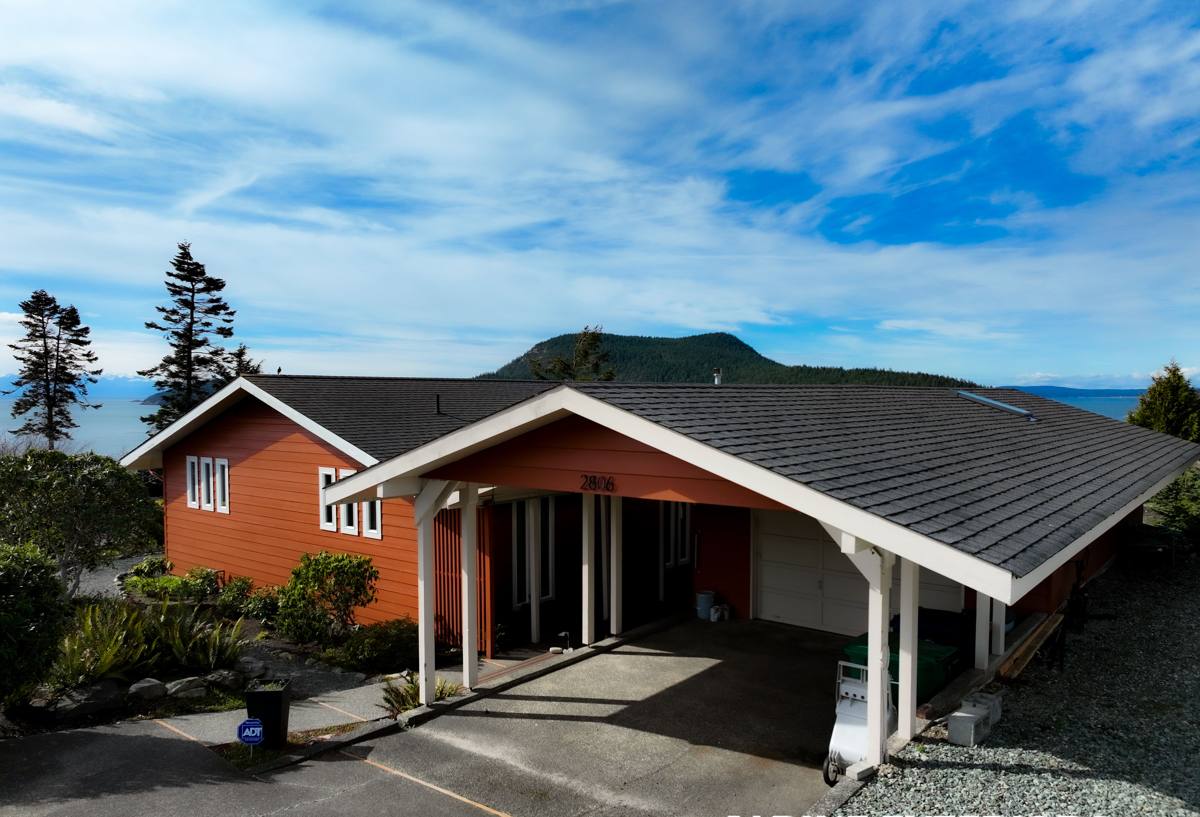
What Bellingham's Climate Does to a House Over Time
Salt Air and Moisture
Proximity to saltwater means airborne salt settles on exterior surfaces, especially on homes closer to the bay or exposed to onshore wind. Salt accelerates corrosion on fasteners, flashing, and any exposed metal, and it can also degrade certain paints and finishes faster than inland exposure would. Materials and hardware that aren't rated for coastal-adjacent use tend to show wear years ahead of schedule.
Driving Rain
Whatcom County gets a lot of rain, but the issue isn't just volume — it's wind-driven rain that gets pushed horizontally into wall assemblies, window frames, and roof edges rather than falling straight down. That kind of exposure finds every gap in flashing, every poorly lapped piece of siding, and every window that wasn't flashed correctly. Water intrusion here is rarely dramatic; it's usually a slow, hidden problem that shows up as rot or mold well after the fact.
Moss and Algae
Shade, moisture, and mild temperatures are exactly what moss and algae need to thrive, and Bellingham roofs and north- or east-facing siding walls get all three for much of the year. Moss holds moisture against roofing material and can lift shingles over time. Algae staining on siding is mostly cosmetic, but it's also a sign that a surface is staying damp longer than it should.
Siding: Why We Only Install James Hardie
Siding takes the brunt of Bellingham's weather, and it's also the exterior component homeowners notice the most when it starts to fail — cracking, swelling, paint that won't hold, or panels that have gone soft at the bottom edge. We made the decision a while back to install James Hardie fiber cement exclusively, and it comes down to how the material behaves under exactly the conditions this area produces.
Fiber cement doesn't absorb water the way wood-based or wood-composite sidings can, so it's far less prone to swelling, delamination, or rot when it's exposed to sustained damp weather. It's also non-combustible, which matters more each year as wildfire smoke and dry-season fire risk become a bigger part of Pacific Northwest summers. James Hardie's ColorPlus factory-applied finish is baked on under controlled conditions and backed by a real finish warranty, which means less repainting and a more consistent look over the long run — something that matters in a climate where field-applied paint has to cure and hold up under wet, cool conditions that aren't always paint-friendly.
We don't install vinyl, LP SmartSide, Cemplank, Allura, primed spruce, or cedar. Each of those has a reasonable case somewhere, but not here. Vinyl can warp and fade, and its seams and expansion behavior aren't a great match for driving rain and coastal air. Wood-based composite sidings and raw wood products are more exposed to the moisture-and-rot cycle that this climate is built to exploit, and they generally demand more upkeep than most homeowners want to sign up for. Alternative fiber cement brands may perform reasonably, but we've standardized on James Hardie because of its engineering, its factory finish, and the strength of its transferable warranty — and we'd rather install one product well than juggle several we're less confident in.
James Hardie also makes climate-engineered product lines (the HZ5 line is built for the wetter, harsher weather found in this region), which is a meaningful detail — it means the siding itself is formulated with local conditions in mind rather than being a one-size-fits-all national product.
Roofing: Built to Shed Water and Resist Moss
A roof in Bellingham has two jobs that matter more here than in drier parts of the state: shedding wind-driven rain without letting it work backward under shingles or flashing, and resisting the kind of sustained dampness that lets moss take hold. Correct underlayment, proper flashing at valleys, chimneys, and roof-to-wall transitions, and adequate ventilation all play into how well a roof handles the wet season year after year. Ventilation in particular matters more than people expect — a poorly ventilated attic traps moisture, which speeds up moss growth on the underside of the deck and can shorten the life of the roofing material from the inside out.
Regular moss removal and gutter maintenance go a long way toward extending a roof's service life here, but they're not a substitute for a roof that was installed with proper flashing and ventilation in the first place.
Windows: Where Driving Rain Finds Weak Points
Window failures in this climate are almost always installation failures, not product failures. A quality window that's flashed incorrectly will leak in a wind-driven rain event; a mid-grade window installed correctly with proper flashing, sealant, and drainage will usually outperform it. We pay close attention to flashing details and drainage paths at every window opening, because that's the detail that determines whether water gets managed or gets trapped in the wall assembly.
Older single-pane or aging dual-pane windows in Bellingham homes also tend to show their age through fogging between panes, drafts, and condensation — all signs the seal has failed and moisture is getting where it shouldn't.
Decks: Standing Up to Rain and Shade
Decks in shaded, damp Bellingham yards deal with the same moss-and-moisture cycle as north-facing roofs and walls. Framing and ledger connections need to be detailed to shed water rather than trap it, and decking material choice matters — some materials handle sustained dampness and shade far better than others. Proper spacing, flashing at the ledger board where the deck meets the house, and drainage underneath all reduce the chance of hidden rot developing in framing members that are hard to inspect once the deck is finished.
Cost Factors for Exterior Work in This Area
Every home and project is different, but these are the main factors that tend to move the price on exterior work here:
| Factor | Why It Matters Locally |
|---|---|
| Home size and wall/roof area | Directly drives material and labor quantities |
| Existing damage or rot | Hidden moisture damage found during tear-off adds repair scope |
| Access and site conditions | Sloped lots, mature landscaping, and tight urban lots common in Bellingham can add labor time |
| Material selection | James Hardie siding lines, roofing materials, and window grades vary in cost and long-term performance |
| Flashing and detail work | Coastal-adjacent, high-rain climates require more careful (and more time-intensive) flashing than dry-climate installs |
Why a Local Crew Matters Here
A crew that works throughout Whatcom County and the greater Bellingham area day in and day out knows which details actually matter for this climate — where driving rain tends to hit hardest, which roof orientations grow moss fastest, and how salt exposure varies depending on how close a property sits to the water. That's not something a crew based somewhere with a drier or more uniform climate picks up quickly. Local experience shows up in the small decisions: how flashing gets lapped, how much ventilation a roof needs, how siding gets detailed at grade level where splashback and moisture collect.
What to Look For When Hiring an Exterior Contractor Here
- Manufacturer certification for the siding or roofing products being installed, not just general experience
- A clear explanation of flashing and moisture-management details, not just material brand names
- Local references and a track record working in Whatcom County's specific climate
- Proper licensing, bonding, and insurance for exterior contracting work in Washington State
- A written scope of work that specifies underlayment, flashing, fastening, and finish details — not a vague one-line estimate
- Willingness to explain trade-offs between material options honestly, including why they do or don't recommend certain products
Getting Started
Whether it's a full siding replacement, a roof that's showing its age, windows that leak in a storm, or a deck that needs attention, the starting point is the same: an honest look at what's actually happening on your home and what it would take to fix it right. If you're in Bellingham or elsewhere in Whatcom County and want a straightforward, no-pressure estimate, we're glad to come take a look and walk you through your options.