 Chuckanut Exterior
 Exteriors Built for Fairhaven's Coastal Exposure
Fairhaven sits close enough to the water that its climate behaves differently than inland Whatcom County. Homes here deal with a near-constant mix of salt-laden air off the bay, driving rain that comes in sideways during winter storms, and long stretches of gray, damp weather that keep exterior surfaces wet for days at a time. Add in the shade from mature evergreens common to older Fairhaven lots, and you get a near-perfect environment for moss, algae, and slow moisture intrusion. None of this is unusual for the area, but it does mean exterior materials and workmanship that would be fine somewhere drier or more inland can fall short here.
We work on homes throughout Chuckanut and the surrounding Whatcom County communities, and Fairhaven's older housing stock, mixed with newer infill construction, gives us a good cross-section of what holds up and what doesn't. This page covers what we see most often in the neighborhood and how our siding, roofing, window, and deck work is approached with that climate in mind.
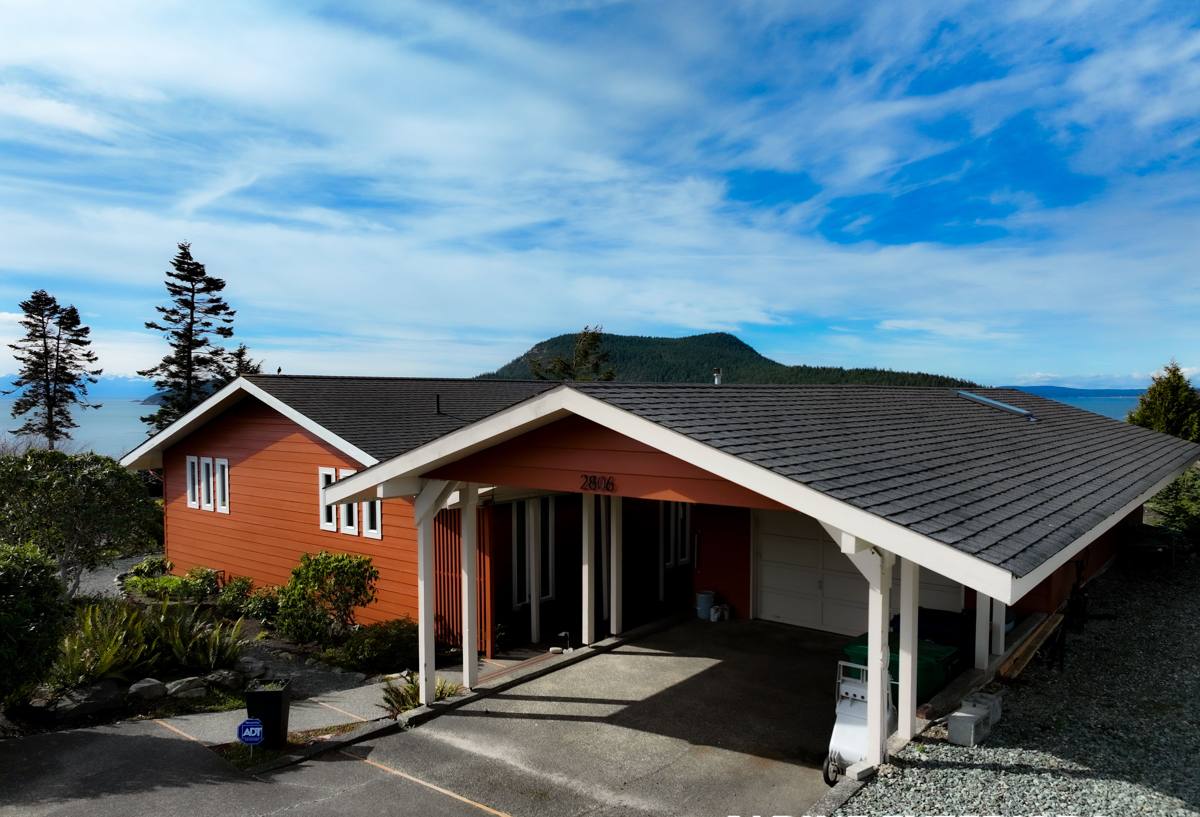
What Salt Air and Moisture Actually Do to a House
Salt Air
Even a few miles inland from open water, airborne salt accelerates corrosion on exposed metal — fasteners, flashing, gutter hardware, and light fixtures. Over years, it also degrades some paint films and caulk faster than manufacturers' standard weathering estimates assume, because most of those estimates are based on inland test conditions, not marine exposure.
Driving Rain
Wind-driven rain doesn't just fall on a wall, it gets pushed into it — through gaps in siding laps, around poorly sealed window and door trim, and under flashing that was installed a little too casually. A house can look fine from the curb for years while water is slowly working its way behind the cladding.
Moss and Organic Growth
Whatcom County's long wet season, combined with shaded lots and north-facing walls that rarely see direct sun, gives moss and algae plenty of time to establish. Beyond the cosmetic issue, moss holds moisture against the surface it's growing on, which is a problem for wood trim, older siding materials, and roofing alike.
Siding: Why We Only Install James Hardie
We made a decision a while back to install one siding system: James Hardie fiber cement. We don't install vinyl, LP SmartSide, Cemplank, Allura, primed spruce, or cedar. That's not a marketing position, it's a standard we hold ourselves to because of what we've seen these products do — and not do — in exactly this kind of climate.
What We Weighed
- Vinyl is affordable and low-maintenance in dry climates, but it expands and contracts with temperature swings, can warp or crack in hard freezes, and its seams and J-channels give wind-driven rain more opportunities to get behind the wall than a properly lapped fiber cement installation.
- LP SmartSide and other wood-strand products perform reasonably when the factory coating stays intact and the field cuts and joints are sealed exactly to spec, but any breach lets moisture into the wood-based substrate, and swelling or delamination at the damaged spot follows. In a wet marine climate, the margin for installation error is thin.
- Cemplank and Allura are also fiber cement, and structurally the material category is sound — that's part of why we like fiber cement as a category. But we standardized on one manufacturer's system so our crews install one set of specs, one flashing detail, and one finish process every time, which is where a lot of siding failures actually originate: inconsistent installation, not the base material.
- Primed spruce and cedar are traditional, attractive, and can look great — but they're wood, and wood requires an ongoing maintenance commitment (repainting, resealing cut ends, watching for rot at grade) that most homeowners underestimate until the first signs of trouble show up 8-10 years in, often at exactly the areas most exposed to salt air and rain.
Why Hardie
James Hardie fiber cement is non-combustible, dimensionally stable across our temperature range, and comes with a factory-applied ColorPlus finish that's baked on and warranted separately from the substrate — meaning the finish is engineered to hold color and resist the fading and mildew staining that painted materials in coastal air tend to show early. Hardie also makes HZ5-rated products engineered for higher-moisture, freeze-prone climates, which fits Whatcom County. Installed to spec — correct clearances, factory-primed cut edges sealed in the field, proper flashing and lap sequencing — it's the most consistent long-term performer we've found for a house that has to deal with salt air, driving rain, and moss season every single year.
| Factor | Vinyl | Wood-Strand (e.g. LP) | Cedar / Primed Spruce | James Hardie Fiber Cement |
|---|---|---|---|---|
| Moisture tolerance | Fair (seam-dependent) | Fair if coating intact | Poor without upkeep | Strong |
| Combustibility | Combustible | Combustible | Combustible | Non-combustible |
| Maintenance | Low | Moderate | High | Low |
| Coastal/salt-air performance | Moderate | Moderate | Moderate-Poor | Strong |
| Typical warranty structure | Varies widely | Manufacturer-dependent | Product only, no finish warranty | Transferable, substrate + finish |
Roofing for a Wet, Moss-Prone Climate
Roofs in Fairhaven do double duty — shedding heavy winter rain and resisting moss growth during the long damp stretches between storms. We pay particular attention to underlayment quality and valley/flashing detail, since that's where driving rain finds its way in on a roof that otherwise looks fine. Proper ventilation matters too: a roof deck that can't breathe holds moisture longer, which speeds up moss colonization and shortens the life of the roofing material itself, whatever it's made of. Gutters and downspouts sized and pitched correctly also make a bigger difference here than in drier regions, since they're handling more total rainfall over the course of a year.
Windows: Sealing Out Wind-Driven Rain
Older Fairhaven homes often still have original or early-replacement windows that were never detailed for the amount of wind-driven rain this location sees. When we replace windows, the flashing and sealing detail around the rough opening matters as much as the window unit itself — a good window installed with a poor moisture barrier will leak eventually, and a modest window installed correctly will outperform it. We also look at overall window condition in the context of the whole exterior: failing seals, fogged glass, and soft trim are often the first visible sign of a broader moisture problem worth addressing while the siding or trim is already open.
Decks: Built to Handle Standing Moisture
Decks in this climate spend a lot of the year wet, shaded, and slow to dry, which is exactly the condition that shortens the life of ledger boards, joists, and fasteners if they're not detailed correctly. We focus on proper ledger flashing, joist protection, and fastener selection rated for the moisture and, where relevant, salt exposure of a near-coastal site. A deck built without that attention can look fine on the surface while the structure underneath is quietly failing — which is a bigger deal than a cosmetic issue, since it's a safety concern.
Why a Local Crew Matters Here
A contractor who works mostly on the dry side of the state, or who treats every job with generic Pacific Northwest assumptions, can miss the specific combination of conditions that Fairhaven and the broader Chuckanut area deal with — salt air corrosion, extended wet-shade moss cycles, and rain that comes in at an angle, not just straight down. Working this area regularly means we see how these products and installation details actually hold up over years, not just at the point of installation, and we adjust our specs accordingly rather than working off a one-size-fits-all manual.
Signs an Exterior Needs Attention
- Moss or algae building up on north-facing siding, trim, or roof sections that stay shaded most of the day
- Soft or discolored trim around window and door openings
- Corrosion or rust streaking near fasteners, flashing, or gutter hardware
- Paint or finish that's fading, chalking, or peeling faster than expected
- Visible gaps or separation at siding laps, joints, or trim seams
- Granule loss or moss growth concentrated in roof valleys
- Deck boards that stay damp or spongy long after rain has stopped
Get a Free, No-Pressure Estimate
If you're noticing any of the signs above, or you're just planning ahead for a home in Fairhaven or elsewhere around Chuckanut, we're happy to take a look and walk through what we're seeing and why. There's no pressure and no obligation — just a straight assessment from a crew that works in this exact climate regularly. Use the form below to request your free estimate.