 Chuckanut Exterior
 Why Bellingham Decks Wear Out Faster Than the Manual Says
Every deck manufacturer publishes a maintenance schedule written for an average American climate. Bellingham doesn't have an average climate. Sitting near Bellingham Bay with the Chuckanut hillside catching moisture off the water, homes here deal with a combination that's harder on wood and hardware than almost anywhere else in the state: salt-laden air, months of driving rain, and a moss season that can run from October well into spring. A deck built to a generic spec sheet starts showing its age here in half the time.
We've repaired decks all over Whatcom County, and the failure patterns repeat themselves. Salt air accelerates corrosion on fasteners, brackets, and any exposed metal hardware. Persistent rain finds every gap in flashing and every end-grain cut that wasn't sealed. And moss doesn't just look bad on decking boards — it holds moisture against the wood surface for weeks at a time, which is exactly the environment rot needs to take hold. None of this is a flaw in your deck. It's just what this climate does to any outdoor structure that isn't inspected and maintained with that reality in mind.
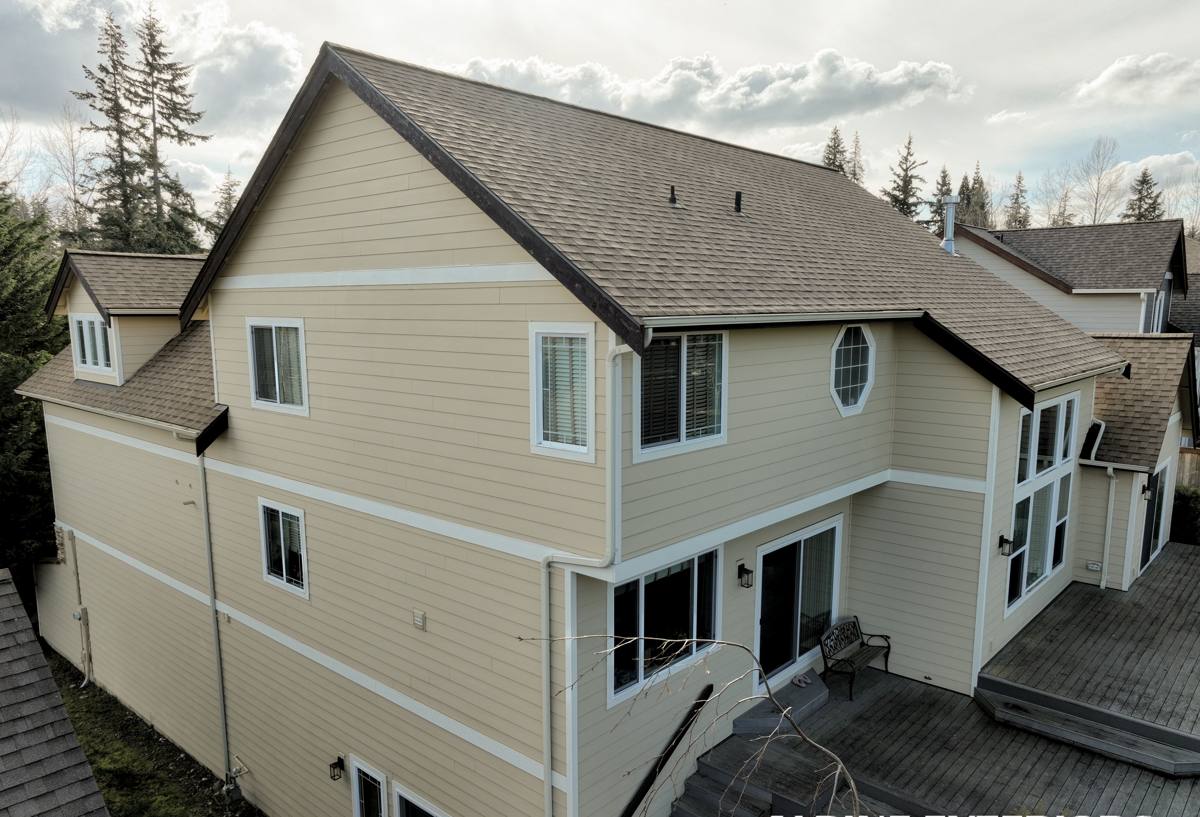
What "Correct" Deck Repair Actually Involves
A lot of deck repair in this region is surface-level: pressure wash the moss off, replace an obviously cracked board, call it done. That approach treats the symptom and leaves the cause in place. A repair that actually holds up here has to look past the visible boards and check the structure underneath, because that's where Bellingham's climate does its real damage.
Structural Components We Always Check
- Ledger board attachment to the house — the single most common point of hidden rot and the source of most serious deck failures
- Support posts and footings for movement, rot at grade level, or undersized concrete contact
- Joists and beams for soft spots, especially where decking boards overlap or where debris collects
- Fasteners and connector hardware for rust, corrosion, or galvanic reaction between mismatched metals
- Flashing at the ledger and any point where the deck meets siding or roofline
- Railing posts for looseness, which is often the first visible sign of rot below the surface
- Stair stringers, a frequent trouble spot because they sit close to grade and shed water poorly
If a repair only replaces what's visibly damaged and skips this list, there's a good chance we'll be back out within a year or two for the same problem in a slightly different spot.
Signs Your Bellingham Deck Needs Attention
Most homeowners call us after noticing one obvious problem — a soft board, a wobbly railing — but decks usually give earlier warnings that are easy to miss if you're not looking for them.
- Boards that feel spongy or flex more than they used to underfoot
- Persistent moss or algae growth that returns within weeks of cleaning
- Gaps opening up between decking boards or around fasteners
- Rust streaks running down from screws, nails, or metal brackets
- A railing that shifts or wiggles when you lean on it
- Discoloration or dark staining where the deck meets the house
- Stairs that feel less solid than the rest of the deck surface
- Standing water that doesn't drain within a few hours after rain
Any one of these on its own might be minor. Two or three together usually means moisture has been working on the structure for a while, and it's worth having someone look underneath before it becomes a safety issue.
Repair or Replace? How We Make That Call
Not every deck problem means starting over, and we don't default to recommending full replacement just because it's a bigger job. The honest answer depends on what we find once we're actually under the deck and testing the wood, not just looking at the surface.
| Factor | Usually Repairable | Usually Needs Replacement |
|---|---|---|
| Rot location | Isolated boards or a single joist | Ledger board, multiple structural members, or posts |
| Age of structure | Under 15 years, built to current code | Older framing, undersized lumber, or no permit on file |
| Fastener condition | Localized rust, hardware still sound | Widespread corrosion throughout the connection system |
| Footings | Solid, properly sized, no movement | Undersized, frost-heaved, or resting on grade |
| Overall footprint | You're happy with the size and layout | You want to change size, shape, or add features |
We'll walk you through what we find in plain terms — where the wood is sound, where it isn't, and what that means for cost and timeline. If a repair genuinely solves the problem, that's what we'll recommend. If patching it would just delay a bigger job, we'll tell you that too, with our reasoning, so you can make the call.
Decking Material Considerations for This Climate
When boards need replacing, the material choice matters more here than in drier parts of the state. Pressure-treated lumber is the budget-friendly standard, but it needs consistent sealing to hold up against Bellingham's rain and moss cycle — skip that maintenance and you're back to square one within a few years. Composite and PVC decking cost more up front but resist moisture and moss growth without ongoing sealing, which is a real advantage in a climate where that maintenance is easy to fall behind on. Cedar is a common regional choice for its natural rot resistance, but it still needs periodic finish maintenance to perform the way people expect. We'll talk through the trade-offs honestly based on your budget and how much upkeep you actually want to commit to, rather than steering you toward whatever's easiest for us to install.
Our Repair Process
1. On-Site Inspection
We start below the deck, not on top of it. That means checking ledger attachment, joists, posts, and footings before we ever talk about which boards need replacing. Surface damage is easy to see; the inspection is where we find what caused it.
2. Written Scope and Estimate
You get a clear breakdown of what's damaged, what's causing it, and what it'll take to fix — with options if there's more than one reasonable path forward. No pressure to upsize the job.
3. Repair or Rebuild the Affected Sections
We replace rotted framing and decking, correct any flashing or drainage issues that contributed to the damage, and upgrade fasteners or hardware where corrosion has been a problem — not just swap like-for-like into the same conditions that caused the failure.
4. Address the Root Cause
If moss buildup, poor drainage, or missing flashing caused the original damage, we fix that too. Replacing boards without correcting the underlying moisture problem just means doing this job again in a few years.
5. Final Walkthrough
We check every repaired connection, confirm railings and stairs are solid, and go over basic maintenance so the repair actually lasts through Whatcom County winters.
Why It Matters to Hire a Crew That Already Works Bellingham
Deck repair looks straightforward from the outside, but the details that matter here are regional. A crew unfamiliar with this area might not think to check for galvanic corrosion between mismatched fasteners near the salt air off the bay, or might not recognize how aggressively moss can undermine a deck surface compared to a drier climate. They also may not be familiar with Bellingham and Whatcom County permitting requirements for structural deck repairs, which can matter for ledger and footing work.
We work in this climate year-round, which means we're not guessing at how a repair will hold up through a wet Pacific Northwest winter — we're basing it on what we've actually seen fail and what's actually held up on decks throughout the area. That local track record is the difference between a repair that solves the problem and one that just buys a little time.
Maintaining Your Deck After the Repair
A good repair job earns you more years out of the deck, but the climate doesn't stop working on it once we leave. A few habits go a long way:
- Clean moss and debris off the surface at least once or twice a year, more often in shaded areas
- Keep gutters and downspouts clear so runoff doesn't drain directly onto the deck
- Reseal or refinish wood decking on the schedule appropriate to the product — don't wait until it's visibly gray
- Check railings for looseness each spring before regular outdoor use ramps up
- Sweep standing leaves and needles off the surface promptly, since trapped organic material holds moisture against the boards
None of this requires much time, but skipping it is exactly how a solid repair turns into a repeat service call a few years down the road.
If your deck has soft spots, a shaky railing, or moss that keeps coming back no matter how often you clean it, we're happy to take a look. Reach out for a free, no-pressure estimate — we'll tell you honestly what we find and what it'll take to fix it right.