 Chuckanut Exterior
 Exterior Work Built for Samish's Waterfront Climate
Samish sits in one of the more demanding exterior environments in Whatcom County. Homes here deal with a combination most inland neighborhoods never see at the same intensity: salt-laden air rolling off Chuckanut Bay and the greater Salish Sea, wind-driven rain that hits siding and trim at an angle instead of falling straight down, and a moss and algae season that can stretch for the better part of the year under the region's tree cover and cloud ceiling. Any one of those factors is manageable. Together, over years, they separate exteriors that were built and installed correctly from exteriors that weren't.
Chuckanut Exterior Company works this stretch of Whatcom County regularly, which means we're not guessing at how a product or an installation detail will hold up here — we're applying what we've already seen play out on homes with the same exposure. That local knowledge shapes every recommendation we make, from the products we install to how we flash and seal the details that matter most.
What Salt Air and Coastal Exposure Do to a Home
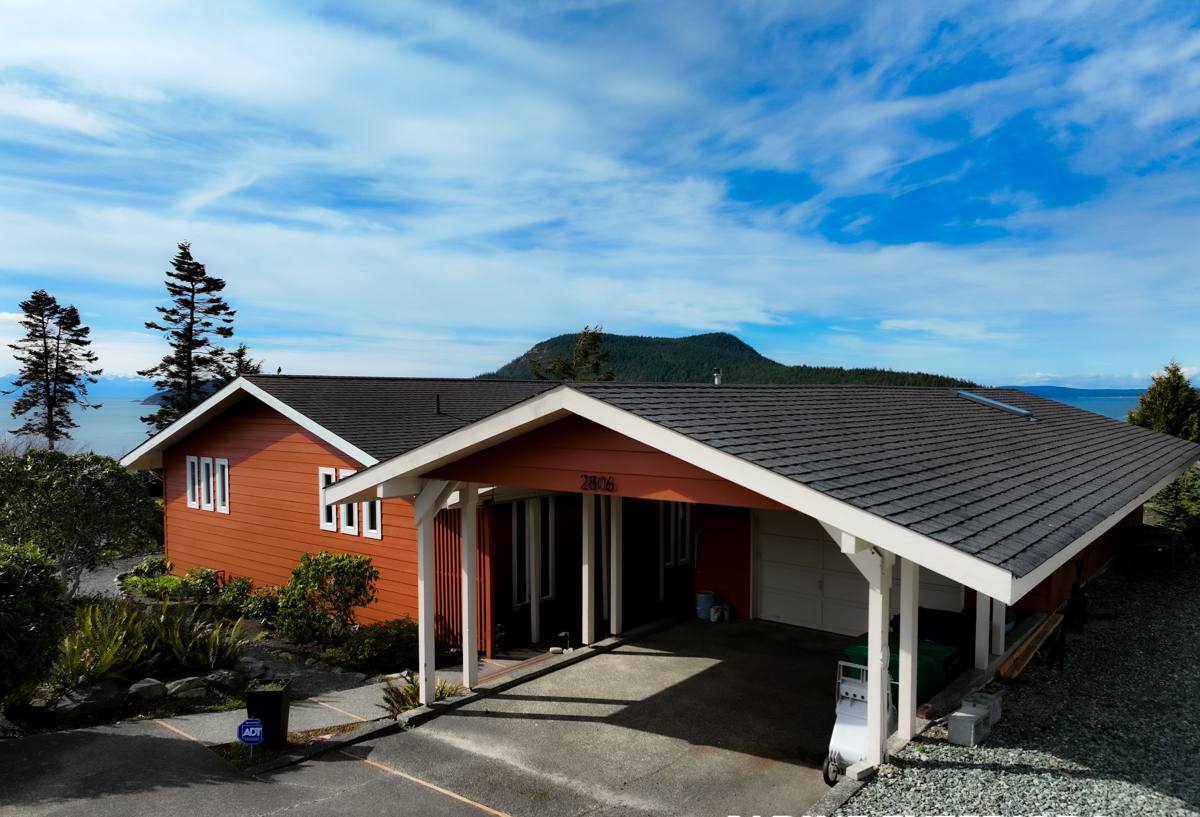
Proximity to saltwater changes the math on exterior durability. Salt-laden moisture is more corrosive to fasteners, flashing, and metal components than plain rainwater, and it accelerates the breakdown of finishes that aren't engineered to resist it. Homes closer to the water tend to show fastener corrosion, paint failure, and finish chalking sooner than homes even a few miles inland with otherwise similar exposure.
This is one of the reasons material choice matters as much as workmanship. A siding product with a weak factory finish, or fasteners that aren't corrosion-resistant, will show its age faster in a place like Samish than it would in a drier, saltwater-free part of the state.
Wind-Driven Rain and Wall Assemblies
The Chuckanut area doesn't just get a lot of rain — it gets rain pushed sideways by wind coming off the water, which means siding, trim, and window flashing have to shed water horizontally, not just vertically. Wall assemblies that rely on caulk alone to keep water out, rather than proper flashing, drainage planes, and overlaps, tend to fail here faster than they would in calmer, drier climates. Correct installation detailing at every penetration, seam, and transition isn't optional in this environment — it's the difference between a wall that stays dry and one that slowly rots from the inside.
Moss, Algae, and the Long Wet Season
Between the tree cover common in and around Samish and the extended stretches of overcast, damp weather typical of Whatcom County, moss and algae growth on roofs and north-facing siding is a near-constant maintenance issue rather than an occasional one. Moss holds moisture against roofing and siding surfaces, which shortens the service life of both if it's left unaddressed. It also tends to find and exploit any gaps in flashing or shingle coverage that a drier climate would never expose.
Roofing systems here benefit from material choices and installation practices that account for sustained moisture exposure — proper ventilation, correct underlayment, and attention to valleys and transitions where debris and moisture collect. Siding that resists moisture absorption at the material level, rather than relying solely on a surface coating, holds up better over time in this kind of climate.
Our Services in the Samish / Chuckanut Area
Siding
We install James Hardie fiber cement siding exclusively. It's a non-combustible product engineered in specific formulations for different climate zones, with a factory-applied ColorPlus finish designed to resist fading and hold up under sustained moisture exposure — a meaningful advantage in a salt-air, high-rainfall environment like Samish. We do not install vinyl, LP SmartSide, Cemplank, Allura, or wood siding, and we're glad to walk homeowners through exactly why, product by product, when the topic comes up.
Roofing
Roof installation and repair work sized to what coastal Whatcom County actually throws at a roof: sustained rain, wind exposure, and heavy moss pressure. We focus on ventilation, underlayment quality, and flashing details at valleys, penetrations, and transitions — the spots where most roof leaks in this climate actually start.
Windows
Window replacement addresses two things at once in this area: energy performance and water management. A window that isn't flashed correctly into the wall assembly can undermine an otherwise sound exterior, so we treat window installation as an extension of the siding and moisture-management work, not a separate trade.
Decks
Decks in the Samish area take on near-constant dampness for large parts of the year, which makes drainage, ledger flashing, and material selection especially important for long-term safety and appearance. We build and repair decks with those coastal conditions in mind rather than treating them as a dry-climate build.
Why a Local Crew Matters Here
Coastal Whatcom County exteriors aren't a generic build. A crew that primarily works dry, inland climates can still do competent work, but they won't have the same instinct for where wind-driven rain finds gaps, how fast moss establishes on a north-facing wall near tree cover, or which flashing details matter most a few hundred yards from saltwater. Working this area regularly means we see how our own installations perform over years in exactly these conditions, and we adjust based on what actually holds up — not just what a spec sheet says should work.
Why We Install Only James Hardie Fiber Cement
We standardized on James Hardie siding because it's the product that best matches the demands of this climate. It's a factory-engineered fiber cement system, not a field-painted or coating-dependent product, which matters when a home is regularly exposed to salt air and driving rain. Hardie's HZ5 product line in particular is engineered for the kind of exposure common along the Pacific Northwest coast — freeze-thaw cycling, sustained moisture, and wind-driven rain.
We don't install vinyl siding, LP SmartSide, Cemplank, Allura, or primed wood siding on the homes we work on. Each of those products has legitimate uses and reasonable performance in the right setting — this isn't a claim that they're poor products in general. Our decision comes down to the specific combination of factors coastal Whatcom County exteriors face: sustained moisture exposure, salt air, and long moss seasons, and how each product's maintenance requirements, moisture behavior, and warranty structure hold up against that combination over the long run. James Hardie is the product we're willing to stand behind on homes in this area, and it's the only one we install.
Cost Factors for Exterior Work in a Coastal Climate
| Factor | Why It Affects Cost |
|---|---|
| Wall complexity and access | More corners, gables, and transitions mean more flashing detail work, which takes time to do correctly |
| Existing moisture damage | Repair or replacement of rotted sheathing found during tear-off adds material and labor |
| Roof pitch and moss buildup | Steeper roofs and heavier moss coverage require more careful, slower work |
| Material selection | Fiber cement siding, factory-finished trim, and quality flashing cost more upfront than lower-tier materials but reduce long-term maintenance |
| Window count and flashing needs | Each window opening needs proper flashing integration with the surrounding wall assembly |
What to Check Before Hiring an Exterior Contractor Near the Water
- Ask whether the crew has worked on homes with similar water proximity and exposure, not just general regional experience
- Confirm they can explain their flashing and moisture-management approach in plain terms, not just the finished material
- Verify current licensing, bonding, and insurance directly rather than taking a business card at face value
- Ask how they handle moss and algae growth during installation planning, especially on shaded or north-facing walls
- Get a written scope that specifies materials, including manufacturer and product line, not just "siding" or "roofing" as line items
- Ask about warranty coverage on both materials and labor, and get it in writing
Planning Exterior Work in Samish
Whether you're dealing with siding that's starting to show its age, a roof that's fighting a losing battle with moss, windows that let in more draft and moisture than they should, or a deck that needs rebuilding with better drainage, the starting point is the same: an honest look at what your home's exterior is actually facing in this climate, not a generic assessment. Homes in Samish and the surrounding Chuckanut area deal with a specific mix of salt air, wind-driven rain, and sustained dampness, and the right fix accounts for all three.
If you'd like a straightforward look at your home's exterior and what it would take to get it holding up the way it should in this climate, we're happy to come out for a free, no-pressure estimate — no obligation, just an honest assessment.