 Chuckanut Exterior
 Why Bellingham Homes Are Hard on Siding
Bellingham sits where marine air off the Salish Sea meets a long, wet Pacific Northwest winter. That combination is tougher on exterior siding than most homeowners realize. Salt-laden air drifting off Bellingham Bay accelerates corrosion on fasteners and trim metal. Driving rain, often pushed sideways by wind off the water, finds every gap in a poorly lapped or under-caulked siding job. And in the shaded, tree-lined neighborhoods common around Bellingham, moss and algae get a long growing season — sometimes eight or nine months of the year when conditions stay damp enough to support growth.
None of this means siding is doomed here. It means the material and the installation both have to be matched to the climate, not just picked off a shelf. A siding job that would hold up fine in a dry inland climate can fail early in Whatcom County if it wasn't designed for constant moisture cycling.
What Bellingham Siding Actually Needs
Moisture Management First
The single biggest predictor of siding failure in this region isn't the siding material itself — it's what's happening behind it. Water-resistive barriers, proper flashing at every window and door, and a drainage plane that lets incidental moisture escape rather than pool are what separate a siding job that lasts decades from one that rots out in ten years. This matters more in Bellingham than in drier climates because the margin for error is smaller; wall assemblies here rarely get a long dry spell to recover from a moisture mistake.
Material That Doesn't Absorb Water
Wood-based and wood-adjacent siding products absorb moisture at their core, which is a serious liability in a climate that stays damp for months at a stretch. Fiber cement, by contrast, is dimensionally stable and doesn't swell, cup, or rot the way wood-based products can when they take on repeated moisture cycling.
Resistance to Moss and Algae Growth
Shaded siding in Bellingham's tree-covered neighborhoods needs a factory finish that resists the buildup of surface moss and algae, and a surface that can be gently cleaned without damaging the paint. Field-applied paint on porous substrates tends to lose that resistance faster than a baked-on factory finish.
Why We Install James Hardie Fiber Cement — and Nothing Else
Chuckanut Exterior Company installs James Hardie fiber cement siding exclusively. We don't install vinyl, LP SmartSide, Cemplank, Allura, primed spruce, or cedar. That's a deliberate standard, not a sales preference, and it's worth explaining why.
- Non-combustible core: Fiber cement doesn't contribute fuel to a fire the way wood-based sidings can, which matters for both safety and insurance considerations.
- Dimensional stability in wet climates: Hardie board doesn't swell, delaminate, or absorb water at the rate wood-based composites do, which is exactly the failure mode our climate punishes hardest.
- ColorPlus factory finish: A baked-on finish applied under controlled conditions holds up better against UV, moss, and moisture than field-applied paint, and it's backed by its own finish warranty.
- Climate-engineered product lines: Hardie's HZ5 product line is engineered specifically for cold, wet, freeze-prone climates like ours — it's not a one-size-fits-all product.
- Strong, transferable warranty: Hardie's warranty structure is well established and transfers to a new owner if the home sells, which matters for resale in a market like Bellingham's.
Vinyl siding is inexpensive and low-maintenance in the sense that it doesn't need painting, but it's also more prone to cracking in cold snaps, fading over time, and it can't be repainted to refresh a home's look. LP SmartSide and similar engineered wood products use a wood-strand core that, while treated, still relies on an intact outer seal to keep moisture out over the long run — a seal that field conditions, installation quality, and decades of weather exposure can compromise. Cedar and primed spruce are attractive materials with a long history, but they require ongoing maintenance — periodic painting or staining, and vigilance against rot — that a lot of homeowners don't want to sign up for on a multi-decade basis. We'd rather stand behind one product system we trust completely than install several we have reservations about.
What a Correct Siding Installation Involves
Installing James Hardie siding correctly is not the same as installing it quickly. Manufacturer specifications exist for a reason, and skipping steps is the single most common cause of premature siding failure — regardless of which brand is on the wall.
Before the Siding Goes On
- Remove old siding down to the sheathing and inspect for hidden rot or moisture damage
- Repair or replace any compromised sheathing before moving forward
- Install a code-compliant weather-resistive barrier, properly lapped shingle-style
- Flash every window, door, and penetration so water sheds outward, not inward
- Confirm proper clearance between siding and grade, decks, and roof lines
During Installation
- Follow Hardie's specified fastener type, spacing, and placement
- Maintain correct minimum overlap on lap siding courses
- Caulk and seal only where Hardie's install guide calls for it — over-caulking traps moisture just as under-caulking lets it in
- Cut and seal panel edges properly to prevent moisture wicking
Every one of these steps matters more in a climate like Bellingham's, where the siding will spend months at a time exposed to sustained damp conditions. A shortcut that might go unnoticed for years in a dry climate can show up as a moisture problem within a single wet season here.
Our Process for Bellingham Homes
1. On-Site Assessment
We start with a walk-around of the home, checking existing siding condition, trim, flashing, and any signs of past moisture intrusion — especially around windows, decks, and roof-to-wall transitions, which are common problem areas in this climate.
2. Product and Color Selection
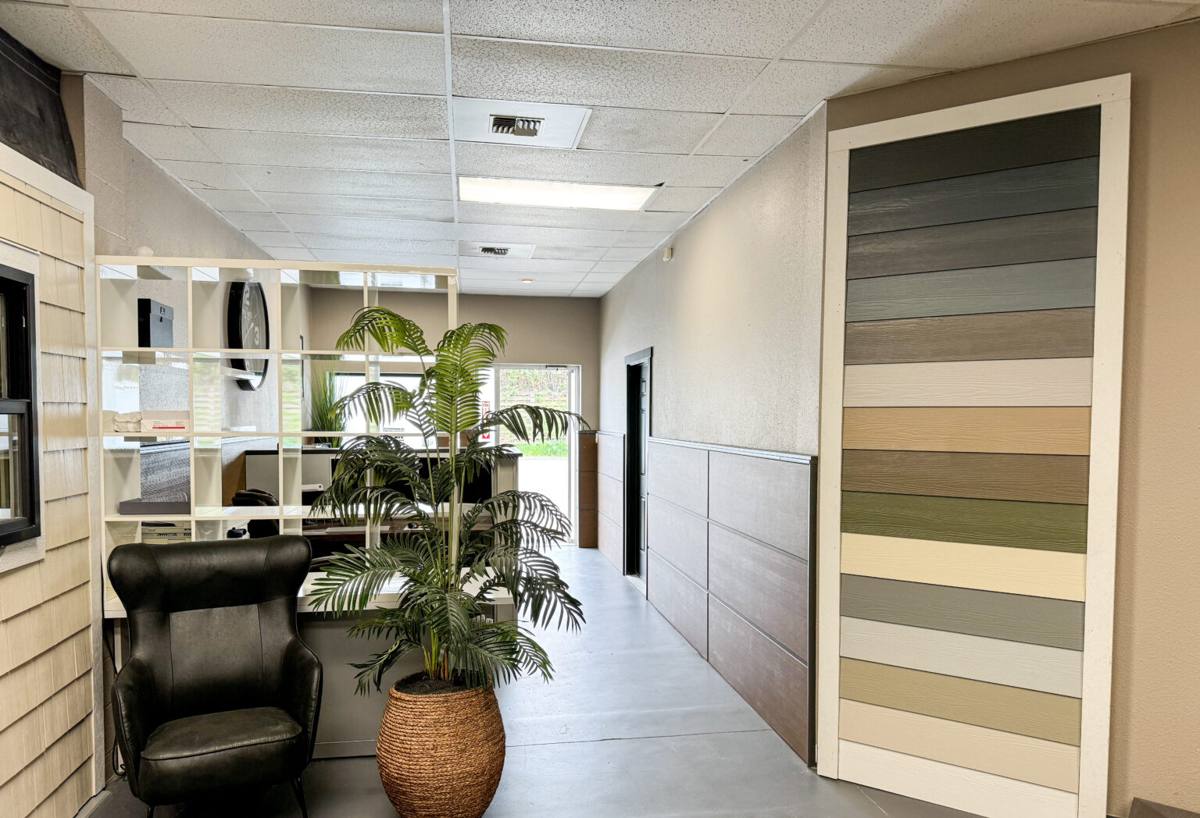
We walk homeowners through the relevant Hardie product line and ColorPlus color options, factoring in sun exposure, tree cover, and how much moss resistance and low-maintenance performance matter for that specific property.
3. Tear-Off and Sheathing Check
Old siding comes off, and we inspect the sheathing underneath before anything new goes up. This is the point where hidden moisture damage, if any exists, gets found and addressed — not covered over.
4. Weather Barrier and Flashing
We install the weather-resistive barrier and flash all penetrations to manufacturer and code specifications, prioritizing the drainage plane that keeps incidental moisture moving out rather than in.
5. Installation to Spec
Siding goes on following Hardie's fastening, spacing, and sealing requirements — not shortcuts that speed up the job at the expense of long-term performance.
6. Final Walkthrough
We review the finished job with the homeowner, covering basic care and what to expect from the ColorPlus finish over time.
Comparing Siding Options for a Bellingham Climate
| Factor | James Hardie Fiber Cement | Vinyl | Wood-Based Products (cedar, engineered wood) |
|---|---|---|---|
| Moisture absorption | Very low | Low (but can trap moisture behind it if installed poorly) | Higher — core material can absorb water over time |
| Fire resistance | Non-combustible | Combustible | Combustible |
| Moss/algae resistance | Factory finish resists buildup | Can support surface growth in shaded, damp areas | Prone to moss and mildew without regular maintenance |
| Maintenance | Occasional wash; repaint decades out | Low, but can't be effectively repainted | Regular painting/staining and rot vigilance required |
| Cold-climate durability | HZ5 line engineered for freeze-prone regions | Can become brittle and crack in cold snaps | Variable; depends on species and treatment |
| Warranty | Strong, transferable manufacturer warranty | Varies by manufacturer | Typically limited or workmanship-only |
Why Local Experience with Bellingham Homes Matters
A siding crew that only occasionally works in coastal Whatcom County can miss the details that matter here — the right flashing details for driving, wind-blown rain, the clearance needed near shaded, moss-prone areas, and the fastening adjustments that make sense for a marine climate. A crew that works Bellingham regularly has already seen what goes wrong when those details get skipped, because they've been called back to fix other contractors' shortcuts. That experience shows up in fewer callbacks and siding that actually performs the way it's supposed to for the life of the warranty.
Signs Your Current Siding May Be Failing
- Soft or spongy spots when pressed, especially near the bottom courses or around windows
- Visible warping, buckling, or gaps between siding panels
- Persistent moss or algae staining that returns quickly after cleaning
- Peeling or bubbling paint, particularly on north-facing or shaded walls
- Water stains or discoloration on interior walls near exterior siding
- Visible rot at trim, corners, or butt joints
If you're seeing any of these signs on a Bellingham home, it's worth having the siding and the wall assembly behind it inspected before small problems become expensive ones.
Get a Straightforward Estimate
If you're considering new siding for a home in the Bellingham area, we're happy to take a look and walk you through what we'd recommend and why. There's no pressure and no obligation — just a straight assessment from a crew that installs one product system and knows it well. Use the form below to request a free estimate.