 Chuckanut Exterior
 Exteriors Built for Columbia's Coastal Conditions
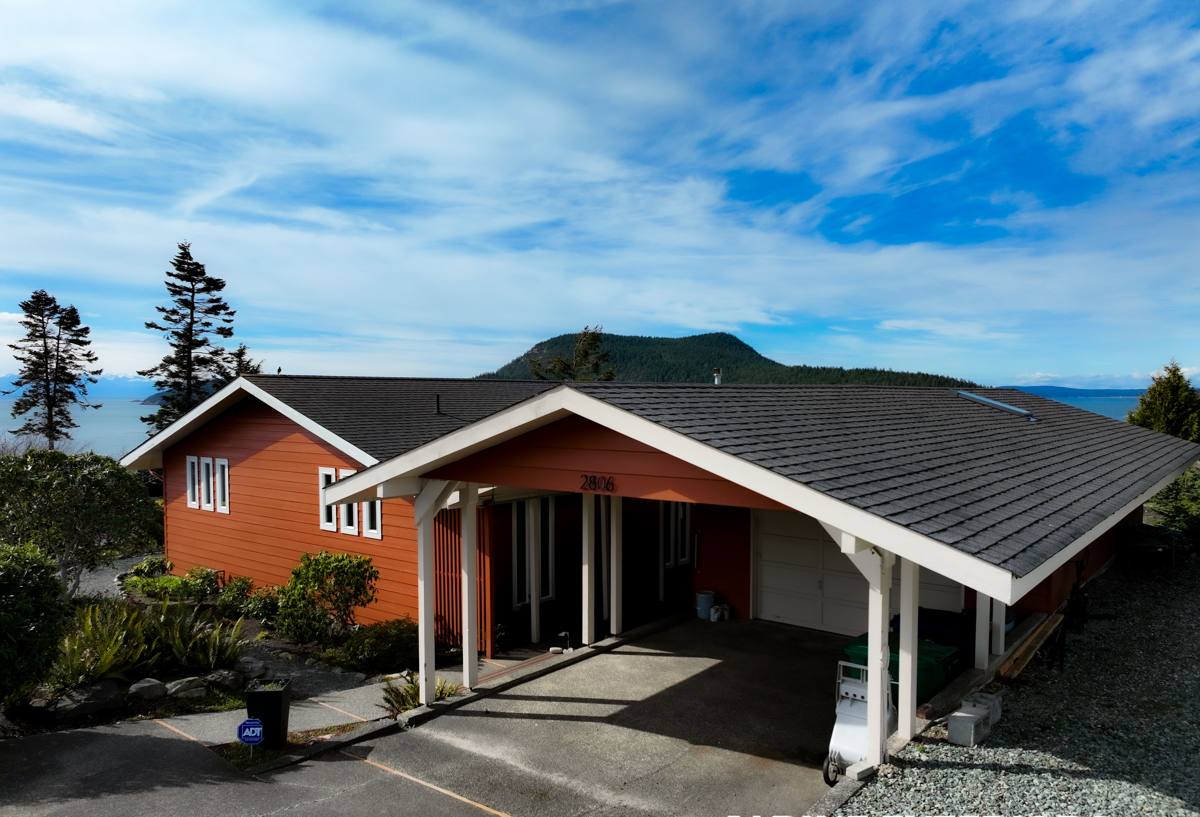
Homes in the Columbia area sit close enough to the water and the wooded slopes above Chuckanut that they take on a specific mix of punishment most inland Whatcom County houses never see. Salt-laden air drifts in off the water and settles on siding, trim, and metal fasteners. Driving rain comes in sideways during winter storms, finding its way into every gap a builder left loose. And the long, wet moss season here starts earlier and lasts longer than it does just a few miles inland, working its way into roof valleys, siding laps, and deck boards from October through May. None of this is exotic — it's just the normal cost of living somewhere beautiful. But it means an exterior that's built or repaired without that reality in mind will show its age fast.
We work this stretch of Whatcom County regularly, which means we're not guessing at what Columbia homes need. We're applying the same lessons learned on the last house down the road to yours.
What Salt Air, Rain, and Moss Actually Do to a House
Salt Air
Airborne salt is corrosive to fasteners, flashing, and any exposed metal on a home's exterior. Over years, it accelerates rust at nail heads, screws, and hardware — especially on the water-facing side of a house. It also degrades paint and lesser siding finishes faster than manufacturers' published life expectancies assume, because those numbers are usually based on inland test conditions.
Driving Rain
Wind-driven rain doesn't just fall — it gets pushed sideways and upward under laps, around window flanges, and behind poorly sealed trim. A house that would stay dry in a calm rain can still take on water during a real Pacific storm system if the water-resistive barrier, flashing, and siding overlaps weren't detailed correctly the first time.
Moss and Sustained Moisture
Moss doesn't just grow on roofs for looks — it holds moisture against shingles, siding, and decking far longer than the surrounding air would otherwise allow. That extended dampness is what actually causes damage: wood rot, granule loss on roofing, and premature failure of lesser siding products that weren't engineered to shed water quickly.
Siding: Why We Standardized on One Product
We install James Hardie fiber cement siding exclusively. We don't install vinyl, LP SmartSide, cedar, primed spruce, or other fiber cement brands, and that's a deliberate standard, not a lack of options. In a climate like Columbia's, siding has to handle constant moisture cycling, occasional salt exposure, and long stretches without much drying time between rain events. Fiber cement is non-combustible and dimensionally stable in a way wood-based and engineered-wood products aren't, and it doesn't have the seams and expansion issues that make vinyl a poor match for driving rain and temperature swings.
Hardie's ColorPlus factory finish is baked on under controlled conditions, which holds up better against UV and salt exposure than field-applied paint, and it comes with a longer, transferable finish warranty than most site-painted systems. Hardie also makes climate-specific HZ product lines engineered for exactly this kind of Pacific Northwest moisture exposure. When we quote a siding job in Columbia, that's the product going on the house — every time, for every homeowner.
Roofing Considerations for This Area
Roofs here fight moss, moisture retention, and wind in combination, not one at a time. A roof that's technically sound can still fail early if moss is left to build up in valleys and along butt joints, holding water against the roofing material long after a storm has passed. Ventilation matters more here too — a poorly ventilated attic traps humid air that condenses against the roof deck from below, which shows up as hidden rot years before it's visible from the ground.
When we look at a roof in this area, we're checking flashing details around chimneys, skylights, and valleys first, since that's where driving rain finds its way in. Moss growth patterns tell us a lot about where a roof is staying wet too long, which is often the first sign of a ventilation or slope problem rather than just a cosmetic issue.
Windows: Sealing Out Wind-Driven Rain
Older windows in this area often show their age through fogging between panes, soft trim, or drafts that get noticeably worse during winter storms. Wind-driven rain exploits any gap in a window's flashing or the seal between the window unit and the wall, and salt air accelerates corrosion on aluminum and lesser vinyl hardware over time. Replacement windows installed with proper flashing integration — tied correctly into the water-resistive barrier and siding — stop that path entirely rather than just slowing it down.
We treat window replacement as an integration job, not just a swap. The flashing details around a new window matter as much as the window itself, especially on walls that take direct weather.
Decks: Fighting Moss and Rot at the Source
Decks in Columbia deal with the same extended dampness that affects roofs, plus direct ground contact and standing water risk if drainage wasn't planned into the original build. Moss and algae on deck boards aren't just a slip hazard — they hold moisture against the wood surface for weeks at a time during the wet season, which is what actually drives rot, not the rain itself. Ledger board flashing where a deck meets the house is one of the most common failure points we find, since water intrusion there can go unnoticed until structural damage has already started.
A deck built or rebuilt for this climate needs proper gapping for drainage, correct ledger flashing, and hardware rated for the moisture and occasional salt exposure this area sees — not just whatever fastener came with the lumber package.
Comparing Exterior Material Options for This Climate
| Material | Moisture Behavior Here | Salt Air Resistance | Maintenance Burden |
|---|---|---|---|
| James Hardie fiber cement | Dimensionally stable, sheds water well | Factory finish holds up well | Low — occasional wash |
| Vinyl siding | Can warp/gap with temperature swings | Fasteners and trim can corrode over time | Low, but limited repair options |
| Cedar / primed wood | Absorbs moisture, needs consistent sealing | Finish degrades faster near salt air | High — regular refinishing |
| Engineered wood (LP SmartSide) | Sensitive to sustained moisture at joints/edges | Moderate, finish-dependent | Moderate — edge sealing matters |
This table reflects general material behavior, not a specific product's rated performance — always check current manufacturer specs before deciding. It's also why our own standard for this region is fiber cement rather than the alternatives.
Signs a Columbia Home's Exterior Needs Attention
- Moss buildup in roof valleys or along the shaded side of the house
- Soft or discolored siding near ground level or under windows
- Green or black staining on deck boards that doesn't wash off easily
- Drafts or fogging around older windows during winter storms
- Rust streaks below fasteners, flashing, or gutter hardware
- Peeling or bubbling paint on wood trim or siding
- Water stains on interior ceilings near roof valleys or chimneys
Any one of these on its own might be minor. Several showing up together usually means moisture has been sitting somewhere it shouldn't for a while.
Why a Local Crew Matters Here
A crew that only works inland, or only works occasionally in Whatcom County, doesn't build the pattern recognition that comes from seeing the same climate conditions repeat house after house. We know which walls in this area take the worst of the driving rain, where moss tends to establish first on a roof, and which deck details fail earliest when they're not built for sustained dampness. That's not a marketing point — it's the practical difference between a crew guessing at a spec sheet and a crew that's already seen how a product or detail performs in exactly this weather.
Being local also means we're not disappearing after the job. If something needs a follow-up look during the first wet season, we're still working in the neighborhood.
Our Process for Columbia Projects
Every project starts with a walk-around assessment of the whole exterior — siding, roofing, windows, and decking — rather than looking at just the one component a homeowner called about. Problems in this climate rarely stay isolated; a roof moss issue can point to ventilation problems that also affect siding moisture levels, for example. From there we put together a written scope and honest cost range before any work begins, and we explain the reasoning behind material choices rather than just naming a brand.
If your home is due for new siding, a roof inspection, window replacement, or deck work, we're glad to take a look and put together a free, no-pressure estimate — no obligation, just a straight assessment of what your exterior actually needs.