 Chuckanut Exterior
 Why Bellingham Roofs Wear Differently Than Roofs Inland
Asphalt shingles perform differently depending on where they're installed, and Bellingham sits in a spot that stresses them in more than one way at once. Homes near Bellingham Bay and the surrounding Puget Sound shoreline deal with a steady drift of salt-laden air that slowly breaks down exposed metal fasteners, flashing, and shingle granules faster than the same products would wear in a dry inland climate. Layer on top of that the region's long stretch of driving rain, where wind pushes water sideways under shingle tabs instead of letting it run straight off, and you get a roof that's being tested at the edges and laps far more than the manufacturer's lab numbers assume.
Then there's moss. Whatcom County's mild, wet winters and shaded, tree-covered lots give moss and algae months at a time to take hold on north-facing slopes and anywhere shingles stay damp longer than a few hours after a storm. None of this means asphalt shingles are a poor choice here — they're still the most practical, cost-effective roofing material for the vast majority of Bellingham homes. It means the installation details that get glossed over in drier climates can't be skipped here, and the maintenance schedule needs to account for moss and moisture, not just age.
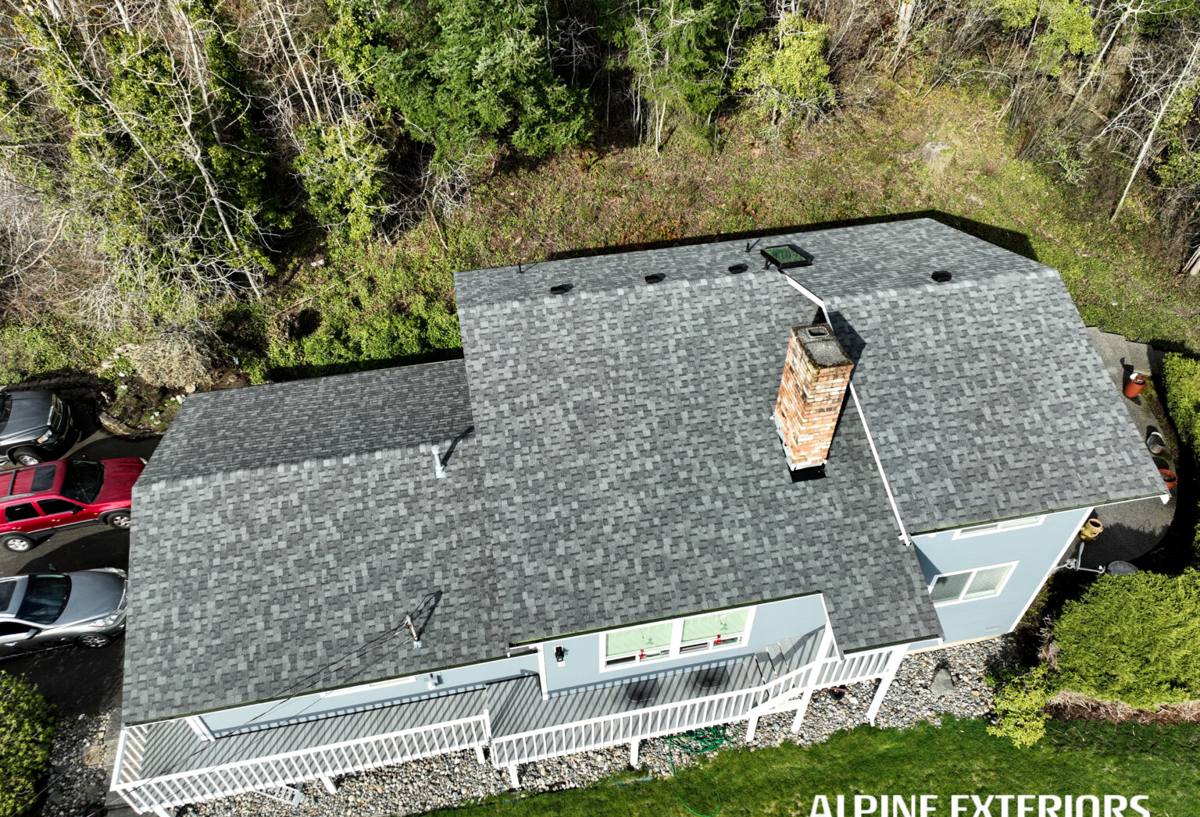
What a Bellingham Roof Actually Needs From an Asphalt Shingle System
Moisture Management, Not Just Shingles
A shingle roof isn't one product, it's a system, and in a climate like this the parts underneath the shingles matter as much as the shingles themselves. Self-adhering ice-and-water membrane at eaves, valleys, and around every penetration gives the roof a second line of defense when wind-driven rain gets past the shingle surface — which it eventually will, on every roof, given enough years of Pacific storms. Synthetic underlayment across the rest of the deck sheds water more reliably than old-style felt and holds up better through the wet install season, which in Bellingham can stretch longer than contractors in drier regions are used to planning around.
Attic Ventilation and Moss Resistance
Balanced intake and exhaust ventilation keeps attic humidity down, which matters twice over here: it protects the roof deck from the inside, and it reduces the cool, damp conditions moss and algae favor on the outside. Algae-resistant shingles, which use copper- or zinc-infused granules, are worth the modest upcoding cost on most Bellingham homes, especially anything with shade from mature trees or a north-facing slope that rarely sees direct sun.
What a Correct Asphalt Shingle Installation Involves
A lot of roofing problems we get called out to fix in Whatcom County aren't shingle failures — they're installation shortcuts that only show up after a few wet winters. A correct job, on any home, follows the same core sequence:
- Full tear-off and deck inspection. Layering new shingles over old hides rot, doesn't allow a flat nailing surface, and voids most manufacturer warranties. We pull everything down to the deck and replace any soft, delaminated, or water-stained sheathing before anything new goes on.
- Drip edge and starter strip at every eave and rake. This is the detail most often skipped on lower-cost jobs, and it's the first thing that fails when wind-driven rain hits the roof edge.
- Ice-and-water membrane at vulnerable points. Eaves, valleys, skylight curbs, and chimney penetrations get self-adhering membrane before the underlayment goes down, not as an afterthought around them.
- Synthetic underlayment across the full deck. Properly lapped and fastened per the manufacturer's spec, not just stapled down quickly to get shingles on before the next rain.
- Correct nailing pattern. Four to six nails per shingle, placed in the manufacturer's nailing zone — not the adhesive strip — driven flush, not overdriven or underdriven. This single detail affects wind rating more than almost anything else in the job.
- Flashing at every wall, chimney, and valley. New step flashing and counterflashing, not caulk smeared over old rusted metal.
- Ridge venting integrated with the intake system. A ridge vent with no matching soffit intake doesn't ventilate the attic properly — it just moves the air around the top few feet of the roof.
Comparing Shingle Options for Bellingham Homes
Not every asphalt shingle is built the same, and the right choice depends on the home's exposure, roof slope, and how much of a factor moss and salt air have historically been on that property. Here's how the common options stack up for this climate specifically:
| Shingle Type | Typical Lifespan Here | Best For | Trade-Offs |
|---|---|---|---|
| 3-tab asphalt | 15-20 years | Budget-conscious re-roofs, rental properties | Lower wind rating, less algae resistance unless specified, flatter appearance |
| Architectural (laminate) | 25-30 years | Most Bellingham homes | Higher upfront cost than 3-tab, but far better wind and impact performance for the price |
| Algae-resistant (AR) upgrade | Same as base shingle | Shaded lots, north-facing slopes, waterfront properties | Small cost add-on; doesn't eliminate moss but slows algae staining significantly |
| Impact-resistant (Class 4) | 30+ years | Homes wanting maximum durability and possible insurance credit | Highest material cost; insurance discounts vary by carrier and should be confirmed before assuming savings |
For most Bellingham properties, we recommend an architectural shingle with the algae-resistant upgrade as the practical baseline — it's the point where cost, durability, and moss resistance line up best for this specific climate, without paying for impact-resistance most homes here don't need given the storm profile.
Reading the Warning Signs: Repair or Replace?
Homeowners often wait too long to call because a few missing granules or a small moss patch doesn't look urgent. Some issues are cosmetic and some are structural, and telling them apart early saves money. This is a general guide, not a diagnosis — every roof still needs an in-person look before we recommend a direction.
| What You See | Likely Cause | Typical Urgency |
|---|---|---|
| Granules collecting in gutters | Normal aging or hail impact | Low, unless sudden and widespread |
| Moss on north-facing slopes | Shade, moisture retention, poor airflow | Moderate — treat before it lifts shingle edges |
| Curling or cupped shingle edges | Age, heat cycling, poor attic ventilation | Moderate to high depending on extent |
| Dark streaking (not moss) | Algae growth, common on shaded or coastal homes | Low to moderate, mostly cosmetic |
| Soft spots or sagging deck | Underlying rot from long-term moisture intrusion | High — schedule an inspection soon |
| Daylight or staining in the attic | Active leak at flashing, valley, or worn shingles | High — don't wait for the next storm |
Ongoing Care: What Keeps a Bellingham Shingle Roof Healthy
A well-installed roof still needs a bit of seasonal attention in a climate this wet. None of this is complicated, but it's the kind of maintenance that gets skipped and then shows up as a bigger bill later.
- Clear gutters and downspouts before the fall rains start, and again mid-winter if the property has overhanging trees
- Have moss treated or gently removed before it thickens enough to lift shingle tabs — don't pressure wash, it strips granules and shortens shingle life
- Check attic ventilation isn't blocked by insulation piled against soffit vents
- After any significant windstorm, do a visual check from the ground for lifted or missing shingles
- Keep tree limbs trimmed back from the roofline to reduce shade, debris, and abrasion
- Have flashing around chimneys and skylights inspected every few years, since these are the first points to fail, not the shingle field itself
How Our Process Works
We keep the process straightforward because homeowners are usually dealing with a roof problem for the first time in years and don't need it made more complicated than it is.
Inspection and Estimate
We look at the roof from the ground and, when needed, get up on it to check the deck, flashing, ventilation, and any moss or algae conditions specific to that property's exposure. The estimate breaks out material, labor, and any deck repair contingencies in plain terms, so there's no surprise change order mid-project.
Installation
Tear-off, deck repair, underlayment, flashing, shingles, and ventilation go in following the sequence described above, with daily cleanup so the property isn't left with exposed decking overnight during an active weather system. We track the marine forecast closely during installation windows, which matters more here than in drier parts of the state.
Final Walkthrough
We walk the finished roof and the property perimeter with the homeowner, covering what warranty applies, what maintenance we recommend given the specific site conditions, and what to watch for in year one.
Why Local Experience in Whatcom County Matters
A crew that only occasionally works this area tends to treat Bellingham like any other Western Washington job — same specs, same shingle line, same ventilation plan regardless of whether the home sits three blocks from the water or up a shaded hillside lot. A crew that works here regularly makes different calls by default: heavier ice-and-water coverage on homes exposed to Chuckanut Drive corridor winds, algae-resistant shingles as the standard recommendation rather than an upsell, and flashing details sized for driving rain rather than straight-down rain. That local pattern-matching is built from repetition, not a certification — it's the difference between a roof that's adequate and one that's actually suited to this specific stretch of coastline.
It also means faster response when weather causes an emergency. Knowing the area's typical storm timing and access routes matters when a homeowner calls after a windstorm has lifted shingles and rain is getting into the attic that same night.
Get a Straightforward Estimate
If your asphalt shingle roof is showing moss, granule loss, curling edges, or you're just not sure how much life is left in it, we're glad to take a look. We'll give you an honest read on repair versus replacement and a clear estimate with no pressure to decide on the spot — just fill out the form below to get started.