 Chuckanut Exterior
 Exterior Work Built for Silver Beach Conditions
Silver Beach homes sit in one of the more exposed pockets of Whatcom County when it comes to weather. Between salt-laden air, wind-driven rain off the water, and a moss season that can stretch for months, the exterior of a house here works harder than it does in more sheltered inland neighborhoods. We're based in Chuckanut and have spent years working on homes throughout this stretch of the county, so we've seen firsthand what this climate does to siding, roofing, windows, and decks over time — and what it takes to make those systems actually hold up.
This page walks through what we watch for on Silver Beach exteriors, how our services apply to the conditions specific to this area, and why having a local crew — not a regional outfit passing through — matters when the work is done.
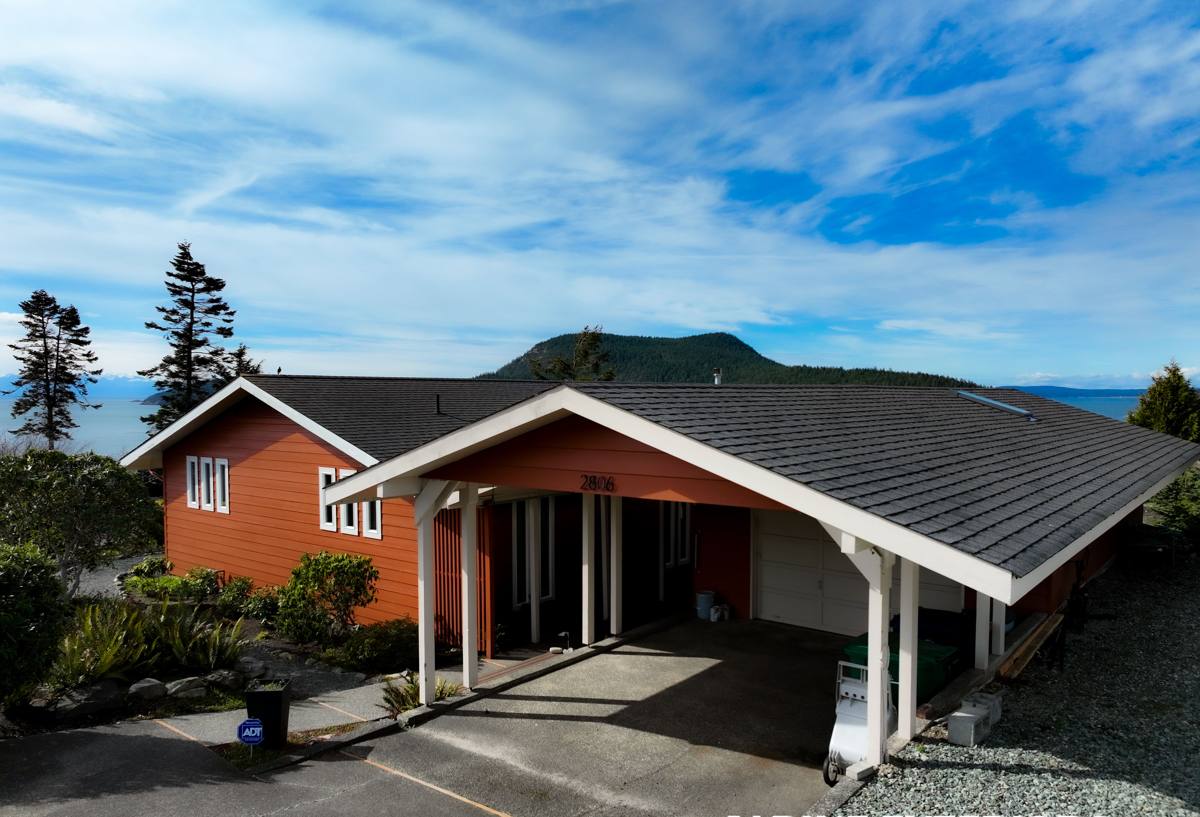
What the Climate Does to a Silver Beach Home
Salt Air and Slow Corrosion
Proximity to the water means airborne salt settles on every exterior surface, not just the parts facing the shoreline. Over years, that salt accelerates corrosion on fasteners, flashing, and metal roofing components, and it breaks down lower-grade paints and coatings faster than they'd wear inland. It's rarely a dramatic failure — it's a slow erosion that homeowners often don't notice until a repair is already overdue.
Driving Rain
Whatcom County gets plenty of rain in general, but wind-driven rain is a different problem than a straight-down downpour. It gets pushed sideways into seams, under trim, and behind poorly lapped siding or flashing. Homes in exposed areas like Silver Beach see more of this than homes tucked behind tree lines or hills, which is why water management details — not just the materials themselves — matter so much here.
A Long Moss Season
Cool, damp, and shaded conditions for much of the year make this a strong environment for moss and algae growth on roofs, decks, and north-facing siding. Left unaddressed, moss holds moisture against surfaces long after a storm has passed, which shortens the life of roofing materials and contributes to rot in wood components. Managing moss isn't cosmetic — it's part of protecting the structure underneath.
Siding: Why Material Choice Matters More Here
We install James Hardie fiber cement siding exclusively. We don't install vinyl, LP SmartSide, Cemplank, Allura, primed spruce, or cedar, and in a climate like Silver Beach's, that decision matters more than it might elsewhere.
- Vinyl can warp and become brittle with repeated freeze-thaw and UV cycling, and its seams give salt-laden moisture more places to work its way in over time.
- Wood siding (cedar, primed spruce) is genuinely attractive but needs consistent, ongoing maintenance to resist rot and moss in a damp, salt-exposed environment — skip a cycle or two of upkeep and it shows fast.
- Engineered wood (LP SmartSide) has improved a lot over the years, but it's still wood-based, which means edge and seam moisture management stays a real, ongoing concern near the water.
- Other fiber cement brands (Cemplank, Allura) are legitimate competitors to Hardie, but we've standardized on one product line so we can guarantee consistent installation quality, finish performance, and warranty support across every job we do.
James Hardie fiber cement is non-combustible, dimensionally stable, and doesn't feed moss or rot the way wood-based products can. Its ColorPlus factory-applied finish is baked on rather than field-applied, which gives it far better resistance to fading and chalking from sun and salt exposure than a job-site paint job. For an area like Silver Beach, that combination of moisture resistance and finish durability is exactly what the climate calls for.
HZ5 Engineering for Coastal Exposure
James Hardie makes climate-specific product lines, and the HZ5 formulation is engineered for regions with more moisture and freeze-thaw cycling — which fits the Pacific Northwest coastal belt well. We spec HZ5 products on homes in exposed areas like Silver Beach as a matter of course, not as an upsell.
Roofing: Managing Moisture and Moss From the Top Down
The roof takes the brunt of both the driving rain and the moss problem. Our roofing work on Silver Beach homes focuses on a few things that matter more here than in drier, more sheltered parts of the county:
- Proper underlayment and flashing details at valleys, penetrations, and eaves, where wind-driven rain finds its way in
- Ventilation that keeps the roof deck dry from underneath, not just protected from above
- Material and installation choices that resist moss colonization, since moss is as much a maintenance issue as it is an installation one
- Gutter and drainage tie-ins that actually move water away from the house rather than letting it pool near the foundation or siding base
A roof that's installed correctly for this climate doesn't just look right on day one — it's still performing the way it should five, ten, and twenty years out.
Windows: Sealing Against Wind-Driven Rain
Window failures in coastal-exposed neighborhoods are rarely about the glass itself — they're almost always about the seal, the flashing, and how the window integrates with the siding around it. A window that's installed without proper flashing integration will eventually let wind-driven rain track behind the trim, and that moisture can sit unnoticed inside the wall assembly for a long time before it shows up as a soft spot or a stain.
When we replace windows, we treat the flashing and integration details as seriously as the window unit itself. That's especially true in an area like Silver Beach, where the water exposure means those details get tested by weather more often than in a typical inland install.
Decks: Built to Handle Salt, Rain, and Shade
Decks in this area deal with a combination most inland decks don't: salt exposure, extended damp periods, and often partial shade from trees or the house itself, which slows drying time after every rain. That combination is exactly what accelerates rot in untreated wood and what makes moss take hold on deck boards and railings.
Good deck work here comes down to material selection suited to the exposure, proper spacing and airflow underneath the structure, flashing where the deck ledger meets the house, and fasteners rated for the moisture and salt conditions. A deck built without those details in mind might look fine for a season or two before problems start showing up in the framing.
Comparing Exterior Material Approaches for This Climate
| Factor | Fiber Cement (James Hardie) | Vinyl | Wood / Engineered Wood |
|---|---|---|---|
| Salt air resistance | Strong — factory finish holds up well | Moderate — can chalk and become brittle over time | Weak to moderate — needs regular maintenance |
| Driving rain / moisture behavior | Dimensionally stable, resists warping | Seams can allow moisture intrusion | Prone to swelling and rot without upkeep |
| Moss/algae resistance | Doesn't feed organic growth | Resistant but can trap moisture at seams | Vulnerable, especially in shaded areas |
| Fire resistance | Non-combustible | Combustible | Combustible |
| Maintenance over 15+ years | Low, with factory finish intact | Low but appearance degrades | High — repainting, sealing, spot repairs |
Why a Local Crew Matters for This Neighborhood
Exterior contractors who don't work this area regularly tend to spec materials and details as if every job were in a dry, sheltered inland location. We work in Whatcom County's coastal-exposed neighborhoods often enough to know that a spec sheet that works fine forty minutes inland can under-perform here. That shows up in things like flashing details, ventilation choices, and how aggressively we recommend addressing moss before it becomes a structural issue rather than a cosmetic one.
Being local also means we're accountable after the job is done. If something needs a look two years down the road, we're not a crew that worked one job in the area and moved on — we're based nearby and plan to be around for the long haul.
A Practical Checklist for Silver Beach Homeowners
- Check north-facing and shaded siding and roof sections for moss buildup at least once a year
- Inspect caulking and trim around windows for gaps after major windstorms
- Keep gutters clear so water isn't backing up against siding or fascia
- Look underneath deck boards periodically for softness, staining, or fastener corrosion
- Have exterior fasteners and flashing checked for corrosion every few years given the salt exposure
- Address small trim or siding gaps promptly — they only get more expensive to fix the longer wind-driven rain has access to them
How We Approach a Silver Beach Project
Every exterior job starts with an honest look at what's actually going on with the home — not an assumption based on age or a quick walk-around. We look at how the house is oriented relative to wind and water exposure, where moss and moisture have already left marks, and which parts of the exterior are due for attention versus which can wait. From there, we build a scope that fits the house and the budget, using James Hardie siding as our standard recommendation because it's what we trust to perform in this specific climate over the long term.
If you're in Silver Beach and dealing with tired siding, a roof that's showing its age, drafty windows, or a deck that needs more than a pressure wash, we're happy to come take a look. We offer free, no-pressure estimates — fill out the form below and we'll get in touch to schedule a time that works.