 Chuckanut Exterior
 Why This Decision Trips Up So Many Homeowners
Nobody wakes up excited to think about their roof. Most homeowners in Chuckanut only start paying attention when there's a stain on the ceiling, a shingle in the yard after a windstorm, or a roofer knocking on the door after a hailstorm two counties over. By then, the question isn't "should I think about my roof" — it's "do I need a patch or a whole new roof," and that decision gets made under pressure, often with incomplete information.
This guide walks through how that decision actually gets made by people who look at roofs for a living: what separates a legitimate repair from a roof that's telling you it's done, how age and damage patterns factor in, and what our wet, mossy, salt-tinged corner of Whatcom County does to asphalt and wood roofing over time.
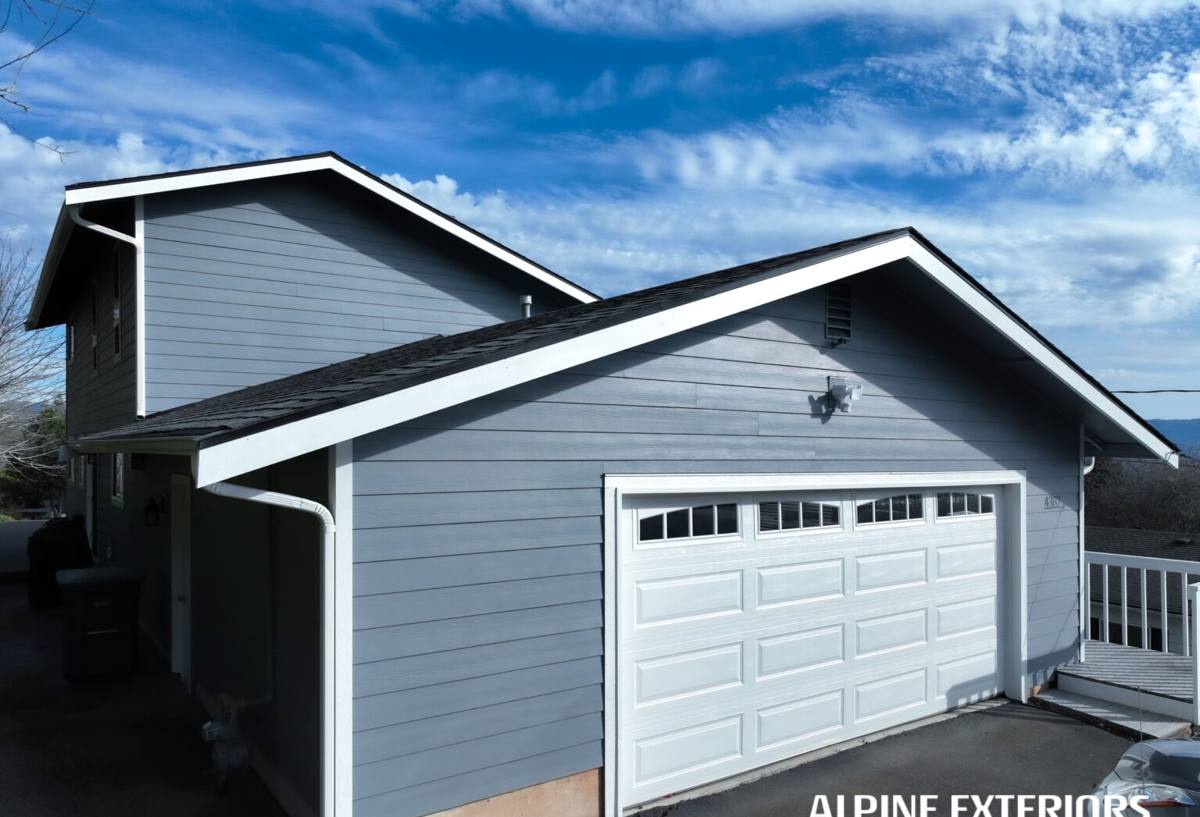
What "Repair" Actually Covers
A repair is appropriate when the damage is localized and the roof's overall structure, decking, and remaining shingle field are still sound. Common repair scenarios include:
- A handful of shingles blown off or cracked after a windstorm, with the surrounding field intact
- A single active leak traced to flashing around a chimney, vent pipe, or skylight
- Localized moss or algae damage in a shaded valley, while the rest of the roof is clean
- Minor impact damage from a fallen branch, isolated to a small area
- A section of ridge cap or hip shingles that has come loose
In these cases, a good repair should hold for years, not months. The catch is diagnosis: a leak that shows up in one spot on the ceiling doesn't always mean the source is directly above it — water travels along decking and rafters before it finds a way through drywall. A repair that just patches the visible symptom without tracing the actual entry point often comes back within a season or two, which is one of the most common complaints homeowners have about roof repairs generally.
When a "Repair" Isn't Really a Repair
Be cautious of roofs that need repeat repairs in different spots year after year. That pattern usually means the underlying material has reached the end of its service life and is failing broadly, not in one isolated place. Patching a symptom on a roof that's system-wide failing is money spent without solving the underlying problem.
What Points Toward Full Replacement
Replacement becomes the honest recommendation when the damage or wear is no longer isolated. Signs include:
- Shingle granule loss visible across large sections, not just one slope
- Widespread curling, cracking, or cupping shingles, especially on south- and west-facing slopes that see the most sun and heat cycling
- Multiple leaks in different locations, or leaks that return after repair
- Soft, spongy decking felt underfoot when walking the roof, indicating water has gotten under the shingles and is degrading the plywood or sheathing
- A roof at or beyond its material's expected lifespan, combined with any of the above
- Heavy, persistent moss coverage that has lifted shingle edges and trapped moisture against the roof deck over multiple seasons
Age alone isn't automatically a replacement trigger — a well-maintained roof can outperform its expected lifespan, and a poorly maintained one can fail early. What matters is condition, and condition is best judged by someone walking the roof, not guessing from the ground.
How Age and Material Interact
Different roofing materials age differently, and knowing where your roof sits on that curve helps frame the repair-versus-replace conversation.
| Material | Typical Lifespan | Common Late-Life Symptoms |
|---|---|---|
| 3-tab asphalt shingles | 15–20 years | Granule loss, curling, brittleness |
| Architectural (laminate) shingles | 25–30 years | Edge lifting, localized blistering, color fading |
| Cedar shake | 20–30 years with upkeep | Splitting, moss colonization, thinning |
| Metal roofing | 40–60 years | Fastener backout, seam wear, coating chalking |
A roof near the top of its expected range that's showing wear across multiple slopes is a strong replacement candidate even if there's no active leak yet — waiting for a leak to appear usually means waiting for decking damage to appear right along with it.
What Whatcom County Weather Does to a Roof
Chuckanut sits close enough to Bellingham Bay that salt-laden air is a real factor for anything metal on the roof — flashing, fasteners, vent caps. Combine that with the driving rain that comes through on a southwesterly wind during fall and winter storms, and you get water finding its way into any gap a typical inland roof might tolerate for longer. Wind-driven rain doesn't just fall straight down; it pushes up under shingle edges and around flashing laps that would otherwise shed water fine.
Then there's moss. Whatcom County's long, wet, mild winters are close to ideal growing conditions for roof moss, and shaded north-facing slopes under overhanging trees are the areas that suffer most. Moss isn't just cosmetic — as it grows, it lifts shingle edges, holds moisture against the roof deck for weeks at a time, and accelerates granule loss underneath the growth. A roof that's clean on the south slope and heavily mossed on the north slope often needs very different treatment on each side, which is part of why a full roof assessment matters more than a quick look from the driveway.
Homes closer to the water deal with an added wrinkle: salt air corrodes exposed metal faster than it does further inland, which shortens the effective life of flashing, nail heads, and metal ridge vents even when the shingles themselves still look fine.
The Cost Question, Honestly
Repair costs are almost always lower up front than replacement — that's true almost everywhere, on almost every roof. But repair cost per square foot on an aging roof can climb close to replacement cost once you're dealing with rot repair, multiple flashing details, and matching discontinued shingle colors on a 15-year-old roof. The real comparison isn't repair price versus replacement price in isolation — it's repair price plus the likelihood of needing another repair in two years, versus replacement price and 20-plus years of not thinking about it.
Insurance sometimes plays a role, particularly after wind or impact events, but coverage depends heavily on your policy, the cause of damage, and your roof's documented condition beforehand. That's a conversation for your insurance agent, not your roofer — a contractor can document damage for a claim, but shouldn't be the one interpreting your policy.
A Practical Homeowner Checklist
Before you call anyone, a quick visual check from the ground and attic can tell you a lot:
- Walk the perimeter of the house and look for shingles in the gutters or yard, especially after a windstorm
- Check the attic on a dry day for daylight coming through the decking, water stains on rafters, or damp insulation
- Look at north-facing slopes for moss or dark streaking
- Note whether ceiling stains appear only during heavy wind-driven rain versus any rain — that's a clue about whether flashing or shingle field is involved
- Check how old the roof actually is, from a permit, prior invoice, or when you purchased the home
- Look for sagging along the ridge line or between rafters, viewed from across the street
None of this replaces a hands-on inspection, but it helps you have an informed conversation instead of taking a stranger's word for it sight unseen.
What a Trustworthy Inspection Looks Like
A contractor who walks your actual roof, photographs specific problem areas, and explains what they found in plain language is giving you something you can evaluate. Be more skeptical of anyone who quotes a full replacement from the driveway, pressures same-day signing, or can't explain why a repair won't hold. A legitimate roofer should be comfortable telling you "this is a repair, not a replacement" when that's the truth — recommending the smaller job when it's justified is part of what separates a contractor you can trust with the bigger jobs down the road.
Where This Fits Into the Rest of Your Exterior
Roofing problems and siding problems often show up together, particularly on homes dealing with the same wind-driven rain and moss pressure common around Chuckanut and the rest of Whatcom County. A roof that's failed at the edge can send water behind trim and siding at the roofline, so if you're already having a roof looked at, it's worth a quick look at the flashing, fascia, and siding transitions nearby while someone's up there.
If you're not sure whether what you're looking at is a simple fix or something bigger, we're happy to take a look and give you a straight answer — no pressure, no upsell, just what we'd tell a neighbor. Reach out for a free estimate and we'll walk the roof with you.