 Chuckanut Exterior
 Edison's Exterior Challenges: What the Climate Does to Homes Here
Homes in and around Edison sit close enough to the water that salt air is part of daily life, not an occasional nuisance. Combine that with the long, wet stretch of fall through spring typical of this part of Whatcom County, and exterior surfaces here take a beating that homes further inland simply don't face. Salt-laden moisture accelerates corrosion on fasteners and trim, driving rain finds every gap in flashing and caulking, and the shaded, damp conditions common near tree lines and low-lying yards give moss and algae months at a time to take hold on roofs, siding, and decking.
None of this means exterior materials are doomed to fail — it means they need to be chosen and installed with this specific climate in mind. A siding product, roofing system, or deck build that performs fine in a drier part of the state can struggle here if it wasn't engineered for sustained moisture exposure and salt air. That's the lens we use on every Edison-area project.
Why "Standard" Materials Underperform Near the Water
Salt air is corrosive to unprotected or poorly coated metal components — fasteners, flashing, gutter hardware. Wood-based products, whether siding or decking, absorb moisture more readily in this environment and are more prone to swelling, cupping, and rot if they aren't properly sealed and maintained. And moss doesn't just look bad; it holds moisture against a roof or wall surface, which shortens the life of whatever is underneath it. Materials that aren't built or installed to shed water aggressively tend to show problems here years before they would somewhere drier.
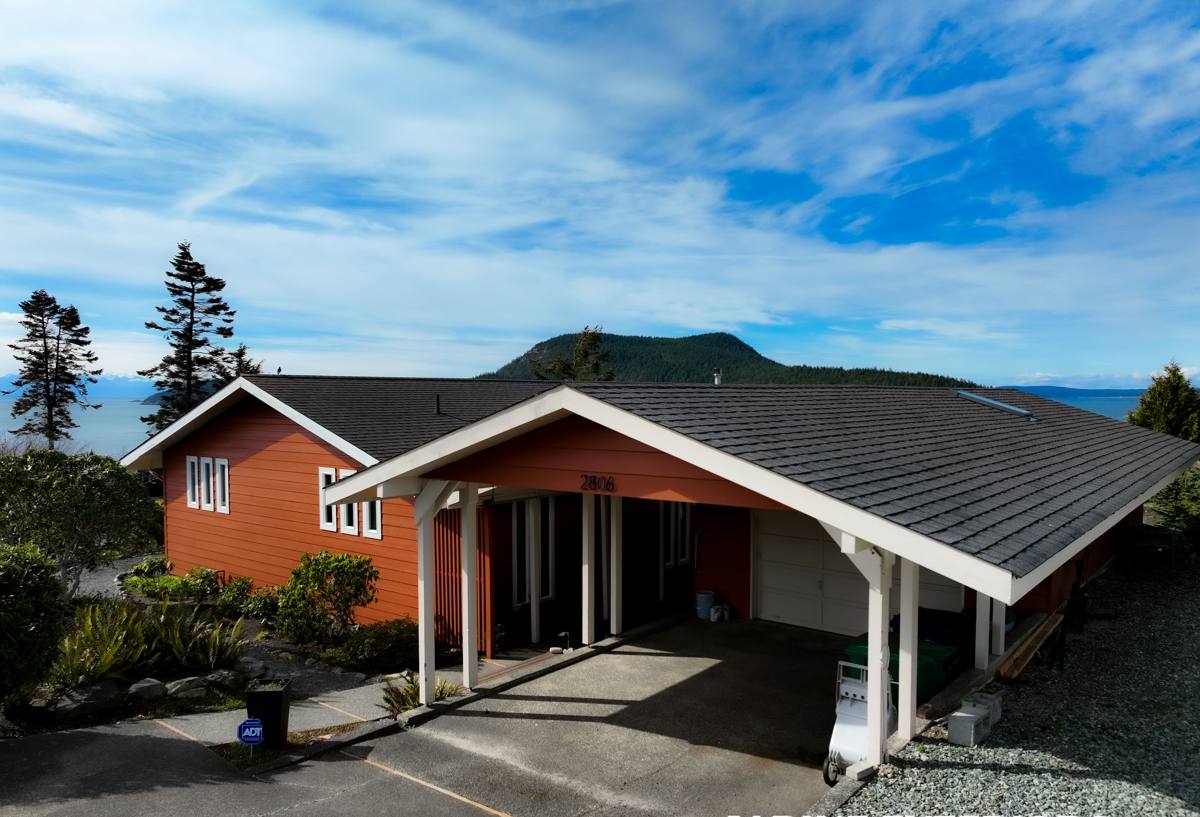
Siding That Holds Up: Why We Install Only James Hardie
We install James Hardie fiber cement siding exclusively. That's a deliberate standard, not a limited product lineup. We don't install vinyl, LP SmartSide, Cemplank, Allura, primed spruce, or cedar, and in a climate like Edison's, the reasoning is straightforward.
Fiber cement is non-combustible and dimensionally stable — it doesn't expand and contract with moisture the way wood-based sidings can, which matters when a home sits in near-constant damp air for months. Hardie's HZ5 product line is specifically engineered for climates with high moisture exposure, which describes this area well. The factory-applied ColorPlus finish is baked on and formulated to resist fading and moisture intrusion better than field-applied paint, which reduces how often a homeowner has to repaint or touch up siding that's taking on salt spray and rain year-round.
Wood-based siding products can perform reasonably well in the right conditions, but they demand consistent maintenance — sealing, repainting, and vigilance against moisture intrusion at seams and edges — to avoid rot. Vinyl holds up to moisture fine but can become brittle and fade under UV and salt exposure over time, and it doesn't offer the same fire resistance. We made the call to standardize on one product because we'd rather install something we can stand behind fully than offer a menu of materials with different long-term risks. Hardie also carries a strong transferable warranty, which matters to homeowners who may sell within the life of the siding.
Roofing for Coastal Rain and Moss Pressure
Roofing in this area has to deal with two persistent enemies: volume of rainfall and moss. Driving rain tests every seam, flashing detail, and penetration point on a roof — chimneys, vents, skylights. A roof that's sound in dry weather can leak the first time wind pushes rain sideways under a poorly sealed flashing edge.
Moss is the slower, quieter threat. It thrives in the shaded, damp conditions common on north-facing slopes and roofs near tree cover, and once established it holds moisture against shingles or panels, degrading them faster than sun and rain alone would. Proper roof design — adequate ventilation, correct flashing, and material choices suited to sustained moisture — reduces how aggressively moss can take hold in the first place, and periodic cleaning keeps it from becoming a structural issue rather than a cosmetic one.
We evaluate roofs here for both problems: watertightness under wind-driven rain and long-term resistance to moss and algae growth, not just how a roof looks on a dry, sunny inspection day.
Windows: Sealing Out Wind-Driven Rain and Salt Air
Windows are one of the most common places water finds its way into a home, especially in coastal, rain-heavy areas. Wind-driven rain doesn't just fall on a window — it gets pushed sideways and upward, testing flashing and seals in ways vertical rain never does. Older windows, or ones installed without proper flashing integration into the wall system, are especially vulnerable here.
Salt air also degrades certain window materials and hardware faster than a typical inland environment. When we replace or install windows in the Edison area, correct flashing and integration with the surrounding wall assembly matters as much as the window unit itself — a good window installed with poor flashing will leak regardless of the glass and frame quality.
Decks Built for a Wet-Winter Climate
Decks take the most direct, sustained exposure of any exterior feature — full sun in summer, standing moisture in winter, and in this area, salt air on top of both. Fastener corrosion, wood rot at ledger boards and post bases, and moss buildup on decking surfaces are the recurring issues we see on older decks near the water.
Building or replacing a deck here means paying close attention to details that matter more in this climate than elsewhere: corrosion-resistant fasteners and hardware, proper drainage and ventilation underneath the deck surface so moisture doesn't sit and pool, and material choices that hold up to repeated wet-dry cycles without cupping or splitting.
Why a Local Crew Matters in Edison
Exterior work in a marine-influenced climate isn't something you get right by following a generic checklist. A crew that works this region regularly knows which details tend to fail first — where moss builds up fastest, which flashing details take the worst of the wind-driven rain, how salt air affects fastener choice — because they've seen it repeatedly, not because it's in a manual.
Being local also means being accountable. We're not driving in from out of the area for one job and disappearing; we're a company that works this region continuously, which shapes how carefully we do the work the first time and how we respond if something needs attention afterward.
Cost Factors for Exterior Projects Near the Water
Every home and project is different, but a few factors consistently affect cost for siding, roofing, window, and deck work in coastal, moss-prone areas like Edison:
| Factor | Why It Affects Cost |
|---|---|
| Existing moisture damage | Rot or water intrusion found during tear-off often requires repair before new material goes on |
| Roof/wall complexity | More valleys, dormers, and penetrations mean more flashing detail work and labor time |
| Access and site conditions | Steep lots, tree cover, or limited equipment access can add time to any exterior project |
| Material tier | Fiber cement, upgraded roofing systems, and corrosion-resistant hardware cost more upfront but reduce maintenance and replacement frequency |
| Moss or algae remediation | Established growth may need treatment or removal before new roofing, siding, or decking work begins |
A Practical Exterior Maintenance Checklist for This Climate
Regardless of what materials a home currently has, a few habits go a long way toward slowing the damage this climate causes:
- Clean moss and debris off roofs and decking at least once a year, more often on shaded slopes
- Inspect caulking and flashing around windows and doors annually, especially before the rainy season
- Rinse salt residue off siding and railings periodically if the home is close to the water
- Check gutters and downspouts for clogs that can push water back under roofing or siding edges
- Look underneath decks for standing moisture or early rot at posts and ledger connections
- Address small leaks or soft spots immediately rather than waiting for a visible problem
How We Approach a Project in Edison
We start with an honest look at the home's current condition — where moisture has already caused damage, where the design is fighting the climate rather than working with it, and what combination of siding, roofing, window, or deck work actually makes sense given the budget and the home's exposure. We're not going to recommend replacing everything if only part of the exterior needs attention, and we're not going to install a product we don't believe holds up here, even if it's cheaper upfront.
If you're weighing exterior work on a home in the Edison area, we're happy to take a look and give you a straightforward assessment of what's going on and what your options are. Reach out for a free, no-pressure estimate using the form below.