 Chuckanut Exterior
 If you're re-siding a home along Chuckanut Drive or anywhere else in Whatcom County, you've probably run into two products that dominate the conversation: James Hardie fiber cement and LP SmartSide engineered wood. Both are marketed as upgrades over vinyl. Both have real fans. But they are built from fundamentally different materials, and those materials behave very differently once they meet the kind of weather we get here — salt-laden marine air off the bay, driving rain that comes in sideways for days at a stretch, and a moss season that can run from October into May. This page walks through both products honestly, including where LP SmartSide gets it right, so you can understand why our crews install James Hardie exclusively.
What Each Product Actually Is
The names sound similar in spirit — both are positioned as "smart" alternatives to solid wood or vinyl — but the raw materials couldn't be more different.
James Hardie Fiber Cement
James Hardie siding is made from Portland cement, sand, and cellulose fiber, cured under pressure and heat. The result is a dense, inorganic board. It doesn't burn, it doesn't feed insects, and it doesn't swell or rot the way organic materials do when they take on moisture. Hardie's HZ5 and HZ10 product lines are specifically engineered for climates like ours — freeze-thaw cycles, prolonged damp, and coastal exposure.
LP SmartSide
LP SmartSide is an engineered wood product — strand board made from wood fiber, resins, and zinc borate (a wood preservative), pressed into panels and coated with a resin-saturated overlay. It's a genuine step up from OSB siding of decades past, and LP has invested real engineering into moisture resistance. But at its core, it is still wood. Wood fiber, no matter how it's engineered, is organic material, and organic material has a different relationship with sustained moisture than cement does.
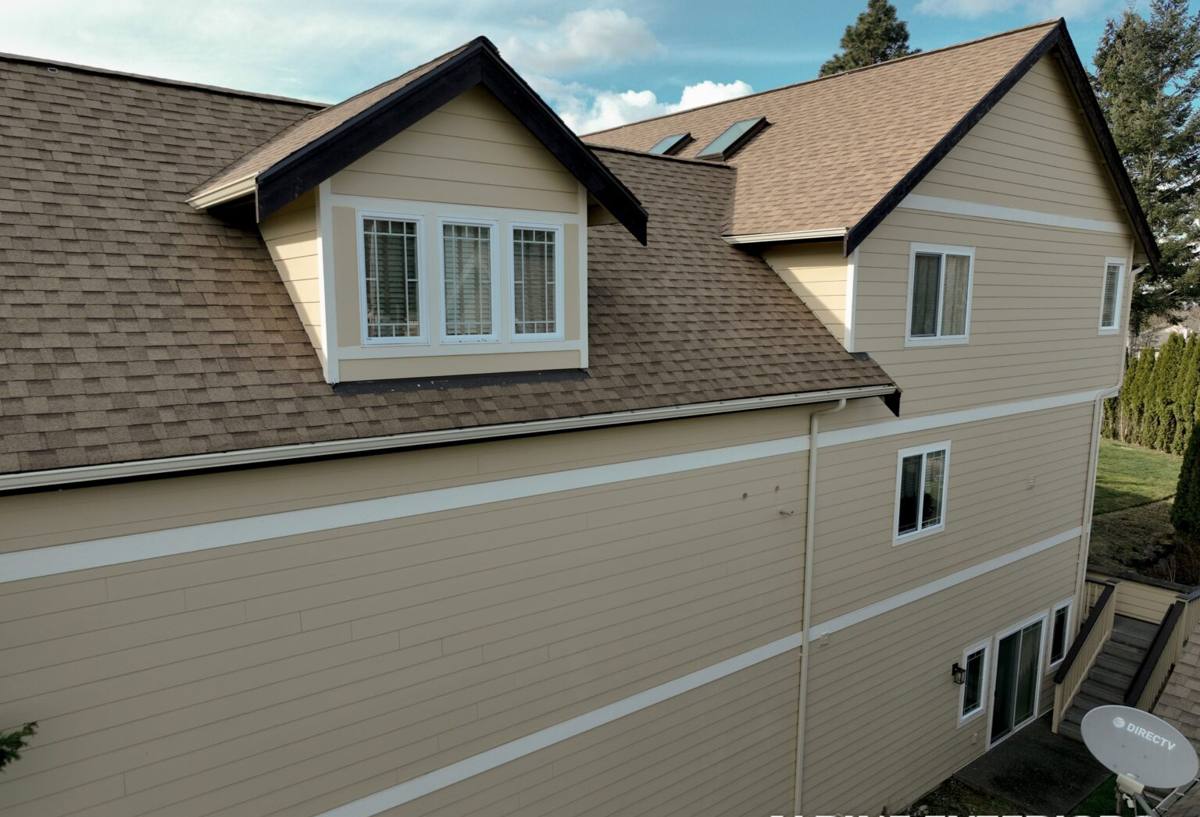
Side-by-Side: The Core Differences
| Factor | James Hardie Fiber Cement | LP SmartSide |
|---|---|---|
| Base material | Cement, sand, cellulose fiber | Engineered wood strand, resin overlay |
| Combustibility | Non-combustible | Combustible (treated, but still wood-based) |
| Moisture response | Does not swell, rot, or absorb water into the board matrix | Resin overlay resists moisture at the surface; core is wood fiber if that layer is breached |
| Insect/pest vulnerability | None — inorganic material | Zinc borate treatment deters insects, but treatment can be compromised at cuts and fastener holes |
| Factory finish | ColorPlus baked-on finish, warrantied separately from the substrate | Factory primed or pre-finished options; field-painting is common |
| Typical field lifespan expectation | Multiple decades when installed and maintained to spec | Solid, but shorter than fiber cement in sustained wet climates per most manufacturer guidance |
| Installation sensitivity | Requires correct fastening, clearances, and caulking per Hardie spec | Requires meticulous sealing of every cut edge and fastener penetration — arguably less forgiving of field error |
Where LP SmartSide Gets It Right
It's worth being fair here. LP SmartSide is a legitimate product, not a gimmick. It's lighter than fiber cement, which can make it faster to install and slightly less demanding on the framing underneath. It takes paint well, holds a crisp wood-grain texture that some homeowners prefer over Hardie's more restrained textures, and LP backs it with a real warranty. For a drier climate — inland regions with less sustained rain and no salt air — plenty of installers get good long-term results with it. We're not going to tell you it's a bad product. We're going to tell you why it's not the product we put our name behind here.
Why Moisture Behavior Matters More in Chuckanut Than Almost Anywhere
Whatcom County's coastal exposure means siding here doesn't get a simple "wet season, dry season" cycle. It gets a long stretch of marine-layer dampness, punctuated by driving rain events that push water sideways into wall assemblies, on top of salt air that accelerates the breakdown of any coating or sealant. That combination stresses the weak points of any siding product: cut edges, fastener penetrations, butt joints, and anywhere the factory finish or treatment layer has been disturbed on site.
With fiber cement, a nick in the ColorPlus finish exposes cement — a material that simply doesn't care much about water. With engineered wood, a nick in the resin overlay or an unsealed cut edge exposes wood fiber, and wood fiber in a chronically damp environment is where problems start. That's not a knock on LP's engineering — it's just physics. A tighter, wetter, saltier climate leaves less margin for the kind of small installation gaps that happen on every job site, no matter how careful the crew.
Moss, Algae, and Long-Term Appearance
Anyone who's owned a home here through a few winters knows moss and algae aren't optional extras — they're part of the deal. North-facing walls, shaded elevations under fir and cedar canopy, and anywhere water sheds slowly all become moss magnets from fall through spring.
- Fiber cement: The board itself doesn't feed organic growth. Moss and algae sit on the surface and typically wash or brush off without damaging the substrate underneath.
- Engineered wood: Sustained organic growth sitting against a wood-fiber substrate is a different equation — it's the kind of chronic surface moisture that engineered wood products are specifically trying to resist, and it puts more pressure on the coating system over time.
Fire Considerations
This matters more every year as wildfire smoke and dry summer stretches become part of the Pacific Northwest's normal calendar, even in a wetter county like ours. James Hardie fiber cement is non-combustible — it won't ignite or contribute fuel to a fire. LP SmartSide, like any wood-based product, is combustible, even with its fire-resistant treatments and ratings. For homeowners weighing insurance considerations or simply wanting one less variable in a worst-case scenario, this is a meaningful, non-marketing difference between the two materials.
Warranty Structure: What You're Actually Covered For
Both manufacturers offer warranties, but read the fine print rather than the headline number.
- James Hardie's ColorPlus finish and substrate are covered on separate, transferable, multi-decade warranty terms, which matters if you sell the home.
- LP SmartSide's warranty covers substrate defects and, on certain product lines, finish performance — but like most engineered wood warranties, coverage can be affected by field conditions such as improper sealing of cut edges or fastener penetrations, which puts more of the burden on installation quality holding up over time.
Ask any contractor quoting either product to show you the actual warranty document, not just the sales sheet. What's excluded is usually more informative than what's included.
Installation: Why the Product Is Only Half the Story
Neither product performs to its potential with sloppy installation, but the consequences of a mistake differ. Fiber cement is unforgiving of the wrong fastener or missed clearance, but the material itself won't degrade from that error — it's a workmanship fix. Engineered wood raises the stakes on sealing: every field cut, every penetration, every butt joint needs to be treated correctly to protect the wood-fiber core, and a missed step compounds over years of our wet weather rather than showing up immediately.
This is a core reason we standardized on one product system rather than quoting whichever siding a homeowner names first. Installing Hardie to spec — correct starter strips, fastener placement, clearances off grade and roofing, and proper joint treatment — is a skill set our crews practice on every job, not something we split attention on across multiple material systems with different installation rules.
What to Ask Any Contractor Before You Sign
- Is the crew factory-trained and certified on the specific product they're installing?
- What's the manufacturer's minimum clearance from grade, decks, and roofing, and will the quote meet it?
- Who is responsible if a warranty claim is later denied due to an installation issue?
- Is the finish (paint/coating) warrantied separately from the board itself, and for how long?
- What's the plan for flashing and sealing around windows, doors, and penetrations?
- Can they show you the actual product line (not just the brand) being quoted, since performance varies by product tier?
Why We Standardized on James Hardie
We made the decision to install only James Hardie fiber cement because it's the product that consistently holds up to what this specific stretch of Whatcom County throws at a house: salt air off the water, months of driving rain, and a moss season that doesn't quit. The non-combustible core, the factory-baked ColorPlus finish, the HZ5 climate engineering, and a warranty structure that transfers with the home all line up with what we're willing to stand behind for the long haul. LP SmartSide isn't a bad product — it's just not the one we think earns its keep in this climate, and we'd rather install one system exceptionally well than split our expertise across products with very different moisture tolerances.
If you're weighing siding options for a Chuckanut area home, we're happy to walk your property, point out the moisture and moss pressure points specific to your lot, and put together a free, no-pressure estimate for James Hardie siding.