 Chuckanut Exterior
 Exterior Living Near Chuckanut: What the Climate Actually Does
Homes in and around Burlington sit inside one of the more punishing exterior climates in Whatcom County, even by Pacific Northwest standards. The combination of proximity to saltwater, near-constant winter rainfall, and shaded, moisture-trapping lots means exteriors here age differently than they would fifty miles inland. It's not one big event that wears a house down — it's the accumulation of small exposures, year after year, on siding, roofing, windows, and decks that were never built with this specific climate in mind.
Salt Air
Salt-laden air moving off the water accelerates corrosion on fasteners, flashing, and metal roofing components, and it breaks down lower-grade paint and coatings faster than a dry climate would. Homes closer to open water feel this the most, but salt air travels further than most people expect, and it doesn't take a waterfront lot to see its effects on caulking, trim, and hardware.
Driving Rain
Rain in this region rarely falls straight down. Winter storms push moisture sideways into wall assemblies, window edges, and door thresholds, which is a very different stress than a vertical downpour. Wind-driven rain finds the seams — laps, corners, penetrations, trim joints — and if those details weren't installed correctly the first time, water gets behind the exterior long before a homeowner ever sees a stain on the inside.
Moss Season
Whatcom County's long, wet, mild winters give moss and algae months of ideal growing conditions on roofs, shaded siding, and deck surfaces. Once established, moss holds moisture directly against building materials, which is worse for long-term durability than the rain itself. Homes tucked under tree cover or on the shaded side of a lot tend to fight this every single year.
How This Shows Up on Siding
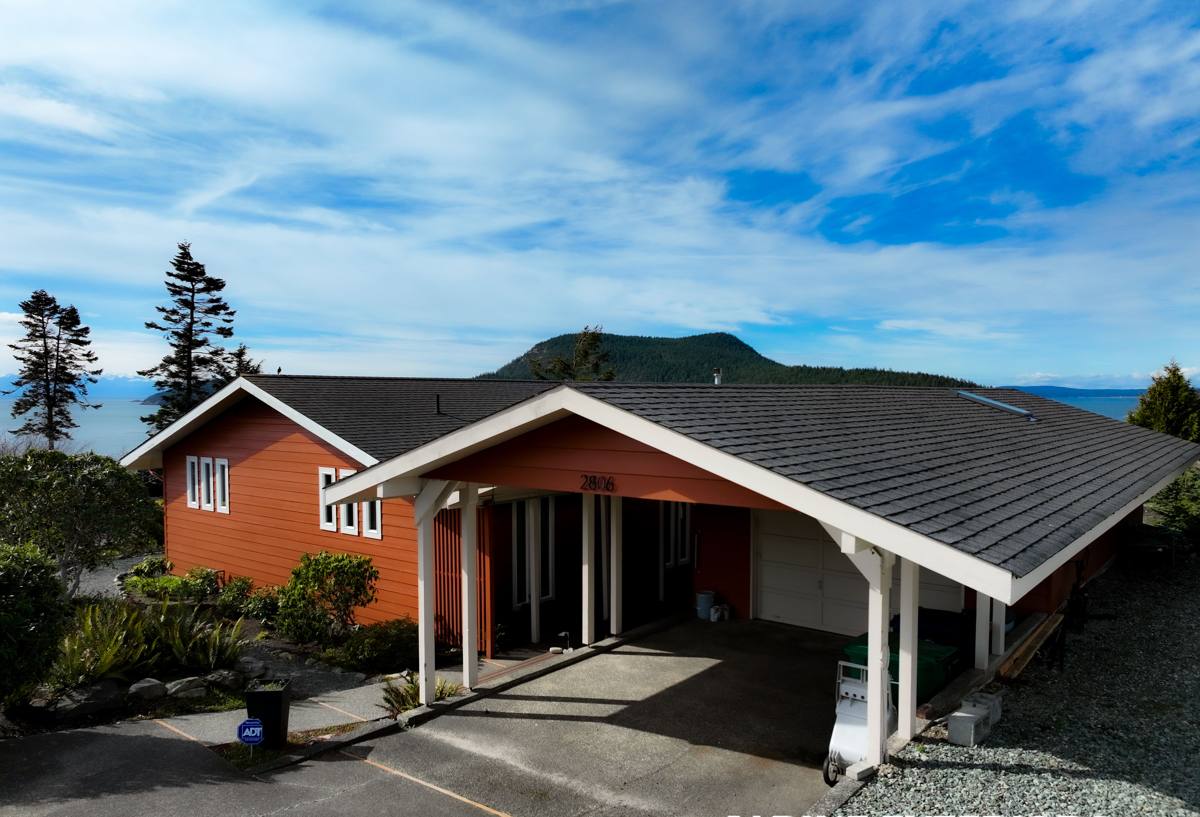
Siding is the first line of defense against all three of these conditions at once, and it shows. We regularly see paint failure and swelling at butt joints and lower courses, moss and algae staining on north- and west-facing walls, and soft or delaminating material near grade where splashback and standing moisture concentrate. Wood-based and engineered wood siding products are especially vulnerable here, because once moisture gets past the surface coating, the substrate itself can absorb it and begin to break down from the inside out.
This is exactly why product choice matters more in Burlington than it does in a drier region. A siding product that performs acceptably in a low-moisture climate can fail years ahead of schedule here, not because it was installed wrong, but because it was never engineered for this level of sustained wet exposure.
Why We Install Only James Hardie Fiber Cement Siding Here
We made the decision to install James Hardie fiber cement exclusively, and it's a decision we stand behind specifically because of climates like this one. Hardie's HZ5 product line is engineered for regions with significant moisture exposure and freeze-thaw cycling — the Pacific Northwest is one of the reference climates the HZ system is built around. Fiber cement doesn't absorb and swell the way wood-based products can, and it's non-combustible, which matters as wildfire smoke and dry-season risk have become a bigger part of Western Washington's yearly calendar even in a generally wet region.
The factory-applied ColorPlus finish also matters more here than in a milder climate. Field-applied paint on any siding material is only as good as its maintenance schedule, and salt air plus UV exposure is hard on coatings. A factory finish baked on under controlled conditions holds color and resists fading, chalking, and moisture intrusion at the surface far longer than a job-site paint job, and it's backed by a real, transferable warranty rather than a maintenance promise.
We don't install LP SmartSide, vinyl, Cemplank, Allura, or primed wood siding, and we're upfront about why: those products can be reasonable choices in the right application, but in a climate defined by salt air, driving rain, and a long moss season, we've seen the maintenance burden and moisture risk outweigh the upfront savings. Standardizing on one product line lets our crew install to spec every time, rather than switching systems and details from job to job.
Roofing Considerations for Burlington Homes
Roofs here fight moss and algae growth more than almost anything else. Shaded roof planes, valleys, and north-facing slopes hold moisture longer, and moss roots work into shingle granules and shakes over time, shortening the roof's usable life well before it reaches its rated age. Proper attic and roof ventilation matters as much as the roofing material itself, since trapped moisture from below accelerates the same deterioration happening from above.
Flashing and gutter condition deserve just as much attention as the field of the roof. In a driving-rain climate, most leaks trace back to flashing at valleys, chimneys, and wall-to-roof transitions rather than failures in the shingles themselves. Gutters clogged with moss and debris redirect water exactly where it shouldn't go — behind fascia, into soffits, and down exterior walls.
Windows: Keeping Wind-Driven Rain Out
Window performance in this area comes down to two things: the quality of the window unit and the quality of the flashing and sealing around it. Wind-driven rain pushes water sideways and upward against window edges, which is a stress that poor flashing details simply won't hold up against over time. We see this most often at older installations where flashing tape, pan flashing, or sill details were skipped or done to a minimum standard.
When we replace windows, correct flashing integration with the surrounding wall assembly and siding gets as much attention as the window unit itself. A high-performance window installed with poor flashing will still leak; a modest window installed correctly, with proper drainage and sealing, will often outperform it.
Decks Built for Wet-Dry Cycling
Decks in Burlington go through repeated wet-dry cycling for most of the year, with long stretches of standing moisture in the shoulder seasons. That cycling is hard on fasteners, framing connections, and any decking material that isn't dimensionally stable. Ledger board connections and framing that stays wet against the house are common trouble spots, along with moss buildup on decking surfaces that don't get much sun.
Good drainage below the deck surface, corrosion-resistant fasteners and hardware, and material choices suited to sustained moisture exposure all matter more here than in a drier climate. A deck built without those details in mind will show soft spots, staining, and hardware corrosion years ahead of a deck built for this specific environment.
Why a Local Crew Matters
A crew that works this part of Whatcom County regularly knows which details actually matter here — where wind-driven rain hits hardest on a given lot orientation, which roof planes hold moss the longest, and which flashing and drainage details separate a fifteen-year fix from a permanent one. That local pattern recognition doesn't come from a manual; it comes from working on homes exposed to the same salt air, rain, and moss season year after year.
Local also means accountability. A crew based in the area is still around for warranty work, follow-up questions, and the rare issue that shows up after the first hard winter — not a crew that finished a project and moved to the next region.
What to Expect When You Work With Us
- An on-site assessment of your siding, roofing, windows, or deck, with honest notes on what's driving current wear
- A clear recommendation, including the correct James Hardie product line and profile for your home's exposure
- A written scope covering flashing, drainage, and moisture-management details, not just material selection
- Installation to manufacturer specification, since correct installation is what most of Hardie's long-term warranty depends on
- A final walkthrough and warranty registration before we consider the job done
Signs Your Exterior Needs a Closer Look
- Peeling, bubbling, or chalking paint on siding, especially on north- or west-facing walls
- Moss or dark algae streaking on roofing, siding, or deck boards that returns even after cleaning
- Soft or spongy siding, trim, or decking near ground level or around window sills
- Visible gaps, cracking, or separation at siding joints and window and door trim
- Water stains on interior ceilings or walls after heavy wind-driven rain
- Corroded or loose fasteners, hardware, or flashing on the roof or deck
Comparing Siding Materials in This Climate
| Material | Moisture Behavior | Moss/Algae Resistance | Maintenance Burden | Fire Rating |
|---|---|---|---|---|
| James Hardie Fiber Cement (HZ5) | Engineered for high-moisture climates; doesn't swell or rot | Good; factory finish resists staining | Low; factory ColorPlus finish, minimal repainting | Non-combustible |
| Vinyl | Doesn't absorb moisture, but seams and fasteners can trap it behind the panel | Moderate; surface can stain over time | Low, but limited repair options if damaged | Combustible |
| LP SmartSide (engineered wood) | Wood-based substrate can absorb moisture if the finish is compromised | Moderate; dependent on coating condition | Moderate; coating maintenance matters | Combustible |
| Primed Wood / Cedar | Absorbs moisture readily; prone to swelling and rot in sustained wet climates | Lower; natural surface holds moisture | High; regular repainting or staining required | Combustible |
This table reflects general material behavior, not a claim that every product fails on every home — installation quality, exposure, and maintenance all play a role. It's simply the reasoning behind why we standardized on one system rather than offering several.
Working Around Burlington and Chuckanut
Whatcom County's marine climate doesn't ease up for long, which means exterior work here has a narrower comfortable installation window than drier regions, and it rewards planning ahead rather than waiting for a visible failure. Whether it's a full siding replacement, a re-roof, window upgrades, or deck work, the goal on every project is the same: build the exterior to handle salt air, driving rain, and moss season for decades, not just get through the next winter.
If you're noticing early wear on your siding, roof, windows, or deck, or you're planning ahead for a project, we're happy to take a look and talk through honest options for your home. Reach out for a free, no-pressure estimate — there's a form below to get started.