 Chuckanut Exterior
 Why Bellingham's Climate Is Hard on Roofs
Bellingham sits close enough to the water that salt-laden air is a real factor in how long a roof lasts, and far enough north that rain, wind, and a long stretch of gray, damp months put constant pressure on whatever is covering a house. A roof here doesn't just need to shed water occasionally during a storm — it needs to hold up to months of near-constant moisture exposure, salt air moving in off the bay, and long shaded stretches where moss gets a head start every fall and doesn't let go until late spring. Metal roofing can handle all of this better than most alternatives, but only when it's specified and installed with this specific climate in mind.
Salt Air and Metal Fatigue
Not all metal roofing handles coastal air the same way. Bare or poorly coated steel can develop surface rust at cut edges, fastener heads, and scratches within a few years near the water. The fix isn't avoiding metal roofing — it's choosing the right base metal and finish, and making sure cut edges and fasteners are properly sealed and coated during installation rather than left exposed. This is one of the most common corners cut on metal roofing jobs, and it's the one that shows up first in a marine climate.
Wind-Driven Rain and Water Intrusion
Whatcom County storms rarely deliver rain straight down. Wind pushes it sideways and up under laps, around chimneys, and into valleys, which means a metal roof's real weak points are its seams, flashing, and penetrations — not the flat panel area. A roof that looks great from the ground can still leak for years if the flashing details weren't done right the first time.
Moss, Moisture, and Shaded Roof Lines
Homes with mature trees or north-facing slopes hold moisture longer, and moss takes hold anywhere organic debris and shade combine with our damp season. Moss on an asphalt roof lifts shingles and traps water against the deck. Metal roofing gives moss far less to grab onto, but it isn't moss-proof — panels still need clean edges, decent slope, and occasional debris removal to keep moss from building up in valleys and behind flashing.
What a Correctly Installed Metal Roof Actually Involves
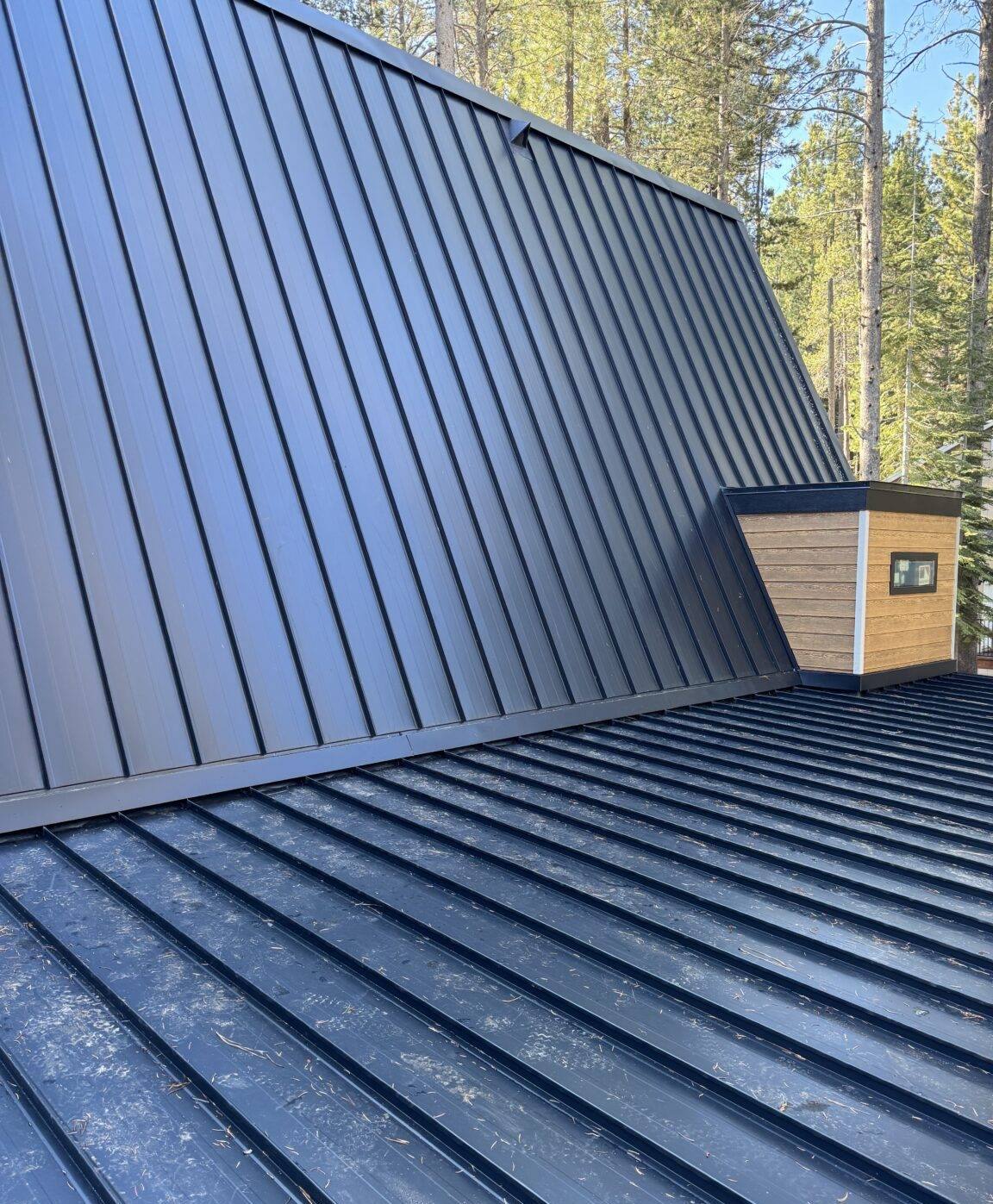
Metal roofing has a reputation for lasting decades, but that reputation only holds up when the installation underneath the panels is done right. Most metal roof failures we've seen trace back to shortcuts in prep work or flashing, not the metal itself.
Deck Inspection and Prep
Before any panel goes down, the roof deck needs to be sound, dry, and flat. Soft spots, old fastener holes, and uneven sheathing all telegraph through metal panels and create places for water to collect. On a tear-off, this is the point where hidden moisture damage from years of small leaks gets found and fixed — not covered over.
Underlayment as the Real Moisture Barrier
Metal panels shed the bulk of the water, but the underlayment beneath them is the actual moisture barrier protecting the deck from condensation, wind-driven rain that finds its way under a seam, and ice or snow melt during our occasional cold snaps. In this climate, that underlayment matters as much as the metal on top of it.
Fastening Method and Seam Type
How panels attach to the roof affects both wind performance and long-term water resistance. Concealed-fastener systems, where screws are hidden under the seam rather than driven through the panel face, hold up better over time because there are no exposed fastener heads for water or salt air to work on. Exposed-fastener systems can still perform well, but they depend on the fasteners and their washers staying sealed, which means more maintenance over the roof's life.
Flashing and Penetration Details
Valleys, chimneys, skylights, and vent pipes are where nearly every roof leak actually starts. Correct metal roofing work means custom-fit flashing at every one of these points, not stock trim pieces stretched to fit. This is slower and less forgiving than working with asphalt shingles, which is exactly why it needs a crew that does this regularly.
Choosing a Metal Roofing System for a Bellingham Home
"Metal roofing" covers several different systems, and they're not interchangeable in terms of cost, appearance, or how they hold up in a wet, salty climate. Here's how the main options compare for a home in this area.
| System | Best For | Coastal Performance | Maintenance |
|---|---|---|---|
| Standing seam (concealed fasteners) | Homeowners wanting the longest service life and a clean, modern look | Strong — no exposed fasteners for salt air to attack | Low; occasional debris clearing and inspection |
| Exposed-fastener panels | Homeowners prioritizing lower upfront cost | Good, but depends on fastener seals staying intact | Moderate; fastener and sealant checks every few years |
| Metal shingles or shakes | Homeowners wanting the look of shingle or shake roofing with metal's durability | Good, similar coating considerations as standing seam | Low to moderate |
For most homes in Bellingham's marine climate, we lean toward concealed-fastener systems specifically because they remove the long-term weak point — exposed fasteners — from the equation. That said, the right choice also depends on roof pitch, budget, and the look a homeowner wants, which is something worth talking through on-site rather than deciding from a brochure.
Cost Factors Homeowners Should Understand
Metal roofing typically costs more upfront than asphalt shingles and less than some premium materials, but the real cost picture depends on more than just the panel type. The factors below move the price up or down more than most homeowners expect.
| Factor | Why It Matters |
|---|---|
| Roof complexity | A simple gable roof installs faster and with fewer custom flashing details than a roof with multiple valleys, dormers, or a steep pitch |
| Tear-off vs. overlay | Removing an old roof and inspecting the deck costs more than overlaying, but it's the only way to catch hidden rot before it's covered up for another 30-plus years |
| Panel gauge and finish | Heavier-gauge metal and better protective coatings cost more but hold up longer against salt air and impact |
| Access and site conditions | Steep sites, limited driveway access, or mature landscaping close to the house can add time and equipment needs |
| Ventilation upgrades | Older homes sometimes need attic ventilation improvements alongside a roof replacement to prevent condensation under the new panels |
We'd rather walk a roof and give an honest number for that specific house than quote a price over the phone. Complexity, access, and existing deck condition genuinely change what a job requires.
Our Process on Bellingham Roofing Projects
- Inspection: We look at the deck, existing flashing, ventilation, and any trouble spots before recommending anything.
- Proposal: A clear, written scope covering the system, materials, flashing plan, and what's included — no vague line items.
- Site protection: Landscaping, siding, and gutters get protected before tear-off starts.
- Tear-off and deck repair: Old roofing comes off, the deck gets inspected, and any soft or damaged sheathing is repaired or replaced.
- Underlayment and panel installation: Moisture barrier goes down first, followed by panels installed to the manufacturer's specifications for our wind and rain exposure.
- Flashing and detail work: Valleys, penetrations, and edges get custom-fit flashing rather than generic trim.
- Cleanup and walk-through: Site is cleaned, magnetic sweeps catch stray fasteners, and we walk the finished roof with the homeowner.
Maintenance That Keeps a Metal Roof Performing
Metal roofing is low-maintenance, not no-maintenance. A little attention once or twice a year goes a long way in this climate.
- Clear leaves, needles, and debris from valleys and behind chimneys before wet weather sets in
- Keep gutters clean so water isn't backing up against roof edges
- Trim back overhanging branches to reduce shade, debris, and moss growth on the roof
- After major windstorms, check for lifted flashing or debris impact damage
- Have fastener heads and sealant checked periodically if the roof uses an exposed-fastener system
- Address any small rust spots or coating scratches promptly, before salt air has time to work on them
Signs Your Current Roof Is Ready for a Metal Upgrade
- Asphalt shingles that are curling, cupping, or losing granules faster than expected for their age
- Moss that keeps coming back within a season or two of cleaning
- Recurring leaks around the same valley, chimney, or vent despite past repairs
- A roof original to a home built decades ago that's never been replaced
- Visible sagging, soft spots, or staining on interior ceilings near the roofline
- A desire to stop redoing the roof every 15-20 years and install something built for the long haul
Why Hire a Crew That Already Works in Bellingham and Whatcom County
Metal roofing performs differently depending on where it's installed, and a crew that already works throughout Whatcom County knows how local wind exposure, tree cover, and proximity to the water change the details that matter — flashing choices, coating selection, and where moss tends to build up first on a given roof orientation. That local pattern recognition is hard to get from a crew that only occasionally works this area, and it's the difference between a roof that's simply installed correctly on paper and one that's actually built for the conditions it will face every winter.
Local experience also means understanding regional permitting requirements and building department expectations without guesswork, which keeps a project moving instead of stalling on paperwork.
Get an Honest Look at Your Roof
If you're weighing metal roofing for a home in the Bellingham area, we're happy to come take a look, answer questions honestly, and put together a clear, no-pressure estimate based on your actual roof — not a generic quote. Use the form below to get started.