 Chuckanut Exterior
 Larrabee sits in one of the more exposed corners of Whatcom County's exterior climate map. Between the salt-laden air moving off Bellingham Bay, the driving rains that come sideways off the water during fall and winter storms, and a moss season that can run most of the year under the tree canopy, homes here take on a different kind of weathering than a house ten miles inland. If you own property in this area, you've probably already noticed it: siding that stays damp longer than it should, roof edges and north-facing slopes that green up with moss faster than the rest of the house, and window and door trim that seems to need attention every couple of years no matter what you do.
This page is about what that climate actually does to a home's exterior, and how our approach to siding, roofing, windows, and decks is built around it — not a generic weatherproofing pitch, but a straight look at what works in this specific stretch of Whatcom County.
What the Climate Actually Does to Homes Near Chuckanut
Three things define exterior wear in the Larrabee area, and they compound each other.
Salt Air and Moisture
Proximity to Bellingham Bay means airborne salt is a real factor, not a coastal cliché. Salt-laden moisture accelerates corrosion on fasteners, flashing, and any exposed metal, and it speeds up the breakdown of finishes that aren't rated for marine-adjacent exposure. Paint film that would hold up fine 20 miles inland can chalk and fail years earlier out here.
Driving Rain
Wind-driven rain off the water doesn't just fall on a house — it gets pushed sideways into seams, laps, and trim joints that would stay dry in a calmer climate. That means water-resistive barriers, flashing details, and siding overlaps have to be installed correctly the first time. Marginal installation work that "mostly" sheds water is exactly what fails first in a driving-rain environment.
Moss and Shade
Larrabee's tree cover is part of what makes the area desirable, but it also means long stretches of shaded, damp exterior surface — north walls, roof valleys, deck boards under overhangs. Moss and algae thrive in that combination, and once established they hold moisture against the surface underneath, which shortens the life of whatever material is there.
None of this means exteriors here fail fast. It means the margin for error in material choice and installation quality is smaller than it is in a drier, more open part of the county.
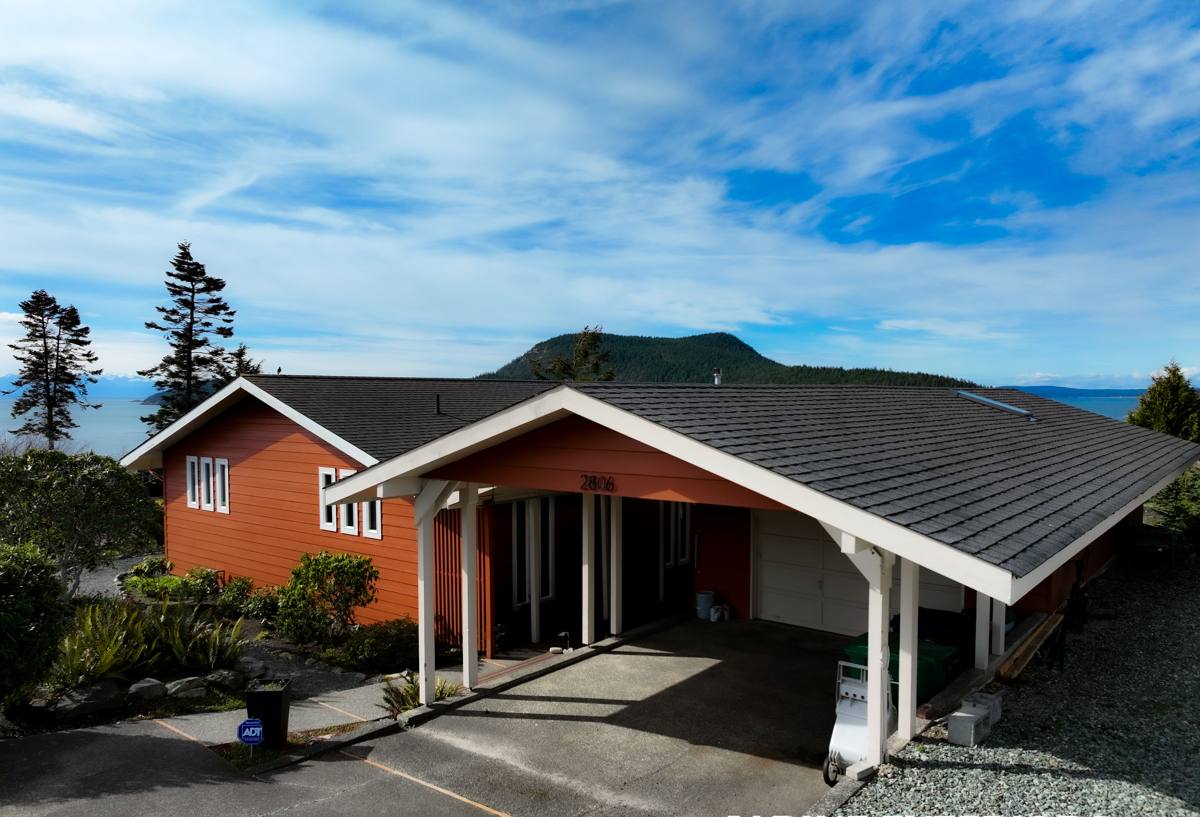
Siding: Why We Only Install James Hardie
Given everything above, siding is where climate exposure shows up first and most visibly. We install James Hardie fiber cement exclusively — we don't offer vinyl, LP SmartSide, primed spruce, cedar, or other fiber cement brands like Cemplank or Allura. That's a deliberate standard, not a sales preference, and it's worth explaining why.
What Makes Hardie Different Here
- Non-combustible core: fiber cement doesn't feed a fire the way wood-based products can, which matters increasingly in this region's wildfire-conscious insurance environment.
- Dimensional stability in wet-dry cycling: fiber cement doesn't swell and contract with moisture the way engineered wood products do, which matters directly in a climate with this much sustained damp exposure.
- ColorPlus factory finish: a baked-on finish applied under controlled conditions holds color and resists the chalking and fading that field-applied paint struggles with under salt air and UV.
- HZ5 and climate-engineered product lines: Hardie's product lines are formulated for specific moisture and freeze exposure, which is relevant in a maritime Pacific Northwest climate even without hard freezes.
- Transferable warranty: a warranty that carries to the next owner protects your investment if you sell, which is a real consideration in a desirable area like this.
We're not going to tell you vinyl or engineered wood siding is garbage — plenty of it is installed and performs adequately elsewhere. But in an environment with sustained moisture, salt exposure, and heavy shade, we've made an internal decision that fiber cement is the only product we're willing to warranty our workmanship against. Vinyl can warp and fade faster under UV and salt cycling; engineered wood products depend heavily on field-sealed cut edges staying sealed, which is a maintenance burden that's easy to fall behind on. Hardie removes that variable.
Installation Matters as Much as the Product
Correct Hardie installation in a driving-rain climate means proper rainscreen or drainage plane detailing, correct fastener spacing and type (stainless or coated fasteners resist the salt-air corrosion issue), factory-mitered or properly caulked joints, and flashing at every horizontal transition. A great product installed to a minimum standard will still underperform here. We install to the manufacturer's wet-climate specifications, not the bare minimum code allows.
Roofing for Moss, Rain, and Wind Exposure
Roofs in the Larrabee area deal with the same moss and moisture pressure as siding, plus wind exposure off the water. A few things matter more here than in a drier climate:
- Underlayment quality and coverage, since driving rain can work under marginal underlayment at eaves and valleys
- Proper ventilation, so trapped moisture in the attic doesn't accelerate sheathing rot from the inside
- Metal flashing material and fastener choice, given salt-air corrosion
- Moss-resistant surface treatments or zinc/copper strips on shaded slopes, since moss growth is close to guaranteed on north-facing, tree-shaded roof planes without some form of mitigation
We also look at tree overhang during a roof inspection — not to tell you to clear-cut your property, but because branch contact and heavy leaf litter are two of the fastest ways to trap moisture and shorten roof life in a wooded area like this.
Windows: Sealing Out Wind-Driven Rain
Window failures in this area are rarely about the glass — they're about the flashing and sealant detail around the frame. Driving rain finds any gap in the water-resistive barrier integration at the rough opening, and once water gets behind a window frame, the damage happens out of sight until it's significant. When we replace windows, correct flashing integration with the wall's drainage plane is non-negotiable, and we pay attention to sill pan details especially on walls that take direct weather exposure.
Decks: Built for Shade and Standing Moisture
Decks under tree cover face a specific set of problems: slower drying time after rain, moss and algae growth on the deck surface itself, and joist and ledger areas that can trap moisture against the house. For decks in shaded, damp conditions we pay close attention to:
- Proper board spacing and airflow underneath to let the structure dry between rain events
- Ledger board flashing where the deck attaches to the house, since this is one of the most common hidden rot points on older decks
- Material selection suited to standing moisture and reduced sun exposure, since UV-cure finishes and some composite products behave differently in heavy shade
Cost Factors for Larrabee Homes
Every project is different, but these are the factors that most often move the price on exterior work in this specific area:
| Factor | Why It Matters Here |
|---|---|
| Site access and tree cover | Wooded lots and steep driveways common in the area can add setup and material-handling time |
| Existing moisture damage | Homes with long-neglected moss or trapped moisture may need sheathing or framing repair discovered during tear-off |
| Flashing and drainage plane detail | Proper wet-climate installation takes more labor time than minimum-code installation |
| Material grade | HZ5 and climate-engineered product lines cost more than standard lines but perform better in sustained moisture |
| Shade and moss mitigation | Adding zinc strips, adjusting ventilation, or specifying moss-resistant treatments is an added line item but reduces future maintenance |
Why a Local Crew Matters Here
Larrabee isn't a climate you can treat generically. A crew that mostly works drier, more open parts of Whatcom County or the greater Puget Sound region may not default to the flashing details, fastener specs, and drainage planning that this particular combination of salt air, driving rain, and shade actually requires. We work this climate regularly, which means we're not guessing at what "wet climate installation" means in practice — it's the standard we build to on every job in this area, not an upgrade we offer.
A Practical Pre-Project Checklist
If you're evaluating your home's exterior condition before reaching out, these are the things worth checking first:
- Moss buildup on north-facing walls, roof valleys, or shaded deck boards
- Soft or spongy siding, especially near ground level or under downspouts
- Peeling or chalking paint, particularly on walls facing the water
- Rust staining below fasteners or flashing
- Window sills or trim that feel soft or show dark staining
- Deck ledger board area for staining or soft wood where it meets the house
- Gutter and downspout function during a heavy rain event
If you're seeing any of these signs, or you're just planning ahead for a home in the Larrabee area, we're happy to take a look and give you a straight, no-pressure assessment. Reach out for a free estimate using the form below — we'll walk the property, explain what we see, and give you honest options for siding, roofing, windows, or decks suited to this specific climate.