 Chuckanut Exterior
 Our Standard, Explained Up Front
Homeowners in Chuckanut sometimes ask why we don't offer a lineup of siding brands the way a lot of contractors do. The honest answer is that we used to, and we stopped. After years of installing and later repairing several different siding products around Whatcom County, we made a deliberate decision to install James Hardie fiber cement siding exclusively. This page explains the reasoning, not to talk down other manufacturers, but so you understand exactly what you're getting when you hire us and why we won't put certain materials on your home even if you ask for them.
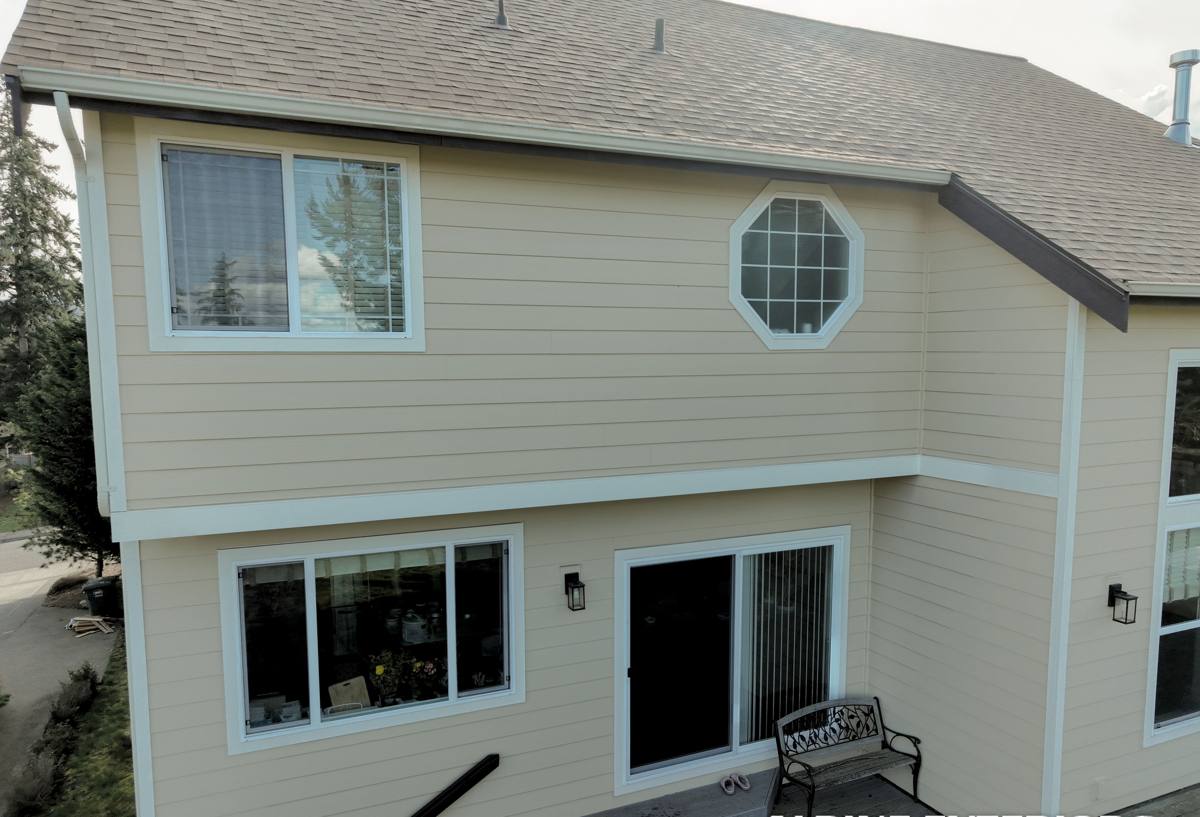
What "Fiber Cement" Actually Is
Fiber cement siding is made from a mix of Portland cement, sand, and cellulose fiber, cured under pressure into dense, dimensionally stable planks and panels. It's not plastic (vinyl), it's not wood-based composite (LP SmartSide), and it's not solid wood (cedar or primed spruce). That composition is the whole story. Cement doesn't rot, doesn't feed insects, and doesn't expand and contract with humidity the way wood-based products do. James Hardie didn't invent fiber cement, but it has been manufacturing it in North America longer than any competitor still selling here, and its plants run tighter quality control than most of the newer entrants.
Why the Material Matters More Than the Brand
We'd rather install a well-engineered fiber cement product than a cheaper alternative from any manufacturer. The reason we landed on Hardie specifically is that the category has real quality variation between brands — plank thickness, cement formulation consistency, and factory finish quality are not identical across the fiber cement field. Hardie has, in our field experience, been the most consistent.
Why We Stopped Installing the Alternatives
None of the products below are frauds or scams. Each has a legitimate use case somewhere. Here's the honest trade-off analysis that led us to stop putting them on Whatcom County homes.
| Product | What It Does Well | Why We Moved Away From It |
|---|---|---|
| Vinyl siding | Low material cost, fast install, no painting | Softens and warps in heat, becomes brittle and cracks in cold snaps, and it's a thin skin over your sheathing rather than a rigid cladding — impact damage and gapping at seams are common over time |
| LP SmartSide | Engineered wood strand product, lighter to handle, reasonable cost | It's still wood fiber at its core — edge and cut-end sealing has to be perfect or moisture gets in, and once it does, swelling and delamination follow. Too much of the long-term performance rides on installer discipline |
| Cemplank / Allura | Also legitimate fiber cement, generally lower cost than Hardie | We've seen more batch-to-batch variation in thickness and finish consistency, and neither carries the same factory-applied finish warranty depth Hardie offers |
| Primed spruce / cedar | Real wood look and feel, renewable material | Requires ongoing repainting and caulk maintenance, and in a wet coastal climate it's the product most likely to need attention within the first decade |
The pattern across every one of these is the same: they all ask the homeowner to either maintain the product regularly or hope the installer was flawless at every seam, cut, and fastener. Fiber cement from a manufacturer with strong quality control removes a lot of that risk before the crew ever shows up.
The James Hardie Product Lines We Install
Hardie isn't a single product — it's a system of lines engineered for different looks and different climates. We select the line based on your home's exposure, not just the style you like.
- HardiePlank lap siding — the most common choice, available in smooth or cedar-textured finishes, installed as traditional horizontal lap boards.
- HardiePanel vertical siding — full sheet panels for board-and-batten or modern vertical looks, often paired with lap siding as an accent.
- HardieShingle — staggered or straight-edge panel shingle siding for a shake look without the maintenance of real cedar shakes.
- HardieTrim — matching trim boards so the whole exterior envelope, not just the field siding, is fiber cement.
- HZ5 climate-engineered formulation — Hardie's product line for wetter, harsher climate zones, which covers our region. It's formulated for better moisture and impact resistance than the standard HZ10 formulation sold in milder, drier parts of the country.
ColorPlus Technology and Why Factory Finish Matters
Most of what we install uses Hardie's ColorPlus factory-applied finish rather than job-site painting. The color is baked on in a controlled factory environment in multiple coats, which gives more even coverage and better fade resistance than a painter can achieve on a ladder in variable weather. It also comes with its own finish warranty separate from the substrate warranty. Field-painted Hardie is still an option for custom colors, but we tell every homeowner up front that ColorPlus is the stronger long-term choice if your color is available in that line.
What Correct Installation Actually Involves
Fiber cement siding's reputation is earned partly by the material and partly by installation discipline — a product this good can still fail early if it's hung wrong. This is the checklist our crews follow on every Hardie job:
- Proper weather-resistive barrier and rainscreen or drainage plane behind the siding, not siding fastened directly to bare sheathing
- Manufacturer-specified minimum clearances from grade, roofing, and decks so water has somewhere to go
- Correct fastener type, spacing, and penetration depth — Hardie is specific about this, and shortcuts here are the single biggest cause of early failures we see on other contractors' work
- Properly sealed and flashed butt joints, corners, and penetrations (vents, hose bibs, light fixtures)
- Blind-nailed or face-nailed per the exposure and wind zone, not whatever's fastest for the crew
- Correct overlap at horizontal laps to shed water rather than wick it
If a Hardie installation fails within its expected lifespan, it's almost always one of these steps that was skipped, not a defect in the boards themselves.
The Warranty, in Plain Terms
James Hardie backs its fiber cement siding with a non-prorated limited warranty that's transferable to a subsequent homeowner if you sell the house, which matters for resale. ColorPlus finishes carry their own separate finish warranty covering the factory coating. Warranty terms are set by the manufacturer and vary by product line and region, so we'll walk you through the specific coverage for your project rather than quote generic numbers here — but the structure itself, non-prorated and transferable, is a meaningfully stronger position than what most vinyl or engineered wood warranties offer.
What This Actually Costs vs. What It Saves
| Factor | Lower-Cost Alternatives | James Hardie Fiber Cement |
|---|---|---|
| Upfront material cost | Generally lower | Higher |
| Repainting cycle (ColorPlus) | Often every 5-10 years for wood-based products | Typically well beyond 15 years before repaint is needed |
| Impact and moisture resilience | Variable, often the weak point | Strong when installed to spec |
| Resale / appraisal perception | Neutral to slightly negative in this market | Generally viewed favorably by local appraisers and buyers |
Over a 20-year ownership window, the maintenance and repainting savings on Hardie typically offset a meaningful portion of the higher upfront cost. We'll never claim it's the cheapest option on day one — it isn't — but we can walk you through real numbers for your specific project.
Why Chuckanut's Climate Made This an Easy Call
Chuckanut sits right up against Bellingham Bay, which means salt-laden air moving off the water year-round, driving rain off the Sound during winter storms, and a moss and lichen season that stretches for much of the year thanks to constant shade and moisture along the wooded hillsides here. Whatcom County homes take a beating that drier inland climates simply don't see. Wood-based products in this environment are fighting a losing battle against moisture intrusion unless every single seal and cut end is perfect and stays that way. Vinyl handles the moisture reasonably well but doesn't hold up to the wider temperature swings and impact events as well as a rigid cement board. Fiber cement, installed with the drainage and flashing details this climate demands, is the product we've found actually holds its finish and its shape here.
Making the Decision for Your Home
We're not going to pretend every home needs the top-tier line or that ColorPlus is always necessary — plenty of straightforward re-sides do fine with standard HardiePlank in a stock color. What we won't do is install a product we don't believe will hold up on a Whatcom County exterior for the long haul, even if it's the cheaper quote. If that means we're not the right fit for a job, we'll say so plainly rather than sell you something we wouldn't put on our own homes.
If you're weighing a siding replacement or new build in Chuckanut and want a straight answer about what product and installation approach fits your home, we're glad to walk the exterior with you and put together a free, no-pressure estimate.