 Chuckanut Exterior
 Roof Repair Built for Bellingham's Weather
Bellingham roofs work harder than most people realize. Between the salt-laden air off the bay, the driving rain that rolls in off the water for months at a time, and a moss season that seems to start earlier every year, a roof here is under near-constant pressure. A repair that would hold up fine in a drier inland climate can fail quickly in Whatcom County if it isn't done with local conditions in mind.
We repair roofs across the Bellingham area every week, and the patterns are consistent. Moisture finds the smallest gap and doesn't leave. Moss holds water against shingles and wood long after a storm has passed. Salt air accelerates corrosion on metal flashing, fasteners, and vents faster than manufacturers' general warranty language accounts for. Good roof repair here isn't just about patching a leak — it's about understanding why that spot failed in this climate and making sure the fix outlasts the next few wet seasons.
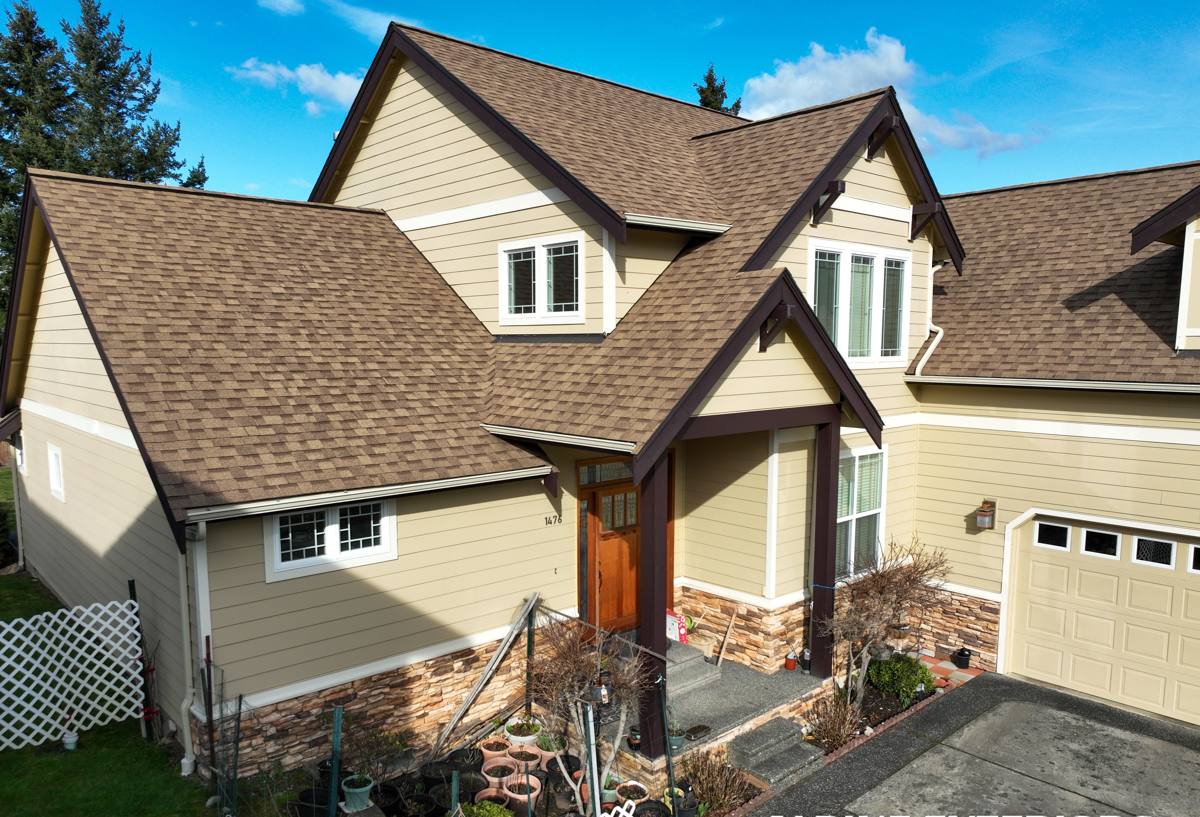
Signs Your Bellingham Roof Needs Repair
Some roof problems are obvious. Others show up quietly over a season or two, especially under a heavy tree canopy or on a north-facing slope that never fully dries out. Catching them early is almost always cheaper than waiting.
- Water stains on ceilings or upper interior walls, especially after a heavy rain event
- Thick moss growth, particularly in shaded valleys or along the north side of the roof
- Granules collecting in gutters or at the base of downspouts
- Curling, cracked, or missing shingles
- Rust streaks or soft spots around metal flashing and vent boots
- Daylight visible through the attic roof deck
- Sagging areas, especially where moss or debris has held moisture against the roof for a long time
- Higher-than-normal heating bills, which can point to a compromised roof deck or insulation getting wet
If you're seeing even one or two of these, it's worth having someone look before the next storm cycle rather than after.
What Causes Most Repairs in This Area
Not every roof problem is caused by age. In Bellingham, climate-driven wear shows up in a fairly predictable set of ways, and knowing the cause changes how the repair should be done.
| Issue | Common Local Cause | Risk If Left Alone |
|---|---|---|
| Moss buildup on shingles | Shaded, slow-drying roof sections combined with a long wet season | Lifts shingle edges, traps moisture, and can work its way under the roofing material |
| Flashing leaks around chimneys, vents, and skylights | Driving, wind-blown rain forcing water past standard seals | Slow leaks into the roof deck and interior framing, often before any interior stain appears |
| Corroded fasteners or metal flashing | Salt air near the bay accelerating oxidation | Loose flashing, exposed nail heads, and eventual water entry points |
| Soft or spongy roof deck | Long-term moisture intrusion, often from a leak that went unnoticed | Structural repair needed in addition to the roofing surface |
| Granule loss and shingle brittleness | Repeated wet-dry cycling over many seasons | Reduced UV and water protection, shorter remaining shingle life |
What a Correct Repair Actually Involves
Diagnosis Before Patching
A leak's entry point and the spot where water shows up inside your home are often not the same place — water travels along rafters, sheathing, and underlayment before it drips. A repair that only addresses the visible symptom without tracing the actual path tends to come back within a season or two. We start by getting on the roof (not just looking from the ground) and, where needed, checking the attic side for staining, wet insulation, or deck damage.
Matching the Fix to the Cause
Moss-related damage needs the moss and debris removed and the affected shingles evaluated for granule loss and lifting, not just a chemical treatment sprayed over the top. Flashing failures need the flashing replaced or resealed with materials suited to sustained wet exposure, not a bead of sealant over the old metal. Corroded fasteners near the bay need corrosion-resistant replacements, since standard fasteners in that environment will simply fail again on a similar timeline.
Protecting What's Underneath
If water has reached the roof deck, that wood needs to be assessed and, if soft or delaminating, replaced before new roofing material goes over it. Roofing over a compromised deck is one of the most common reasons a "repaired" roof leaks again — the surface looks fine, but the structure underneath it isn't.
Repair or Replace? How We Help You Decide
Not every roof problem calls for a full repair — sometimes it calls for a real conversation about whether the roof is nearing the end of its useful life. We look at the age of the roofing material, how widespread the damage is, and how much of the roof has already been affected by moisture or moss, then give you a straight answer.
| Factor | Leans Toward Repair | Leans Toward Replacement |
|---|---|---|
| Age of roofing material | Well within expected lifespan | Near or past expected service life |
| Extent of damage | Isolated to one section or feature | Spread across multiple roof planes |
| Roof deck condition | Solid, dry, no soft spots | Soft, delaminating, or repeatedly wet |
| History of prior repairs | First or second repair in that area | Same spot repaired multiple times already |
We'd rather tell you honestly that a repair will hold for several more years than sell you a replacement you don't need yet — and we'll tell you just as honestly when a repair is only going to be a short-term fix.
Our Roof Repair Process
- Inspection. We walk the roof and check the areas most exposed to weather, moss, and past moisture — flashing points, valleys, shaded slopes, and any spot you've already noticed a problem.
- Honest assessment. We explain what we found, what caused it, and what it will take to fix it correctly — including if a full repair isn't the right call.
- Written estimate. You get a clear scope of work and price before anything happens, so there are no surprises mid-job.
- The repair itself. We remove damaged material, address the underlying cause (moss, flashing, deck, fasteners), and install new material suited to this climate.
- Cleanup and check. Debris and old material are cleared, and we confirm the repair is sound before we consider the job done.
What Affects Roof Repair Cost in Bellingham
Every roof is different, so we're not going to throw out a number that doesn't mean anything until we've actually seen the roof. What we can tell you is what tends to move the price up or down.
| Cost Factor | Why It Matters |
|---|---|
| Size of the damaged area | More material and labor to remove and replace |
| Roof pitch and access | Steeper or harder-to-reach roofs take more time and equipment |
| Deck condition underneath | Rotten or soft decking adds structural repair on top of the roofing work |
| Roofing material | Asphalt, cedar, metal, and other materials have different repair methods and material costs |
| Moss and debris removal | Heavy buildup takes extra time to clear safely before repairs can begin |
| Flashing and fastener condition | Corroded or failing components often need full replacement, not just resealing |
Most straightforward repairs are a modest expense compared to a full roof replacement — but a small leak ignored for a couple of wet seasons can turn into deck repair and a much larger bill. When in doubt, an inspection costs you far less than waiting.
Keeping a Repaired Roof in Good Shape
A repair is only as good as the maintenance that follows it, especially in a climate that stays wet for months at a stretch.
- Keep gutters and downspouts clear so water isn't backing up under the roof edge
- Trim back overhanging branches to cut down on shade, debris, and moss growth
- Have moss removed before it builds up thick enough to lift shingles
- Do a visual check after major windstorms for lifted or missing shingles
- Get a professional look every couple of years, even if nothing seems wrong — small issues are cheaper to catch early
Why Hire a Crew That Already Works in Bellingham
A roofer who mostly works drier inland areas doesn't see moss-driven failures, salt-air corrosion, or wind-driven rain leaks often enough to know the small differences that matter. We work on roofs around Bellingham and the rest of Whatcom County regularly, so we're not guessing at how this climate treats a roof over time — we're repairing the same categories of damage on a routine basis and adjusting our approach based on what actually holds up here versus what looks fine on paper.
That local experience shows up in the details: which flashing details actually shed wind-driven rain, how aggressively moss needs to be addressed on a shaded slope, and which fasteners are worth the extra cost this close to the water. It's the difference between a repair that's technically correct and one that's actually built for where it's installed.
If you've got a leak, moss buildup, or damaged shingles on your Bellingham home, we're happy to take a look and give you a straightforward, no-pressure estimate — just fill out the form below to get started.