 Chuckanut Exterior
 Why Bellingham Roofs Wear Out Differently
A roof in Bellingham doesn't fail the same way a roof does in a dry inland climate. Three things work on it year-round: salt-laden air off the Sound, driving rain that gets pushed sideways during winter storms, and a moss season that can run most of the year in shaded, north-facing sections. None of these are dramatic on their own, but stacked together over ten or fifteen years, they shorten the useful life of a roof system faster than most homeowners expect, and they punish shortcuts in ways that don't show up until the damage is already inside the attic.
Salt air accelerates corrosion on exposed metal — flashing, fasteners, vent caps, and gutter hardware — long before the shingles themselves look worn. Driving rain finds its way under improperly lapped flashing and around penetrations that were sealed instead of properly flashed. And moss doesn't just sit there looking green; its root structure lifts shingle edges, holds moisture against the roof deck, and slowly works granules loose. A roof replacement done right in this part of Whatcom County has to account for all three, not just swap old shingles for new ones.
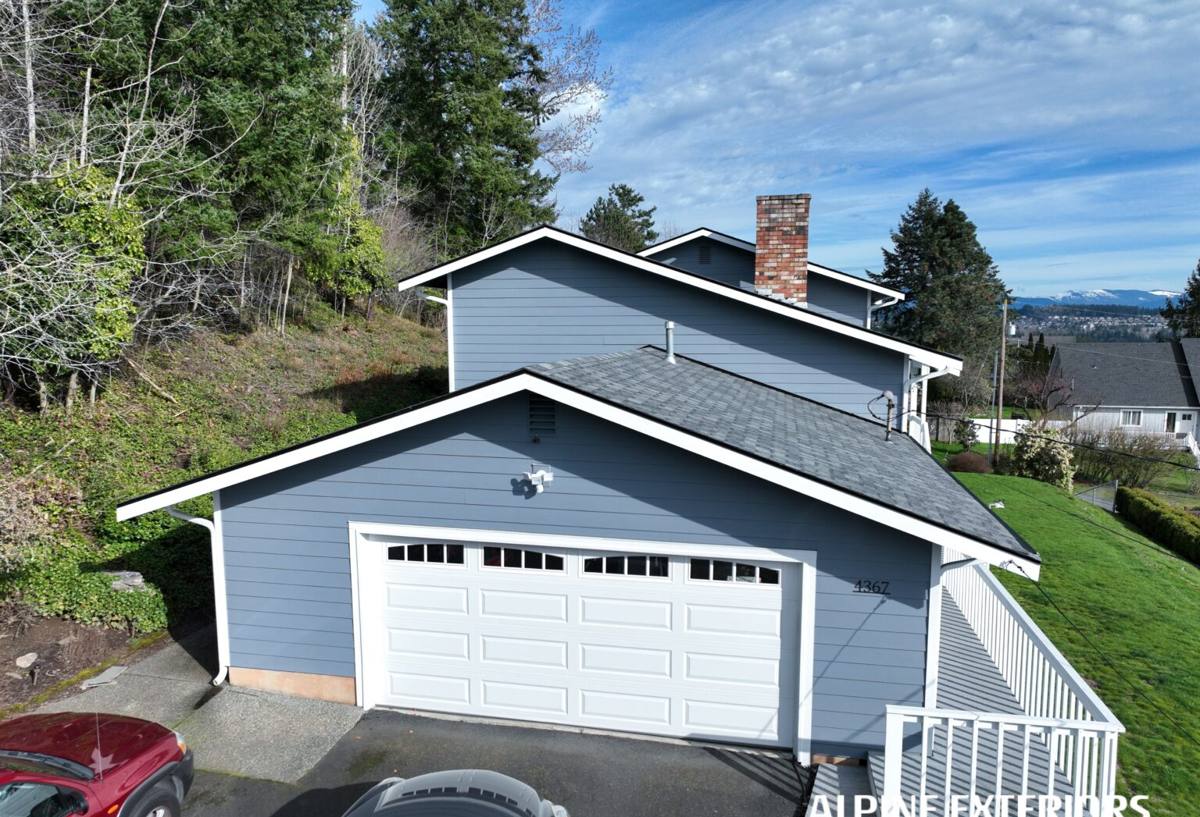
Signs a Bellingham Roof Needs Replacing, Not Patching
Not every roofing problem calls for a full replacement. But there's a point where patch-and-repair stops making financial sense and starts throwing money at a roof that's already past its practical service life. Here's what we look for:
- Granule loss heavy enough that you can see bare asphalt in multiple spots, not just one worn valley
- Shingles that are curling, cupping, or cracking across large sections rather than isolated tabs
- Moss growth that's returned within a year or two of cleaning, especially on north-facing slopes
- Soft spots or noticeable give when walking the roof, which usually means deck damage underneath
- Daylight visible through the roof deck from inside the attic, or staining on rafters and sheathing
- Flashing around chimneys, skylights, or vent pipes that's rusted, lifted, or was caulked instead of properly installed
- A roof that's already had two or more layers of shingles installed over the years
- Interior ceiling stains that reappear after rain, even after a repair was made
If a roof is showing two or three of these at once, patching individual spots tends to just delay the inevitable and can end up costing more over a few years than one properly done replacement.
What a Correct Roof Replacement Actually Involves
A roof replacement isn't just new shingles laid over what's there. Done correctly, it's a full system rebuild from the deck up, and the parts most homeowners never see are the parts that determine whether the roof holds up through a Whatcom County winter.
Tear-Off and Deck Inspection
We remove the existing roofing down to bare deck. This is the only point where hidden rot, soft sheathing, or old water damage from a slow leak actually gets found and dealt with. Skipping this step — or "roofing over" an existing layer — traps whatever moisture damage is already there and hides it under a warranty that won't cover the real problem.
Underlayment and Water Protection
Given how much wind-driven rain this area sees, underlayment choice matters more here than in drier climates. Self-adhered ice-and-water barrier goes in along eaves, valleys, and around every penetration — the spots where wind-driven rain is most likely to find a way in — with synthetic underlayment covering the rest of the deck as a secondary water barrier.
Ventilation
Balanced intake and exhaust ventilation keeps the attic space dry and temperature-regulated. This isn't optional in a climate this wet — poor ventilation traps moisture in the attic, which condenses on the underside of the deck and rots it from the inside, regardless of how good the shingles above are.
Flashing and Penetrations
Every chimney, skylight, vent stack, and roof-to-wall transition gets new metal flashing, properly stepped and lapped — not caulked over old flashing. Caulk is a maintenance item, not a waterproofing method, and it's usually the first thing to fail when salt air and UV exposure get to it.
Roofing Material Options for Whatcom County Homes
There's no single "right" material for every Bellingham roof — it depends on the home's exposure, roof pitch, and how much moss and moisture pressure a given slope sees. Here's an honest breakdown of what we install and how each holds up locally:
| Material | Moss & Moisture Behavior | Typical Lifespan | Best Fit |
|---|---|---|---|
| Architectural (laminated) asphalt shingle | Algae-resistant granules slow moss/moss-related staining; good performance with proper ventilation | 25–30 years | Most Bellingham homes; best value-to-performance balance |
| 3-tab asphalt shingle | Lower profile holds less debris but shorter lifespan means less time to weather salt/UV exposure | 15–20 years | Budget-driven projects, secondary structures |
| Standing seam metal | Sheds moss and moisture very well due to smooth, steep-shedding surface; needs marine-grade fasteners near the water to resist salt corrosion | 40–50+ years | Homes with heavy shade/moss history or higher upfront budget |
| Cedar shake | Attractive but holds moisture and is the highest-maintenance option in a wet, mossy climate | 20–30 years with upkeep | Homeowners committed to regular maintenance and treatment |
We're upfront that cedar shake, while a classic Pacific Northwest look, carries the most maintenance burden in exactly the conditions Bellingham sees most — shade, moisture, and moss pressure. If a homeowner wants that appearance, we'll install it correctly, but we'll also walk through the maintenance schedule it requires so there are no surprises five years in.
How We Handle a Bellingham Roof Replacement
- On-site inspection. We walk the roof and attic, check the deck condition, and identify problem areas before quoting anything.
- Written estimate. Material options, scope, and a clear price — no vague allowances that turn into change orders later.
- Material and color selection. We help match the roof to the home and the neighborhood without overselling upgrades that don't add real value.
- Tear-off and deck repair. Full removal, deck inspection, and replacement of any damaged sheathing before anything new goes down.
- Underlayment, flashing, and ventilation installed to spec. This is where most of the long-term performance actually comes from.
- Final installation and cleanup. Magnetic sweep for stray nails, full site cleanup, and a walk-through so you know exactly what was done.
What Affects the Cost of a Roof Replacement
Costs vary based on the specifics of the home, but these are the main factors that move the price up or down on most Bellingham projects:
| Factor | Why It Matters |
|---|---|
| Roof size and number of facets | More square footage and more valleys/hips mean more material and labor time |
| Roof pitch and accessibility | Steep or hard-to-access roofs require more safety setup and take longer to work |
| Deck condition | Rotted or soft sheathing found during tear-off adds repair cost, but is far cheaper to fix now than after a new roof is installed over it |
| Material choice | Asphalt, metal, and cedar carry different material and labor costs, as shown above |
| Layers being removed | Tearing off two old layers instead of one adds disposal and labor time |
| Flashing and ventilation upgrades | Bringing older systems up to current standards is worth the added cost given how wet this climate is |
We give a firm, itemized quote after the on-site inspection — not a phone estimate — so the number reflects the actual roof, not a rough average.
Why Hiring a Crew That Already Works Bellingham Matters
A roofing crew that mostly works dry, inland climates will often spec a roof the same way regardless of where it's going. A crew that works Whatcom County regularly knows which slopes hold moss longest, which flashing details actually hold up against wind-driven rain off the Sound, and which fastener grades resist salt-air corrosion instead of rusting out in a few years. That knowledge doesn't come from a manual — it comes from replacing roofs in this specific climate season after season and seeing what holds up and what doesn't.
It also matters for scheduling and follow-through. A local crew isn't juggling travel time across the region, can respond quickly if a question comes up after installation, and has a reputation in the community that depends on the work holding up — not just looking good on installation day.
After Your New Roof Goes On
A correctly installed roof still benefits from basic upkeep, especially given how much moss pressure this area sees. A short annual routine goes a long way toward protecting the investment:
- Have gutters cleared at least twice a year so water isn't backing up under the roof edge
- Keep overhanging branches trimmed back to reduce shade and debris buildup on moss-prone slopes
- Have moss growth treated early, before it has a chance to root under shingle edges
- Do a visual check after major windstorms for lifted shingles or displaced flashing
- Schedule a professional roof check every few years, even without an obvious problem
None of this is intensive, but skipping it is how a well-installed roof loses years off its lifespan in a climate this wet.
If you're weighing repair versus replacement, or just want an honest read on where your roof actually stands, we're happy to take a look. The estimate is free, there's no pressure, and you'll get a straight answer either way — use the form below to get started.