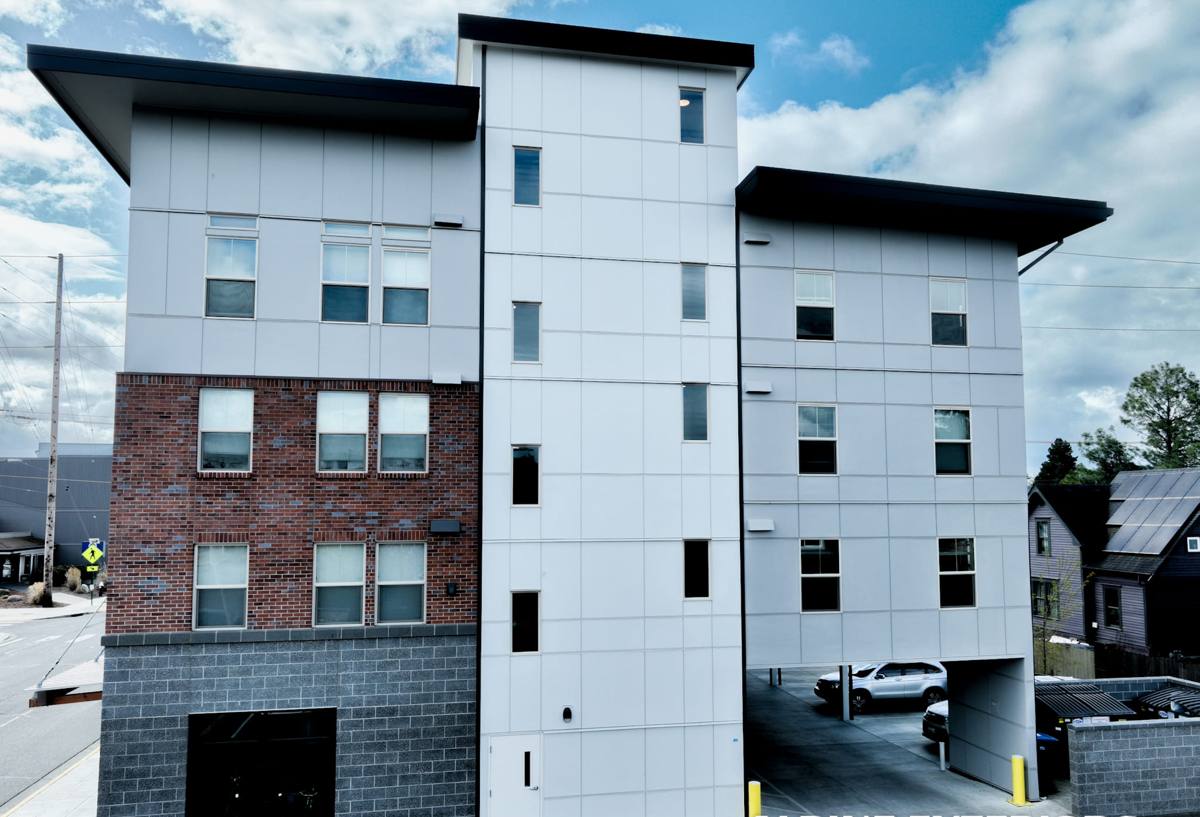
 Chuckanut Exterior
 Why Board & Batten Fits Bellingham's Coastal Homes
Board and batten siding — wide vertical panels with narrow strips covering the seams — has a clean, tailored look that suits the farmhouse, craftsman, and modern homes common around Bellingham. It's also one of the more demanding siding profiles to get right, because every seam is a potential water path and every batten is a fastening point that has to hold up to real weather, not showroom conditions. In a place like Chuckanut and the surrounding Whatcom County shoreline, "real weather" means salt-laden air off the bay, driving rain that comes in sideways more often than straight down, and a moss season that can stretch most of the year. A board and batten job that looks great in month one and starts showing seam stains, swollen edges, or moss streaking by year three usually failed at the details, not the concept.
What Bellingham's Climate Puts Board & Batten Siding Through
Salt Air Off the Bay
Homes closer to the water deal with airborne salt that accelerates corrosion on fasteners, flashing, and any exposed metal trim. Over time, unprotected or undersized fasteners can streak, loosen, or fail well before the siding itself would otherwise need attention. This matters more with board and batten than with lap siding, because the vertical battens create more individual fastening points exposed to the weather.
Driving Rain and Wind-Driven Moisture
Bellingham doesn't just get rain — it gets rain pushed sideways by wind coming off the water, which finds its way into any gap a builder assumed water would simply run past. Vertical board and batten seams are naturally more exposed to wind-driven moisture than horizontal lap siding, so the drainage plane behind the panels and the quality of every seam and joint matter enormously.
The Long Moss Season
Cool, damp, shaded conditions for much of the year make moss and algae growth a near-constant issue on north-facing walls and anywhere siding stays damp longer than it should. Porous or absorbent siding materials hold that moisture at the surface, feeding growth and slowly breaking down over repeated wet-dry cycles. Siding that resists moisture absorption at the surface simply has less to feed on.
What a Correct Board & Batten Installation Actually Involves
A Rainscreen Gap and Working Drainage Plane
Correct installation isn't just nailing panels to the wall. It starts with a weather-resistive barrier, and in a climate like this, a rainscreen gap behind the siding so any moisture that does get past the surface has somewhere to drain and dry instead of sitting against the sheathing. Skipping this step is one of the most common shortcuts that shows up years later as trapped moisture damage, and it's invisible once the siding is up — which is exactly why it needs to be done right the first time.
Fastening and Batten Spacing
Batten spacing has to account for the panel width and expected movement, with fasteners landing in solid framing at the spacing the manufacturer specifies — not just "close enough." Under-fastened or misaligned battens are a common cause of buckling and seam gaps that show up after a few seasons of wetting and drying.
Flashing at Windows, Corners, and Trim
Every window, door, corner, and trim transition is a place water wants to get behind the siding. Proper head flashing, kickout flashing at roof-wall intersections, and sealed (not just caulked-over) corner details are what actually keep water out — caulk is a backup, not a strategy. In a driving-rain climate, these details separate a job that lasts decades from one that needs re-caulking every couple of years.
Why We Install James Hardie Board & Batten — Not Vinyl, LP, or Cedar
We only install James Hardie fiber cement siding, including Hardie's board and batten profiles. That's a deliberate standard, not a lack of options. Here's the honest comparison for this specific application and this specific climate:
| Material | How it handles salt air & driving rain | How it handles moss season | Long-term trade-off |
|---|---|---|---|
| James Hardie fiber cement | Non-combustible, engineered for Pacific Northwest moisture exposure (HZ product lines); factory-applied ColorPlus finish resists fading and doesn't need repainting on the same cycle as wood | Doesn't absorb moisture like wood, so it gives moss and algae less to hold onto at the surface | Heavier material, requires correct fastening and cutting technique |
| Vinyl board and batten | Can warp or bow under wind-driven rain and temperature swings; seams rely on overlap, not sealed joints | Surface doesn't feed growth directly, but trapped moisture behind panels is common if house wrap detailing is poor | Lower upfront cost, but limited repairability and a shorter realistic service life in coastal wind exposure |
| LP SmartSide (engineered wood) | Treated wood substrate is more moisture-sensitive at cut edges and seams than fiber cement | Wood-based product; edge swelling and delamination risk increases in prolonged damp conditions if any seal is compromised | Needs disciplined edge sealing and maintenance to hit its full service life here |
| Cedar / primed spruce | Natural wood movement with humidity; salt air accelerates finish breakdown | Absorbs moisture readily; classic surface for moss and algae to establish on north-facing walls | Highest ongoing maintenance — refinishing, caulking, and moss treatment on a recurring schedule |
Cedar and primed wood board and batten can look beautiful, and we understand why some homeowners want that look — but keeping it looking that way in this climate means a real, recurring maintenance commitment. Vinyl and engineered wood both cut upfront cost, but each carries a specific weak point in salt air, wind-driven rain, or sustained dampness. James Hardie's fiber cement formulation, factory finish, and engineered product lines are built around exactly the conditions Whatcom County throws at a wall, which is why it's the only material we put our name behind.
Our Process for Bellingham Board & Batten Projects
- On-site assessment — we look at current siding condition, moisture history, wall orientation (especially north-facing and water-facing walls), and existing trim and flashing.
- Detailed estimate — a clear scope covering tear-off (if needed), house wrap, rainscreen strategy, flashing details, panel and batten layout, and finish selection.
- Prep and moisture barrier — installing or verifying the weather-resistive barrier and drainage plane before any siding goes up.
- Panel and batten installation — laid out and fastened to manufacturer spec, with attention to expansion gaps and fastener placement.
- Flashing and trim — windows, corners, and roof-wall intersections detailed to shed wind-driven rain, not just resist it.
- Final walkthrough — reviewing seams, caulking, and finish with the homeowner before we consider the job done.
Cost Factors for Board & Batten Siding in Bellingham
| Factor | Why it moves the price |
|---|---|
| Existing siding removal | Tear-off, disposal, and sheathing repair add labor beyond a install-over-existing scope |
| Wall orientation and exposure | Water-facing and north-facing walls often need extra flashing and drainage detailing |
| Trim and architectural detail | Corners, window returns, and gable detailing take more time on board and batten than flat lap siding |
| Substrate condition | Rot or moisture damage found once old siding comes off needs repair before new siding goes on |
| Panel and finish selection | Color and texture options within the Hardie line carry different material costs |
We don't quote broad numbers without seeing the house — a two-story water-facing wall with existing moisture damage is a different job than a single-story addition — but we'll walk you through exactly what's driving your estimate before any work starts.
What Board & Batten Needs — and Doesn't Need — in This Climate
Fiber cement board and batten, installed correctly, is genuinely low-maintenance compared to wood alternatives, but "low-maintenance" doesn't mean "no attention." A short seasonal checklist keeps it performing the way it should:
- Rinse off accumulated salt spray and grime a couple of times a year, especially on walls facing the water
- Check caulking at trim and window transitions annually for cracking or separation
- Keep gutters and downspouts clear so water isn't sheeting down siding it wasn't meant to carry
- Trim back vegetation and landscaping that keeps a wall shaded and damp longer than it needs to be
- Watch north-facing and low-sun walls for early moss or algae buildup and address it before it spreads
- Have any impact damage or loose batten checked promptly rather than waiting for the next issue to pile on
Choosing a Board & Batten Contractor Who Already Works Bellingham
Board and batten rewards a crew that already understands local wind exposure, water-facing wall behavior, and how to detail flashing for driving rain rather than a generic install approach. A contractor who's only worked drier inland climates may cut corners on the rainscreen gap or flashing details that don't matter as much elsewhere but matter constantly here. Ask any contractor bidding board and batten work in Bellingham how they handle drainage behind the panels, how they detail corners and window returns, and what siding material they'd put on their own house given the salt air and moss exposure — the answers tell you a lot about whether they've actually done this work in this climate before.
If you're weighing board and batten siding for a home in Bellingham or elsewhere around Chuckanut, we're happy to take a look and walk you through what your specific walls need. Fill out the form below for a free, no-pressure estimate.