 Chuckanut Exterior
 Exteriors Built for South Hill's Weather
South Hill sits inside the stretch of Whatcom County that takes the full brunt of Pacific Northwest coastal weather. Homes here deal with a mix that's tougher on exteriors than most people realize: salt-laden air drifting in off the water, long stretches of driving rain angled by wind rather than falling straight down, and a moss season that can run from early fall through late spring. Any one of those factors is manageable on its own. Together, year after year, they're what separates a home that looks tired at ten years from one that still looks sharp at twenty-five.
We're a local exterior crew that works this area regularly, which means we're not guessing at how a product or installation detail will hold up here — we're watching it happen on houses a few streets over from the last job. That local feedback loop shapes everything from the materials we'll install to the flashing details we won't skip.
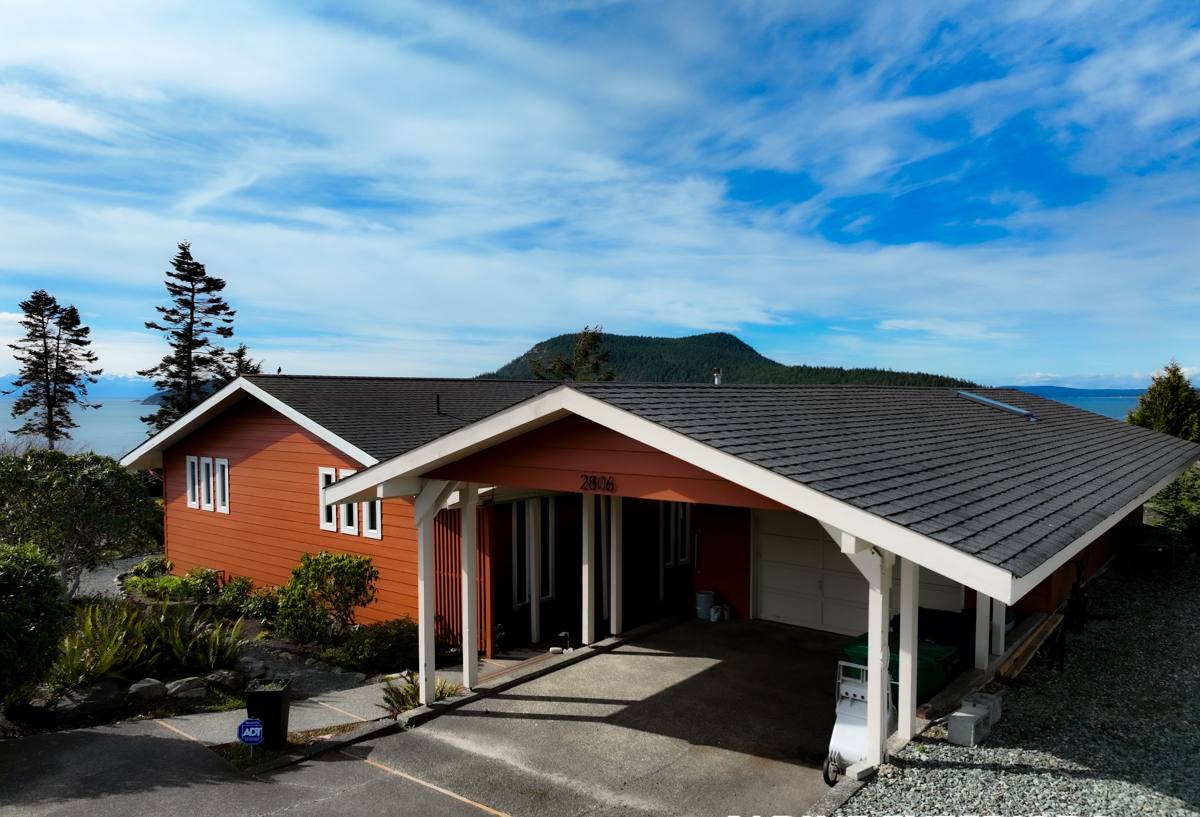
Why Salt Air and Driving Rain Matter More Than People Expect
Salt air isn't just a coastal-town talking point. Airborne salt accelerates corrosion on fasteners, flashing, and hardware, and it works its way into microscopic cracks and seams that wouldn't matter in a drier inland climate. Combine that with wind-driven rain — the kind that hits siding and window trim at an angle instead of running straight off a roofline — and you get moisture intrusion at joints and laps that a home fifty miles inland simply doesn't have to deal with.
This is why exterior work in South Hill isn't just about picking a good-looking material. It's about installation details: proper flashing at every penetration, correct lap and gap spacing, sealants rated for the exposure, and fasteners that won't corrode and stain the finish within a few years.
What This Looks Like on an Older Home
On homes that are 20-plus years old in this area, we typically see the same handful of issues:
- Soft or delaminating siding at the bottom courses and around window trim, where wind-driven rain collects
- Rust streaking below nail heads or hardware on older siding and trim
- Moss and algae buildup on north-facing roof slopes and shaded siding sections
- Deck boards that have cupped, split, or gone soft near ground contact or under debris buildup
- Window seals that have failed, showing fogging between panes or drafts around the frame
Siding That's Actually Suited to This Climate
We install James Hardie fiber cement siding exclusively — we don't carry vinyl, LP SmartSide, or other engineered wood or composite products. That's a deliberate standard, not a limitation on options. Fiber cement doesn't absorb moisture the way wood-based siding can, it doesn't warp or soften from repeated wet-dry cycles, and it's non-combustible, which matters given how dry Northwest summers have trended in recent years even in a wet region like this.
Hardie's HZ5 product line is engineered specifically for climates with significant moisture exposure, and the factory-applied ColorPlus finish holds up to UV and salt exposure far better than field-applied paint, which tends to fail first at laps and butt joints — exactly the spots where South Hill's wind-driven rain finds its way in.
None of that replaces good installation. Fiber cement still needs correct clearances off grade and roof lines, properly flashed window and door openings, and factory-cut or properly sealed field cuts. A great product installed loosely will still let water in; that's true of any siding.
Roofing in a Long Moss Season
Moss is more than a cosmetic issue. It holds moisture against roofing material, works into shingle laps, and over time can lift shingles enough to let water underneath. North-facing slopes and roofs shaded by mature trees — common throughout this area — are the most at risk. Gutters clogged with needles and moss debris compound the problem by backing water up under the roof edge instead of letting it drain.
Our roofing work in this area focuses on the details that actually reduce moss and moisture problems long-term: proper ventilation so roof decks dry out between rain events, clean flashing at valleys and penetrations, and gutter systems sized and pitched to actually move water off the roof instead of holding it.
Windows: Condensation, Drafts, and Salt Exposure
Older or lower-grade windows in this climate tend to show their age through fogged double panes, drafts, and hardware that's stiff or corroded from salt exposure. Replacement windows here should be rated for the moisture and wind exposure typical of Whatcom County's coastal areas, with attention paid to flashing integration with the surrounding siding — a window that's well-sealed on its own but poorly flashed into the wall assembly will still leak.
When we replace windows alongside a siding project, we treat the window opening as part of the whole water-management system rather than a separate task. That's one advantage of having one crew handle siding, roofing, and windows together instead of coordinating between separate trades.
Decks: Built to Handle Wet-Dry Cycling
Decks in South Hill face constant wet-dry cycling, shaded moisture retention from surrounding trees, and moss growth on horizontal surfaces that hold water. The most common failure points we see are ledger board connections, joists in ground contact or poor airflow zones, and decking that wasn't gapped correctly for drainage and seasonal movement.
A deck built for this climate needs adequate ventilation underneath, correct fastener spacing to allow water to shed rather than pool, and materials or finishes chosen with moss and mildew resistance in mind, not just appearance.
Cost Factors to Understand Before You Budget
Exterior project costs vary by scope, home size, and condition of what's being replaced, but a few factors consistently move the number more than homeowners expect:
| Factor | Why It Matters Here |
|---|---|
| Existing water damage | Hidden rot behind old siding or under old decking often isn't visible until removal begins, and it has to be addressed before new material goes on |
| Roof pitch and access | Steeper or harder-to-access rooflines take longer to work safely and affect moss removal and flashing detail work |
| Number of penetrations and corners | Every window, vent, and outside corner needs flashing and trim work — more of them means more labor, not just material |
| Tree cover and shading | Homes under heavy tree cover often need more moss remediation and ventilation work built into the scope |
| Material choice | Fiber cement has a higher upfront cost than vinyl or engineered wood but a longer service life and lower maintenance burden in this climate |
Our Process for South Hill Projects
What a Typical Project Looks Like
- On-site assessment of siding, roofing, windows, and/or decking condition, including checking for hidden moisture damage
- A written scope and estimate that spells out materials, flashing details, and what's included
- Removal of old material with a check for rot or moisture damage in the wall or deck framing before anything new goes on
- Installation to manufacturer spec, with attention to flashing, clearances, and fastening appropriate for coastal exposure
- A final walkthrough so you understand what was done and what maintenance, if any, it needs going forward
Questions Worth Asking Any Exterior Contractor Here
- Are you licensed and insured to work in Washington, and can you provide proof?
- How do you handle flashing at windows, doors, and roof penetrations?
- What happens if you find rot or water damage once old siding or decking comes off?
- What's the manufacturer's warranty, and what's your own workmanship warranty?
- Have you worked on homes in this specific area before, and what issues do you typically see here?
Why a Local Crew Makes a Difference
A crew that works Whatcom County regularly knows which details actually matter in this climate — where moss builds up fastest, which sides of a house take the worst of the wind-driven rain, and what installation shortcuts show up as problems in five years instead of twenty. That's not something you get from a general contractor who does one job in the area and moves on. It shows up in the small decisions: how flashing is lapped, where a deck's ventilation gaps are cut, which roof valleys get extra attention during a moss-heavy season.
If your South Hill home's siding, roofing, windows, or deck are showing wear from salt air, rain, or moss, we're happy to take a look and walk you through what we see — no pressure, no obligation. Fill out the form below to schedule a free estimate.