 Chuckanut Exterior
 Building for the Lake Samish Microclimate
Lake Samish sits in a forested basin in southern Whatcom County, tucked between the Chuckanut hills and the Skagit County line. It's a different exterior environment than open, exposed shoreline property. Tall conifers ring most of the lake, tree canopy shades roofs and siding for much of the day, and the surrounding hillsides funnel moisture and cooler air down toward the water. That combination — persistent shade, restricted airflow, and long stretches of damp weather — is exactly the kind of environment where exteriors age faster than homeowners expect.
Add in the broader Chuckanut climate pattern of driving rain off the Salish Sea and a moss season that can run eight or nine months out of the year in shaded spots, and you get a set of conditions that punishes the wrong siding choice, the wrong roofing detail, or a window installed without proper flashing. We've built our business around understanding these local patterns rather than applying a one-size-fits-all approach pulled from a drier region.
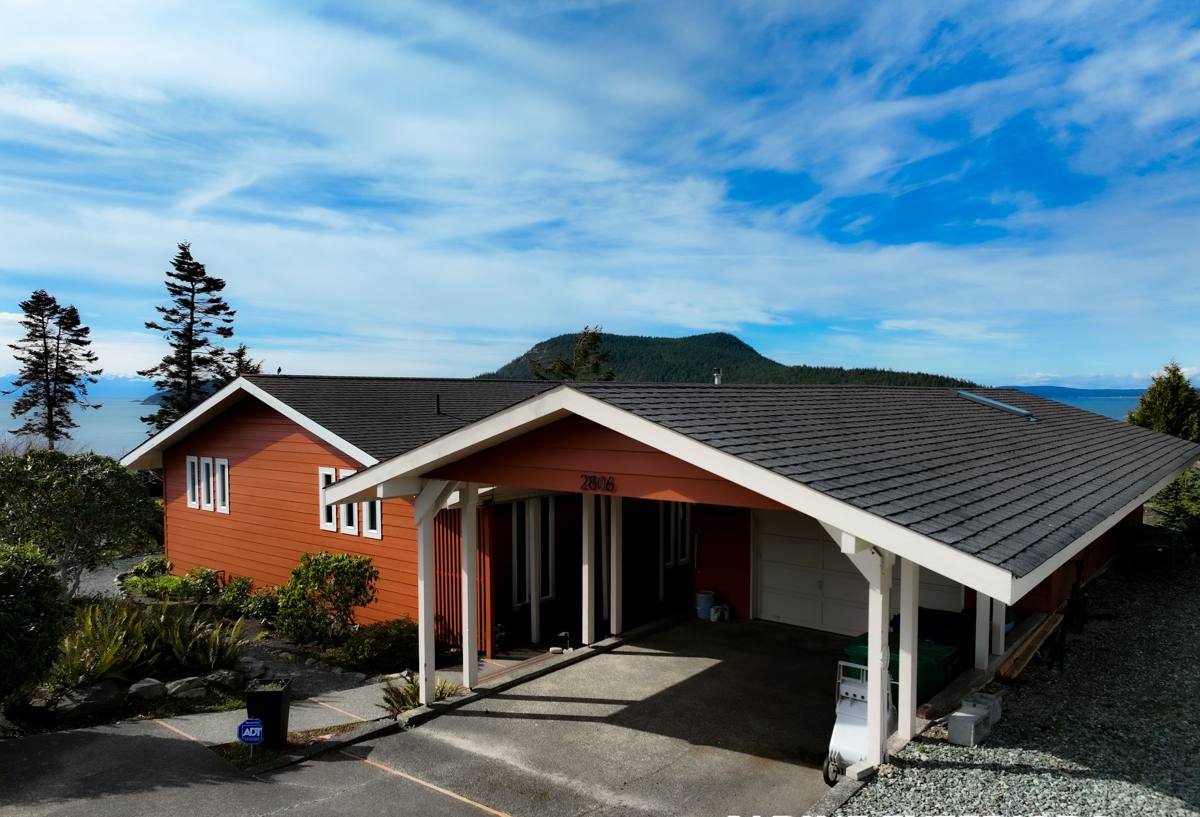
What Lake Samish Homes Are Up Against
Shade and Moisture Retention
Homes tucked under mature trees near the lake dry out slower after every rain event than homes in open sun. Wood surfaces, painted trim, and lower-grade siding products hold moisture longer in these spots, which is the single biggest driver of rot, paint failure, and moss growth we see on Lake Samish properties. North-facing walls and roof sections under tree cover are almost always the first place problems show up.
Moss and Organic Growth
Moss doesn't just look bad — it holds water against roofing and siding surfaces, works into seams and laps, and accelerates material breakdown underneath it. On a shaded lake lot, moss pressure on roofs and north walls is a near-constant maintenance item, not an occasional nuisance.
Driving Rain and Wind-Driven Moisture
Whatcom County storms regularly push rain sideways, not straight down. That matters more than most homeowners realize — it means water gets tested at every seam, lap, window flange, and butt joint on a wall, not just on horizontal surfaces. Siding and window installations that rely on caulk alone instead of proper flashing and water-shedding design tend to fail here years before they should.
Temperature Swings and Material Movement
Lake-basin humidity plus seasonal temperature swings cause expansion and contraction in siding materials over time. Products that aren't dimensionally stable — or that weren't installed with the right gaps and fastening — telegraph that movement as cracking, warping, or popped fasteners.
Siding: Why We Only Install James Hardie
We install James Hardie fiber cement siding exclusively. We don't install vinyl, LP SmartSide, Cemplank, Allura, primed spruce, or cedar, and on a lake lot with heavy shade and moss pressure, that decision matters more than on a typical suburban home.
Why Wood-Based and Engineered Wood Products Struggle Here
Cedar and primed spruce are wood. In a shaded, damp lake environment, wood siding needs diligent, ongoing maintenance — repainting, caulking, and moisture monitoring — to keep ahead of rot. LP SmartSide is an engineered wood product with a factory treatment, and it holds up reasonably well when maintained correctly, but it's still wood-based at its core, meaning cut edges, seams, and any breach in the coating are vulnerable points in a climate that never really lets siding fully dry out for long.
Why We Passed on Vinyl
Vinyl is affordable and low-maintenance in a lot of climates, but it's a thin, flexible material that expands and contracts significantly with temperature swings, and it doesn't offer the same fire resistance or long-term rigidity as fiber cement. In a wooded lake setting, we also weigh wildfire exposure — vinyl can deform or melt from radiant heat well before flames arrive, while Hardie's fiber cement is non-combustible.
Why Fiber Cement Alternatives Like Cemplank and Allura Didn't Make the Cut
Cemplank and Allura are also fiber cement, and fiber cement as a category is the right call for this climate. We standardized on James Hardie specifically because of its ColorPlus factory finish (which resists the fading and moisture intrusion that can affect field-painted fiber cement), its HZ5 product engineering for wetter climates, and a warranty structure we trust to back the product for the long haul. Narrowing to one manufacturer also means our crews install it the same correct way, every time, rather than switching techniques between brands.
Hardie Product Lines We Use
| Product | Best For | Notes |
|---|---|---|
| HardiePlank lap siding | Most Lake Samish homes | Traditional look, engineered for the Pacific Northwest's wet-climate demands |
| HardiePanel vertical siding | Accent walls, gables, modern designs | Clean lines, pairs well with board-and-batten detailing |
| HardieShingle | Cabin-style or lake-house aesthetics | Shingle look without the maintenance burden of real wood shakes |
| HardieTrim | Corners, fascia, window and door surrounds | Matches siding durability at the most water-exposed details |
Roofing for Shade and Moss Pressure
On a lake lot ringed by trees, roofing decisions revolve around moisture shedding and moss resistance as much as they do around basic weatherproofing. We look at underlayment quality, ventilation, and detailing at valleys and penetrations — the places where a shaded, slow-drying roof tends to fail first. Gutter and debris management also matters more here than on an open lot, since needle and leaf litter from surrounding trees can dam water at eaves and accelerate rot in fascia and soffits if it's left unaddressed.
Roof Maintenance Realities on a Shaded Lake Lot
- Moss and algae growth should be checked at least once or twice a year on shaded roof sections
- Gutters and downspouts need more frequent clearing under tree canopy than on open lots
- Valleys and low-slope sections deserve extra attention during inspections — they hold water longest
- Ventilation matters as much as the roofing material itself in preventing trapped moisture
Windows: Flashing Is the Real Story
Window failures around Lake Samish are rarely about the glass — they're almost always about flashing and integration with the surrounding wall assembly. Wind-driven rain finds any gap in a window's water-management system, and once moisture gets behind a window flange on a shaded wall that doesn't dry quickly, rot can spread into the framing before it's visible from outside. When we replace windows, we treat proper flashing, sill pan installation, and integration with the siding system as the actual scope of the job — the window unit itself is only part of it.
Decks in a Lake Environment
Decks near Lake Samish deal with the same shade and moisture pressure as the rest of the home, plus proximity to the water itself in many cases. Composite decking has become the practical choice for a lot of homeowners here because it doesn't require the sanding, staining, and sealing cycle that wood decking demands to keep moss and mildew from taking hold. For homeowners who prefer real wood's look and feel, we're upfront about the maintenance commitment it takes to keep a wood deck healthy in a shaded, humid setting.
Why a Local Crew Matters Here
Lake Samish isn't a subdivision with uniform lots — it's a mix of older cabins, newer builds, steep driveways, and properties tucked into hillsides with limited access. A crew that works throughout Chuckanut and greater Whatcom County knows how to plan material staging and access on these lots, knows which details fail first in a shaded lake environment because we've replaced them before, and isn't guessing at how Northwest weather patterns behave over a full year. That local familiarity shows up in the small decisions — flashing details, fastening schedules, moisture barrier choices — that determine whether an exterior lasts twelve years or thirty.
What to Expect From an Estimate
When we walk a Lake Samish property, we're looking at tree cover and shade patterns, existing moss or moisture damage, the condition of trim and flashing at windows and rooflines, and how the home is oriented relative to prevailing wind and rain. That assessment shapes our recommendation more than any generic product brochure would — a home tucked deep under fir trees on the lake's north side needs a different conversation than one on a more open, sun-exposed lot nearby.
A Few Signs It's Time to Have Your Exterior Looked At
- Visible moss buildup on roof surfaces or north-facing walls
- Soft or discolored trim around windows and doors
- Peeling paint or swelling on wood or engineered wood siding
- Granule loss or dark streaking on roofing shingles
- Gutters that overflow or clog frequently during storms
- Visible gaps or cracking at siding seams and butt joints
If you're noticing any of these signs on a Lake Samish property — or you're planning ahead for a siding, roofing, window, or deck project — we're happy to walk the property with you and give you a straightforward, no-pressure estimate. There's no obligation, and the form below is the easiest way to get started.