 Chuckanut Exterior
 Why Bellingham Siding Wears Differently
Bellingham sits close enough to the water that salt-laden air is a constant, low-grade stressor on exterior building materials, even on homes set back from the shoreline. Add Whatcom County's long wet season, driving rain that comes in sideways off Puget Sound storms, and a moss season that can stretch from fall through spring, and you have a climate that's genuinely harder on siding than most of the country deals with. None of this means siding fails quickly here — good materials installed correctly last decades in this climate. But it does mean small problems don't stay small. A cracked board, an open seam, or a failed caulk joint that might sit harmlessly for years in a dry inland climate becomes a moisture entry point here within a season or two.
That's the lens we bring to every siding repair call in Bellingham: the question is never just "what's broken," but "what did the moisture do while it had access, and what's the fastest path back to a weathertight wall."
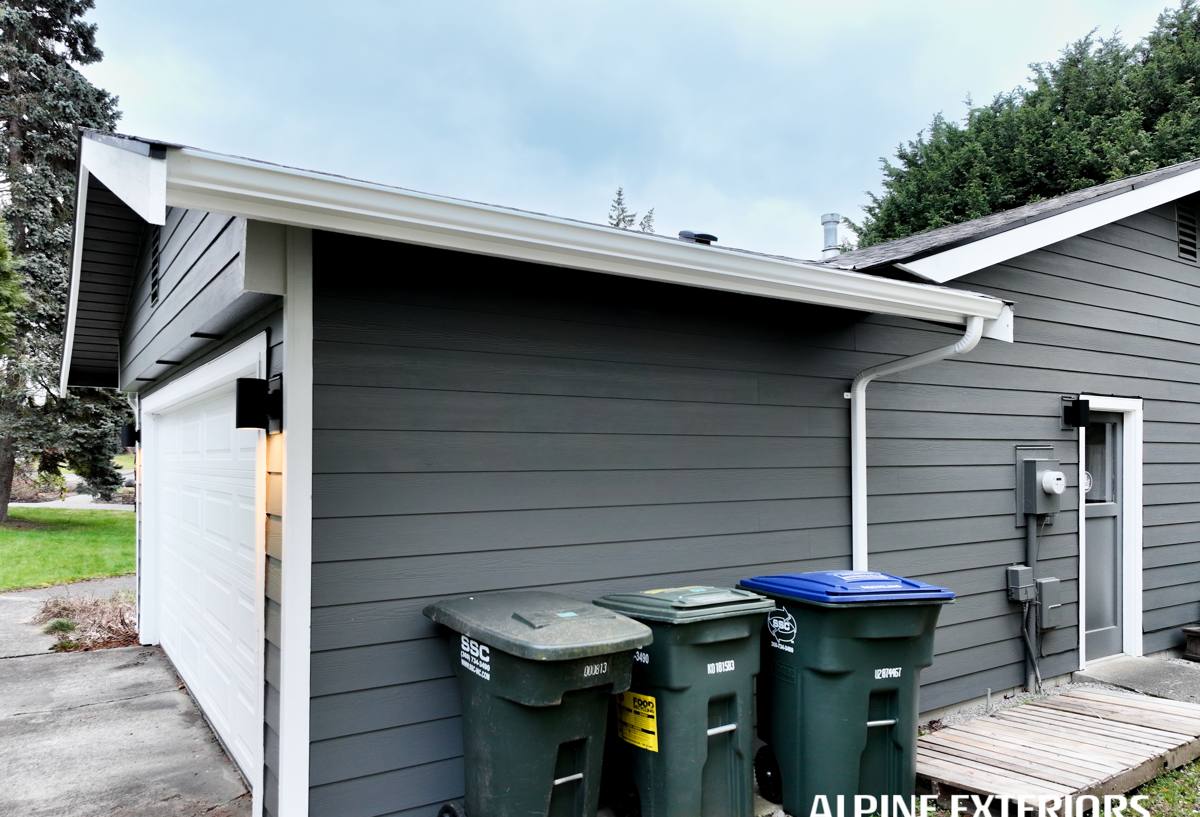
What Driving Rain and Salt Air Actually Do to Siding
Driving Rain
Wind-driven rain doesn't fall straight down — it gets pushed sideways into laps, seams, and fastener holes that were never designed to handle water arriving at an angle. Over time this drives water behind the siding plane, where it's invisible until it's caused rot in the sheathing or framing underneath.
Salt Air
Airborne salt accelerates corrosion on fasteners, flashing, and any exposed metal trim. Once a fastener starts rusting, it loses holding strength and can allow the board around it to work loose, which opens a gap for water.
Moss and Sustained Moisture
Moss doesn't just sit on the surface — it holds moisture against the siding for extended periods, which is especially damaging to wood-based products and can accelerate paint and caulk breakdown on any material. A long moss season means siding in shaded, north-facing, or tree-covered spots stays damp far longer than siding in full sun, and that's usually where we find the worst repair needs.
Signs a Bellingham Home Needs Siding Repair
- Visible cracks, splits, or buckling in individual boards or panels
- Soft or spongy spots when you press on the siding, a sign of rot underneath
- Peeling or bubbling paint, especially in a pattern that follows seams or laps
- Gaps opening up at butt joints, corners, or around window and door trim
- Persistent moss or dark streaking that doesn't wash off and keeps returning
- Warped or separating boards after a wet winter
- Higher-than-expected heating bills, which can point to moisture-compromised insulation behind the wall
- Visible staining or discoloration on interior walls near exterior corners
Any one of these on its own might just need a spot repair. Several together, especially combined with soft sheathing underneath, usually means the damage has traveled further than the visible symptom.
What a Correct Siding Repair Actually Involves
A repair that only replaces the damaged board and stops there is a cosmetic fix, not a durable one. In a climate like Bellingham's, that approach tends to fail again within a few years because it doesn't address why the original damage happened. A repair done right includes:
1. Finding the Real Cause
Before anything gets replaced, we look at why that section failed — a missing kickout flashing, a caulk joint that was never sealed, a fastener pattern that let water track behind the board, or trapped moisture from poor ventilation. Replacing the board without fixing the cause just resets the clock on the same failure.
2. Checking What's Behind the Siding
Once a section is opened up, we check the weather-resistant barrier and sheathing underneath. If water has been getting behind the siding for a while, the sheathing itself may be soft or delaminating, and that has to be addressed before new siding goes back on — otherwise you're fastening good material to a compromised substrate.
3. Correcting Flashing and Water Management
Repairs are also a chance to fix water-management details that were wrong from the original install — kickout flashing at roof-to-wall intersections, head flashing over windows and doors, and proper overlaps at horizontal joints. These details matter more in a driving-rain climate than almost anywhere else.
4. Matching Material and Finish
Wherever possible, repairs should blend into the existing wall rather than standing out as an obvious patch. For homes already sided in Hardie fiber cement, we match plank profile and ColorPlus finish so the repair is close to invisible. For homes on other siding materials, we'll walk you through honest options, including whether a full or partial re-side with fiber cement makes more sense than continuing to patch a system that keeps failing.
Repair or Replace: How We Help You Decide
Not every problem calls for a full re-side, and not every problem is worth patching indefinitely. The table below covers the factors we walk through with homeowners.
| Factor | Leans Toward Repair | Leans Toward Replacement |
|---|---|---|
| Extent of damage | Isolated to one or two sections | Spread across multiple walls or elevations |
| Sheathing condition | Solid and dry once opened up | Soft, delaminated, or showing rot in several spots |
| Siding material | Fiber cement or sound wood with a working finish | Aging materials nearing the end of their service life |
| Repair history | First repair in this area of the home | Same section has been patched more than once |
| Water management | Flashing details are correct elsewhere on the home | Systemic flashing problems affecting the whole exterior |
We'll always give you the honest read on which side of that line your home falls on, including cases where a targeted repair is genuinely the right call and a full re-side isn't necessary.
Why We Rebuild and Repair With James Hardie Fiber Cement
When a repair calls for new material, or when a homeowner decides a section is due for replacement rather than another patch, we install James Hardie fiber cement exclusively. We don't install vinyl, LP SmartSide, Cemplank, Allura, or primed wood siding, and in a climate like Bellingham's, that's a deliberate standard, not a sales preference.
Fiber cement doesn't absorb moisture the way wood-based products can, which matters directly in a region with a long moss season and sustained damp conditions. It's non-combustible, which matters for wildfire-adjacent risk in the broader Pacific Northwest. And Hardie's ColorPlus factory finish is baked on under controlled conditions, which holds up better against the freeze-thaw and UV cycling our weather puts siding through than field-applied paint typically does. When we patch a section of existing Hardie siding, matching material means the repair performs the same way the rest of the wall does — not a different product aging on a different timeline.
If your home is currently sided in something other than fiber cement, we won't pretend a repair on that material will out-perform what it's made of. We'll be straight with you about what to expect from the existing material and what switching to Hardie would change.
Our Repair Process
- On-site inspection. We assess the visible damage and probe for soft spots, hidden moisture, and related issues nearby, not just the spot you called about.
- Honest diagnosis. We explain what caused the failure, what's involved in fixing it correctly, and whether repair or partial replacement makes more sense.
- Clear scope and estimate. You get a written plan before any work starts, including what's being opened up and what happens if we find additional damage underneath.
- Correct repair execution. Damaged material and compromised sheathing are removed, water-management details are corrected, and new material is installed and finished to match.
- Final walkthrough. We show you what was found, what was fixed, and what to watch for going forward.
Why a Crew That Already Works Bellingham Matters
Siding repair in this part of Whatcom County isn't the same skill set as siding repair in a dry inland climate. A crew that works Bellingham regularly already knows which elevations tend to hold moss longest, how kickout flashing needs to be detailed for our rain patterns, and what "normal" wear looks like on a home this close to the water versus what's an early warning sign. That local pattern recognition is what keeps a repair from becoming a repeat visit two winters later.
It also means faster, more accurate estimates. We're not guessing at how the regional climate will treat a given repair — we're applying what we've already seen on homes with the same exposure, the same rain direction, and the same moss pressure as yours.
Keeping Repaired Siding in Good Shape
- Rinse siding periodically to keep salt residue and organic buildup from accumulating, especially on north-facing and shaded walls
- Trim back vegetation and tree cover where practical to reduce shade and moisture retention
- Check caulk joints around windows, doors, and trim once a year and re-seal any that look cracked or pulled away
- Address moss growth early rather than letting it establish, since it's far easier to remove when it's new
- Have any soft, discolored, or buckling sections looked at promptly rather than waiting for the next dry season
If you're seeing early signs of trouble, or you've already got a section that's clearly failed, we're happy to take a look and give you a straight answer on what it needs. Reach out for a free, no-pressure estimate using the form below.