 Chuckanut Exterior
 Exterior Work for Homes Near Bow and Chuckanut
Bow sits in a stretch of Washington where the exterior of a house works harder than it does almost anywhere else in the state. You're close enough to the water that salt-laden air is a constant, close enough to the hills that driving rain comes in sideways during winter storms, and shaded enough in places that moss and algae get a long, comfortable growing season on anything that stays damp. Homes here don't fail because of one dramatic event. They fail slowly, from years of moisture finding the same weak seams, the same north-facing walls, the same low rooflines that never quite dry out between storms.
Chuckanut Exterior Company works this area regularly, which matters more than it sounds like it should. A crew that only sees a property once, for one job, tends to treat every house the same. A crew that works Bow and the surrounding Chuckanut and Whatcom County corridor season after season starts to recognize the patterns — which orientations take the worst weather, which older siding systems are already past their useful life, which roof valleys collect debris fastest. That local pattern recognition is a big part of what keeps a repair from turning into a redo two years later.
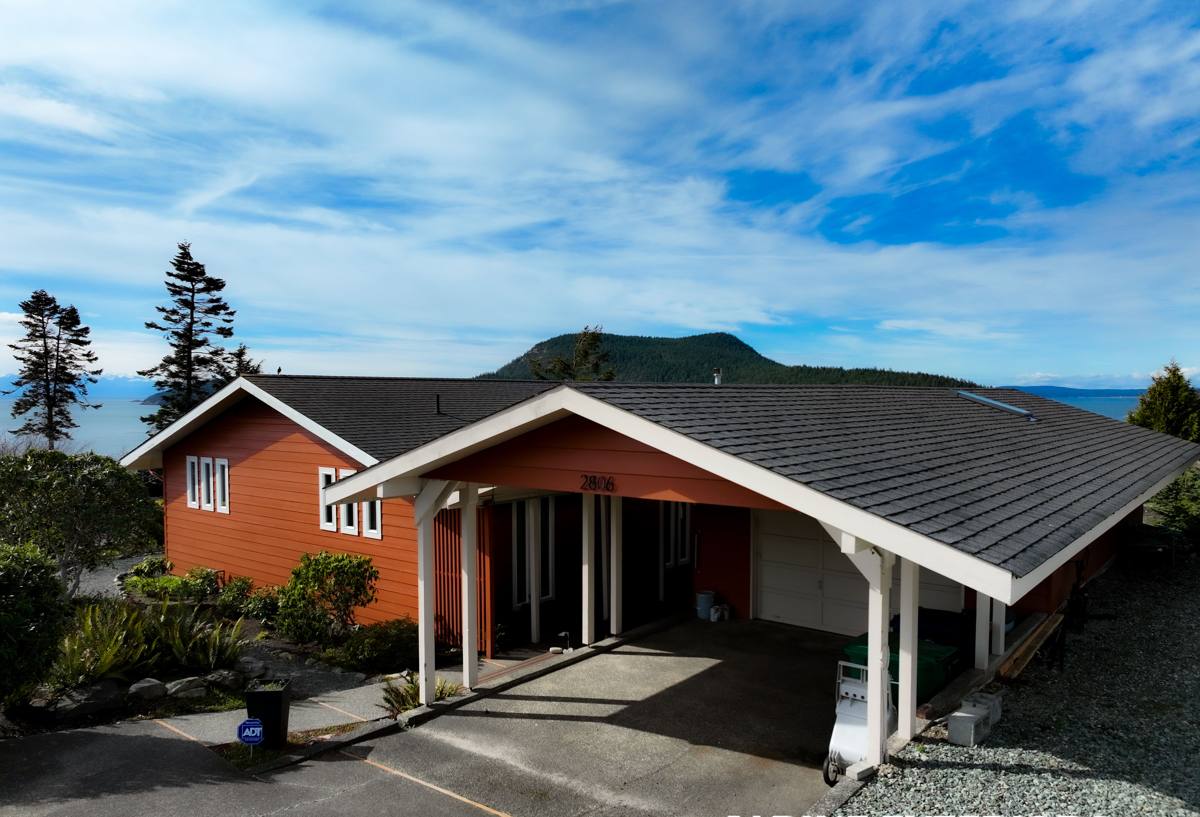
What the Local Climate Actually Does to a House
Salt Air
Proximity to the water means airborne salt settles on every exterior surface, not just the parts facing the shoreline. Salt is hygroscopic — it pulls moisture out of the air and holds it against whatever it's sitting on. On fasteners, flashing, and any exposed metal, that means accelerated corrosion. On paint and coatings, it means faster breakdown of the surface film, which is why houses near the water often need repainting or refinishing more often than the same house would inland.
Driving Rain
Rain that falls straight down is relatively easy to shed. Rain that's being pushed sideways by wind coming off the water finds every horizontal lap, every unsealed penetration, and every gap where two materials meet. This is why housewrap, flashing details, and the way siding laps over itself matter more here than in a calmer inland climate — the water-resistive barrier behind the siding is doing real work, not just serving as a formality.
Moss and Algae
Shade, moisture, and mild temperatures are exactly what moss wants. Roofs with north-facing slopes or heavy tree cover hold onto moisture longer, and that moss doesn't stay put — it holds water against roofing material and can work into shingle laps and siding seams, keeping wood-based products damp long after a storm has passed. Left unaddressed for years, that sustained dampness is one of the more common reasons we see rot in fascia boards, trim, and siding edges.
Siding: Why We Only Install James Hardie
Chuckanut Exterior Company installs James Hardie fiber cement siding exclusively. We don't install vinyl, LP SmartSide, cedar, primed spruce, or other fiber cement brands like Allura or Cemplank — not because those products can't function somewhere, but because after years of doing exterior work in this specific climate, Hardie is the product we're willing to put our name behind.
Wood-based siding, including engineered wood, depends on an intact factory coating to keep moisture out. In a salt-air, high-rain environment, any breach in that coating — a scratch, a poorly sealed cut end, a fastener hole — becomes an entry point, and wood-based cores swell and soften once water gets in. Vinyl handles moisture fine but expands and contracts with temperature swings and can become brittle over time, and it doesn't offer the same fire resistance or impact durability as fiber cement. James Hardie's HZ5 product line is specifically engineered for climates like this one — cold, wet, and humid for long stretches of the year — with a factory-applied ColorPlus finish that's baked on rather than field-applied, which matters when salt air is degrading paint faster than usual.
Hardie fiber cement is non-combustible, doesn't rot, and holds its factory finish far longer than paint applied on-site. It's not the cheapest option up front, and it's not the lightest material to install correctly — but for a home that's going to sit in salt air and driving rain for decades, that trade-off is one we think is worth making.
Roofing in a Moss-Prone Climate
Roofing work in the Bow area has to account for the fact that a roof here rarely gets a long, uninterrupted dry stretch. That changes how we think about a few things:
- Underlayment quality and coverage, since a roof that stays damp longer needs a more forgiving secondary barrier
- Ventilation, so moisture trapped under the roof deck has somewhere to go instead of condensing
- Flashing at valleys, chimneys, and any roof-to-wall transition, which is where driving rain and pooling moss debris cause the most damage
- Material choice for shaded, north-facing slopes, where moss and algae resistance matters more than it would on a sun-exposed south slope
We also pay attention to gutter and downspout sizing during roof work, since undersized or clogged gutters push water back up under roof edges — a problem that shows up more in areas with heavy tree cover and long wet seasons than it does in drier parts of the state.
Windows: Sealing Out Wind-Driven Moisture
Old or poorly installed windows are one of the most common sources of water intrusion we find during exterior evaluations. In a wind-driven rain climate, a window that would be fine inland can leak here simply because the flashing detail wasn't built for sideways-blown water. When we replace windows, we treat the flashing and integration with the water-resistive barrier as seriously as the window unit itself — a good window installed with a poor flashing detail will still leak, and a modest window installed correctly usually won't.
We also look at window placement relative to prevailing weather when we're doing a full exterior job, since a home's most exposed elevation often needs a slightly different approach to sealing and flashing than its sheltered side.
Decks: Built for Wet Ground and Salt Exposure
Decks near Bow deal with two compounding problems: ground-level moisture that rarely fully dries out, and airborne salt that accelerates corrosion in fasteners and hardware. A deck built with standard fasteners or without proper ledger flashing will show problems faster here than in a drier, inland location. We focus on corrosion-resistant hardware, proper ledger-to-house flashing, and decking materials chosen with moss and moisture resistance in mind, not just appearance.
Comparing Common Siding Options for This Climate
| Material | Moisture Behavior | Salt Air Durability | Maintenance |
|---|---|---|---|
| James Hardie Fiber Cement (HZ5) | Does not rot or swell; engineered for wet climates | Factory ColorPlus finish resists salt-driven fade and wear | Low — occasional wash, repaint only when owner chooses |
| Vinyl | Water-resistant but expands/contracts with temperature | Can fade and become brittle over time | Low, but limited color/repair options |
| LP SmartSide / Engineered Wood | Vulnerable at cut ends, fasteners, and coating breaches | Salt accelerates coating breakdown | Moderate to high — coating upkeep is important |
| Cedar / Primed Spruce | Absorbs moisture readily; needs consistent sealing | Salt air shortens repaint cycles significantly | High — regular refinishing required |
What a Free Estimate Visit Looks Like
When we come out to look at a property in Bow or the surrounding Chuckanut area, we're checking a specific set of things, not just eyeballing the siding color:
- Which elevations take the worst wind-driven rain and how the current siding or trim is holding up there
- Signs of moss, algae, or sustained dampness on roofing and siding, especially on shaded or north-facing sections
- Condition of flashing around windows, doors, and roof penetrations
- Fastener and hardware corrosion on decks and any exposed metal
- Whether gutters and drainage are keeping water away from the foundation and siding base
Why a Local Crew Matters Here
Exterior work in a salt-air, high-rain climate isn't harder in a dramatic way — it's harder in a thousand small ways that only show up if you've seen enough houses in the same conditions. A crew that installs siding the same way in Bow as they would in a dry inland town is going to under-flash something eventually, because the assumptions that hold up elsewhere don't hold up here. We've built our approach around what actually happens to homes in this specific stretch of Whatcom County — the moss, the salt, the sideways rain — and that's the standard we hold every job to, whether it's a full siding replacement or a single window.
If you're dealing with aging siding, a roof that's holding onto moss longer than it should, or windows and decks showing wear from years of salt air and rain, we're happy to take a look. We offer free, no-pressure estimates, and you can use the form below to get one scheduled.