 Chuckanut Exterior
 Why Bellingham Homes Need a Different Approach to Siding
Bellingham sits in a stretch of Whatcom County where three climate factors work against exterior siding at the same time: salt-laden air moving in off Bellingham Bay and the Salish Sea, long stretches of driving rain that come in sideways during fall and winter storms, and a moss and algae season that can run eight months or more thanks to the shade, humidity, and mild temperatures common to this part of Washington. Any one of these would shorten the life of an ordinary siding product. Together, they make material choice and installation quality the two biggest decisions a homeowner in this area will make about their exterior.
We work Bellingham regularly, which means we're not learning the local exposure patterns on your project. We already know which sides of a house in this area take the worst weathering, where moss tends to establish first, and how salt air behaves differently a half-mile from the water compared to a few miles inland.
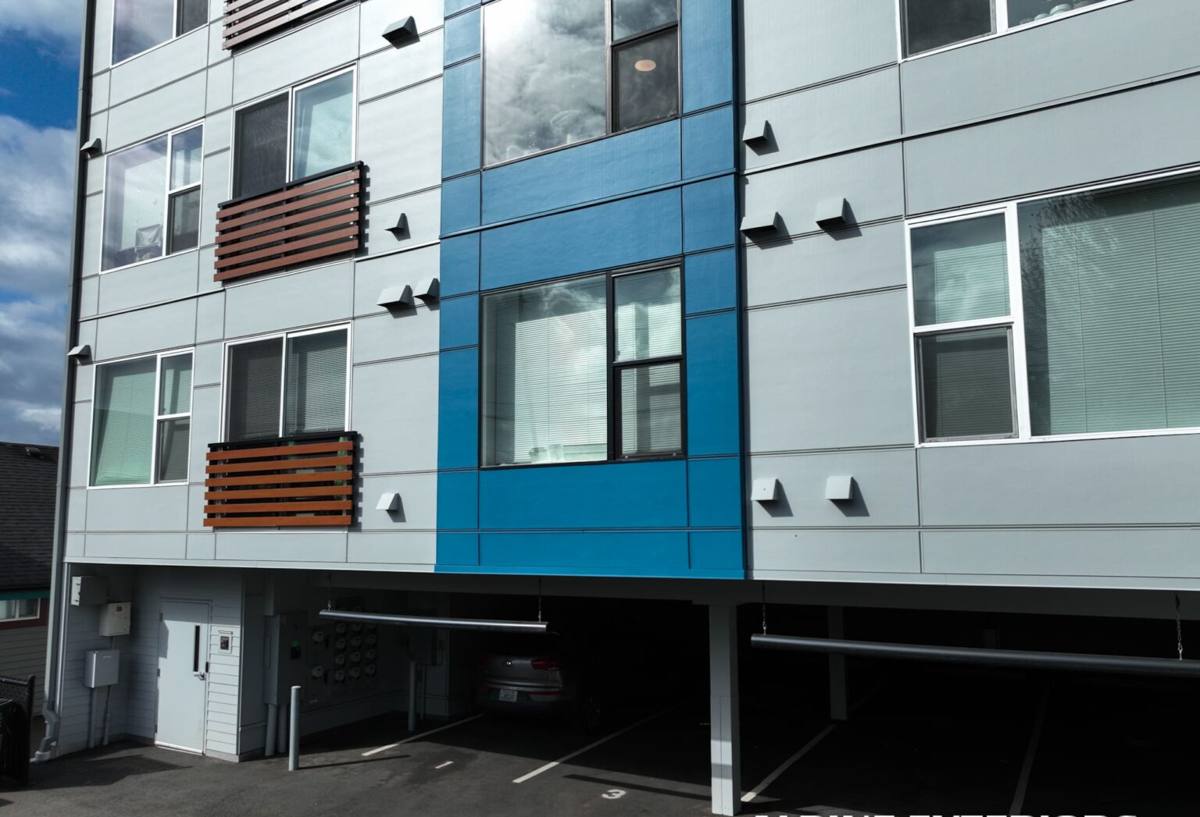
What Salt Air Actually Does to Siding
Salt air doesn't just sit on a wall — it works into seams, fastener heads, and any spot where a coating has started to break down. Over years, that slow chemical exposure can accelerate corrosion of fasteners and trim, and it degrades paint films faster than an inland environment would. Homeowners closer to the water in and around Bellingham often notice their siding "chalking," fading, or peeling years ahead of what the same product would do in a drier, saltier-free climate.
Why This Matters for Material Choice
This is one of the practical reasons we install only James Hardie fiber cement siding. Hardie's ColorPlus finish is a factory-applied, baked-on finish engineered specifically to hold up against UV and moisture exposure better than field-applied paint, and the fiber cement substrate itself doesn't corrode, rot, or feed mold the way some other materials can when repeatedly wetted by salt-carrying air.
Rain, Wind-Driven Moisture, and Wall Assemblies
Bellingham's rainfall isn't just frequent — a meaningful share of it arrives horizontally during winter storms, driven by wind off the water. That means siding here has to perform as a system, not just a surface. Flashing details, water-resistive barrier integration, and proper drainage gaps behind the siding matter as much as the siding material itself. A product installed without attention to these details can trap moisture behind the wall even if the siding face looks fine.
Moss, Algae, and the Long Wet Season
Whatcom County's combination of moisture, mild temperatures, and shaded lots (especially on tree-covered or north-facing properties common around Bellingham) creates ideal conditions for moss and algae growth on exterior surfaces. This isn't just cosmetic — moss holds moisture against a wall surface for extended periods, which accelerates wear on any material that isn't dimensionally stable or resistant to sustained dampness.
- Moss tends to establish first in shaded corners, under eaves, and on north- and west-facing walls
- Sustained moisture contact is harder on materials that swell, delaminate, or absorb water at the surface
- Regular gentle cleaning extends the life of any siding, but the material still has to tolerate repeated wet-dry cycling without breaking down
- Proper installation with drainage gaps helps moisture escape rather than pool against the siding
James Hardie fiber cement is manufactured to resist moisture-related swelling and cracking that can plague wood-based products in exactly these conditions, which is a major part of why we don't offer primed spruce or cedar as siding options — they require a level of ongoing maintenance vigilance that doesn't match how most homeowners actually live.
What a Correct James Hardie Installation Involves in This Area
The siding panel is only part of the job. In a climate like Bellingham's, the installation details determine whether the wall assembly stays dry and performs for decades.
Key Installation Steps We Follow
- Inspect and repair the substrate and sheathing before any new siding goes on — hidden rot or damage gets addressed, not covered up
- Install or verify a proper water-resistive barrier with correctly lapped and taped seams
- Set up a drainage plane so any moisture that gets behind the siding can drain and dry out
- Flash all windows, doors, and penetrations to shed water outward and downward, never into the wall
- Fasten panels according to James Hardie's published specifications for this climate zone — correct nail placement and depth matter for long-term performance
- Maintain proper clearances at grade, roof lines, and dissimilar materials so the bottom edge of the siding isn't sitting in standing water or debris
- Caulk and seal only where Hardie's install guide calls for it — over-caulking can trap moisture instead of releasing it
Skipping or rushing any of these steps is where most siding failures actually originate — not from the material itself, but from installation shortcuts that let water in behind it.
Choosing the Right James Hardie Product Line for Bellingham
James Hardie makes climate-engineered product lines, and for a coastal Whatcom County environment, the HZ5 line is formulated for wetter, harsher climates like ours. Beyond the core panel, homeowners in Bellingham have a few practical decisions to make about profile and finish.
| Option | Best Fit For | Local Consideration |
|---|---|---|
| Lap Siding (various reveals) | Traditional and craftsman-style homes | Wider reveals shed driving rain slightly better on exposed walls |
| Board and Batten (Artisan or HardiePanel) | Modern and farmhouse styles | Vertical seams need careful flashing on rain-exposed elevations |
| Shingle/Shake Panels | Accent areas, gables | More surface texture can hold moss longer in shaded spots |
| ColorPlus prefinished | Nearly all installations | Factory finish holds up better against salt air than field-applied paint |
We'll walk through these options against your home's exposure — how much direct weather each elevation takes, how much shade it gets, and how close you are to the water — before recommending a specific combination.
Why We Only Install James Hardie
We don't offer vinyl, LP SmartSide, Cemplank, Allura, primed spruce, or cedar, and that's a deliberate standard, not an oversight. Vinyl can warp or become brittle with UV and temperature swings and doesn't hold up well against sustained salt exposure over the long run. Wood-based and engineered wood products require a level of moisture management and repainting discipline that's tough to keep up with in a climate this wet. Other fiber cement brands exist, but we've standardized on James Hardie because of the combination of its ColorPlus finish durability, its climate-specific engineering, and the strength of its transferable warranty when the installation is done to their specification.
That standardization means every crew member on your project is deeply familiar with one system, rather than switching between products with different fastening rules, flashing requirements, and failure points.
Why Hiring a Crew That Already Works Bellingham Matters
A siding crew that mostly works other parts of the state can still install James Hardie correctly on paper — but they won't necessarily know which walls in a Bellingham neighborhood take the worst wind-driven rain, how close a property sits to salt-air exposure zones, or how aggressively moss establishes on a shaded lot here versus a drier climate. We work in this area regularly, so those judgment calls — where to add extra flashing attention, which elevation needs the most drainage capacity, how a specific lot's tree cover affects moss risk — are things we've already worked through on homes near yours.
What to Expect from Our Process
- An on-site inspection of your current siding, trim, and any visible moisture or moss issues
- A clear explanation of what's driving wear on your specific home — sun exposure, wind direction, shade, proximity to water
- A written scope that covers substrate repair, barrier and flashing details, and the specific Hardie product line recommended
- An honest cost range before work begins, with no pressure to upgrade beyond what your home actually needs
Maintenance That Actually Matters in This Climate
Even with James Hardie siding correctly installed, a few basics keep it performing well in Bellingham's conditions:
- Rinse siding periodically to remove salt residue, pollen, and organic buildup before it feeds moss or algae growth
- Keep gutters clear so overflow doesn't run down and saturate wall sections repeatedly
- Trim back vegetation that shades and dampens wall sections year-round
- Have caulking and flashing points checked periodically, since these are the components most likely to need attention over time — not the siding panel itself
None of this is heavy maintenance — it's closer to what any homeowner already does for their gutters and landscaping — but it matters more here than in a drier climate.
If you're dealing with aging, moss-covered, or failing siding on a Bellingham home, we're happy to take a look and give you a straightforward assessment — no pressure, no upsell, just an honest read on what your home needs. Request a free estimate using the form below.