 Chuckanut Exterior
 Building Decks for Bellingham's Climate, Not Against It
Bellingham sits close enough to the water that salt air is a real factor in material selection, and far enough into the Pacific Northwest that rain is simply part of the calendar for most of the year. A deck built here has to do more work than a deck built in a dry inland climate. It needs to shed water fast, resist the slow creep of moss and algae, and hold up to salt-laden air moving in off Bellingham Bay and the Strait of Georgia. When we design and build a custom deck for a Bellingham property, every decision — from the framing lumber to the fastener coating to the board spacing — gets made with that climate in mind, not treated as an afterthought.
A deck that looks right on install day but wasn't built for this environment usually starts showing problems within a season or two: soft spots in the framing, black streaking on the decking, fasteners bleeding rust through the boards, or a slick green film that shows up every fall and doesn't fully leave until late spring. None of that is inevitable. It's a result of choices made — or skipped — during design and construction.
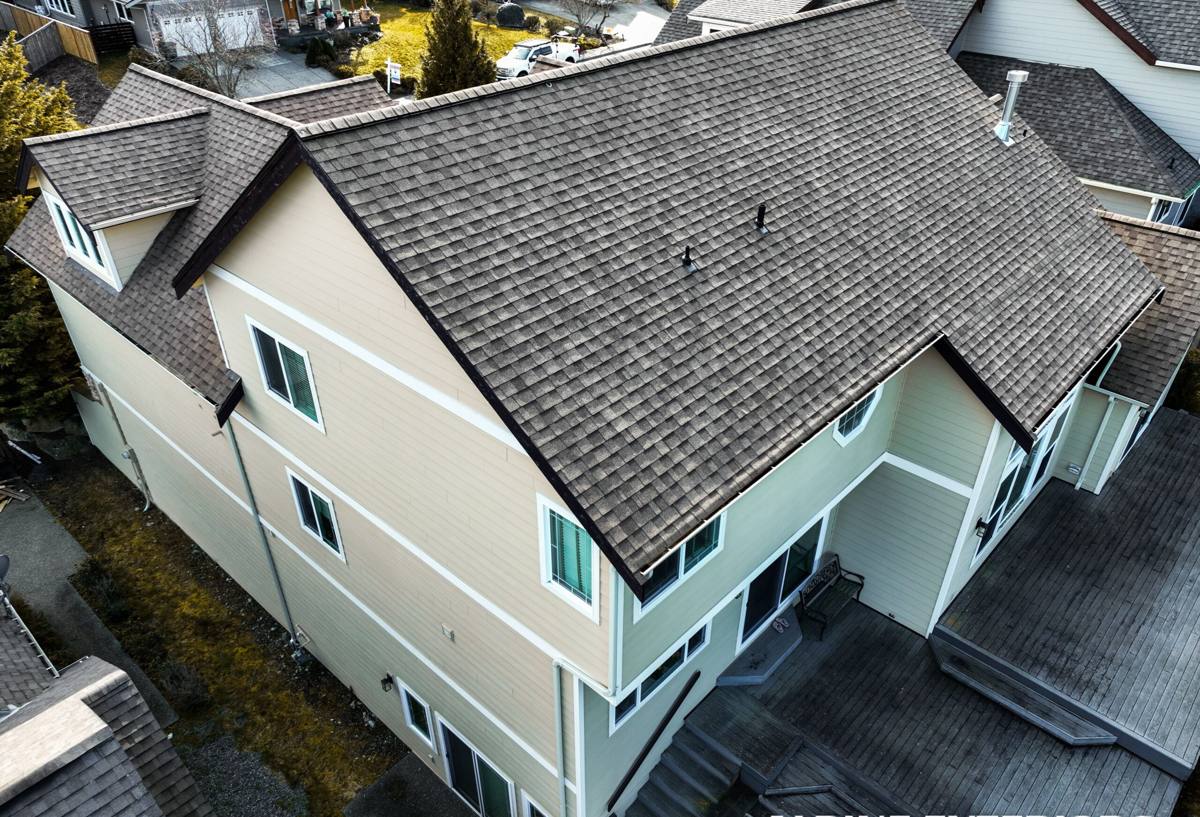
What Bellingham Homes Actually Need From a Deck
Every custom deck project starts with the same question: what is this specific yard, this specific exposure, and this specific house asking for? A few things come up consistently on Bellingham properties.
Drainage Is Not Optional
Whatcom County gets a long stretch of steady, driving rain rather than short intense downpours. That means water sits and works its way into gaps, seams, and end grain over time if a deck isn't detailed to move it along. Proper board spacing, correctly sloped ledger connections, and drainage planes underneath the surface matter more here than they would in a drier climate.
Salt Air Changes What Hardware You Use
Homes closer to the water deal with airborne salt that accelerates corrosion on anything that isn't rated for it. Standard fasteners and connectors can start showing rust bleed within a year or two in a coastal-influenced climate. We spec stainless steel or heavy-duty coated hardware rated for coastal exposure on every Bellingham deck, not just the ones directly on the waterfront — salt air travels further inland than most homeowners expect.
Moss Season Is Long — Design for It
Between fall and spring, moss and algae growth on horizontal wood surfaces is one of the most common deck complaints we hear from Whatcom County homeowners. Shaded decks under trees or on the north side of a house are especially prone to it. Board selection, gapping, and airflow underneath the deck all influence how much moss takes hold and how easy it is to keep ahead of.
Sun Exposure Still Matters
Even with our overcast stretches, UV exposure adds up over years and affects how composite and wood decking age — fading, chalking, and surface checking all show up faster on south- and west-facing decks. We factor orientation into material recommendations, not just moisture exposure.
Framing: The Part No One Sees But Everyone Depends On
The decking boards get the attention, but the framing underneath determines whether a deck is safe and stable for decades or starts needing repairs within a handful of years. In a climate with this much sustained moisture, framing decisions carry extra weight.
- Pressure-treated framing lumber rated for ground contact where posts meet grade, even if the visible structure is above grade
- Joist tape or a comparable moisture barrier on top of joists to keep standing water from working into the wood through fastener penetrations
- Proper flashing at the ledger board connection to the house — this is one of the most common failure points on older decks in wet climates
- Post bases that keep wood off concrete or soil contact, rather than posts set directly into or against damp surfaces
- Adequate under-deck clearance and airflow to let framing dry out between rain events instead of staying damp for weeks at a stretch
A deck can look finished and still be built wrong underneath. This is the stage where corners get cut on rushed jobs, and it's also the stage that's hardest for a homeowner to inspect after the fact — which is exactly why it matters who's doing the framing.
Choosing Decking Material for a Bellingham Property
There's no single "best" decking material — the right choice depends on budget, how much upkeep a homeowner wants to take on, and how exposed the deck is to shade, moisture, and salt air. Here's how the common options compare in this climate specifically.
| Material | Moss/Algae Resistance | Maintenance | Typical Lifespan Here |
|---|---|---|---|
| Pressure-treated wood | Moderate — needs regular cleaning and sealing | Annual cleaning, re-sealing every 1-3 years | 15-20 years with upkeep |
| Cedar | Good natural resistance, still needs care in shade | Periodic cleaning and oiling to hold color and grain | 15-25 years with upkeep |
| Composite decking | Very good — dense surface resists moss rooting | Occasional washing, no sealing or staining | 25-30+ years |
| PVC decking | Excellent — fully synthetic surface | Lowest — soap and water cleaning only | 30+ years |
Composite and PVC decking have become popular choices in Whatcom County specifically because they hold up well against the moss-and-moisture cycle without demanding yearly maintenance. Wood still has a place — especially for homeowners who want the natural look and are comfortable with the upkeep — but it's an honest trade-off, not a compromise we gloss over. We'll walk through the real maintenance expectations for each option before you decide, based on your deck's actual sun and shade exposure.
Design Considerations Specific to Bellingham Properties
Bellingham's terrain and neighborhoods vary quite a bit — some lots are flat and open, others slope toward water views or sit tucked under mature tree cover. Custom deck design means actually accounting for the lot in front of us rather than defaulting to a standard layout.
Multi-Level and Sloped-Lot Decks
Homes on sloped lots often benefit from multi-level deck designs that work with the grade instead of requiring heavy fill or retaining work. This is common enough in the hillier parts of Whatcom County that we treat it as a standard design conversation, not a special-case upcharge.
Covered and Partially Covered Decks
Given how much of the year sees rain, a partial roof or pergola structure over at least part of a deck significantly extends how usable it is through fall and winter. It's one of the most common upgrades homeowners ask us to price out once they see the design.
Railing and Code Compliance
Any deck above a certain height needs code-compliant railing, and Bellingham's permitting process reviews this closely. We handle the permit submission and inspection scheduling as part of the build so homeowners aren't navigating city requirements on their own.
Our Process for a Bellingham Deck Build
The process is the same discipline every time, adjusted to the specifics of the property.
- On-site assessment: we walk the property, check sun and shade patterns, existing drainage, soil conditions, and how the deck will connect to the house
- Design and material selection: layout, framing plan, and decking material chosen based on exposure, budget, and how the space will be used
- Permitting: we handle the City of Bellingham or Whatcom County permit submission and coordinate required inspections
- Framing and structural build: ledger flashing, moisture barriers, hardware, and post footings installed to hold up in sustained wet conditions
- Decking installation: boards installed with correct spacing for drainage and expansion, fasteners matched to the material
- Final walkthrough: we review the finished deck with the homeowner, including a straightforward maintenance rundown for the specific material chosen
What a Correct Deck Install Should Include
If you're comparing quotes from different contractors, here's a practical checklist of what should be part of any legitimate custom deck build in this area — not upgrades, just the baseline for a job done right in this climate.
- Ledger board properly flashed and sealed at the house connection
- Joist protection (tape or membrane) on all structural framing
- Corrosion-resistant hardware rated for coastal/high-moisture exposure
- Post footings set below frost depth and per local code
- Adequate board spacing for drainage and material expansion
- Sufficient under-deck airflow and clearance from grade
- A permit pulled and inspections completed where required
- A written scope covering material specifications, not just square footage and price
Maintaining a Deck Through Whatcom County's Wet Season
Even a well-built deck needs some seasonal attention here. Regular sweeping to keep leaves and debris from trapping moisture against the boards, an annual wash-down before moss gets a foothold in fall, and keeping gutters and downspouts clear so runoff isn't dumping directly onto or near the deck all go a long way. For wood decking, re-sealing on the schedule appropriate to the product matters more in this climate than in drier regions — skipping a cycle here tends to show up faster than it would elsewhere. We'll go over the specific maintenance rhythm that fits your material and your deck's sun exposure when we finish a build, so there's no guesswork afterward.
Why Local Experience on This Specific Job Matters
Deck-building fundamentals don't change from region to region, but the details that separate a deck that lasts from one that needs early repairs are almost entirely climate-driven. A crew that builds mostly in dry climates and treats Bellingham as just another job site is more likely to under-spec the moisture barrier, use standard-grade hardware, or design drainage for rainfall patterns that don't match what actually happens here. We work in Whatcom County and see how decks built with and without these details hold up over the years — that's the experience we bring to every custom deck we build in Bellingham.
If you're planning a new deck or replacing one that's showing its age, we're happy to walk your property, talk through material options honestly, and put together a straightforward estimate — no pressure, no obligation. Use the form below to request a free estimate for your Bellingham deck project.