 Chuckanut Exterior
 Exterior Work Built for Sedro-Woolley's Climate
Sedro-Woolley sits in one of the wetter corners of Washington, tucked into the Skagit Valley where marine air off the Salish Sea meets the moisture pushed up against the foothills of the Cascades. Homes here deal with a longer wet season than most of the state, and that combination of driving rain, salt-laden air, and shade from mature conifers creates conditions that are genuinely tough on a house's exterior. Chuckanut Exterior Company works throughout this part of Whatcom County, and we've built our approach around what actually happens to siding, roofing, windows, and decks when they sit in this environment year after year.
This isn't a generic problem. A lot of exterior product decisions that work fine in a drier climate — or even in a wetter but warmer one — don't hold up the same way here. The wood-adjacent siding products, in particular, show their weaknesses fastest in a place like Sedro-Woolley. We'll get into why below.
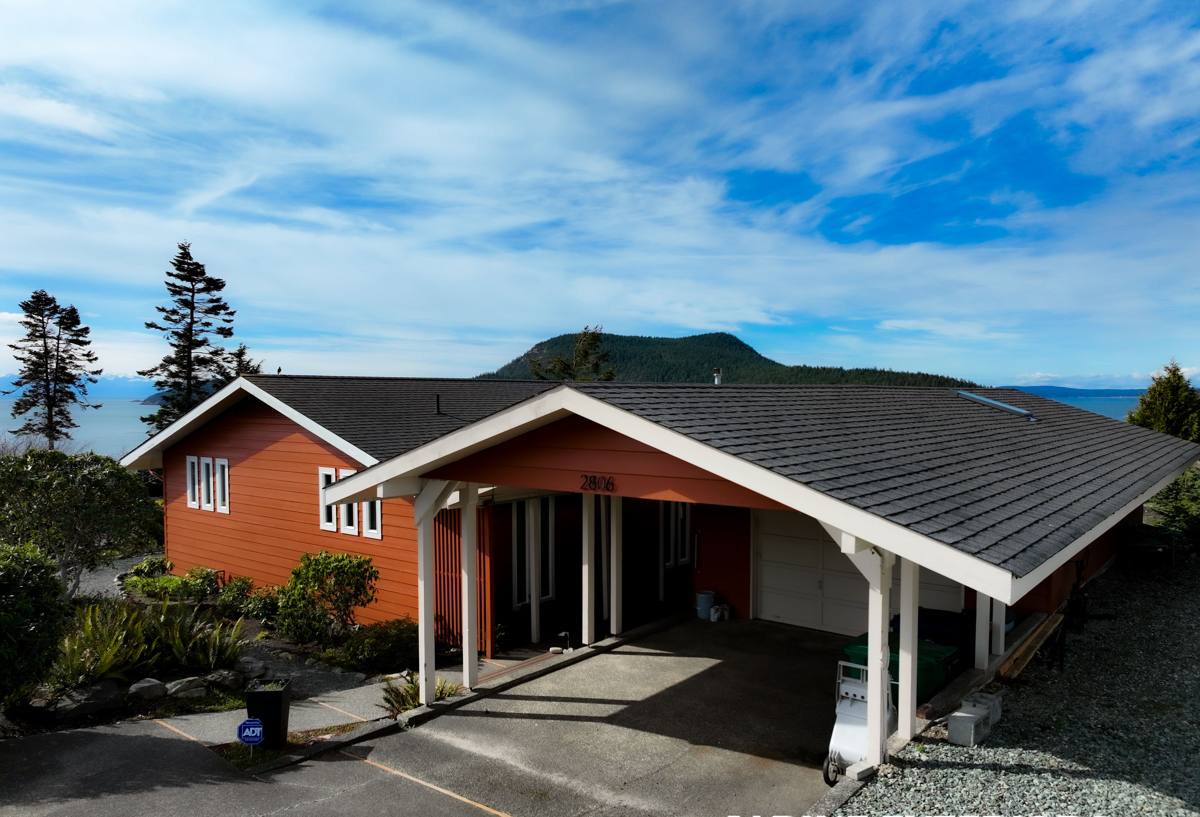
What the Climate Actually Does to a House Here
Driving Rain and Wind-Driven Moisture
Rain in this part of Washington doesn't just fall straight down — storms coming off the water push rain sideways into wall assemblies, especially on the west and southwest exposures. That means water finds its way into seams, joints, and any gap in flashing or caulking that a drier climate would never expose. Over years, this is what separates siding and trim that hold up from siding and trim that don't.
A Long Moss and Algae Season
Because Sedro-Woolley gets extended stretches of overcast, damp weather, roofs and shaded siding surfaces stay wet longer between dry-outs. That's exactly the environment moss and algae need to take hold. Roofs facing north or shaded by trees are especially prone to moss buildup, which holds moisture against shingles and accelerates wear. Siding in shaded, low-airflow areas — under eaves, behind shrubs, on the north wall — sees the same problem.
Salt Air and Corrosion
Proximity to Puget Sound and the Salish Sea means a measurable amount of salt in the air, even well inland. Salt air accelerates corrosion on fasteners, flashing, gutters, and any exposed metal components. It also degrades certain paint and coating systems faster than an inland climate would, which is part of why factory-applied, engineered finishes matter more here than in a lot of the country.
Siding: Why We Only Install James Hardie Fiber Cement
Chuckanut Exterior Company installs one siding product: James Hardie fiber cement. We don't install vinyl, LP SmartSide, Cemplank, Allura, primed spruce, or cedar. That's a deliberate standard, not a marketing line, and it comes directly out of what we see happen to exteriors in this climate.
Where the Alternatives Fall Short Here
- Wood-based siding (cedar, primed spruce): Wood is a beautiful, traditional choice, and it can look great when properly maintained. But wood siding needs consistent recoating and caulking to stay ahead of moisture intrusion, and in a climate with this much sustained dampness, that maintenance window gets tighter. Skip a cycle or two and you're looking at swelling, cupping, or rot — especially in shaded, moss-prone areas.
- LP SmartSide and other engineered wood products: These are strand-based wood composites with a resin binder. They perform reasonably in moderate climates, but any breach in the factory coating — a scratch, an unsealed cut edge, a fastener installed wrong — gives moisture a path into the wood fiber core, and once that starts, it doesn't reverse. Given how much rain exposure Sedro-Woolley homes get, we don't think the margin for installation error is worth the risk.
- Vinyl siding: Vinyl is low-cost and low-maintenance in the sense that it doesn't rot, but it's a plastic product that expands and contracts with temperature swings, can crack in impacts, and isn't fire-resistant. It also tends to look and perform like what it is over the long run, with limited ability to hold detail or a factory-grade painted finish.
- Cemplank and Allura: These are also fiber cement products, and fiber cement as a category is the right call for this climate. Where we draw the line is with James Hardie specifically, because of its climate-engineered product lines, factory finish warranty, and manufacturing consistency — details below.
Why James Hardie
James Hardie fiber cement is a cement, sand, and cellulose fiber composite — it doesn't have a wood core to rot, it's non-combustible, and it holds paint and factory finishes far longer than wood-based alternatives because the substrate itself doesn't move with moisture the way wood fiber does. Hardie also makes climate-specific product lines engineered for different regional exposure conditions, which matters in a place dealing with sustained damp weather and salt air. Their ColorPlus factory finish is baked on and warranted separately from the substrate, which is a meaningfully different proposition than field-applied paint that has to be recoated on a maintenance schedule.
None of this means Hardie is maintenance-free — it still needs proper installation, caulking at penetrations, and periodic inspection like any exterior product. But it removes the biggest failure point we see in this climate: a moisture-absorbent core behind the finish.
Roofing in a Moss-Heavy, Rain-Heavy Climate
Roofing in Sedro-Woolley has to account for both volume of rainfall and duration of dampness. A roof that sheds a heavy downpour fine can still fail early if moss holds moisture against the shingles between storms. Proper roofing work here means attention to underlayment quality, flashing at every valley and penetration, ventilation that lets the roof deck dry out, and, where a home has heavy tree cover, guidance on moss prevention and periodic cleaning that doesn't damage the roofing material itself.
Common Roofing Issues We See in This Area
- Moss buildup on north-facing and shaded roof slopes, especially near mature conifers
- Flashing failures at chimneys, skylights, and roof-wall intersections where wind-driven rain finds gaps
- Gutter and downspout systems overwhelmed during heavy rain events, leading to water backing up under roof edges
- Granule loss and premature aging on roofs that don't get enough attic or roof-deck ventilation
Windows: Managing Condensation and Sealing Against Wind-Driven Rain
Windows in this climate face two separate challenges: keeping wind-driven rain out at the frame and sill, and managing condensation that builds up from the temperature difference between a warm interior and a cold, damp exterior. Older single-pane or poorly sealed windows in Sedro-Woolley homes often show both problems — water staining below sills from rain intrusion, and persistent condensation or fogging between panes when seals have failed. Correct window installation means proper flashing integration with the wall's water-resistive barrier, quality sealant at all penetrations, and units rated for the moisture exposure this region sees.
Decks: Built to Handle Standing Moisture
A deck in Sedro-Woolley spends a large part of the year wet, whether from rain or from shade that keeps surfaces from drying out between storms. That makes ledger board attachment, proper flashing where the deck meets the house, adequate drainage and slope, and rot-resistant or properly sealed structural lumber especially important. Decking surface material matters too — composite and properly maintained wood both have a place, but whichever is chosen, the structure underneath needs to be built assuming it will stay damp for extended stretches, not just occasionally wet.
Why a Local Crew Matters
Exterior work in Whatcom County isn't identical to exterior work in a drier part of the state, and it's not identical to coastal work further south either. A crew that works this specific area regularly knows which exposures take the worst wind-driven rain, which neighborhoods deal with heavier moss due to tree cover, and how salt air affects fastener and flashing choices over time. That local pattern recognition is what keeps small issues from turning into expensive repairs five or ten years down the line.
What to Look for in an Exterior Contractor Here
| Factor | Why It Matters in This Climate |
|---|---|
| Local project history | Shows familiarity with wind exposure, moss patterns, and drainage issues specific to the area |
| Manufacturer training/certification | Correct installation is what makes a warranty valid and a product actually perform as engineered |
| Flashing and water-management detail | The majority of long-term exterior failures trace back to flashing, not the siding or roofing material itself |
| Written, itemized estimates | Lets you compare scope, not just a bottom-line number |
| Licensing and insurance | Protects you if something goes wrong during the project |
Quick Checklist Before Hiring
- Ask how they detail flashing at windows, roof penetrations, and deck ledgers — not just what material they use
- Ask which siding products they install and why, not just what's cheapest
- Get the scope of work in writing, including underlayment, flashing, and fastener specifications
- Confirm licensing, bonding, and insurance directly, not just by trusting a business card
- Ask how they'd handle a north-facing, shaded section of roof or wall differently from a sun-exposed one
Our Approach to Sedro-Woolley Projects
We evaluate every project against the specific exposure conditions of that property — sun, shade, wind direction, tree cover, and proximity to open water — rather than applying a one-size-fits-all spec. On siding, that means James Hardie fiber cement installed to manufacturer specification, with the flashing and sealant detail that this climate demands. On roofing, windows, and decks, it means building in the drainage, ventilation, and moisture management this region actually needs, not the minimum a drier climate would get away with.
If you're weighing exterior work on a Sedro-Woolley home — whether it's a full siding replacement, a roof nearing the end of its life, aging windows, or a deck that needs rebuilding — we're happy to take a look and walk you through what we see, with no pressure to act on it right away. Reach out for a free estimate using the form below.