 Chuckanut Exterior
 Windows in Samish Take a Beating Most Inland Homes Never See
If you own a home in the Samish area near Chuckanut, you already know your windows work harder than windows almost anywhere else in Washington. You've got salt-laden air coming off the water, long stretches of driving rain, and a moss season that seems to last most of the year. None of that is a problem a window can just shrug off forever. Frames corrode faster, seals fail sooner, and moisture finds its way into places it was never supposed to reach. A window installation done for a dry inland climate simply isn't built for what Samish throws at it.
This page is about one thing: getting window installation right for this specific area, in this specific climate, so the job holds up for decades instead of years.
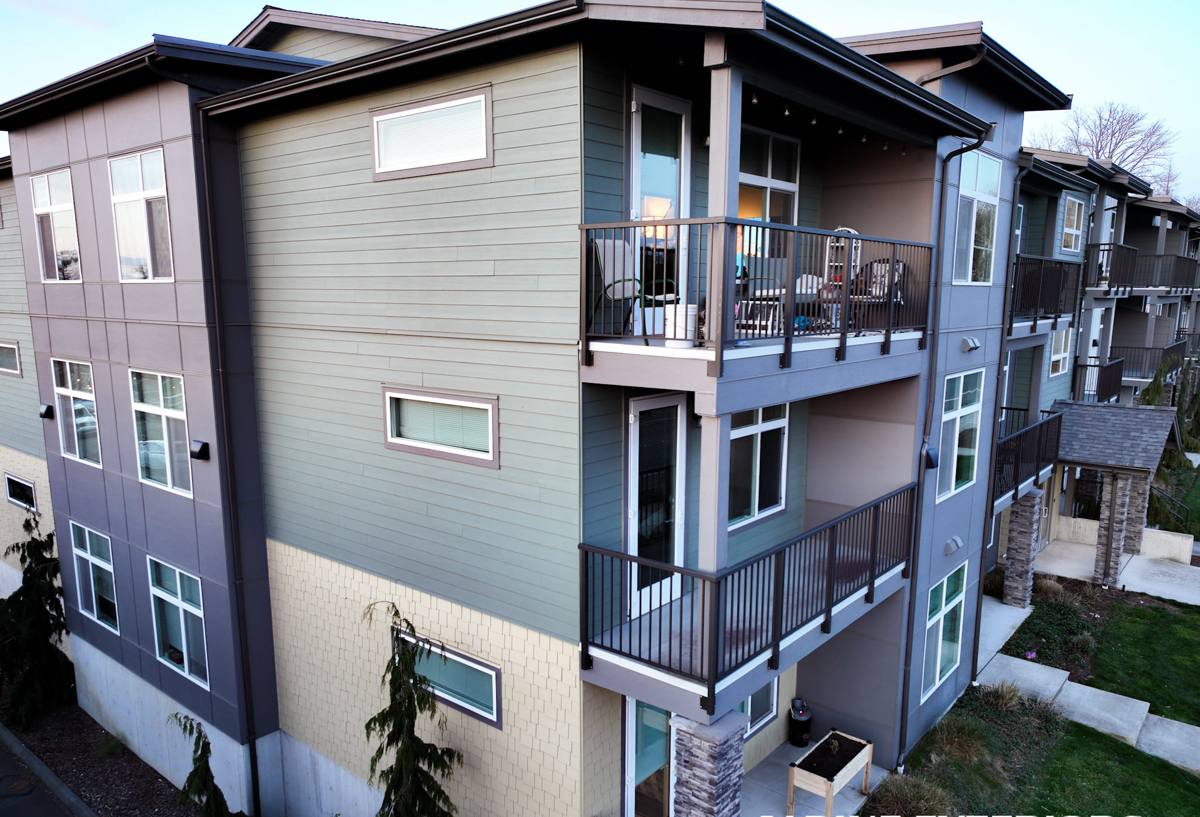
What Damp, Salty Air Actually Does to a Window Over Time
It helps to understand the mechanism, not just the symptom. Coastal moisture doesn't just make things "wet" — it drives a slow, steady breakdown of materials that aren't matched to the environment.
Salt air and metal components
Fasteners, hinges, cranks, and lock hardware are usually the first casualties. Ordinary steel screws and untreated aluminum components corrode noticeably faster this close to the water than they would twenty or thirty miles inland. Once corrosion sets in around a fastener, the seal around it weakens, and that's an entry point for water.
Constant moisture and wood rot
Wood-framed and wood-clad windows are beautiful, but wood that stays damp for extended periods — which is exactly what happens through a Whatcom County winter — is at real risk of rot if it isn't properly detailed, primed on all sides, and flashed correctly. Rot rarely announces itself early. By the time you see soft wood or paint bubbling, moisture has usually been working behind the surface for a while.
Moss, algae, and trapped water
A long moss season doesn't just affect roofs. Moss and algae growth around sills, on nearby trim, and in shaded corners near windows holds moisture against the building longer than open air would. That constant dampness accelerates everything above — corrosion, rot, and seal breakdown — especially on north-facing or heavily shaded walls that don't get much direct sun to dry out between rain events.
Signs a window is already losing the battle
- Fogging or condensation between the panes of a double-pane unit — a sign the seal has failed
- Soft, spongy, or discolored wood around the frame or sill
- Difficulty opening, closing, or locking a window that used to operate smoothly
- Visible gaps, cracked caulk, or daylight showing around the frame
- A cold draft near the window even when it's fully closed and latched
- Rust streaks below hardware or fasteners
What a Correct Window Installation Actually Involves
A window installation is not "remove old window, set new window, caulk the edges." In a climate like this, most long-term failures trace back to shortcuts taken during installation, not defects in the window itself. The window is only as good as the water management built around it.
Flashing and water management come first
Before a new window ever goes in, the opening needs to be prepared so that any water that does get behind the siding or trim has a controlled path back out — not into the wall cavity. That means proper flashing at the sill, jambs, and head, integrated correctly with the home's existing weather-resistive barrier (the house wrap or building paper behind the siding). Skip or rush this step and you can install a top-quality window that still leaks.
Sill pan protection
A sloped sill pan under the window directs any incidental moisture outward instead of letting it pool at the bottom corners — historically the most common failure point on any window installation, and even more so in a climate that sees this much sustained rain.
Sealing and insulation around the frame
The gap between the window frame and the rough opening needs to be insulated and air-sealed correctly — not overpacked with rigid foam that can bow the frame, and not left with gaps that let air and moisture through. This is a detail that's easy to get wrong and hard to inspect once trim is back on.
Fasteners and hardware suited to a coastal environment
Given how much faster ordinary hardware corrodes this close to the water, using fasteners and components rated for coastal or high-moisture exposure is a small line-item cost that prevents a much bigger repair down the road.
Exterior trim and caulking as the final water barrier
The visible caulk line around a window is the last line of defense, not the first. It matters, but a home that relies on caulk alone to keep water out is a home where the installation skipped steps underneath.
Choosing a Window Frame Material for a Samish Home
There's no single "best" window material — the right choice depends on your home's exposure, your maintenance appetite, and your budget. Here's how the common options actually compare for this specific climate.
| Frame Material | How It Handles Salt Air & Moisture | Maintenance Needed | General Cost Tier |
|---|---|---|---|
| Vinyl | Doesn't corrode or rot; handles moisture well | Low — occasional cleaning | Lower to mid |
| Fiberglass | Very stable in wet, salty conditions; resists warping | Low | Mid to higher |
| Wood-clad (wood interior, clad exterior) | Good if detailing and cladding integrity are maintained; exposed wood joints are the risk point | Moderate — watch cladding seams and interior finish | Higher |
| Aluminum | Prone to corrosion near salt air unless marine-grade and properly finished | Moderate to high in this environment | Varies |
For homes in Samish that get direct exposure to salt-laden wind off the water, we lean toward steering clients away from standard aluminum frames unless they're a marine-rated product — not because aluminum is a bad material generally, but because ordinary aluminum's corrosion behavior is a poor match for this specific exposure. Vinyl and fiberglass tend to be the lower-maintenance path for most Samish homes, while wood-clad remains a solid choice for owners who want that look and are comfortable with the added upkeep.
Energy Performance in a Mild, Wet, Windy Climate
Whatcom County winters aren't brutally cold compared to a lot of the country, but they are damp, windy, and long — and that combination matters more for window performance than raw temperature alone. A poorly sealed window doesn't just waste energy; it invites condensation on interior glass and sills, which becomes another moisture problem indoors. When we spec glass packages and frame types for a Samish installation, we're weighing:
- Wind exposure on the specific wall or elevation being replaced
- How much direct rain exposure that side of the house gets
- Whether condensation has been a recurring issue with the existing windows
- The home's overall insulation and ventilation, since windows don't perform in isolation
Our Installation Process for Samish Homes
- On-site assessment — we look at the existing windows, the surrounding wall condition, exposure direction, and any visible moisture or rot before quoting anything.
- Material and glass recommendation — based on that specific wall's exposure, not a one-size answer for the whole house.
- Opening prep — removal of the old unit, inspection of the rough opening and sheathing for hidden damage, and repair of any compromised framing before the new window goes in.
- Flashing and sill pan installation — integrated with the existing weather barrier, not just caulked over it.
- Window setting, shimming, and fastening — leveled and secured with hardware appropriate for coastal exposure.
- Insulation, air sealing, and interior/exterior trim — finished to match the home.
- Final water test and walkthrough — so you know exactly what was done and why.
Why a Crew That Already Works This Area Matters
Window installation isn't just a product question — it's a judgment call about how much water management a given opening needs, and that judgment is built through repetition in the same conditions, not from a manual. A crew that regularly works homes around Chuckanut and Samish has already seen how the local exposure to wind-driven rain and salt air plays out over years on real houses — which walls tend to take the worst of it, which older flashing details tend to fail first, and which shortcuts show up as callbacks two winters later. That familiarity shows up in fewer surprises during the job and fewer problems after it.
It also matters for permitting and code compliance. Window replacements can trigger requirements around egress sizing for bedrooms, safety glazing near doors and low sills, and energy code minimums — a local crew that pulls permits in this jurisdiction regularly isn't guessing at what's required.
Maintaining Your Windows Between Services
A correctly installed window still benefits from basic upkeep, especially in this climate. A few habits go a long way toward protecting the investment:
- Rinse or wipe down accumulated salt residue on frames and glass periodically, especially after wind storms off the water
- Keep moss and organic debris cleared from sills, tracks, and nearby trim so moisture doesn't sit against the window
- Check and re-caulk any cracked or separated exterior caulk lines before the wet season sets in
- Operate locking hardware a few times a year so cranks and latches don't seize from disuse and corrosion
- Watch for early condensation between panes — it's the clearest early sign of a failing seal
- Keep gutters and downspouts clear so runoff isn't sheeting directly across window heads
Straight Talk on Timing
If your current windows are already showing rot, failed seals, or hardware that's seizing up, it's worth having them looked at before another wet season adds to the damage — repairs get more involved the longer moisture sits in a wall assembly. If your windows are simply older but still sound, there's no need to rush; a straightforward assessment can tell you whether you're looking at years of remaining life or a closing window of opportunity to replace before small issues become bigger ones.
If you'd like an honest look at what your Samish home's windows actually need, we're happy to come take a look. There's no pressure and no obligation — just a straightforward assessment and a clear estimate, using the form below.