 Chuckanut Exterior
 Storm Damage Roof Repair for Blanchard Homes
When a Pacific storm rolls off the Salish Sea and hits the Chuckanut area, Blanchard homes take it on the nose. Wind gusts funnel between the mountain and the water, driving rain sideways under shingles and siding that would stay dry in a calmer inland spot. If your roof took a hit in the last storm — or you're finding soft spots, granule buildup in the gutters, or a stain spreading across a ceiling — you need someone who understands what storm damage actually looks like here, not a generic checklist written for a drier climate.
Chuckanut Exterior Company repairs storm-damaged roofs for homeowners in Blanchard and the surrounding Whatcom County shoreline communities. This page covers what local storms typically do to a roof, what a correct repair actually involves, and how we approach the job so it holds up through the next one.
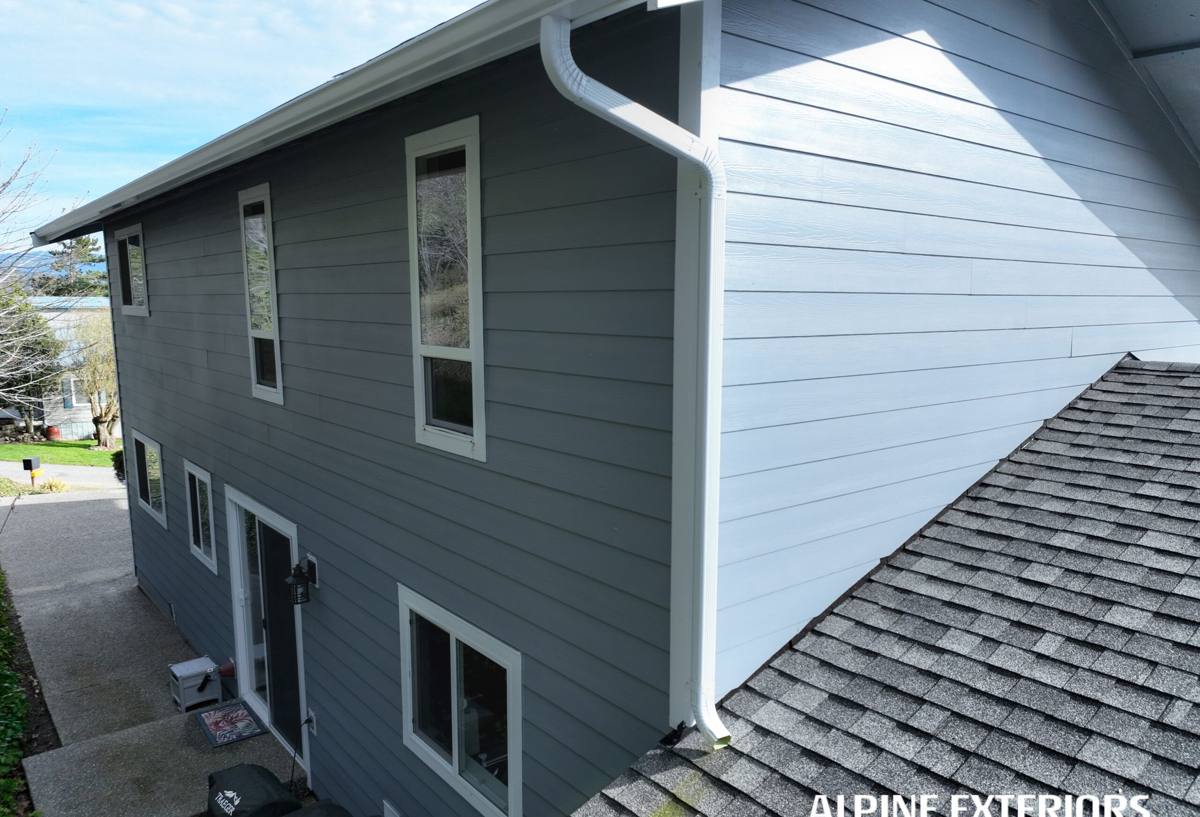
What Storm Damage Actually Looks Like on a Blanchard Roof
Not all storm damage announces itself with a missing shingle on the lawn. Some of the most costly damage is the kind that sits quietly for months before it shows up as a ceiling stain or a soft patch of decking. On homes we've worked on in this area, storm damage tends to fall into a few recurring patterns:
- Wind-lifted or creased shingles — the sealant strip breaks loose, the shingle doesn't lay flat again, and the next rain gets underneath it.
- Torn or displaced ridge caps — the highest, most exposed part of the roof, and often the first thing a strong gust takes.
- Flashing pulled away from chimneys, vents, and skylights — small metal pieces that do a lot of the actual waterproofing work.
- Gutter and downspout damage from wind-driven debris, which backs up water against the roof edge instead of carrying it away.
- Branch or debris impact that punctures or bruises shingles, sometimes without an obvious visible crack.
- Slow water intrusion around fasteners and seams that were loosened by wind but didn't fail outright — this is the kind that shows up weeks later as a leak.
The tricky part is that a roof can pass a quick visual check from the ground and still have real damage. That's why a proper storm inspection means getting on the roof, not just looking at it from the driveway.
Why Blanchard's Climate Is Harder on Roofs Than Most Inland Areas
Every roof ages. What's different here is the pace, and it comes down to three things working together rather than in isolation.
Salt Air and Metal Corrosion
Homes close to the water pick up salt-laden air, and that air is hard on anything metal — flashing, fasteners, gutter hangers, and vent caps. Corrosion doesn't happen overnight, but it steadily weakens the metal components that keep water out at roof penetrations. A flashing detail that would last decades in a drier, inland part of Washington can start showing rust and pinholing much sooner out here. When we repair storm damage on a Blanchard roof, we're always checking flashing condition as part of the job, not just the shingles around it.
Driving Rain and Wind-Driven Water Intrusion
Rain that falls straight down mostly runs off a roof the way it's designed to. Rain that's driven sideways by wind behaves differently — it can work its way under shingle tabs, around vent boots, and through gaps that would never see water in calmer conditions. This is why storm damage here so often shows up as water intrusion rather than a dramatic hole in the roof. The wind doesn't have to tear anything off to cause a leak; it just has to find the one weak seam and push water into it.
A Long Moss Season
Whatcom County's damp, mild climate gives moss a long runway to establish itself on north-facing and shaded slopes. Moss holds moisture against the shingle surface, which accelerates granule loss and can lift shingle edges over time — and a roof that's already weakened by moss has a lot less margin left when a storm hits it. We regularly find that what looks like straightforward wind damage is actually storm damage layered on top of moss-related deterioration that had been building for a season or two beforehand.
What a Correct Storm Damage Repair Actually Involves
A storm repair done right is more than swapping out the shingles that are obviously missing. Here's what we consider a complete job:
Full-Roof Inspection, Not Just the Damaged Spot
Wind damage rarely stays confined to one tidy area. We check the whole roof — all slopes, all penetrations, all flashing — because storms that damage one section often stress the fasteners and seals on the rest of the roof too, even where nothing tore loose.
Decking Check Before Anything Goes Back On
If water got under the roofing material, the plywood or OSB decking underneath may be wet, soft, or delaminating. Covering damaged decking with new shingles just hides a problem that will come back. Any soft or compromised decking gets replaced before new material goes down.
Matching Materials, Not Just Filling Gaps
A patch job using mismatched shingles or the wrong flashing profile might stop a leak short-term but rarely lasts. We match shingle type, color run where possible, and flashing profile so the repair performs — and looks — like part of the original roof, not a visible patch.
Flashing and Ventilation Get a Second Look
Because flashing failure and blocked ventilation are so often part of the underlying problem — especially given the salt air and moss factors above — a proper storm repair includes checking that flashing is sound and that roof ventilation hasn't been compromised, since trapped moisture undermines a repair from the inside just as effectively as a leak does from the outside.
How Our Storm Repair Process Works
We keep the process straightforward because storm damage is stressful enough without adding confusion on top of it.
- Emergency tarping, if needed. If your roof has an active leak or exposed decking, we prioritize getting it covered and dry before scheduling the full repair.
- On-roof inspection and documentation. We physically inspect the damage and photograph what we find, which is useful both for planning the repair and for any insurance claim you may be filing.
- A clear, written scope of work. You get a straight explanation of what's damaged, what needs to be repaired versus replaced, and why — no pressure to upsize the job beyond what the storm actually did.
- The repair itself. Decking, underlayment, flashing, and roofing material are addressed as a system, not as isolated fixes.
- Final walkthrough. We confirm the repair with you before considering the job finished.
If you're filing an insurance claim, we can provide documentation and photos to support it. We work for you, not the insurance company, and we'll give you an honest read on what's storm damage versus what's ordinary wear the policy likely won't cover.
Repair or Replace? What Actually Tips the Decision
Not every storm-damaged roof needs a full replacement, and not every roof is a good candidate for a patch. The right call depends on a handful of factors:
| Factor | Points Toward Repair | Points Toward Replacement |
|---|---|---|
| Age of existing roof | Roof is well within its expected service life | Roof is already near or past its expected lifespan |
| Extent of damage | Damage is limited to one slope or a localized area | Damage is spread across multiple slopes or the whole roof |
| Decking condition | Decking underneath is dry and sound | Widespread soft or delaminated decking |
| Moss and granule condition | Rest of the roof is in reasonably good shape | Significant moss damage or granule loss beyond the storm-affected area |
| Material availability | Matching shingles are readily available | Discontinued material makes a seamless patch impossible |
Cost follows the same logic. A localized flashing or shingle repair after a wind event is typically the least expensive fix; a full slope or roof replacement after long-term moisture and moss damage runs considerably more. We'll always tell you honestly which category your roof falls into rather than defaulting to the bigger job.
Why It Matters to Hire a Crew That Already Works in Blanchard
After a regional storm, it's common for out-of-area crews to show up canvassing damaged neighborhoods. Some of that work is fine — but a contractor who doesn't normally work this stretch of Whatcom County coastline doesn't have the same working knowledge of how salt air, driving rain, and moss season interact on a roof here over time. That local pattern recognition is what separates a repair that holds up from one that leaks again next winter.
Working Blanchard and the Chuckanut area regularly also means we're accountable here after the job is done — not a phone number that stops answering once the storm season's rush of work moves on. If a repair needs a follow-up visit, we're local enough for that to be a normal part of doing business, not a special favor.
After the Repair: Keeping a Storm-Damaged Roof From Becoming a Repeat Problem
A good repair is the fix; a little regular attention afterward is what keeps the next storm from undoing it. We recommend homeowners in this area stay on top of a short list of maintenance items, especially on roofs that have already been through storm damage once:
- Clear gutters and downspouts before the wet season, so wind-driven rain has somewhere to go instead of backing up at the roof edge.
- Have moss treated or removed on shaded and north-facing slopes before it has a chance to lift shingle edges.
- Check flashing around chimneys, vents, and skylights periodically for early rust or gaps, given how salt air accelerates corrosion here.
- Trim back tree limbs that overhang the roof, which reduces both debris impact and the amount of shade that feeds moss growth.
- After any significant windstorm, do a quick visual check — or have it checked — even if nothing looks obviously wrong from the ground.
Get a Free, No-Pressure Estimate
If your roof took damage in a recent storm, or you just want an honest opinion on whether what you're seeing is worth worrying about, we're happy to take a look. Use the form below to request a free estimate — no pressure, no obligation, just a straight assessment from a crew that works this part of Whatcom County regularly.