 Chuckanut Exterior
 Roofing in Alger Isn't the Same as Roofing Inland
Alger sits close enough to the water and the tree line that its roofs take a different kind of beating than a roof twenty miles inland. Homes here deal with salt-laden air rolling off the bay, long stretches of driving rain that comes in sideways more often than straight down, and a moss season that can run most of the year in the shaded, north-facing sections of a roof. None of that is unusual for Whatcom County, but it does mean a roof built without those conditions in mind will age faster here than the manufacturer's warranty sheet suggests.
When we install a new roof in Alger, we're not just following a generic spec sheet. We're accounting for how this specific stretch of coastline and tree cover treats a roof over ten, twenty, and thirty years.
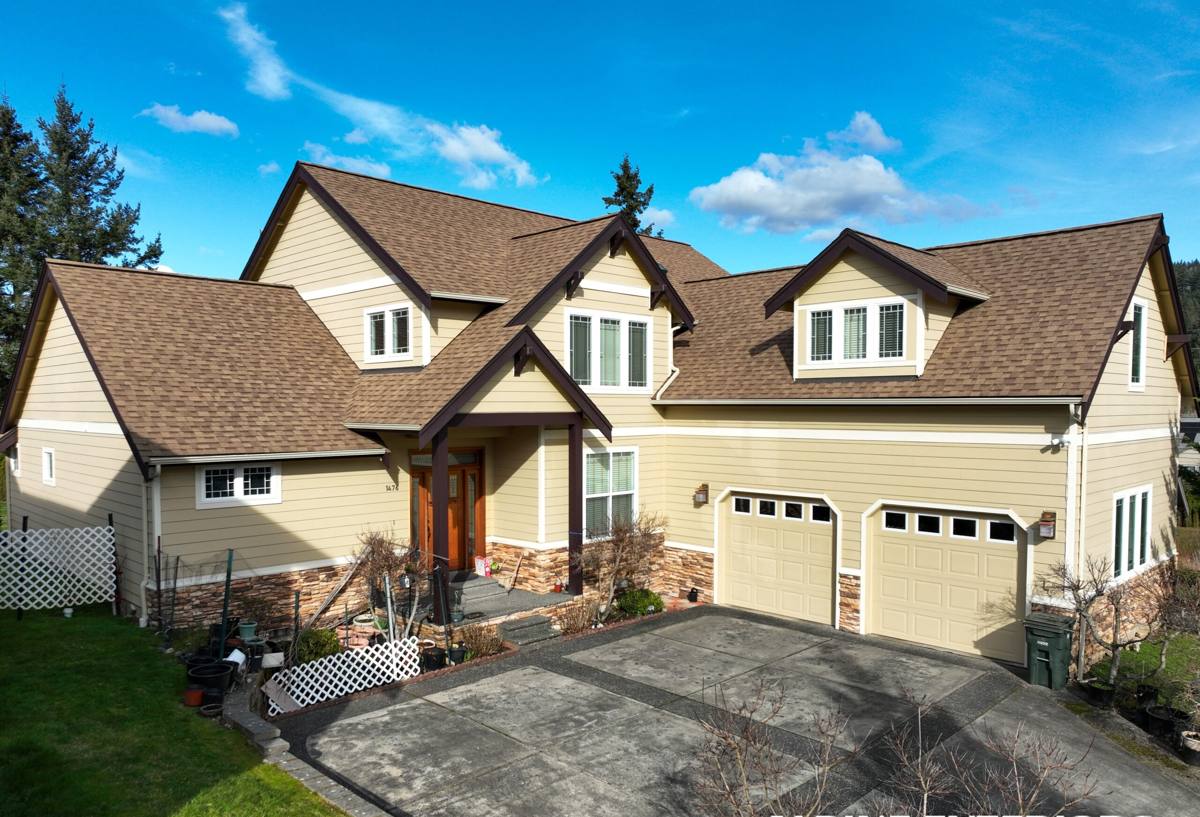
What Salt Air, Rain, and Moss Actually Do to a Roof
Salt Air
Airborne salt accelerates corrosion on any exposed metal — flashing, fasteners, vent caps, gutter hangers. Over years, cheap or under-coated metal components can pit and weaken well before the shingles themselves show wear. This is a fastener and flashing problem as much as it's a shingle problem, and it's often overlooked because it's not visible from the ground.
Driving Rain
Wind-driven rain doesn't just fall on a roof, it gets pushed sideways and upward under edges, around penetrations, and into any gap that a calmer climate could get away with ignoring. Roofs here need tighter seams, properly lapped underlayment, and flashing details that assume water will try to travel uphill at some point during a winter storm.
Moss
Moss thrives in the shaded, damp, slower-drying sections of a roof — typically north-facing slopes and areas under tree cover. It's not just cosmetic. Moss holds moisture against the roofing surface, works its way under shingle tabs as it grows, and can lift material enough to create a path for water. A roof installed without moss-resistant strategy in a spot like Alger is often fighting the same battle again within five to seven years.
Signs a Full Replacement Makes More Sense Than a Repair
- Shingles are curling, cracking, or losing granules across large sections rather than one isolated spot
- You've had two or more repair visits in the last few years for different leaks
- Moss has been established long enough that it's lifted shingle edges, not just discolored the surface
- Flashing around chimneys, skylights, or vents is rusted, loose, or was never properly step-flashed
- The roof is past 20-25 years old (asphalt) or shows widespread wear consistent with its material's expected lifespan
- You're seeing daylight through the attic decking, or attic insulation shows water staining
One or two of these on their own might point to a targeted repair. Several at once usually means the roof system as a whole is past the point where patching makes financial sense.
What a Correct New Roof Installation Actually Involves
A roof is a system, not a single layer of shingles. Skipping or shortcutting any part of it is where most premature failures start, especially in a climate that doesn't give a roof much room for error.
Tear-Off and Deck Inspection
We remove the old roofing down to the deck rather than layering over it. This lets us actually see the plywood or OSB underneath and catch soft, rotted, or delaminated sections before they get covered up and hidden for another 20 years.
Underlayment
Given how much wind-driven rain this area sees, underlayment choice and installation matter more than most homeowners realize. Properly lapped, sealed underlayment is the backup layer that protects the deck if wind ever drives water past the primary roofing surface.
Flashing
Every penetration — chimneys, vents, skylights, valleys, wall-to-roof transitions — is a place water wants to get in. Correct step flashing, counter-flashing, and valley metal, installed with corrosion-resistant fasteners suited to a coastal-influenced climate, is what actually keeps those areas dry over time.
Ventilation
Balanced intake and exhaust ventilation keeps the attic space closer to outdoor temperature and humidity, which reduces condensation, helps shingles last their full rated life, and reduces the damp, cool conditions moss favors on the roof surface above.
Final Details
Drip edge, starter strips, proper nailing patterns per manufacturer spec, and cleanup are what separate a roof that performs from one that just looks finished on installation day.
Choosing a Roofing Material for Alger's Conditions
There's no single "best" roofing material — there's a best fit for your home, your budget, and how much long-term maintenance you're willing to take on. Here's how the common options stack up for a property in this specific climate:
| Material | Performance in Salt Air / Rain | Moss Resistance | Maintenance Burden |
|---|---|---|---|
| Architectural Asphalt Shingle | Good, with corrosion-resistant flashing and fasteners | Moderate — benefits from zinc/copper strips or periodic cleaning | Low to moderate |
| Standing Seam Metal | Very good when properly coated and fastened | High — moss struggles to grip a smooth metal surface | Low |
| Cedar Shake | Requires diligent maintenance; wood is more sensitive to constant moisture | Low without regular treatment and cleaning | High |
| Synthetic/Composite Shingle | Good; consistent manufacturing tolerances help with sealing | Moderate to high depending on product | Low |
We install roofing systems as our professional standard dictates rather than pushing whatever is cheapest to install. For a shaded, moisture-prone property, that often steers the conversation toward metal or a well-specified architectural shingle system with real moss-mitigation built in, rather than a lower-cost option that will need aggressive upkeep to hold up here.
How We Handle Moss and Long-Term Moisture Management
Given how long the moss season runs in this part of Whatcom County, we build moss resistance into the installation rather than treating it as an afterthought. That includes proper slope-appropriate material choice for shaded sections, zinc or copper control strips near the ridge on asphalt systems where appropriate, and making sure valleys and low-slope transitions are detailed so water actually clears the roof instead of sitting and encouraging growth. Good ventilation, covered above, does double duty here by keeping the roof deck and surface temperature more consistent, which also discourages moss establishment.
Our Process, Start to Finish
- On-site inspection and estimate — we walk the roof and attic, note deck condition, ventilation, and problem areas specific to your property
- Material selection — honest talk through the options above based on your home, budget, and how much maintenance you want going forward
- Scheduling and prep — protecting landscaping, siding, and gutters before work starts
- Tear-off and deck inspection — full removal of old roofing, replacement of any compromised decking
- Underlayment, flashing, and ventilation installation — the parts that determine how the roof performs in weather, not just how it looks
- Roofing material installation — installed to manufacturer specification for full warranty coverage
- Final walkthrough and cleanup — magnetic sweep for debris, gutter check, and a review of the finished work with you
Why Hiring a Crew That Already Works in Alger Matters
A roofing crew that mostly works dry, inland conditions will build a technically sound roof — for a different climate. Working regularly in this part of Whatcom County means we've already seen how salt air ages fasteners over a decade, which roof orientations in this area hold moss the longest, and how driving rain finds the gaps that calmer-weather installations can get away with. That's not something a manufacturer's install manual fully covers on its own — it comes from repeatedly working this exact coastline and adjusting details accordingly.
It also means we're a known, reachable local business if a warranty question or storm-related concern comes up years down the road, not a crew that was in the area for one job and gone.
Keeping a New Roof Performing After Installation
- Have gutters cleared at least twice a year so water isn't backing up under the roof edge
- Keep overhanging branches trimmed back to reduce shade, debris, and moss pressure on the roof
- Do a visual check after major windstorms for lifted shingles or displaced flashing
- Address any moss regrowth early, before it has time to lift material
- Schedule a periodic professional inspection rather than waiting for a visible leak
A correctly installed roof in this climate shouldn't need constant attention, but a little seasonal upkeep goes a long way toward hitting its full expected lifespan.
If your roof in Alger is showing its age, or you just want an honest read on whether repair or replacement makes sense, we're happy to take a look. The form below gets you a free, no-pressure estimate — no obligation, just a straight assessment of what your roof actually needs.