 Chuckanut Exterior
 Storm Damage Roof Repair in Edison
When a windstorm rolls off the water and tears through the Edison area, the damage doesn't always look dramatic. A few lifted shingles, a bent piece of flashing, a soft spot where wind-driven rain found a seam — none of it looks urgent from the ground, but every one of those small openings is a path for water into your attic and framing. Chuckanut Exterior Company repairs storm-damaged roofs for homes in and around Edison, and we've learned that the roofs out here take a different kind of beating than roofs just a few miles inland.
This page covers what storm damage actually looks like on an Edison roof, what a correct repair involves, and how we handle the job from the first phone call to the final inspection.
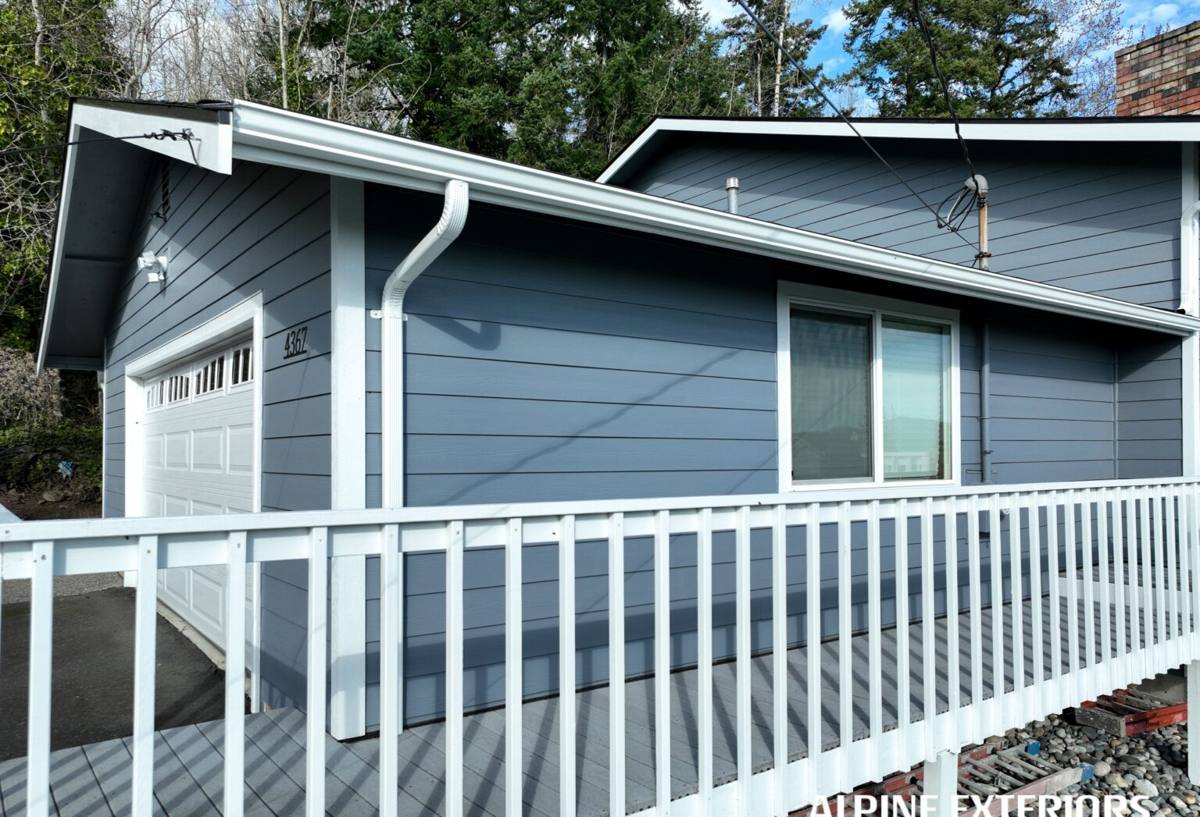
Why Edison Roofs Take a Different Kind of Storm Damage
Homes along this stretch of the Whatcom County coastline deal with three things at once that inland roofs mostly don't: salt-laden air, hard driving rain that comes in sideways rather than straight down, and a moss season that runs longer than most homeowners realize.
Salt Air
Salt in the air accelerates corrosion on anything metal — nail heads, flashing, gutter fasteners, drip edge. A storm that would leave an inland roof with a couple of loose shingles can leave an Edison roof with corroded fasteners that were already weakened before the wind ever showed up. That's why we check fastener condition, not just shingle condition, on every storm inspection.
Driving Rain
Wind off open water pushes rain sideways and upward under roof edges, into vents, and past flashing that would keep dry weather out just fine. After a storm, water intrusion often shows up somewhere other than the obvious damaged spot — a stain on a ceiling across the room from where the wind actually hit the roof. Chasing the real entry point, not just the visible mark, is most of the job.
A Long Moss Season
Moss and roof algae hold moisture against the roof surface for weeks longer than a clean roof would. A storm that lifts or cracks shingles in a mossy section does more damage, faster, because the wood and underlayment underneath are already softened. Roofs with active moss growth are also more likely to lose granules and shingle integrity in high wind, simply because the surface is already compromised.
Signs Your Edison Roof Has Storm Damage
Some damage is obvious. Most isn't. After any significant windstorm or heavy rain event, it's worth checking for these signs — from the ground with binoculars, not by climbing up yourself:
- Shingles that look curled, cracked, creased, or missing entirely
- Granules collecting in gutters or at downspout outlets
- Flashing around chimneys, skylights, or roof valleys that looks bent, lifted, or separated
- Gutters pulled away from the fascia or sagging under debris
- New stains, soft spots, or discoloration on interior ceilings, especially near exterior walls
- Visible daylight through the attic roof deck
- Debris, branches, or moss clumps that have shifted and torn shingle tabs on their way down
- A musty smell in the attic that wasn't there before
If you see any of these, the roof needs a real inspection — not just a look from the driveway. Small openings get bigger with every rain event they sit through.
What a Correct Storm Damage Repair Actually Involves
Emergency Tarping
If a storm has left an active leak or exposed roof deck, the first job is stopping water intrusion, not fixing everything at once. A properly installed tarp is fastened into the roof structure, not just weighted down at the edges — a loose tarp in a coastal wind is its own hazard and often causes more damage than it prevents.
A Full Inspection, Not a Spot Check
Storm damage rarely stays confined to one area. We walk the entire roof plane — not just the section that's visibly damaged — because wind and rain often loosen shingles or flashing in a wider radius than what's obvious. We check the roof deck, flashing, vents, gutters, and attic interior, since attic moisture and insulation condition tell us as much as the shingles do.
Repair vs. Replace, Honestly
Not every storm-damaged roof needs a full replacement, and not every roof can be safely patched. The honest answer depends on the age of the roof, how much of it is affected, and whether the damage is isolated or spread across multiple sections. We'll tell you plainly which category your roof falls into and why, including when a repair is the right call even if a replacement would be the bigger job for us.
Documentation for Insurance
If you're filing a homeowner's insurance claim, we document the damage with dated photos and a written scope of work before any repair begins. This protects you if the adjuster's assessment doesn't match what we find, and it gives you a clear record of pre-existing versus storm-caused damage.
Our Process, Start to Finish
- Call or request an estimate. Tell us what you're seeing — a leak, missing shingles, storm timing — so we can prioritize active leaks first.
- Inspection. We assess the full roof, not just the reported problem area, and check the attic from inside where access allows.
- Written scope and estimate. You get a clear explanation of what's damaged, what needs to happen, and a price range before any work starts.
- Emergency mitigation if needed. Tarping or temporary sealing happens fast when there's an active leak, ahead of the full repair.
- Repair. Damaged shingles, decking, flashing, or underlayment are replaced to match the existing roof as closely as possible.
- Final walkthrough. We show you what was done and where, and flag anything else worth watching going forward.
What Drives the Cost of a Storm Repair
Every storm repair is different, but the price is generally driven by a handful of factors. This table gives you a general sense of what pushes a repair toward the lower or higher end of the range — it's not a quote, since that requires an actual inspection.
| Factor | Tends to lower cost | Tends to raise cost |
|---|---|---|
| Extent of damage | Isolated to one section or slope | Spread across multiple roof planes |
| Roof deck condition | Deck is dry and sound underneath | Deck has soaked through and needs replacement |
| Access | Simple roof pitch, easy ladder access | Steep pitch, multiple stories, tight access |
| Matching materials | Current shingle line still available | Discontinued shingle requiring a blend or wider replacement |
| Underlying moss/algae damage | Roof was otherwise well-maintained | Long-term moss growth has degraded shingles beyond the storm damage itself |
Materials We Use for Coastal Storm Repairs
What goes back onto the roof matters as much as the repair itself, especially in a climate this hard on roofing materials. We choose materials for their actual performance in salt air and driving rain, not just for upfront cost.
| Component | What we use it for | Why it matters here |
|---|---|---|
| Corrosion-resistant fasteners | All shingle and flashing attachment | Standard fasteners corrode faster in salt-laden coastal air, leading to repeat failures |
| Self-adhering underlayment at eaves and valleys | Areas most exposed to wind-driven rain | Provides a sealed barrier where standard underlayment alone can be forced through by sideways rain |
| Matched or closely blended shingles | Patch and section repairs | Mismatched shingles age and weather differently, creating a visible patchwork over time |
| Properly profiled step and counter flashing | Chimneys, walls, valleys | Poorly fitted flashing is the single most common cause of repeat leaks after a storm repair |
We don't chase every new roofing product on the market, and we're upfront when a trendy material isn't a good fit for this climate — some options that perform fine in drier regions have real trade-offs here in maintenance burden or moisture behavior. We'd rather install something proven than something that looks good on a spec sheet.
Why It Matters That We Already Work in Edison
A crew that hasn't worked this specific stretch of coastline will treat your roof like any other repair job. A crew that has knows that Edison roofs corrode faster at the fasteners, that moss holds on longer here than it does even a few miles inland, and that wind-driven rain finds entry points that a dry-climate inspection checklist would miss entirely. That local pattern recognition is what separates a repair that lasts from one that leaks again at the next storm.
We're also close enough to respond quickly when there's an active leak — and in coastal weather, the difference between a same-week tarp and a two-week wait is often the difference between a repair and a much bigger deck replacement.
A Quick Checklist Before You Call
- Note when the storm hit and what symptoms showed up (leak, stain, missing shingles) and when
- Take photos from the ground if it's safe to do so — do not get on the roof yourself
- Check the attic for staining, dampness, or daylight if you can access it safely
- Avoid placing buckets or tarps yourself in high wind — leave temporary fixes to a crew that can secure them properly
- Keep any correspondence with your insurance company for reference during the estimate
If your roof took a hit in the last storm, or you're just not sure whether what you're seeing is worth worrying about, we're happy to take a look. Request a free, no-pressure estimate using the form below, and we'll give you a straight answer about what your roof actually needs.