 Chuckanut Exterior
 Siding Replacement for York Homes in Chuckanut
York is a quieter residential pocket of the greater Chuckanut area, and like most neighborhoods this close to the water, its homes take a different kind of beating than houses ten or fifteen miles inland. Salt-tinged air off the bay, driving rain that comes in sideways during fall and winter storms, and a long, damp moss season that can stretch from October into May all put steady pressure on exterior siding. When a homeowner in York calls us about siding replacement, we're not looking at the job the same way we would for a dry, sheltered lot on the east side of Whatcom County. We're looking at what the specific combination of salt, moisture, and shade around a York property has already done to the walls, and what it will keep doing if the replacement isn't done right.
This page is about one service, in one place: full siding replacement for homes in York. Not a patch job, not a partial repair — a complete tear-off and reinstall done to match the realities of this microclimate.
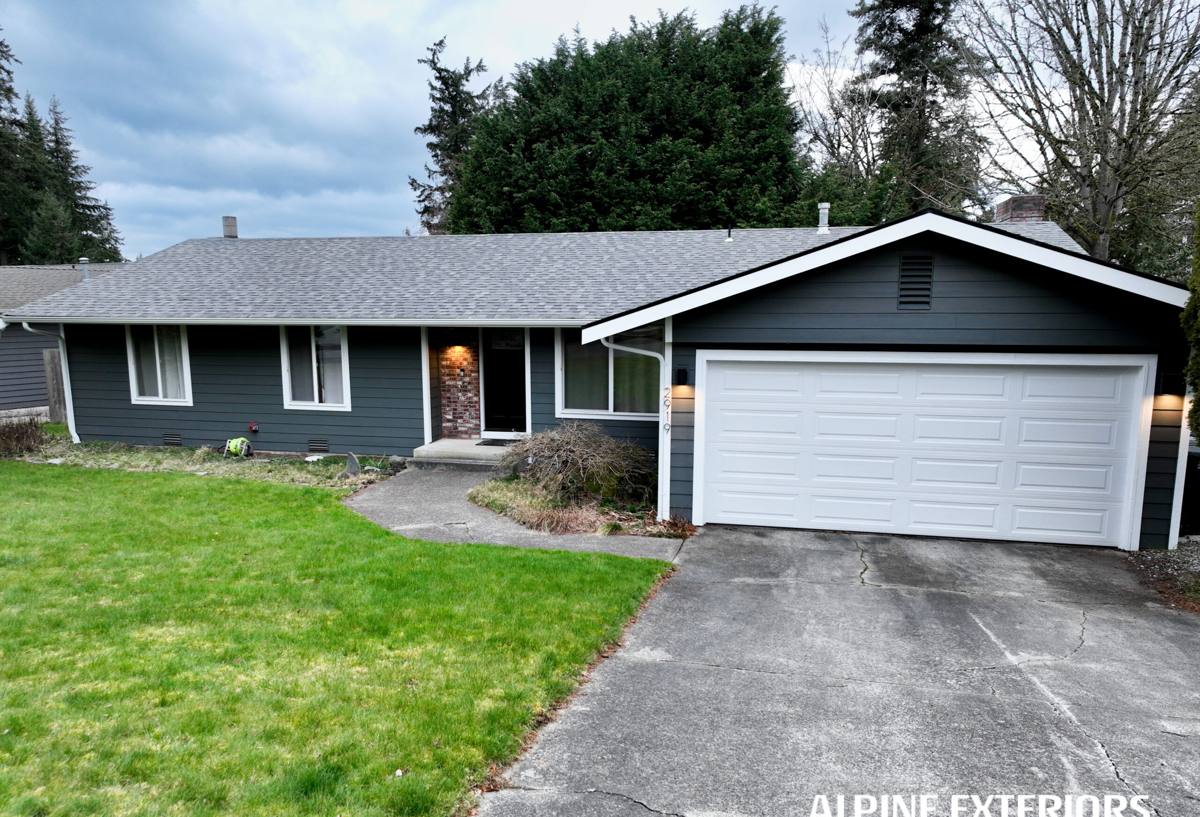
Why Chuckanut's Climate Is Hard on Siding
Whatcom County gets a lot of rain, but it's not just the volume that matters — it's the combination of moisture, wind-driven exposure, and limited direct sun that many York lots deal with because of mature trees and proximity to the water. That combination creates conditions where siding rarely gets a chance to fully dry out between weather events. Add salt air into the mix, and you get faster degradation of fasteners, caulking, and paint film than you'd see on a similar home twenty miles inland.
Moss and algae are the most visible symptom. On north-facing walls and anywhere shaded by trees, a thin film of green or black growth can build up on wood-based and lower-grade siding within a couple of seasons. That growth holds moisture against the surface longer than plain rain does, which accelerates rot in wood substrates and breaks down paint and caulk faster than manufacturers' warranties usually assume. Homeowners in York often notice the cosmetic issue — the green streaking, the dark patches — before they notice the structural one underneath.
What This Means for an Aging Wall System
By the time siding shows visible moss, algae, or paint failure, the water-resistive barrier and sheathing behind it have usually been dealing with intermittent moisture intrusion for a while. That's the part homeowners can't see from the driveway, and it's the part that determines whether a replacement is a straightforward reside or a bigger repair involving rotted sheathing and framing.
Signs a York Home Needs Siding Replaced, Not Just Patched
Not every siding problem calls for a full replacement. But there's a point where patching stops making sense — where the labor and material cost of repeated repairs starts to rival the cost of doing it right, once, with a product built for this climate. Here's what we look for:
- Soft or spongy spots when you press on the siding, especially near the bottom courses and around window and door trim
- Persistent moss or algae staining that returns within a season or two of cleaning
- Visible cracking, splitting, or delamination, common on older wood-based or engineered wood panels
- Paint that's peeling, bubbling, or chalking heavily rather than just fading
- Warping or buckling panels, particularly on walls that get the most wind-driven rain
- Nail pops, gaps at seams, or trim separating from the wall
- A musty smell in adjacent interior rooms, which can indicate moisture has already reached the wall cavity
If you're seeing two or three of these at once, that's usually a sign the whole wall system needs attention, not just the worst-looking section.
What a Correct Siding Replacement Actually Involves
A siding replacement is only as good as what happens underneath it. Anyone can nail new panels over old sheathing and have it look fine for a photo. Whether it holds up through a Whatcom County winter is a different question entirely.
Tear-Off and Inspection
We remove the existing siding down to the sheathing and inspect for rot, soft spots, and hidden moisture damage. This is the step that gets skipped on cut-rate reside jobs, and it's the step that matters most in a damp, coastal-influenced neighborhood like York. Any compromised sheathing or framing gets addressed before anything new goes up — covering it over just locks the problem inside the wall.
Water-Resistive Barrier and Flashing
A correctly installed weather-resistive barrier, properly lapped and sealed, combined with correct flashing at windows, doors, and any wall penetrations, is what actually keeps driving rain out of the wall assembly. Siding is the visible layer, but the barrier and flashing behind it do the real work of managing bulk water. We install both to manufacturer spec, not just "close enough."
Installing to Manufacturer Specification
Fiber cement siding has specific requirements for fastener type, spacing, clearance from grade, and gapping at butt joints — all of which matter more, not less, in a wet climate. Installed loose or with the wrong fasteners, even a good product will fail early. Installed to spec, it's built to handle exactly the conditions York deals with.
Trim, Caulking, and Final Finish
Trim details and caulking are where a lot of long-term water problems start if they're rushed. We finish these details carefully, because a poorly sealed trim joint on a wind-exposed wall is often where the next moisture problem begins.
Why We Install Only James Hardie Fiber Cement Siding
We made a deliberate decision to install one product line: James Hardie fiber cement. We don't install vinyl, LP SmartSide, Cemplank, Allura, primed spruce, or cedar. That's not a marketing position — it's a standard we hold because of what we've seen these products do, and not do, in this specific climate.
Vinyl siding is inexpensive and low-maintenance in dry climates, but it expands and contracts with temperature swings, can warp or crack in wind-driven rain events, and doesn't hold paint if a homeowner ever wants to change the color. Wood-based products like primed spruce or cedar look great initially but are the most vulnerable to the moss, algae, and rot issues we described above — they're organic materials in a climate that's genuinely hard on organic materials. Engineered wood siding like LP SmartSide performs better than raw wood in many ways, but it still relies on an engineered wood core, which means cut edges and any breach in the factory coating are still a moisture entry point. Other fiber cement brands like Cemplank and Allura are reasonable products, but we've standardized on one manufacturer so our crews install one system, to one spec, with one warranty structure, every time — no guessing which product's install requirements apply on a given job.
James Hardie fiber cement is non-combustible, doesn't support rot the way wood-based products can, and comes factory-finished with ColorPlus technology — a baked-on finish that holds color and resists the fading and chalking that's common with field-applied paint in this climate. Hardie also engineers specific product lines, like their HZ5 line, for cold and wet climate zones, which is a meaningful difference from a one-size-fits-all siding product.
Choosing the Right Hardie Product for a York Home
James Hardie makes several siding profiles, and the right one depends on the home's style and how exposed the walls are. Here's how the main options compare for a property in this area:
| Product | Look | Best Suited For |
|---|---|---|
| HardiePlank Lap Siding | Traditional horizontal lap, several textures | Most York homes — the standard choice for full residing |
| HardiePanel Vertical Siding | Clean vertical lines | Modern builds, accent walls, gable ends |
| HardieShingle Siding | Staggered or straight-edge shingle look | Craftsman and cottage-style homes wanting shingle character without wood's moisture issues |
| HardieTrim Boards | Smooth or textured trim profiles | Window, door, and corner trim on any of the above |
For most York properties, HardiePlank is the practical choice — it's the most weather-tested profile in wet coastal climates and works with the traditional and craftsman-style homes common throughout Whatcom County.
Cost Factors for Siding Replacement in York
We don't post fixed prices because every home is different, but the factors that actually move the number are consistent. Here's what drives cost up or down on a typical siding replacement in this area:
| Factor | Why It Matters |
|---|---|
| Amount of sheathing repair needed | Hidden rot found during tear-off, more common on shaded, moss-prone walls, adds material and labor |
| Home size and wall complexity | More corners, dormers, and trim details mean more cutting and detail work |
| Siding profile chosen | Lap, panel, and shingle products have different material and labor requirements |
| Story height and access | Two-story and steep-lot homes require more scaffolding and safety setup |
| Trim and detail scope | Full trim replacement costs more than reusing sound existing trim |
The only way to get an accurate number is a walk-through of the specific home, which is what our estimate is for.
Our Process, Start to Finish
- Free on-site estimate and visual assessment of current siding and any visible moisture damage
- Written scope and quote covering tear-off, any needed repairs, and the Hardie product selected
- Scheduling that accounts for weather windows, since installation needs reasonably dry conditions
- Tear-off, sheathing inspection, and any necessary repairs before new material goes up
- Weather-resistive barrier, flashing, and siding installed to manufacturer specification
- Final walkthrough to confirm trim, caulking, and finish details before we call the job done
Why a Crew That Already Works in York Matters
Every neighborhood in Whatcom County has its own quirks, and York is no exception — lot orientation relative to the water, tree cover, and prevailing wind direction all affect which walls take the worst weathering on a given home. A crew that's already worked on homes in this area knows to check the north- and west-facing walls first, knows how much moss buildup is normal versus a sign of a bigger problem, and doesn't need to relearn the local conditions on your dime. That familiarity shows up in fewer surprises during tear-off and a more accurate estimate up front.
If your York home's siding is showing moss staining, soft spots, or paint failure, it's worth having someone look at it before those issues reach the sheathing. We'll walk the exterior with you, explain what we find, and put together a straightforward quote for a James Hardie replacement — no pressure, no upsell games. Request a free estimate using the form below and we'll get a time on the calendar.