 Chuckanut Exterior
 Why Sehome Siding Takes More Punishment Than Most
Homes in the Sehome area of Chuckanut deal with a specific combination of weather that's tougher on exterior cladding than people realize until they've lived with it for a decade or two. Salt-laden air off the water works into seams and fastener points. Driving rain, pushed sideways by wind rather than falling straight down, finds every gap in flashing and trim. And the long, damp moss season that runs from fall through spring keeps north-facing and shaded walls wet for weeks at a stretch. None of this is dramatic on its own, but stacked together year after year, it's exactly the kind of slow, cumulative exposure that separates siding that lasts thirty years from siding that starts failing at twelve.
If you're planning a re-side or new installation in Sehome, the material and the workmanship both need to be matched to that reality, not to a generic siding job.
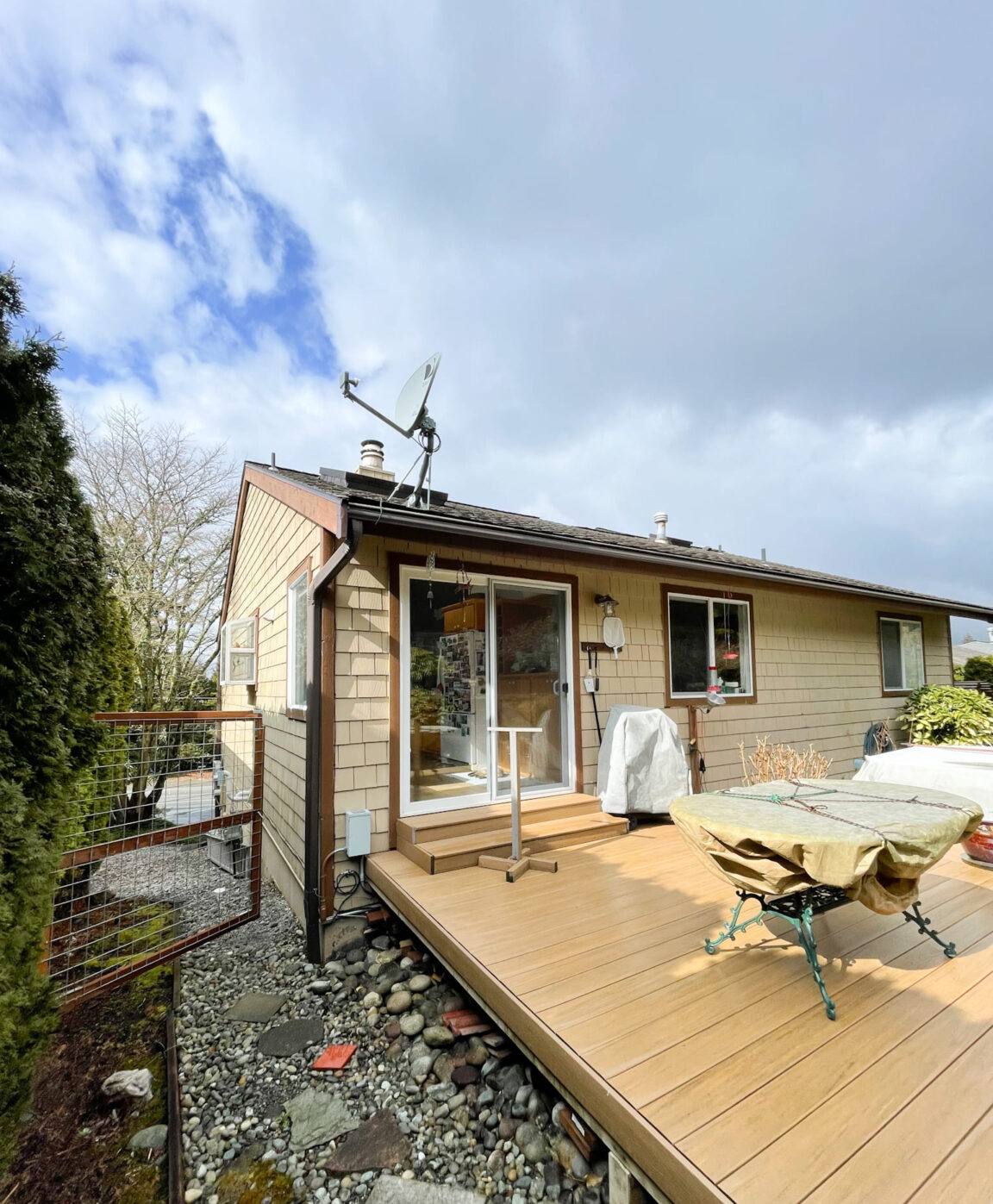
What Fiber Cement Actually Needs to Do Here
Fiber cement siding is a good fit for this climate in principle — it's dimensionally stable, doesn't rot, and resists the moisture cycling that destroys wood-based products. But "fiber cement" isn't one product; the formulation, factory finish, and installation details all matter, especially in a coastal, high-moisture area like Sehome.
The non-negotiables for this location
- A factory-applied finish that's engineered to resist moisture intrusion at the board's core, not just at the painted surface
- Rain-screen or proper drainage detailing behind the siding so trapped moisture has somewhere to go
- Corrosion-resistant fasteners rated for coastal exposure
- Flashing and caulking details sized for wind-driven rain, not just vertical rainfall
- A finish that resists algae and moss staining on shaded elevations
This is where the difference between a correctly specified job and a generic siding job shows up years later — not on install day, but the first time a wall stays wet for two weeks straight in February.
Why We Only Install James Hardie
We standardized on James Hardie fiber cement siding for every job we do, including in Sehome, and it's not a marketing preference — it's a decision based on what holds up under exactly this kind of exposure. Hardie's HZ5 product line is engineered specifically for climates with prolonged moisture and freeze-thaw cycling, which describes Whatcom County's weather well. The ColorPlus factory finish is baked on and cured under controlled conditions, which gives it more consistent moisture and UV resistance than field-applied paint can match, and it holds color longer on the sun-exposed sides of a house while resisting the mildew staining that shows up fast on shaded, damp walls.
We don't install vinyl, LP SmartSide, Cemplank, Allura, or primed wood siding. Some of those are reasonable products in the right setting — but we've made a professional call that in a coastal, high-moisture area like this, the trade-offs (moisture sensitivity at cut edges, field-finish durability, or long-term warranty structure) aren't ones we want to put our name behind. Hardie is what we install because it's what we're confident stands up to a Sehome winter, and a Sehome winter twenty years from now.
What a Correct Sehome Installation Actually Involves
The siding panel itself is only part of the job. Most siding failures we get called out to inspect in this area trace back to installation details, not the product. A few that matter most here:
Weather-resistive barrier and drainage plane
With this much sustained moisture exposure, a house needs a continuous weather-resistive barrier behind the siding and, ideally, a drainage gap that lets any moisture that does get past the cladding drain and dry out rather than sit against the sheathing.
Fastening and joint spacing
Hardie panels need to be fastened per manufacturer spec — correct nail placement, correct gapping at butt joints, and correct clearance at the bottom of the wall so the siding never sits in standing water or direct soil contact. Rushed or undertrained crews skip these details constantly, and it's invisible until the first real problem shows up.
Flashing at every penetration
Windows, doors, hose bibs, light fixtures — every penetration through the siding is a potential entry point for wind-driven rain. Each one needs proper flashing and sealant, not just a bead of caulk at the surface.
Caulking and touch-up paint
Cut edges need to be sealed and touched up with Hardie-approved products before installation continues, particularly on a job where the crew is working through drizzle, which is common for a good chunk of the year here.
Our Process, Start to Finish
We keep this straightforward, because the value is in the details being done right, not in the process being complicated.
- Walk-through and assessment — we look at your current siding, trim, flashing, and any moisture or moss patterns on the exterior before quoting anything.
- Written estimate — scope, product line, color, and a clear breakdown of what's included, with no vague allowances.
- Tear-off and inspection — once old siding comes off, we check the sheathing and framing underneath for hidden moisture damage before closing anything back up.
- Weather barrier and flashing — this layer gets done right regardless of what's visible once siding goes back on, because it's the layer that actually keeps water out.
- Hardie installation — panels, trim, and fastening per manufacturer spec for your specific wall assembly and exposure.
- Final detailing — caulking, touch-up, and a walk-through with you before we call it done.
Moss, Algae, and Salt Air: What to Expect Long-Term
Even with the right product and installation, no siding in Sehome is maintenance-free. Shaded north walls and areas under tree cover will still be the first to show moss or algae growth during the wet months — that's a function of light and moisture exposure, not a defect in the siding. Hardie's factory finish resists staining better than field-painted alternatives, but periodic gentle washing (never pressure-washing directly into seams) keeps growth from taking hold and keeps the finish looking like it did on day one. Trim and caulking should get a visual check every year or two, since that's where small gaps tend to show up first, long before they'd ever affect the panels themselves.
Cost Factors for a Sehome Siding Project
Every job is different, but these are the variables that actually move the number on a Sehome re-side:
| Factor | Why It Matters Here |
|---|---|
| Home size and wall complexity | More corners, gables, and penetrations mean more flashing and cutting labor |
| Current condition underneath | Hidden moisture damage from years of exposure sometimes means sheathing repair before new siding goes on |
| Siding profile and accessories | Lap, shingle-style, or panel systems, plus trim and soffit work, all price differently |
| Drainage plane detailing | Adding or upgrading a rain-screen gap adds labor but pays off in a high-moisture area |
| Access and site conditions | Slopes, tight lot lines, and mature landscaping around the home affect scaffolding and staging |
We give you a real, itemized number after we've actually looked at your house — not a per-square-foot guess over the phone.
Signs Your Current Siding May Already Be Failing
Because moisture damage in this climate often develops behind the siding before it's visible on the surface, it helps to know what to watch for:
- Soft or spongy spots when you press on siding near the bottom of walls or below windows
- Paint that's bubbling, peeling, or failing faster than it used to
- Persistent moss or dark staining that comes back within weeks of cleaning
- Visible warping, cupping, or gaps opening at seams and joints
- A musty smell near exterior walls inside the house
- Siding that was installed more than 20-25 years ago, especially wood-based or older composite products
Any one of these is worth a look before it turns into a sheathing or framing repair on top of the siding job.
Why Hiring a Crew That Already Works in Sehome Matters
Siding installation isn't one-size-fits-all across Washington, let alone across the country. A crew that regularly works in Sehome and the surrounding Chuckanut area already knows how the local exposure — the salt air, the wind-driven rain patterns, the shaded lots that hold moisture longer — should shape flashing details, drainage decisions, and even which elevations need extra attention. That's knowledge you don't get from a national franchise crew rotating through on a install-and-move-on schedule. It shows up in the small decisions made on-site, not in the sales pitch beforehand.
If you're weighing a siding replacement or new install in Sehome, we're happy to come take a look and give you a straightforward, no-pressure estimate — just fill out the form below.