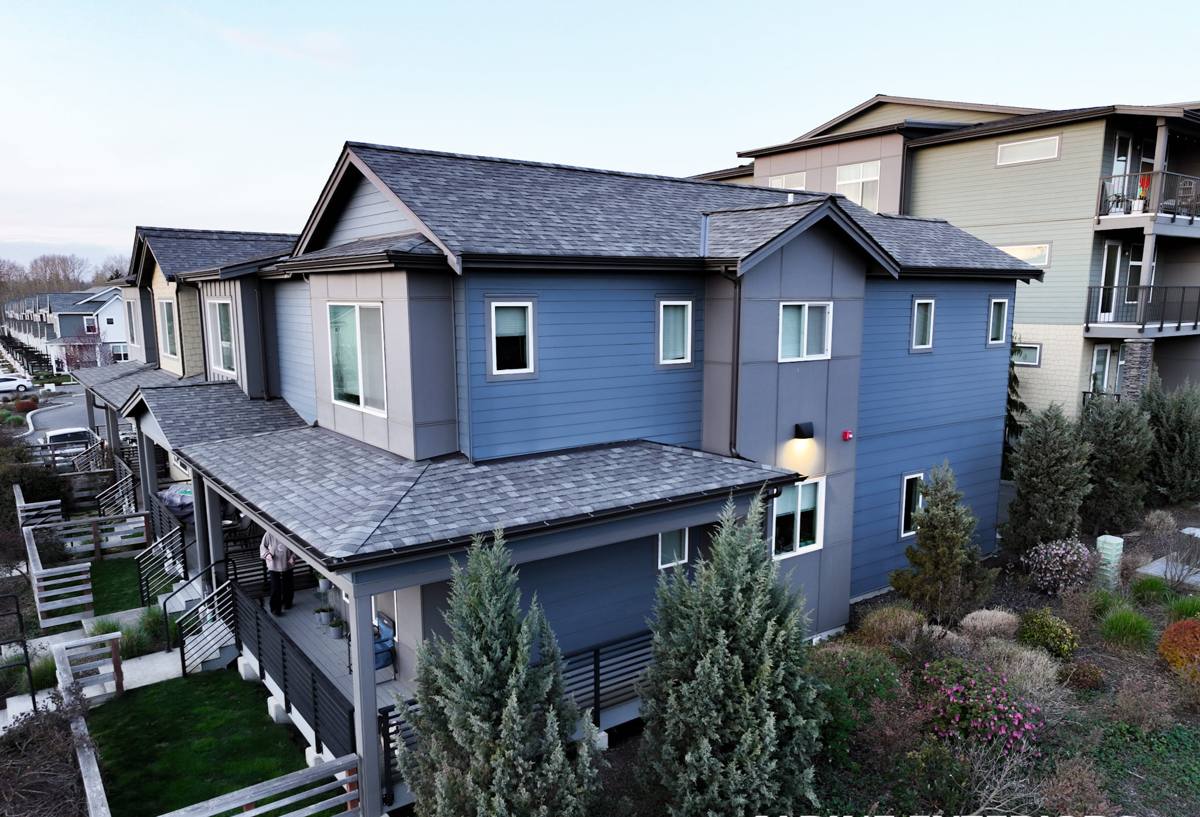
 Chuckanut Exterior
 Why Board & Batten Fits South Hill Homes
Board and batten has become one of the most requested siding looks in South Hill — and it's easy to see why. The vertical lines read as clean and modern on newer builds, but the same profile also works beautifully on farmhouse-style and craftsman homes, especially as an accent on gables, entries, and dormers where a change in texture makes the whole elevation feel more intentional. It's not just a trend detail, though. When it's installed correctly, board and batten is a genuinely durable siding system — and when it's installed poorly, it's one of the faster ways to trap water against a wall. The difference almost always comes down to what's happening behind the boards, not the boards themselves.
What South Hill's Climate Actually Does to Vertical Siding
Whatcom County weather is hard on any exterior, but board and batten has its own specific pressure points worth understanding before you commit to the look.
Salt Air and Marine Moisture
Homes in and around Chuckanut sit close enough to marine air that salt-laden moisture works its way into fasteners, trim, and any exposed cut edges over time. Untreated wood and lower-grade fasteners corrode or swell faster here than they would further inland, and that process is often invisible until paint starts failing or a batten starts cupping.
Driving Rain Against Vertical Seams
Board and batten has more vertical seams per square foot than a standard lap siding wall, and every one of those seams is a potential path for wind-driven rain to get pushed upward and behind the cladding. A siding system that looks identical to a well-built one from the street can behave completely differently in a January storm if the water management layer behind it isn't right.
A Long Moss Season
North-facing and shaded elevations around South Hill hold moisture for months at a time once moss and algae take hold. That growth doesn't just look bad — it keeps the surface underneath damp long after the rest of the house has dried out, which shortens the life of any coating or substrate that isn't built to handle sustained moisture contact.
How Board & Batten Actually Works as a System
Board and batten isn't just a decorative pattern — it's a layered assembly, and every layer has a job. Wide panels or boards are installed first, and the narrower battens are fastened over the seams between them. Done right, those battens aren't just visual detailing; they're the primary defense keeping wind and rain out of the joint underneath. Behind all of it should sit a water-resistive barrier and, ideally, a drainage gap that lets any moisture that does get past the cladding find its way back out instead of soaking into the wall assembly. Skip or shortcut any one of those layers and you've built a wall that looks right but isn't.
Why We Only Install This Look in James Hardie Fiber Cement
Board and batten can be built out of several materials, and we've worked with enough of them to know why we've standardized on one.
Cedar and Other Wood Board & Batten
Real wood board and batten has a warmth and grain pattern nothing else fully matches, and we understand the appeal. But wood is organic material in a climate that gives it constant moisture exposure and a long moss season. Even with good detailing, wood board and batten asks for more frequent refinishing, more vigilant caulk maintenance, and more tolerance for repair as boards age, cup, or take on rot at end grain and fastener points.
Vinyl Board & Batten
Vinyl versions of this profile are common and inexpensive, but they're a poor match for the vertical, high-relief look board and batten is supposed to deliver — panels tend to look thin and can ripple or gap with temperature swings. Vinyl also relies almost entirely on correct installation to keep water out, since the material itself doesn't hold paint or accept caulk repairs well if a seam ever needs attention later.
Why James Hardie
James Hardie fiber cement holds its shape and crisp reveal lines in a way wood and vinyl don't, and it's non-combustible, which matters given how many South Hill properties back up to trees and brush. Their ColorPlus factory finish is baked on under controlled conditions rather than field-applied, and it comes with its own finish warranty separate from the substrate warranty — a meaningfully different guarantee than site-painted siding gets. This is the entire reason we standardized on one manufacturer instead of offering every option on the market: we'd rather install one system exceptionally well than install several systems adequately.
What a Correct Installation Involves
A board and batten job that will actually hold up in this climate follows a specific sequence, and skipping steps is where most siding failures start:
- A water-resistive barrier installed and lapped correctly over the sheathing, with all penetrations properly flashed before any siding goes up
- A rainscreen or furring strip layer that creates a real drainage gap behind the cladding, rather than fastening panels flush to the wrap
- Battens and panels fastened into solid framing on the spacing and pattern the manufacturer specifies — not just wherever studs happen to line up
- Flashing and trim detail at every window head, door head, and roof-to-wall transition, since these are the highest-risk points for water intrusion
- Sealant applied only where the manufacturer calls for it — over-caulking a fiber cement wall can trap moisture just as easily as under-caulking it
- Consistent reveal width and batten spacing across the elevation, which is what separates a professional-looking wall from one that reads as slightly off the moment you step back and look at it
Our Process for South Hill Projects
We start every board and batten project with an honest look at what's behind the existing siding, not just what's visible from the driveway. If there's hidden moisture damage or rot in the sheathing, that gets addressed before a single new board goes up — installing a beautiful new wall over a compromised substrate just delays the same problem. From there we walk through batten spacing, reveal size, and color with you, since those choices affect both the finished look and the long-term maintenance profile of the home. Our crews doing the physical installation are the same people who've worked on homes throughout the South Hill area, so they already know which elevations tend to take the worst weather and where extra attention at flashing and trim pays off. We clean up thoroughly at the end of each work day, not just at project completion.
Cost Factors to Understand Before You Budget
Board and batten pricing varies more than most siding styles because so much depends on what's happening underneath the existing wall and how much trim detail the design calls for. Here's what typically moves the number:
| Cost Factor | Why It Matters |
|---|---|
| Existing siding removal and disposal | Tear-off complexity and hidden sheathing condition affect labor time |
| Wall moisture or rot repair | Any damaged sheathing or framing found underneath must be repaired before new siding goes on |
| Rainscreen/drainage gap installation | Adds material and labor but is essential for long-term performance in this climate |
| Batten spacing and reveal width | Narrower spacing means more battens, more fasteners, and more labor per square foot |
| Trim complexity | Multiple gables, dormers, or window openings increase detail work significantly |
| ColorPlus color selection | Some factory-finish colors carry a different price point than standard options |
| Home height and access | Multi-story sections or difficult access require additional equipment and time |
Maintaining Board & Batten Through Moss Season
Fiber cement board and batten is low-maintenance compared to wood, but "low-maintenance" doesn't mean "no maintenance" in a climate like ours. A short annual routine keeps it looking right and catches small issues before they become expensive ones:
- Rinse shaded and north-facing elevations at least once a year to keep moss and algae from establishing
- Keep gutters and downspouts clear so overflow isn't running down the wall face during heavy rain
- Trim back vegetation and tree limbs that keep any section of wall in constant shade or damp contact
- Inspect caulking around windows, doors, and penetrations annually and have any cracked or missing sealant addressed promptly
- Avoid direct high-pressure washing into seams and battens — a garden hose or low-pressure setting is safer for the joints
- Watch for staining or discoloration near grade level, which can signal splashback moisture that needs a drainage fix, not just a cleaning
Why Hiring a Crew That Already Works South Hill Matters
Board and batten's performance problems almost never show up in year one — they show up in year five or ten, after enough driving rain and moss seasons have tested every seam and fastener. A crew that's already worked on homes throughout South Hill and the broader Chuckanut area has seen which details hold up here and which ones don't, and they've already built relationships with Whatcom County's permitting process so inspections don't stall your project. That local track record is worth more than a low bid from a crew that's never had to answer for their work after a real Pacific Northwest winter.
If you're considering board and batten siding for a South Hill home, we're happy to take a look and give you an honest, no-pressure assessment of what your project actually needs. Fill out the form below to schedule a free estimate.