 Chuckanut Exterior
 Why Silver Beach Roofs Wear Differently Than Roofs Inland
Silver Beach sits close enough to the water that salt-laden air is a daily fact of life, not an occasional nuisance. Combine that with the driving rain that comes off the Salish Sea during winter storms, and you get a roof environment that's noticeably harder on materials than a roof ten miles inland in Whatcom County. Fasteners corrode faster near salt air. Wind-driven rain finds gaps that would never leak on a calmer site. And the shade and moisture from the surrounding tree cover mean moss has a long growing season here — often close to year-round in a mild coastal winter.
None of this means Silver Beach homes need exotic materials or gimmicks. It means the installation details that get skipped on an easy job — flashing laps, fastener spacing, underlayment coverage, ventilation balance — are the details that actually matter here. A roof that's "good enough" for a dry inland lot can fail early in this location if those details are cut short.
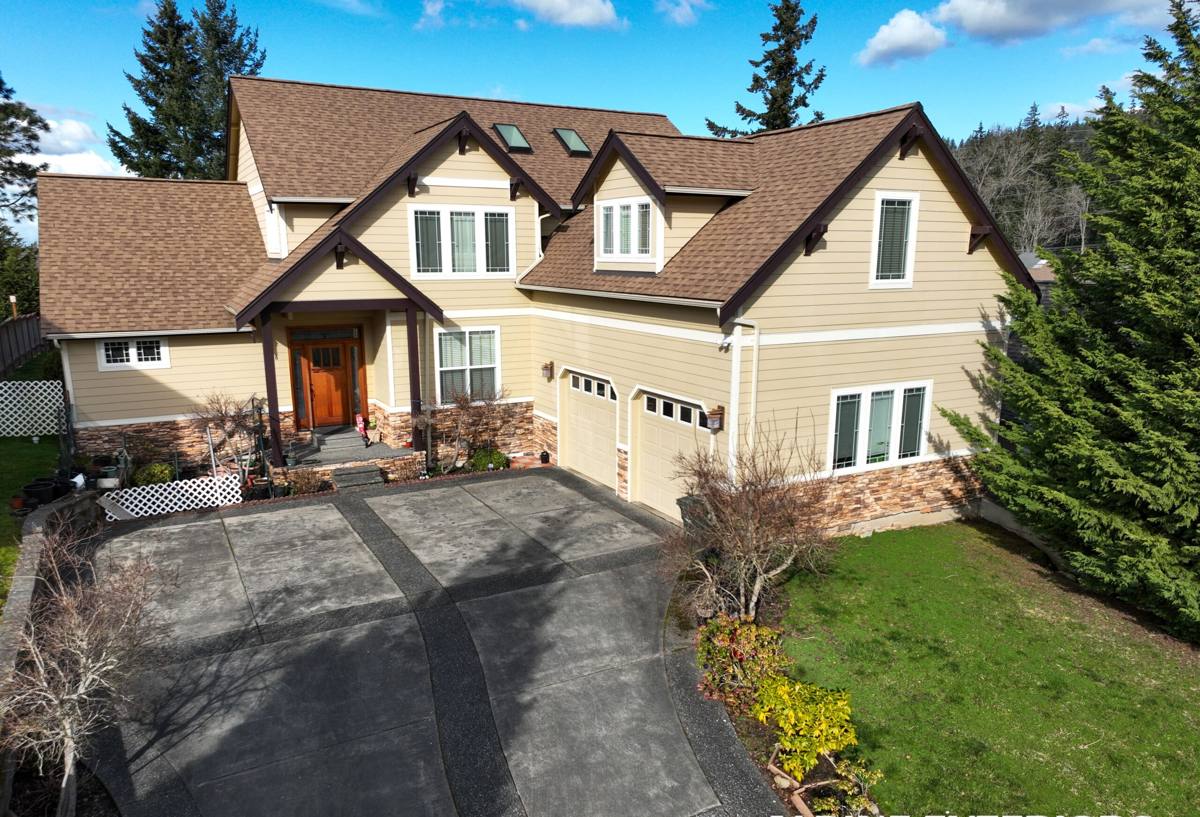
What Driving Rain Actually Does to a Roof
Most people picture rain falling straight down and running off a roof the way it's supposed to. Along the water near Chuckanut, storms regularly push rain sideways, which changes the physics of what a roof has to resist. Wind-driven rain gets forced up and under shingle tabs, into nail holes, and into any gap in flashing that wouldn't be a problem in calmer weather.
This is why we don't treat underlayment as a formality. On a Silver Beach install we run self-adhered underlayment at eaves, valleys, and around every penetration — not just the minimum code-required strip — because that's the layer doing the real work when wind pushes water uphill instead of letting it drain down.
Where Wind-Driven Rain Usually Wins
- Valleys where two roof planes meet and water concentrates
- Step flashing along walls, chimneys, and dormers
- Low-slope sections or additions where water sits longer before draining
- Exposed nail heads on older or improperly installed shingles
- Roof-to-wall transitions where siding meets roofing
Salt Air and What It Means for Materials and Fasteners
Salt air accelerates corrosion on anything metal — flashing, fasteners, and any exposed hardware. It's not that standard materials can't handle a marine-influenced climate; it's that the grade of fastener and flashing metal matters more here than it would on a roof away from the water. We spec corrosion-resistant fasteners and flashing on Silver Beach jobs as a standard practice, not an upcharge, because replacing rusted-out flashing five years early costs far more than doing it right the first time.
Roofing membranes and shingle products themselves generally hold up fine in coastal air when installed correctly — the failure point is almost always the metal components and the seams, not the field material.
Moss: The Slow Damage Most Homeowners Underestimate
A long moss season is part of life on shaded, moisture-prone lots near Chuckanut, and Silver Beach's mix of tree cover and coastal humidity keeps roofs damp longer than open, sunny sites. Moss itself isn't just cosmetic. As it grows, it lifts shingle edges, holds moisture against the roof deck, and creates a foothold for organic debris that traps even more water. Left alone for a few seasons, moss growth can shorten the life of an otherwise sound roof by years.
How a New Roof Installation Should Address Moss
- Algae/moss-resistant shingles (copper or zinc-infused granules) on north-facing or heavily shaded slopes
- Proper slope and drainage detailing so water doesn't pool where moss thrives
- Clean valley and gutter design that doesn't trap needles and leaf litter
- Optional zinc or copper strips at the ridge on shaded roofs, where appropriate
We won't claim any product makes a roof "moss-proof" — nothing does, given enough shade and time. What a correct installation does is stack the odds in the homeowner's favor and make routine moss removal easier instead of a fight against a roof designed without it in mind.
Comparing Roofing Material Options for a Coastal Whatcom County Home
There's no single "best" material for Silver Beach — it depends on budget, roof complexity, and how much long-term maintenance a homeowner wants to take on. Here's how the common options stack up for this specific climate and salt exposure.
| Material | Coastal/Salt Air Performance | Moss Resistance | Typical Lifespan | Maintenance Level |
|---|---|---|---|---|
| Architectural asphalt shingle | Good, with corrosion-resistant fasteners and flashing | Moderate; algae-resistant granule options recommended | 25–30 years | Low to moderate |
| Standing seam metal | Very good when properly coated and fastened | High — sheds moss more readily than shingles | 40–50+ years | Low |
| Synthetic/composite shingle | Good | Moderate to high, product-dependent | 30–50 years | Low to moderate |
| Cedar shake | Requires more upkeep near salt air and moisture | Low without regular treatment | 20–30 years with maintenance | High |
For most Silver Beach homes, a well-installed architectural asphalt shingle with corrosion-resistant components remains the practical choice — it balances upfront cost against durability in this climate. Metal is worth a serious look for homeowners planning to stay long-term or who want to minimize moss and maintenance calls, even with a higher installed cost.
What a Correct Installation Actually Involves
A new roof is only as good as the parts nobody sees once it's finished. On every Silver Beach installation, our process covers the same fundamentals regardless of which material a homeowner chooses:
Tear-Off and Deck Inspection
We remove the old roofing completely and inspect the deck for soft spots, rot, or prior water damage — common where moss and driving rain have been at work for years unnoticed. Damaged sheathing gets replaced before anything new goes down; covering over a compromised deck just hides a problem that will resurface.
Underlayment and Ice/Water Protection
Self-adhered underlayment at eaves, valleys, and penetrations, with synthetic underlayment across the rest of the field. This is the layer that protects the home if wind-driven rain gets past the outer roofing material.
Flashing
New flashing at every valley, wall intersection, chimney, and vent — never reusing old flashing on a new roof. This is one of the most common corners cut in the industry, and it's where coastal roofs fail first.
Ventilation Balance
Proper intake at the eaves and exhaust at the ridge, sized to the attic. Bad ventilation traps moisture inside the roof system, which accelerates deck rot and, ironically, can worsen moss and algae growth from the underside as well as the top.
Fastening and Wind Rating
Fastener count and pattern matched to the manufacturer's high-wind specification, not the bare minimum — appropriate for a site exposed to coastal wind and driving rain.
Why Local Experience on Silver Beach Roofs Matters
Roofing code and best practice are the same citywide, but the judgment calls on a given roof — how much underlayment overlap a particular valley needs, which slopes need algae-resistant shingles, where moss has historically caused problems on similar homes nearby — come from having actually worked on roofs in this exact setting. A crew that regularly works Silver Beach and the broader Chuckanut area already knows which roof orientations catch the worst of the wind-driven rain, which lots hold shade long enough to need extra moss protection, and how local permitting and inspection typically goes.
That familiarity shows up in fewer surprises during the job and a roof that's built for the conditions it will actually face, not a generic spec sheet.
Before You Hire: A Practical Homeowner Checklist
- Ask for the specific flashing plan for valleys, walls, and penetrations — not just "we'll flash it"
- Confirm whether old flashing will be reused or replaced (it should be replaced)
- Ask which underlayment is used at eaves and valleys versus the open field
- Get the fastener type and spacing in writing, especially for coastal exposure
- Ask how attic ventilation will be assessed and adjusted, not just the roofing surface
- Request references or examples of similar work done in Whatcom County's coastal areas
- Compare warranty terms for both materials and workmanship, not just the material warranty
Signs Your Silver Beach Roof May Need Replacement Soon
A roof rarely fails all at once — it usually gives warning signs first. Granule loss in gutters, curling or cracked shingles, persistent moss that keeps returning after cleaning, daylight visible in the attic, or soft spots underfoot are all reasons to get an inspection rather than wait for an active leak. Given how much moss growth and salt exposure can shorten a roof's usable life here, an honest inspection sooner rather than later usually saves money over an emergency repair later.
If you're seeing any of these signs on a Silver Beach home, or simply planning ahead for a roof nearing the end of its expected life, we're happy to take a look and give you a straight assessment. Fill out the form below for a free, no-pressure estimate — no obligation, just an honest read on where your roof stands.