 Chuckanut Exterior
 Roof Repair Built for Larrabee's Coastal Conditions
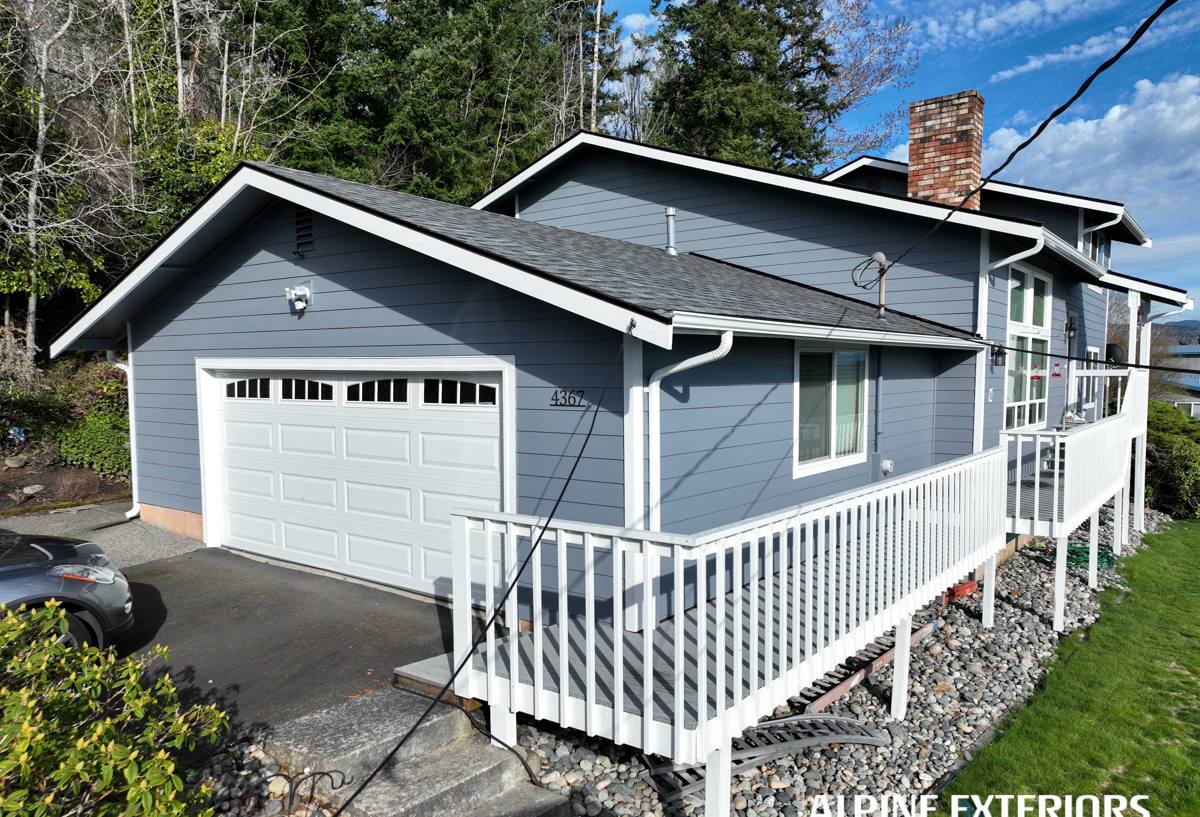
Larrabee sits in one of the more demanding stretches of Whatcom County for a roof to hold up in. Between the salt-laden air drifting off the water, the driving rain that comes off winter storms, and the deep tree cover that shades roofs for months at a time, homes here are working harder than roofs in drier, more open parts of the county. A repair that would hold up fine in a sunny inland neighborhood can fail early in Larrabee if it doesn't account for what the local climate actually does to a roof year after year.
We work on roofs throughout this part of Whatcom County, and the repair calls we get from Larrabee tend to follow a pattern: moss-related moisture damage, flashing that's corroded or worked loose from wind-driven rain, and shaded valleys that never fully dry out. Understanding that pattern is the difference between a repair that lasts and one that's back on our schedule in two years.
Why Larrabee Roofs Age Differently
Salt Air and Metal Fatigue
Homes closer to the water pick up airborne salt that settles on roofing metal — flashing, drip edge, vent caps, gutter hardware — and accelerates corrosion compared to roofs further inland. Once flashing starts to pit or thin out, it stops doing its job at seams and penetrations, which is exactly where most roof leaks start. This isn't something you can see from the ground; it shows up as rust streaking, soft spots at flashing edges, or a leak that seems to come from nowhere.
Driving Rain, Not Just Rain
Whatcom County gets plenty of straight-down rain, but Larrabee's exposure to wind off the water means homeowners also deal with driving rain — rain pushed sideways under eaves, around chimneys, and into any gap in flashing or siding transitions that would otherwise stay dry. A repair that only addresses the shingle surface and ignores how water moves sideways under wind pressure will leak again in the next storm.
A Long Moss Season
Tree cover and persistent shade mean many Larrabee roofs stay damp far longer after a rain than roofs in open, sun-exposed neighborhoods. That extended dampness is exactly what moss and algae need to establish. Once moss takes hold, it lifts shingle edges, holds moisture directly against the roofing material, and works its way toward fasteners and underlayment. A roof that looks fine from the driveway can have real moisture damage underneath a healthy-looking patch of moss.
Signs a Larrabee Roof Needs Repair, Not Just a Look
- Moss growth concentrated in shaded valleys, north-facing slopes, or under overhanging branches
- Dark streaking or granule loss on shingles, especially near the roof edges
- Rust-colored staining at flashing, vent boots, or metal chimney caps
- Soft, spongy decking felt underfoot in the attic near a suspected leak point
- Water stains on interior ceilings that appear or worsen after wind-driven storms specifically
- Shingles that are curling, cupping, or lifting at the edges rather than lying flat
- Granules collecting in gutters or at the base of downspouts
Any one of these on its own might be minor. Two or three together, especially paired with an interior stain, usually means water has already found a path through the roof system and it's worth having someone look before the next heavy rain.
What a Correct Repair Actually Involves
A roof repair that actually solves the problem starts with finding the real point of entry, not just patching where the ceiling stain shows up. Water travels — it can enter at a flashing seam ten feet from where it eventually drips through drywall. That means a proper repair includes:
- Tracing the leak to its actual entry point, not just the visible damage
- Removing damaged shingles, underlayment, or decking rather than covering over them
- Replacing or re-sealing flashing at chimneys, vents, skylights, and roof-to-wall transitions
- Matching shingle type, color, and profile as closely as possible so the repair doesn't stand out or create a mismatched wear pattern
- Confirming attic ventilation isn't part of the underlying moisture problem
- Clearing moss and treating the surface so the repaired section isn't compromised again within a season
Skipping any of these steps is how "repairs" turn into repeat service calls. A patch over rotten decking, or new shingles laid over flashing that's still corroded, buys a homeowner a little time and not much else.
Moss Removal Is Part of the Repair, Not an Extra
On a lot of Larrabee properties, you can't separate the roof repair from the moss problem — they're the same job. Moss holds moisture against the roofing surface, which is what causes the granule loss, decking softness, and flashing corrosion we end up repairing in the first place. Removing moss without addressing what let it grow back so fast (shade, debris buildup, poor drainage at valleys) just means it returns. We handle moss removal as part of the repair process, using methods that clear growth without damaging the shingle surface, and we'll talk through practical ways to slow regrowth given the tree cover most Larrabee lots have.
Repair or Replace? What Actually Drives That Decision
| Factor | Leans Toward Repair | Leans Toward Replacement |
|---|---|---|
| Roof age | Under 15 years, or recently replaced | Approaching or past expected lifespan for the material |
| Damage extent | Isolated to one section, valley, or penetration | Spread across multiple slopes or widespread granule loss |
| Decking condition | Solid, dry decking under the damaged area | Soft or delaminated decking in multiple spots |
| Moss/algae history | First occurrence or recently treated | Chronic, recurring moss with visible mat buildup |
| Flashing condition | Localized corrosion or a single failed seam | Widespread rust or flashing original to an old roof |
Most of the time the honest answer is repair — full replacement gets recommended far less often than homeowners expect. We'll tell you plainly if a repair is the right call, and just as plainly if it isn't.
Our Repair Process
- Inspection. We get on the roof (not just a look from the ground) to check flashing, decking, ventilation, and moss condition across the whole roof, not just the reported leak spot.
- Diagnosis and estimate. We explain what's actually causing the problem, what the repair involves, and a straightforward cost range before any work starts.
- Repair. Damaged material comes out, the cause gets fixed — not just covered — and new material is matched to blend with the existing roof.
- Moss and debris treatment. Where moss or heavy debris contributed to the damage, we clear it and treat the surface as part of the same visit.
- Walkthrough. We show you what was done and what to watch for going forward, especially if tree cover or drainage on your lot means moss is likely to return.
Materials We Work With
For repairs, matching the existing roofing system matters as much as the repair technique itself. We work with asphalt composition shingles (three-tab and architectural), and standing seam or exposed-fastener metal roofing repairs. For flashing and underlayment, we favor materials with proven performance in wet, salt-exposed coastal conditions over the cheapest available option, because Larrabee's climate simply doesn't forgive corner-cutting on that front. When a repair calls for a product change — for example, upgrading corroded flashing to a more corrosion-resistant metal — we'll explain the trade-off in plain terms: material cost versus how long it should actually hold up in this environment.
Why It Matters That We Already Work in Larrabee
A roofing crew that mostly works drier, inland neighborhoods can still do competent work, but they're often diagnosing Larrabee-specific problems — salt-accelerated flashing corrosion, shade-driven moss patterns, wind-driven leak paths — for the first time on your roof. We see these same conditions repeatedly across Chuckanut and the surrounding Whatcom County coastline, which means we're not guessing at why a roof in this area is failing. We know what a typical moss cycle looks like on a shaded Larrabee roof, what flashing tends to fail first near the water, and what a repair actually needs to hold up through a full wet season here — not just pass a dry-day inspection.
We also know the practical side of working on wooded, sloped lots that are common in this area: access, safe staging, and working around mature trees without unnecessary damage to landscaping.
Maintaining Your Roof Between Repairs
- Have moss-prone areas inspected at least once a year, ideally before the wet season sets in
- Keep gutters and valleys clear of needles and leaf debris, which trap moisture against the roof
- Trim back overhanging branches where practical to reduce shade and debris buildup
- Address small leaks early — a small flashing repair now is far cheaper than decking replacement later
- Have flashing checked specifically after major windstorms, not just general rain events
If you're noticing moss buildup, a stain on a ceiling, or you just want an honest read on a roof's condition before it becomes a bigger problem, we're glad to come take a look. We offer free, no-pressure estimates for roof repair work in Larrabee and the surrounding Chuckanut area — use the form below to get in touch.