 Chuckanut Exterior
 Fairhaven's Siding Problem Is a Water Problem
Homes in and around Fairhaven sit close enough to the water that salt air is a daily fact of life, not an occasional nuisance. Add Whatcom County's long wet season, driving rain that comes in sideways off the Salish Sea, and a moss season that can stretch for most of the year, and you have a climate that is genuinely hard on exterior siding. Wood siding checks and rots at the edges. Vinyl gets brittle, fades unevenly, and gives moss and algae a rough surface to grip. Even siding that looks fine from the curb can be hiding trapped moisture behind it that's slowly damaging the sheathing and framing underneath.
This isn't a page about siding in general. It's specifically about James Hardie fiber cement siding, installed correctly, on homes in the Fairhaven area near Chuckanut. If you're weighing a siding replacement or new install here, the product and the installation details both matter more than they would somewhere drier and calmer.
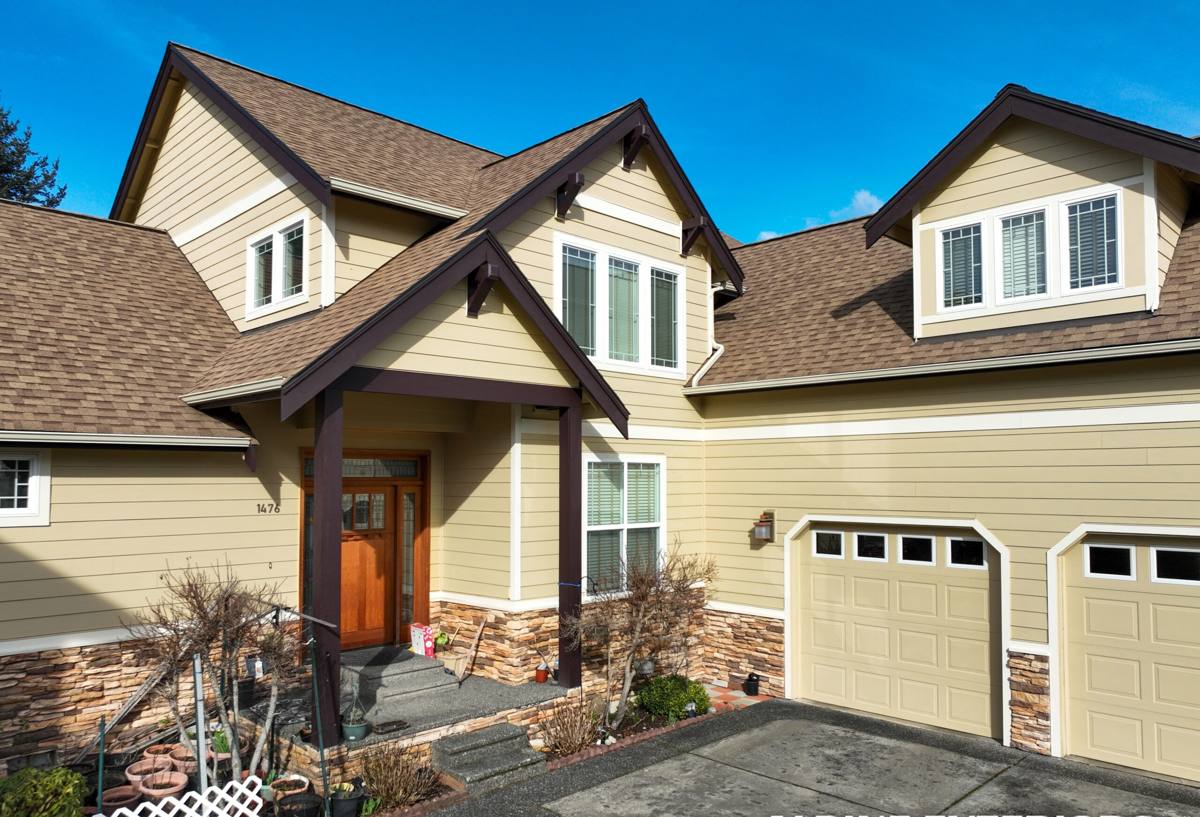
Why We Only Install James Hardie in This Area
We don't install vinyl, LP SmartSide, Cemplank, Allura, primed spruce, or cedar. That's a deliberate standard, not a sales pitch, and it matters more here than in most parts of the country because of what salt air and constant moisture do to those alternatives over time.
What Salt Air and Rain Do to Common Alternatives
Vinyl siding doesn't rot, but it does become brittle and can crack or warp with repeated freeze-thaw and UV cycling, and salt-laden air accelerates fading and chalking on the finish. Engineered wood products like LP SmartSide perform well when the exterior stays dry, but any breach in the coating or caulking near a coastal, high-moisture site can let water into the wood strand core, which then swells and deteriorates from the inside. Primed spruce and untreated cedar are natural wood — beautiful when new, but they require ongoing paint and sealant maintenance to keep water out, and a missed maintenance cycle in a climate this wet shows up fast as cupping, splitting, or rot.
Why Fiber Cement Handles It Differently
James Hardie siding is fiber cement — cellulose fiber, sand, and cement, cured into a rigid, dimensionally stable board. It doesn't absorb water the way wood does, it won't warp with humidity swings, and it's non-combustible. The factory-applied ColorPlus finish is baked on under controlled conditions, which gives it better adhesion and UV resistance than a field-applied paint job, and it holds up against salt air better than most site-painted finishes. None of that means Hardie is maintenance-free, but it means the maintenance burden and failure modes are far more manageable in a climate like this one.
What "Climate-Engineered" Actually Means for This Job
James Hardie makes region-specific product formulations under its HZ5 and HZ10 designations, engineered for different moisture and freeze-thaw exposure levels across the country. Western Washington, including the Fairhaven area, falls into a wet marine climate zone, and the correct HZ formulation is chosen accordingly. This isn't a marketing detail — using the wrong regional formulation, or skipping it because a supplier had the wrong stock on hand, is one of the quieter ways a Hardie job underperforms in a coastal climate. Part of doing this correctly is simply confirming the boards specified for your home match the exposure they'll actually see.
Panel Options That Make Sense Here
- Lap siding (HardiePlank) — the most common choice for full-home siding, available in smooth or cedar-textured finish
- Shingle siding (HardieShingle) — for homes wanting a coastal or craftsman look without the maintenance of real cedar shakes
- Panel siding (HardiePanel) — often used for accent gables, dormers, or modern facades
- Trim boards (HardieTrim) — matched fiber cement trim so the whole envelope, not just the field siding, resists the same moisture and rot
What a Correct Installation Involves
Fiber cement siding is only as good as the installation underneath it. Most of the Hardie failures we get called out to inspect aren't product failures — they're installation shortcuts that let water get behind the boards, where it has nowhere to go and nothing to dry it out. That's a bigger risk here than in a dry climate because there are more wet days for water to find its way in and fewer dry stretches for anything trapped behind the siding to evaporate out.
The Details That Matter Most in a Wet Coastal Climate
- Weather-resistive barrier and rain screen — a properly lapped house wrap plus a drainage gap behind the siding lets any incidental moisture drain and dry instead of sitting against the sheathing
- Flashing at every penetration — windows, doors, vents, and hose bibs all need correctly lapped flashing so water sheds outward, not inward
- Fastener placement and spacing — Hardie specifies exact nailing patterns and clearances; over-driven or misplaced fasteners crack boards or void the warranty
- Ground and roof clearance — Hardie requires minimum clearances from grade, decks, and roof lines so splash-back and standing water don't sit against the bottom edge of the siding
- Caulked and painted cut edges — factory ColorPlus finish protects the face of the board, but field-cut edges need to be sealed correctly or they become the weak point
- Correct joint treatment — butt joints need to be flashed or caulked per spec, not just butted together and left
Skip any one of these and you can end up with a wall that looks like a proper Hardie job from the street but is quietly trapping moisture behind it — which, in a Fairhaven winter, doesn't take long to become a real problem.
Moss, Algae, and the Long Wet Season
Moss and algae growth isn't just cosmetic here — it's a near year-round condition on north-facing walls, shaded siding, and anywhere airflow is limited. Fiber cement is far more resistant to moss taking root than wood shingle or shakes, since there's no organic material for spores to feed on, but any siding will still collect surface growth if it stays damp and shaded long enough. Proper installation with adequate drainage and airflow behind the panels reduces how long the surface stays wet after a rain, which is the biggest factor in how fast moss and algae establish. Periodic gentle washing (never high-pressure blasting directly at joints and edges) keeps growth from building up and holding moisture against the surface long-term.
Our Process for Fairhaven Homes
1. On-Site Assessment
We walk the exterior, check current siding and trim condition, look for existing moisture damage or rot at sills, corners, and penetrations, and note site-specific exposure — how much direct weather and salt air a given wall or elevation actually takes.
2. Tear-Off and Sheathing Check
Old siding comes off and we inspect the sheathing underneath. Any water damage found at this stage gets repaired before anything new goes up — covering damaged sheathing with new siding just hides the problem.
3. Weather Barrier and Drainage Plane
House wrap and a rain screen gap go in correctly lapped and taped, matched to the specific wall assembly, before any siding is hung.
4. Hardie Installation to Spec
Boards, panels, and trim go up following Hardie's fastening, clearance, and flashing requirements — not shortcuts to save labor time.
5. Finish and Cleanup
Cut edges sealed, caulking completed, site cleaned of debris and old material, and a final walkthrough so you know exactly what was done and what to expect going forward.
Comparing the Options
| Factor | James Hardie Fiber Cement | Vinyl | Wood / Engineered Wood |
|---|---|---|---|
| Salt air resistance | Strong — factory finish holds up well | Fades and chalks faster near water | Coating breaks down; needs repainting |
| Moisture behavior | Doesn't absorb or swell | Doesn't rot, can warp/crack with age | Absorbs water if coating fails; can rot |
| Moss/algae resistance | Good — no organic material to feed growth | Moderate — textured surfaces trap growth | Poor — organic surface, especially untreated wood |
| Fire resistance | Non-combustible | Melts/deforms under heat | Combustible |
| Ongoing maintenance | Occasional wash, caulk check | Low, but limited repair options when damaged | Regular repainting/resealing required |
What Drives Cost on This Type of Job
| Factor | Why It Matters |
|---|---|
| Tear-off and sheathing condition | Rot or water damage found under old siding adds repair scope before new siding can go up |
| Panel type and texture | Lap, shingle, and panel siding carry different material and labor costs |
| Trim and detail work | Homes with more corners, gables, and window trim take more labor to flash and finish correctly |
| Home height and access | Multi-story walls and limited access add staging and labor time |
| Rain screen / drainage plane | Doing this correctly for a coastal climate adds a step most low-bid jobs skip |
We give exact numbers only after seeing the home in person — anyone quoting a firm price over the phone for a job like this is guessing.
Why Hiring a Crew That Already Works Fairhaven Matters
Correct installation practice doesn't change from town to town, but judgment calls do — how much clearance to leave near a low deck, where drainage needs extra attention on a shaded north wall, how a particular street's wind and rain exposure should factor into flashing details. A crew that regularly works homes in this part of Whatcom County has already seen how salt air, rain, and moss behave on houses like yours, and builds that experience into the details of the job rather than treating every property the same. That's the difference between a Hardie installation that looks right on day one and one that's still performing the way it should ten and twenty years out.
What to Look For When Hiring
- A written scope that specifies weather barrier, rain screen, flashing, and fastening details — not just "install siding"
- Confirmation of the correct HZ product formulation for a marine climate
- A crew that inspects and repairs sheathing before covering it, not after problems show up
- References or examples of completed work in similar coastal or high-moisture settings
- A clear explanation of the manufacturer warranty and what it covers versus what the installer warranties separately
If you're considering new siding or a replacement for a home in the Fairhaven area, we're happy to take a look and walk you through exactly what your home needs. Reach out for a free, no-pressure estimate using the form below.