 Chuckanut Exterior
 New-Construction Windows in Silver Beach: A Different Job Than Replacement
When people say "new-construction windows," they mean something specific: windows built with a nailing fin (also called a flange) around the perimeter of the frame, designed to be installed into an open stud bay before the weather-resistive barrier and siding go on. That's a different animal from a replacement or "pocket" window, which gets inserted into an existing frame on a home that's already finished and sided. If you're building new in Silver Beach, adding a room, or replacing a wall of windows down to the studs, this is the category you're working in — and it's the category where the install quality matters most, because there's no siding or trim hiding a shortcut.
That distinction isn't just terminology. A new-construction window install happens in sequence with the housewrap, flashing, and siding trades. Get the order or the laps wrong, and water finds its way behind the cladding months or years later — usually discovered only after rot or staining shows up on the interior. Once the wall is closed up, fixing it means opening finished siding, trim, and sometimes interior drywall to get back to the window. That's expensive and avoidable, and it's exactly why we treat this stage as the one chance to get it right.
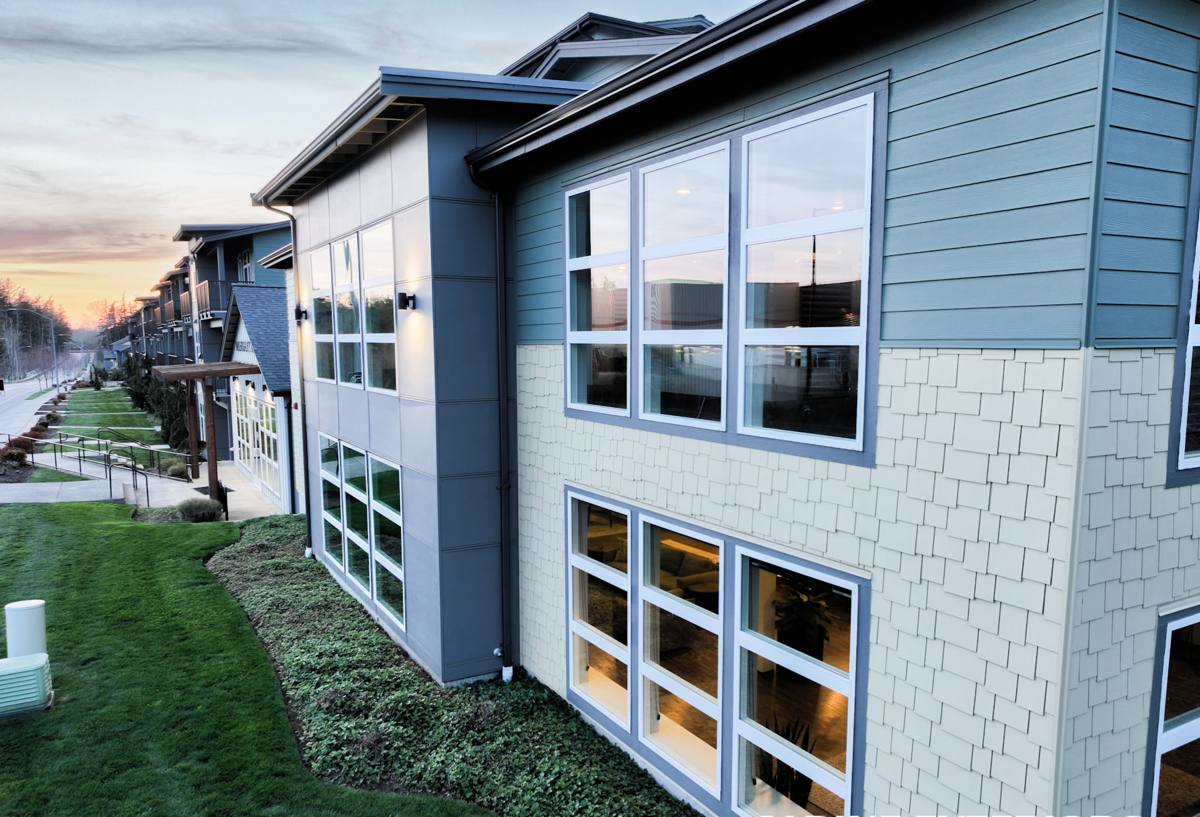
How Chuckanut's Climate Shapes the Job
Chuckanut sits in a marine climate zone where the window's job is bigger than just keeping heat in. Homes here deal with salt-laden air off the water, long stretches of driving, wind-pushed rain rather than gentle vertical rainfall, and a moss season that can run most of the year in shaded, damp spots. Each of those has a direct effect on a new-construction window install:
- Salt air accelerates corrosion on exposed fasteners, hinges, and lower-grade hardware — a reason to be deliberate about fastener material and hardware finish, not just the glass package.
- Driving, wind-driven rain means water can be pushed sideways and upward under a poorly lapped flange or a flashing detail that only accounts for water falling straight down. Whatcom County's exposure to Pacific storm systems makes this a real, recurring load on the wall assembly, not a rare event.
- Moss and algae thrive in the shaded, moisture-retentive conditions common on north- and west-facing walls near Chuckanut and around Silver Beach. Moss holding against a sill or trim board keeps that wood wet far longer than open sun and air movement would allow, which is a slow but steady threat to any window opening that isn't detailed to shed water and dry out.
None of this means new-construction windows are a bad fit for the area — it means the flashing and sequencing details, which are invisible once the wall is closed up, carry more weight here than they would in a drier inland climate.
What a Correct New-Construction Install Involves
Sill Pan and Flashing Sequence
Every rough opening needs a sloped sill pan that directs any water that gets past the window — and some always will, over time — back outside the wall rather than down into the framing. The sill pan goes in before the window, the window's nailing fin gets integrated with the housewrap using a shingle-lap sequence (each layer overlapping the one below it, so water always sheds downward and outward), and the head flashing goes on last, over the top of the housewrap. Reversing any part of that order defeats the purpose of the whole assembly.
Head Flashing and Housewrap Integration
The top of the opening takes the brunt of driving rain in this climate, so head flashing needs to extend past the window's outside edges and tie cleanly into the housewrap above it. We also pay attention to end dams — small returns at the ends of the head flashing that stop water from running sideways off the flashing and behind the trim, which is a common weak point on wind-exposed elevations.
Shimming, Fastening, and Squaring
A window that's out of square or racked in the opening won't operate smoothly and puts uneven stress on the frame and seals over time. Shims go at the fastening points specified by the window manufacturer, not just wherever's convenient, and fasteners go through the nailing fin at the spacing the manufacturer calls for — skipping fastener points to save time is one of the more common corners cut on production builds, and it shows up later as air and water infiltration at the corners.
Choosing a Frame Material for New Construction Here
There's no single "best" window frame material — each one comes with real trade-offs, and the right call depends on the home, the elevation's exposure, and the owner's tolerance for upkeep. Here's how the common options compare for a Silver Beach build:
| Frame Material | Moisture & Salt-Air Tolerance | Maintenance | Typical Trade-Off |
|---|---|---|---|
| Vinyl | Good — won't rot or corrode, though lower-grade vinyl can warp with heavy sun on dark colors | Low — no painting or sealing | Frame profiles are thicker than fiberglass or wood at the same strength |
| Fiberglass | Very good — stable in temperature swings, resists moisture and salt exposure well | Low to moderate | Higher upfront cost than vinyl for comparable performance |
| Wood-clad (exterior clad, wood interior) | Good on the clad exterior; the wood interior needs the cladding to stay intact to stay protected | Moderate — interior wood may need occasional finish work | Best fits homes wanting a natural wood interior look; exterior clad takes on the weather duty |
| Bare wood | Requires diligent maintenance in a wet, salt-air climate | High — regular painting or sealing | We steer most Silver Beach new-construction clients away from unclad wood on exterior-facing units unless they're committed to the upkeep schedule |
We'll walk through this with you against your actual elevation exposure — a window on a covered, east-facing wall has an easier life than one facing open water and prevailing weather.
Meeting Washington's Energy and Building Code Requirements
New-construction windows in Whatcom County have to meet the U-factor and solar heat gain requirements in effect under the Washington State Energy Code at the time your permit is issued, and the local building department will check window specs against your plans at inspection. We handle that as part of the job — confirming the glass package on order actually matches what was specified and permitted, not just what looks similar on a spec sheet. On a new build or addition, this gets checked at rough-in framing inspection and again at final, so a mismatch caught late can hold up your other trades.
Our Process When You're Building or Adding On in Silver Beach
Coordinating With Your Builder or GC
Most of our new-construction window work happens as one piece of a larger build — a general contractor's schedule, a framer who's already set the rough openings, a siding crew waiting on us to finish before they start. We coordinate directly with whoever's running the job so our install lands at the right point in the sequence: after framing and housewrap, before siding.
Timing Windows Into the Build Schedule
Windows that sit exposed to weather for weeks between framing and siding are more vulnerable, so we try to keep the window and flashing stage moving as soon as the opening is ready rather than letting it stall. That's a scheduling conversation as much as a technical one, and it matters more here than in a drier climate given how often Whatcom County sees rain outside the summer months.
Inspection and Sign-Off
We document the flashing and sill pan work with photos before it's covered by siding, so there's a record of what's behind the wall if a question ever comes up later — for you, for the builder, or for a future buyer's inspector.
Mistakes We Watch For on New-Construction Window Jobs
- Housewrap lapped under the nailing fin instead of over it, which sends water behind the barrier instead of down its face
- Missing or flat (unsloped) sill pans that let standing water sit against the sill instead of draining out
- Head flashing cut flush with the window instead of extending past it, leaving the trim ends exposed
- Fastener spacing skipped to save time, leaving corners under-supported
- Sealant used as a substitute for proper flashing laps rather than as a secondary backup
- Window specs that don't match the permitted energy code package, caught only at inspection
What New-Construction Windows Cost to Get Right
Pricing on a new-construction window package depends on more than the window unit itself. The factors below tend to move the number the most on Silver Beach projects:
| Cost Factor | Why It Matters |
|---|---|
| Frame material and glass package | Vinyl, fiberglass, and wood-clad units price differently, and the glass package needed to meet current energy code adds cost over minimum glazing |
| Number and size of openings | Larger units and more openings mean more flashing labor, not just more glass |
| Elevation exposure | Walls facing open water or prevailing wind and rain sometimes call for more robust flashing details, which adds labor |
| Coordination with other trades | Jobs where we're scheduling tightly around framing and siding crews run more efficiently than ones with gaps and re-mobilization |
| Access and site conditions | Upper-story openings, tight lots, or difficult staging add time |
We give a written, itemized estimate before work starts — no vague allowances — so you can see exactly what's driving the number.
Why Hire a Crew That Already Works in Silver Beach
A crew that's worked new-construction windows around Chuckanut and the greater Whatcom County area already knows which elevations take the worst weather, how local building department inspectors like flashing documented, and which builders in the area we've coordinated with before. That familiarity shows up in fewer surprises mid-build — we're not learning the area's climate behavior on your project. It also means we're a reasonable drive away if a question comes up after the siding's closed in and you want someone to look at how a window is performing.
If you're building, adding on, or replacing windows down to the studs in Silver Beach, we're glad to walk your plans or your framed opening and give you a straight, written estimate — no pressure, no obligation. Use the form below to get started.