 Chuckanut Exterior
 Board & Batten Siding Built for Edison's Coastline
Board and batten is one of the most requested looks in the Edison area right now — that clean run of vertical panels with narrow battens covering the seams shows up on farmhouses, waterfront cottages, and new builds alike. It's a striking profile, but in this part of Whatcom County it has to be more than good-looking. Homes near the Chuckanut coastline deal with salt-laden air, wind-driven rain that comes in sideways off the water, and a moss season that can stretch for most of the year. Vertical siding handles water differently than horizontal lap siding does, and if it's not detailed correctly for this climate, it will show problems faster than almost any other siding style.
This page covers what board and batten siding actually needs to hold up in Edison, what a correct installation involves, and how we approach these projects for homeowners in this specific area — not a generic overview of the style.
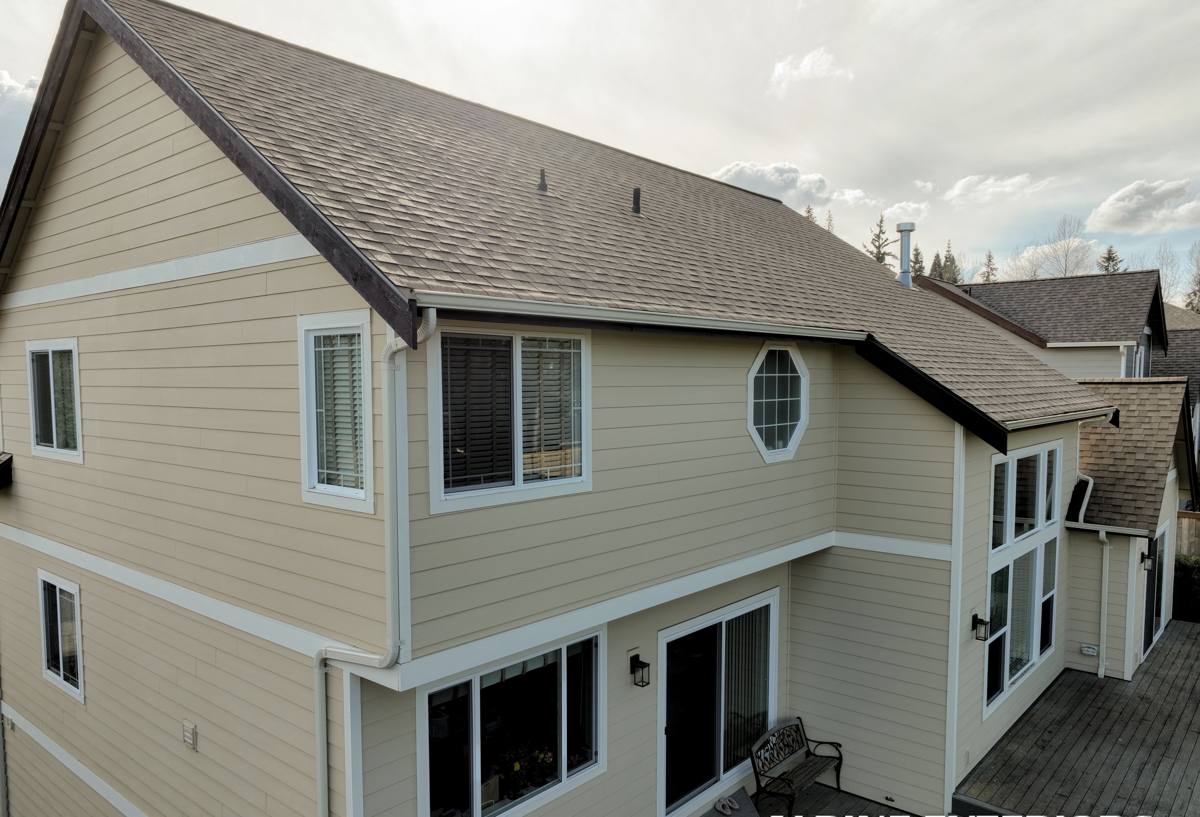
Why Edison's Climate Is Hard on Board & Batten Siding
Board and batten relies on vertical seams and butt joints that, done wrong, give water a straight path down into the wall assembly instead of shedding it the way overlapping lap siding does. That makes climate detailing even more important here than it is elsewhere in Whatcom County.
Salt Air
Proximity to the water means airborne salt settles on siding, trim, and especially fasteners. Salt accelerates corrosion in anything less than corrosion-resistant hardware, and it breaks down cheaper paint films faster than inland exposure would. Fastener choice and finish quality matter more here than they do a few miles inland.
Driving Rain
Wind off the water doesn't just fall — it pushes rain sideways into vertical seams, batten joints, and anywhere flashing is missing or undersized. Board and batten has more vertical joint length per square foot than lap siding, so every one of those joints is a spot where a shortcut shows up as a leak later.
Moss and Sustained Dampness
Long stretches of overcast, damp weather keep north-facing walls and shaded siding wet for days at a time. Moss and algae take hold on anything that can't dry out, and on wood-based materials that constant moisture also feeds rot from the inside out, not just staining on the surface.
What a Correct Board & Batten Installation Actually Involves
The finished look of board and batten is simple, but what's behind it is not. A correct installation in this climate includes several things that don't show once the siding is up, but determine whether it lasts.
- A drainage plane and rainscreen gap behind the siding, so any moisture that does get past the panels has a path to drain and dry instead of sitting against the wall sheathing
- Correct flashing at every window, door, roofline, and horizontal transition — this is where most siding failures actually start, regardless of the siding material
- Corrosion-resistant fasteners rated for coastal exposure, driven at the manufacturer's specified pattern and depth
- Proper batten spacing and fastening so panels can expand and contract with temperature and moisture changes without cracking the caulk lines or pulling fasteners loose
- Factory-finished panels wherever possible, so the protective coating isn't dependent on field painting matching the same standard on every board
Skip any one of these and the siding can still look right for a season or two. In Edison's climate, the gaps show up as staining, soft spots, or paint failure well before they would in a drier region.
James Hardie Board & Batten: What We Install
We install James Hardie fiber cement exclusively, and for board and batten that generally means HardiePanel vertical siding paired with Hardie trim battens, or the Hardie Artisan Collection for a more refined, tighter-reveal version of the same look. Both are engineered fiber cement — not wood, not vinyl — which changes how the material behaves in this climate.
Why Fiber Cement Changes the Equation
Fiber cement doesn't absorb and swell with moisture the way wood does, and it doesn't expand and contract with temperature swings the way vinyl does. That matters directly for board and batten, because the style depends on tight, stable seams staying tight. Hardie's ColorPlus factory finish also means the color and protective coating are baked on under controlled conditions, not applied on a ladder in variable weather — which is a real factor in a region where dry installation windows aren't guaranteed.
HZ5 Engineering
James Hardie makes climate-specific product formulations, and homes in this region call for the HZ5 line, engineered for wetter, harsher climates rather than the moderate-climate HZ10 formulation used in drier parts of the country. Installing the correct HZ designation for this climate zone is a detail worth confirming with any contractor you're vetting, not just for us.
Board & Batten Material Comparison
| Material | How It Handles Edison's Climate | Long-Term Maintenance |
|---|---|---|
| James Hardie fiber cement | Non-combustible, dimensionally stable, factory-sealed finish resists moisture and salt exposure | Occasional washing; no repainting needed for the life of the ColorPlus finish |
| Solid wood board & batten | Absorbs moisture at every seam and fastener hole; prone to cupping and splitting under sustained damp conditions | Repainting or staining every few years; ongoing caulk and rot repair |
| Vinyl board & batten | Won't rot, but expands and contracts with temperature, which can stress seams; can look visibly cheap up close | Low maintenance but can crack, fade, or warp; not repairable in sections, only replaceable |
| Engineered wood (LP-style) panels | Better moisture resistance than solid wood, but still an organic wood-strand core that depends on the factory coating staying intact | Moderate; edge and seam sealing needs monitoring over time |
This isn't a claim that the alternatives are unusable — plenty of homes have them. It's why, as a company, we standardized on fiber cement and stopped installing the others: in a driving-rain, salt-air, moss-prone climate like this one, fiber cement's stability and factory finish hold up with the least ongoing intervention from the homeowner.
Our Process for Edison Board & Batten Projects
- On-site assessment — we look at wall orientation, existing moisture damage, roofline and window flashing conditions, and how exposed the home is to prevailing wind and rain direction
- Tear-off and sheathing check — old siding comes off and the sheathing underneath gets inspected before anything new goes up; problems found here get addressed, not covered
- Weather-resistive barrier and rainscreen install — the drainage layer behind the siding, done correctly, before a single panel goes up
- Flashing at every penetration — windows, doors, roof transitions, and any horizontal trim
- Panel and batten installation — set to manufacturer spacing and fastener specs, using corrosion-resistant hardware appropriate for coastal exposure
- Final walkthrough — checking seams, caulk lines, and trim details against Hardie's installation standards before we call it finished
None of these steps are unique to us — they're simply what a correct installation requires. The difference is whether they get done consistently, which is where a lot of siding jobs quietly fall short.
Maintaining Board & Batten Siding in a Moss-Prone Climate
Even the right material benefits from basic upkeep, especially on shaded or north-facing walls where Edison's damp stretches linger longest.
- Rinse siding annually, focusing on shaded walls and areas under tree cover where moss and algae take hold first
- Keep gutters clear so overflow doesn't run directly down siding faces or pool at the base of walls
- Trim back vegetation and tree limbs that keep siding shaded and damp longer than the rest of the house
- Check caulk lines at trim and batten joints every couple of years and have any cracked sections resealed
- Walk the exterior after major windstorms to check for loose trim, damaged flashing, or debris caught behind battens
Why Hire a Crew That Already Works in Edison
Board and batten done wrong doesn't fail everywhere at once — it fails first at the wall orientation that takes the worst of the driving rain, or the shaded side that never fully dries out. A crew that's worked this specific stretch of coastline knows which orientations need extra flashing attention, how local permitting and inspection expectations run, and what this climate actually does to siding over years, not just what a spec sheet says it should do. That's different from general siding experience picked up in a drier or more sheltered part of the state.
We stand behind board and batten installations here because we control every part of the process — material, prep, flashing, and installation — to the standard this coastline actually requires, not the minimum a warranty technically allows.
Get a Free Estimate for Your Edison Home
If you're considering board and batten siding for a home in the Edison area, we're happy to take a look, walk through what your specific walls and exposure need, and give you an honest, no-pressure estimate. There's no obligation — just a straight answer on what a correct installation would involve for your property.