 Chuckanut Exterior
 Fiber Cement Siding for Blanchard's Coastal Exposure
Blanchard sits in the wooded, water-adjacent corner of Whatcom County that gets hit with everything this coastline has to offer — salt-laden air moving in off the water, rain that comes in sideways more often than it falls straight down, and enough shade and tree cover to keep a moss season going for most of the year. Homes here don't get much of a break between weather events, and that shows up fastest and most visibly on the siding. We install James Hardie fiber cement siding exclusively, and in a place like Blanchard, that's not a marketing preference — it's the product we trust to actually hold up to what this specific stretch of coastline does to a wall, year after year.
This page is about one service in one area: fiber cement siding for Blanchard homes specifically, not a generic overview of what fiber cement is everywhere. What follows is what we've learned works here, what a correct installation actually involves, and why we think it's worth hiring a crew that already knows this stretch of Whatcom County.
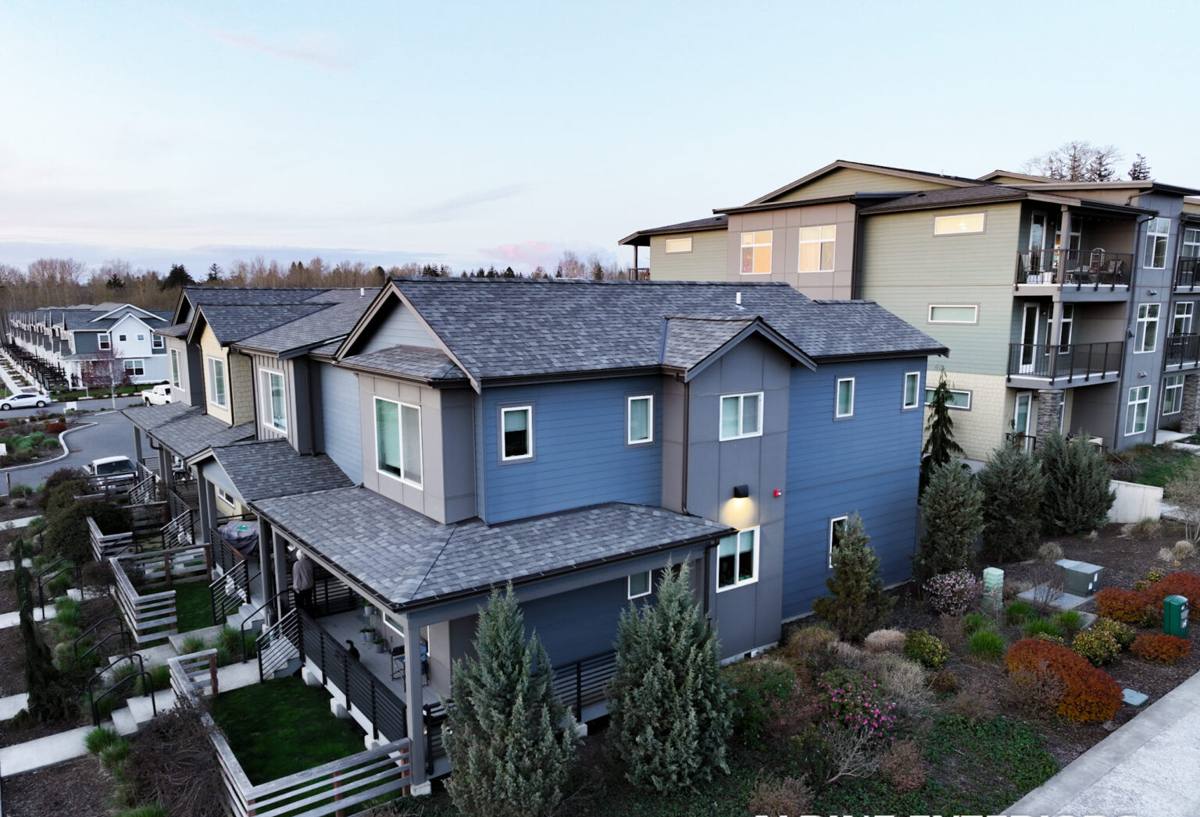
What Blanchard's Climate Actually Does to a Wall
Salt Air
Salt-tinged air doesn't just make things feel damp near the water — it's chemically aggressive toward anything it settles on. It speeds up corrosion at exposed fasteners, breaks down field-applied finishes faster than a dry inland climate ever would, and works into hairline gaps at joints and trim that a drier climate might never test in the first place. On siding, that means the finish and the fastening system underneath it are doing more work here than they would almost anywhere else in the state, day in and day out.
Driving Rain
Storms off the water rarely drop straight down on a Blanchard property. Wind pushes rain sideways into south- and west-facing walls, forcing water into every seam, lap joint, and penetration that isn't detailed correctly the first time. A siding system engineered mainly for climates that deal with mostly vertical rainfall — the kind common in drier parts of the country — is being asked to do a job here it was never really built for, which is exactly where corners cut during installation start to show.
A Moss Season That Doesn't Take a Break
Tree cover and shade keep a lot of Blanchard's north-facing walls damp long after a storm has passed elsewhere in the county. That extended dampness is exactly what moss and mildew need to establish themselves, and once they do, they hold moisture directly against the wall surface — which is a durability problem on anything with an organic substrate, not just a cosmetic one that pressure-washing can permanently solve.
Why James Hardie Fiber Cement Is the Right Fit Here
We don't install vinyl, LP SmartSide, Cemplank, Allura, primed spruce, or cedar. That's a standard we hold on every job we take, not a limitation on what we're capable of installing. Fiber cement addresses the specific problems Blanchard's climate creates: it's non-combustible, it has no organic core for moss, mildew, or sustained moisture to work into over time, and it doesn't expand, contract, or cup with humidity swings the way wood-based products can. James Hardie backs that core material with a factory-applied ColorPlus finish that's baked on under controlled conditions rather than field-applied on a ladder in whatever weather shows up that week, and with a strong transferable warranty that holds up whether the current owner keeps the house or sells it down the road.
Hardie also engineers its HZ product lines for specific regional exposure rather than selling one generic formulation everywhere in the country. That distinction matters more in a spot like Blanchard, dealing with this much combined salt, wind-driven rain, and shade, than it would in a milder or drier part of Washington. It's a big part of why, when we standardized on one siding product for every job we do, fiber cement was the clear answer.
Where Blanchard's Climate Puts the Most Stress on a Siding Job
| Exposure Factor | What It Does to Siding | What a Correct Fiber Cement Install Does About It |
|---|---|---|
| Salt air off the water | Accelerates fastener corrosion; breaks down field-applied finishes faster | Corrosion-resistant fasteners at correct spacing; factory-cured ColorPlus finish instead of field paint |
| Wind-driven rain | Forces water sideways into seams, laps, and penetrations | Correct lap exposure, sealed penetrations, and flashing lapped to shed water downward and outward |
| Shade and moss growth | Keeps north-facing and tree-covered walls damp long enough for organic growth to take hold | Inorganic substrate that doesn't feed moss the way wood does, plus a drainage gap so any moisture reaching the wall can dry out |
| Seasonal temperature swings | Repeated expansion and contraction stresses joints and caulked seams | Dimensionally stable fiber cement core that doesn't swell or shrink the way wood-based siding can |
None of this is unique to any one house in Blanchard — it's the baseline every wall in the area is up against in some combination. What varies is how much of it a given wall's orientation, shade, and elevation actually see, which is part of what we look at before recommending a plan for your specific property.
What a Correct Fiber Cement Siding Installation Involves
Fiber cement is a far more forgiving material than wood, but it still depends on installation details most homeowners never see and can't easily check once the job is finished. Before hiring anyone for a fiber cement project in Blanchard, look for a contractor who can speak specifically to each of these:
- House wrap or a weather-resistive barrier installed and correctly lapped before any siding goes up
- Proper clearance maintained between the siding and grade, decks, roof lines, and other horizontal surfaces
- Correct flashing at every window, door, and roof-to-wall intersection
- Fasteners rated for coastal exposure, placed at the manufacturer's specified spacing rather than "enough to hold it up"
- Field-cut edges primed before installation, since the factory ColorPlus finish only protects the surfaces cut at the plant
- A drainage gap where the wall assembly calls for one, so any moisture that reaches the wall can dry out instead of sitting against it
Skip any one of these and the siding can still look fine for a year or two. The problems that come from cutting corners on these details — staining at seams, soft spots near grade, premature finish failure at trim and joints — take a wet season or two to show up, which is exactly why they're easy for a rushed install to get away with until the homeowner is the one living with the consequences.
Signs a Blanchard Home Is Ready for New Siding
Most homeowners in this area come to us because something specific has caught their eye, not because they woke up one day and decided they wanted new siding for its own sake. Common triggers include persistent moss or dark streaking that keeps coming back no matter how often it gets cleaned off, visible gaps or warping at seams and corners, paint or finish that's failing faster than it reasonably should, soft or spongy spots near grade or under windows, and siding that's simply original to a house old enough that it's due for replacement regardless of visible damage.
None of these automatically means a full replacement is the right call. Sometimes it's a localized repair, better drainage detailing at one problem area, or addressing a landscaping issue that's keeping a wall wetter than it needs to be. But any of them are worth a professional look before the underlying wall assembly is affected, since a wet framing issue behind the siding is a far more expensive problem than the siding itself.
Our Process for a Blanchard Fiber Cement Project
Walkthrough and Assessment
We start by looking at the actual walls involved — which ones take direct weather off the water, which stay shaded and slow to dry, and whether the existing wall assembly already has moisture issues that need to be addressed before new siding goes up. New siding installed over a wall with hidden problems just buries those problems under new material instead of solving them.
Planning and Product Selection
We work out lap exposure, trim details, and how the siding will meet windows, doors, and rooflines before any material gets cut. We also walk through color and finish options at this stage, since ColorPlus is a factory decision made before the boards ever arrive on site, not something adjusted easily after installation.
Installation to Manufacturer Spec
Every fastener, gap, and flashing lap follows James Hardie's published installation requirements for this climate zone, not a generic national standard. That's what keeps the manufacturer's warranty intact, and it's the difference between a wall that performs for decades and one that starts showing problems within a few wet seasons.
Final Walkthrough
We walk the finished job with you, cover what little maintenance fiber cement actually requires compared to what you may be used to, and make sure you know what a well-installed wall should look like if you ever want to check it yourself down the road.
Cost Factors for Fiber Cement Siding in Blanchard
| Factor | Why It Affects Price |
|---|---|
| Wall height and complexity | More corners, dormers, and transitions mean more cuts and flashing details |
| Existing wall condition | Moisture damage found during tear-off needs repair before new siding goes up |
| Siding profile | Lap, shingle, and board and batten profiles differ in material and labor needs |
| Trim and window detailing | More openings mean more flashing and finish work around each one |
| Site access | Tree cover, slope, and limited access common in this area can add labor time |
We'll walk your specific property and give you real numbers rather than a rough estimate based on square footage alone. Two homes of similar size in Blanchard can land in very different price ranges depending on how many of these factors are actually in play once we get up close to the walls.
Why Hire a Crew That Already Works Blanchard
A lot of what separates siding that lasts from siding that doesn't comes down to judgment calls that don't show up on any spec sheet — how much clearance a wall actually needs given how wet the ground stays here, which orientations need extra attention because of shade and tree cover, and where a drainage gap earns its keep versus where it's optional. A crew that's installed fiber cement across Blanchard and the surrounding Whatcom County coastline through repeated wet seasons has already seen these patterns play out house to house, year after year.
That familiarity isn't something a generic install guide can substitute for, and it's the difference between a wall that still looks and performs the same in fifteen years and one that's showing seam staining or finish failure by year five. It's also why we're comfortable giving straight answers on-site instead of hedging — we've seen how this exact combination of salt air, driving rain, and moss plays out on real walls in this area, not just in a manufacturer's technical bulletin.
If you're weighing fiber cement siding for a home in Blanchard, we're happy to walk the property, talk through what your specific walls are dealing with given their exposure and shade, and give you a straightforward, no-pressure estimate. There's a form below — reach out and we'll set up a time to take a look.