 Chuckanut Exterior
 Siding Repair in Samish Means Solving a Moisture Problem, Not Just Patching a Board
When a homeowner in Samish calls us about siding repair, the visible damage is almost never the whole story. A cracked panel, a soft spot near a window, a stretch of boards that look chalky or swollen — those are symptoms. The actual job is figuring out why that section failed while the rest of the wall didn't, and fixing the cause along with the cosmetic problem. In a shoreline community exposed to salt air off Samish Bay, wind-driven rain, and a moss season that can run most of the year on shaded walls, that distinction matters more than it would somewhere drier and more sheltered.
This page is specifically about repair — not a full re-side. Most homes in Samish don't need to replace all their siding; they need a contractor who can accurately tell the difference between a localized repair and a sign that more of the wall is compromised, and who does the repair itself correctly instead of just covering the damage back up.
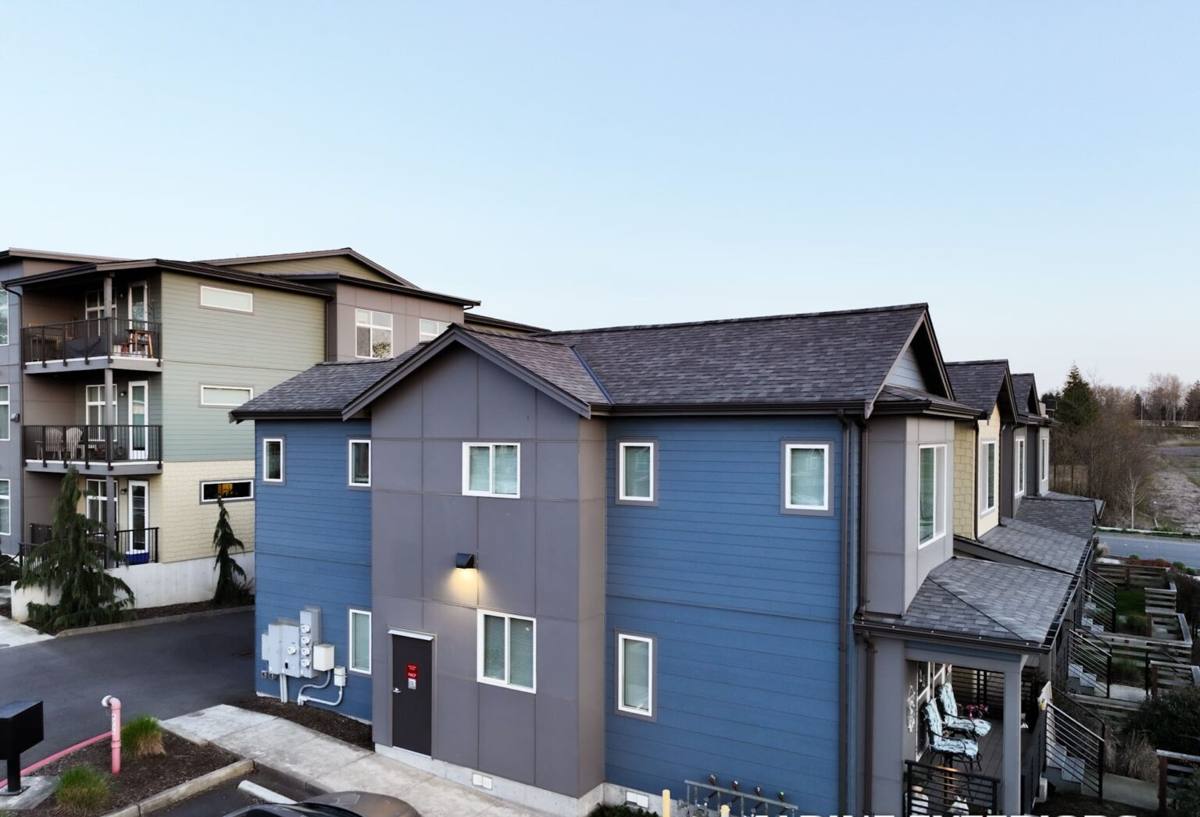
What Salt Air, Driving Rain, and Moss Actually Do to Siding Here
Samish sits close enough to the water that salt-laden air is a constant, low-grade stress on every exterior surface, and that stress compounds with the amount of rain the area gets and how long walls stay shaded and damp between storms.
Salt Air and Fastener Corrosion
Airborne salt accelerates corrosion at nail heads, flashing, and any exposed metal trim. Once a fastener starts to rust, it can weep stains down the face of the siding and, over time, lose its grip — which is one of the more common causes of a single loose or popped board on an otherwise sound wall. This kind of failure often shows up first on walls facing the water or prevailing wind, well before the rest of the house shows any wear.
Wind-Driven Rain at Laps and Joints
Rain in this part of Whatcom County doesn't just fall straight down — storms push it sideways into south- and west-facing walls, forcing water into butt joints, corner trim, and anywhere a bead of caulk has started to crack. Siding is designed to shed water that runs down its face; it's not designed to handle water forced sideways into a seam under pressure. That's why so much repair work traces back to a joint or transition point rather than the flat field of the wall itself.
Moss, Shade, and Trapped Moisture
Wooded lots and shaded north walls, common throughout Samish, stay wet longer after every storm than an open, sun-exposed wall would. That extra dwell time is exactly what moss and mildew need to establish, and once organic growth takes hold on or near a wall, it holds moisture against the surface and against fasteners and trim, extending the damp period even further. On fiber cement, this mostly shows up as surface staining and finish degradation rather than structural failure — but on any wood trim, flashing, or transition pieces nearby, it can mean real moisture intrusion if it's not addressed.
Signs Your Samish Home's Siding Needs Repair
Most of the calls we get start with one of these. None of them require guesswork to check for — a homeowner can walk their own exterior and look for:
- A board or panel that's visibly cracked, split, or has a corner broken off
- Soft, spongy areas when pressed near seams, corners, or close to grade
- Staining that runs downward from a nail head, seam, or trim piece
- Persistent moss or dark streaking on shaded or north-facing walls
- Gaps opening up at butt joints or where siding meets window and door trim
- Paint or factory finish that's chalking, peeling, or visibly worn in one section but not others
- Any bubbling, warping, or bulging that suggests moisture trapped behind the surface
When a Patch Won't Hold: Repair vs. Replacement
A big part of doing this job right is being honest about which situation you're actually in. Isolated damage with a clear, single cause is usually a legitimate repair. Damage that shows up in multiple, unrelated spots — or that keeps coming back after a repair — is often a sign the underlying moisture management for that wall (flashing, water-resistive barrier, grading, or drainage) needs attention beyond what a spot repair can fix.
| Situation | Usually points to | Why |
|---|---|---|
| One damaged board near a known impact or fastener failure | Straightforward repair | Single, identifiable cause with no sign of spreading moisture |
| Recurring damage in the same spot after a prior patch | Underlying moisture path not yet fixed | The visible board was replaced but the water route behind it wasn't corrected |
| Soft spots or staining scattered across one whole wall | Broader assessment needed | Suggests a systemic issue — flashing, barrier, or grading — not a single failed board |
| Damage concentrated near grade, downspouts, or roof-wall intersections | Repair plus a drainage or flashing fix | These are the highest-exposure points on any wall in a high-rainfall climate |
We'll always tell a homeowner plainly if what looks like a small repair actually needs a broader look, and just as plainly when it doesn't. Recommending more work than a house needs doesn't serve anyone, and neither does patching over a problem that's going to reappear in a year.
What a Correct Siding Repair Actually Involves
The visible part of a repair — cutting out damaged material and putting in new — is the easy part. The parts that determine whether the repair actually lasts are less visible:
- Identifying and correcting the actual moisture source before closing the wall back up
- Removing material back to solid, undamaged substrate, not just the obviously bad section
- Checking the flashing and water-resistive barrier behind the repair area, and replacing either if compromised
- Matching the replacement panel's profile, thickness, and reveal to the existing siding
- Sealing and fastening to the same standard the original installation should have met
Skipping any of these steps is how a repair turns into a callback. A new board nailed over the same unaddressed flashing gap will fail again in roughly the same place, on roughly the same timeline.
What Drives the Cost of a Siding Repair
| Factor | Why it matters |
|---|---|
| Extent of hidden damage found once boards are removed | A repair scope can only be finalized after the area behind the visible damage is inspected |
| Whether flashing or the water-resistive barrier also needs replacing | Addressing the moisture path, not just the siding, is what prevents a repeat repair |
| Color and finish matching on factory-finished panels | Weathered ColorPlus finish ages differently than a brand-new panel, affecting how repairs are matched or blended |
| Accessibility of the damaged area | Second-story sections, steep grade, or dense landscaping affect labor time |
| Number of separate repair locations on the same visit | Consolidating multiple small repairs into one visit is more efficient than several separate trips |
Why We Repair Exclusively With James Hardie Materials
We install and repair with James Hardie fiber cement only — we don't carry vinyl, LP SmartSide, or other composite products in the truck, and we don't patch a Hardie wall with a different material just because it's on hand. Staying inside one system means the repair panel is dimensionally identical to what's already on the wall, the factory ColorPlus finish is engineered to weather consistently over time, and the HZ5 product line the region generally calls for is built specifically to hold up against the moisture load a climate like this one puts on a wall. A repair that mixes materials or profiles might look fine on day one; it's the years after that reveal whether the pieces actually perform the same way side by side.
Our Process for Samish Siding Repair
- Inspection. We look at the visible damage and check the surrounding area — corners, grade, downspouts, and shaded sections — for anything related that hasn't shown up yet.
- Diagnosis. Once we know what's causing the failure, we explain it in plain terms: what's actually wrong, what caused it, and what it will take to fix it correctly.
- Scope and estimate. We put together a clear, written scope before any work starts, including what happens if we find additional hidden damage once the area is opened up.
- Repair. We remove damaged material back to sound substrate, address flashing or barrier issues if present, and install matched Hardie material to the same standard as new construction.
- Cleanup and follow-up. We clear debris and fasteners from the site and stand behind the work — a repair that reappears the following winter isn't a finished job.
Why Hiring a Crew That Already Works in Samish Matters
Siding repair isn't a generic skill applied the same way everywhere. A crew that regularly works this area already knows which walls tend to take the worst of the wind-driven rain, which lots hold shade and moisture longer because of tree cover, and where salt exposure off the water tends to hit fasteners and trim hardest. That local pattern recognition shortens the diagnostic part of the job and reduces the odds of misreading a symptom — treating a stained board as the whole problem when the real cause is a flashing detail a few inches away. It also means a faster response when a repair genuinely can't wait for the next dry stretch, which in this climate isn't a small thing.
If you're seeing damage, staining, or soft spots on your home's siding anywhere in the Samish area, we're glad to take a look and give you a straight answer about what's actually going on — no pressure, and no assumption that repair automatically means replacement. Reach out for a free estimate and we'll walk the wall with you.