 Chuckanut Exterior
 Why Silver Beach Homes Ask About Fiber Cement Siding
Silver Beach sits close enough to open water that homes here deal with a combination most inland neighborhoods never have to think about: salt-laden air moving off the water, long stretches of driving rain through the fall and winter, and short, low-angle winter sun that leaves shaded siding damp for days at a time. Add in Whatcom County's mild, wet climate overall, and you get a recipe for a very specific kind of siding wear — moss and algae staining on north- and west-facing walls, paint that chalks and peels faster than it should, and trim and butt joints that stay wet long enough to start rotting from the inside out.
None of that means siding here is doomed. It means the material and the installation both have to be chosen with this climate in mind, not a generic one. That's the whole reason we standardized on James Hardie fiber cement rather than offering a menu of options — the product and the install method have to match what Silver Beach actually throws at a house.
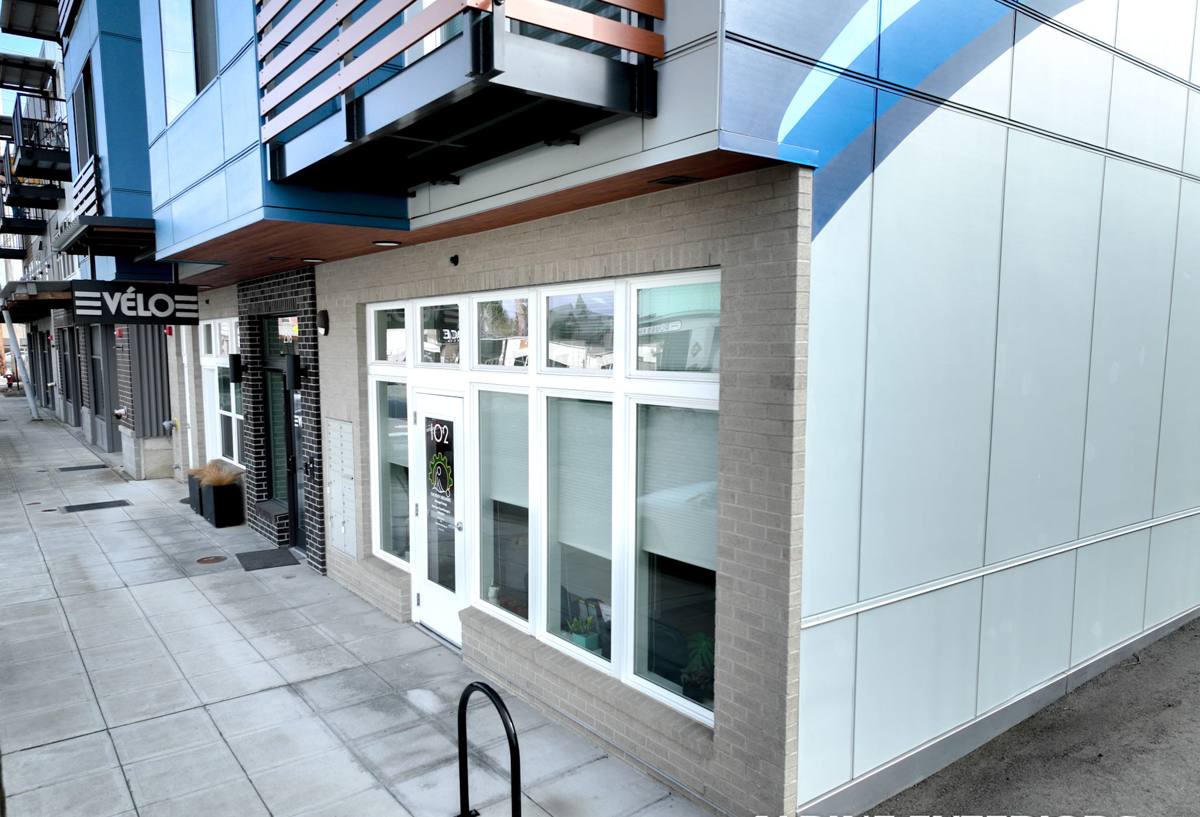
What This Climate Actually Does to Siding
Salt air
Airborne salt accelerates corrosion on exposed metal fasteners, flashing, and hardware, and it can dull or streak lower-quality paint finishes over time. Siding materials and finishes that aren't formulated to shed salt residue tend to show it first at corners, around fastener heads, and along lower courses closest to grade.
Driving rain
Wind-driven rain doesn't just wet the surface of a wall — it pushes moisture sideways and upward, testing every seam, joint, and penetration. A siding job that relies on caulk alone to keep water out, rather than proper flashing and drainage behind the cladding, will eventually let water in, usually where you can't see it until the damage is done.
Moss and algae season
Whatcom County's wet season runs long, and shaded, north-facing walls in tree-covered lots like many in Silver Beach can stay damp for weeks. That constant moisture is exactly what moss and algae need to take hold. Once organic growth sets into a porous or poorly finished surface, it's a maintenance cycle that never really ends.
Why We Install James Hardie and Nothing Else
We don't offer vinyl, LP SmartSide, primed wood, or other fiber cement brands as alternatives on quotes. That's a deliberate standard, not a sales pitch — it's what we've found actually holds up to this specific combination of salt exposure, rain, and moss pressure without turning into a maintenance project for the homeowner.
Non-combustible, dimensionally stable material
Fiber cement is cement, sand, and cellulose fiber — it doesn't burn, doesn't rot, and doesn't expand and contract with moisture the way wood-based products do. That stability matters directly here: siding that swells and shrinks with every wet-dry cycle opens hairline gaps at joints, and those gaps are where water gets behind the cladding.
HZ5 engineering for wet, coastal-influenced climates
James Hardie makes region-specific product formulations, and homes in this part of Washington fall into their HZ5 climate zone, engineered for higher moisture exposure. That's a meaningful difference from siding designed for a drier interior climate — it's not marketing language, it's a different manufacturing spec for a wetter environment.
ColorPlus factory finish
Field-applied paint is only as good as the weather conditions it was applied in and the number of coats put down. ColorPlus finish is baked on at the factory in a controlled environment, which gives it more consistent coverage and better resistance to fading, chipping, and the kind of chalky breakdown salt air and UV exposure cause over time. It also comes with its own finish warranty separate from the substrate warranty — something field-painted siding simply can't offer.
What a Correct Installation Involves Here
Fiber cement siding is only as good as the install behind it. In a climate like this one, the details that get skipped on a rushed job are exactly the ones that cause problems two or three winters later.
Weather-resistive barrier and drainage plane
A correct install starts with a continuous weather-resistive barrier and a drainage gap behind the siding, so any moisture that does get past the cladding has somewhere to go instead of sitting against the sheathing. This matters more here than in drier climates, because the volume of wind-driven rain is higher and the drying time between storms is shorter.
Fastening and clearances
James Hardie specifies exact fastener types, spacing, and embedment depth, along with minimum clearances from grade, roof lines, and decks. Those clearances aren't arbitrary — they keep the bottom edge of the siding from sitting in standing water or splashback, which is one of the most common failure points we see on older installs in wetter neighborhoods.
Joint treatment and caulking
Butt joints, corners, and penetrations (vents, hose bibs, light fixtures) need to be treated as a system — factory-primed cut edges, correct sealant, and proper flashing above horizontal trim — rather than sealed with a bead of caulk and hoped for the best. Caulk fails; flashing and correct detailing don't rely on hope.
Ventilation behind the cladding
Proper rainscreen or drainage detailing lets air move behind the siding so any trapped moisture can dry out instead of feeding moss and mildew growth on the back side of the panels, where you'd never see it until it's a bigger problem.
| Install Detail | Why It Matters in Silver Beach |
|---|---|
| Continuous drainage plane | Sheds wind-driven rain that gets past the outer surface before it reaches sheathing |
| Correct fastener spec and spacing | Resists loosening from repeated wet-dry cycling and salt-influenced corrosion |
| Grade and roofline clearances | Keeps lower courses out of splashback and prolonged ground moisture |
| Factory ColorPlus finish | Holds color and resists chalking better than field-applied paint under salt air and UV |
| Rainscreen/ventilation gap | Lets trapped moisture dry instead of feeding moss and algae growth |
Signs Your Siding Needs a Closer Look
A lot of siding problems in this climate start small and stay hidden behind the surface for a while. Worth checking for:
- Dark streaking or green-black growth on north- or west-facing walls that comes back soon after cleaning
- Paint that's chalking, peeling, or fading unevenly, especially on the sides most exposed to weather
- Soft or spongy spots around butt joints, corners, or trim, which can indicate moisture behind the surface
- Visible gaps or cracking at seams and caulked joints
- Fastener heads showing rust or staining through the paint
- Siding that sits close to or below grade, deck lines, or roof-to-wall transitions with little to no clearance
Any one of these on its own isn't necessarily an emergency, but they're worth having looked at before the next wet season adds to the problem.
Fiber Cement Compared to Other Siding Choices Homeowners Consider
| Factor | James Hardie Fiber Cement | Vinyl | Wood / LP-Style Products |
|---|---|---|---|
| Moisture behavior | Dimensionally stable, engineered finish options for wet climates | Can warp or buckle under heat/cold cycling; seams can allow water intrusion | Prone to swelling, rot, and moisture absorption if finish fails |
| Combustibility | Non-combustible | Combustible, can melt or deform near heat sources | Combustible |
| Finish durability | Factory ColorPlus finish, separate finish warranty | Color molded through material but can fade; limited repaint options | Relies on field-applied paint/primer, needs recoating over time |
| Maintenance | Periodic washing, minimal repainting needed | Low maintenance but can crack and is hard to patch invisibly | Regular repainting/resealing required to prevent moisture damage |
This isn't a claim that other products are unusable everywhere — plenty of homes around the country wear them fine. It's that for the specific combination of salt exposure, driving rain, and moss pressure Silver Beach deals with, fiber cement installed to spec has consistently been the material and finish system we're willing to put our name behind.
How Our Process Works
1. On-site assessment
We look at your home's actual exposure — which walls face prevailing weather, where moisture and growth are already showing up, and what the current siding and trim conditions tell us about what's happening behind the surface.
2. Honest scope and estimate
You get a clear breakdown of what the job involves, including any sheathing or trim repair needed before new siding goes on — not just a number for the visible siding itself.
3. Correct-spec installation
Weather-resistive barrier, drainage detailing, manufacturer-spec fastening, and proper flashing at every joint and penetration — the parts of the job that don't show up in a walk-by but determine how the siding performs in five, ten, and twenty years.
4. Final walkthrough
We go over the finished work with you, including care and cleaning guidance suited to this climate, before calling the job done.
Why a Crew That Already Works Silver Beach Matters
Siding installation isn't one-size-fits-all across Whatcom County. A crew that regularly works neighborhoods with this kind of salt and moisture exposure already knows where problems tend to hide on homes here — which wall orientations need extra attention to drainage, how tight to keep grade clearances given local rain patterns, and what a "normal" amount of existing moss or moisture staining looks like versus a sign of deeper trouble. That local pattern recognition is hard to replace with a generic install checklist, and it's the kind of thing that only comes from doing this work repeatedly in the same conditions.
Get a Straightforward Estimate
If you're weighing a siding project in Silver Beach or elsewhere around Chuckanut, we're glad to take a look and give you an honest read on condition, scope, and what correct installation for this climate actually involves — no pressure, no inflated urgency. Use the form below to request a free estimate.