 Chuckanut Exterior
 Fairhaven Decks Face a Different Set of Conditions
A deck built in Fairhaven doesn't live the same life as a deck built forty miles inland. It sits closer to salt air coming off the water, it takes a beating from driving rain that comes in sideways during winter storms, and it spends a long stretch of the year — often four to five months — sitting under the kind of damp, shaded conditions that grow moss faster than most homeowners expect. None of that means a deck can't hold up. It means the deck has to be built with those specific conditions in mind from the first footing to the last board.
We've built and repaired decks throughout Whatcom County, and the pattern is consistent: decks that fail early almost never fail because of one dramatic event. They fail slowly, from moisture that had nowhere to go, fasteners that corroded from the inside out, or framing that was never meant to handle a marine-influenced climate in the first place. A correct build addresses all three before the first coat of finish ever goes on.
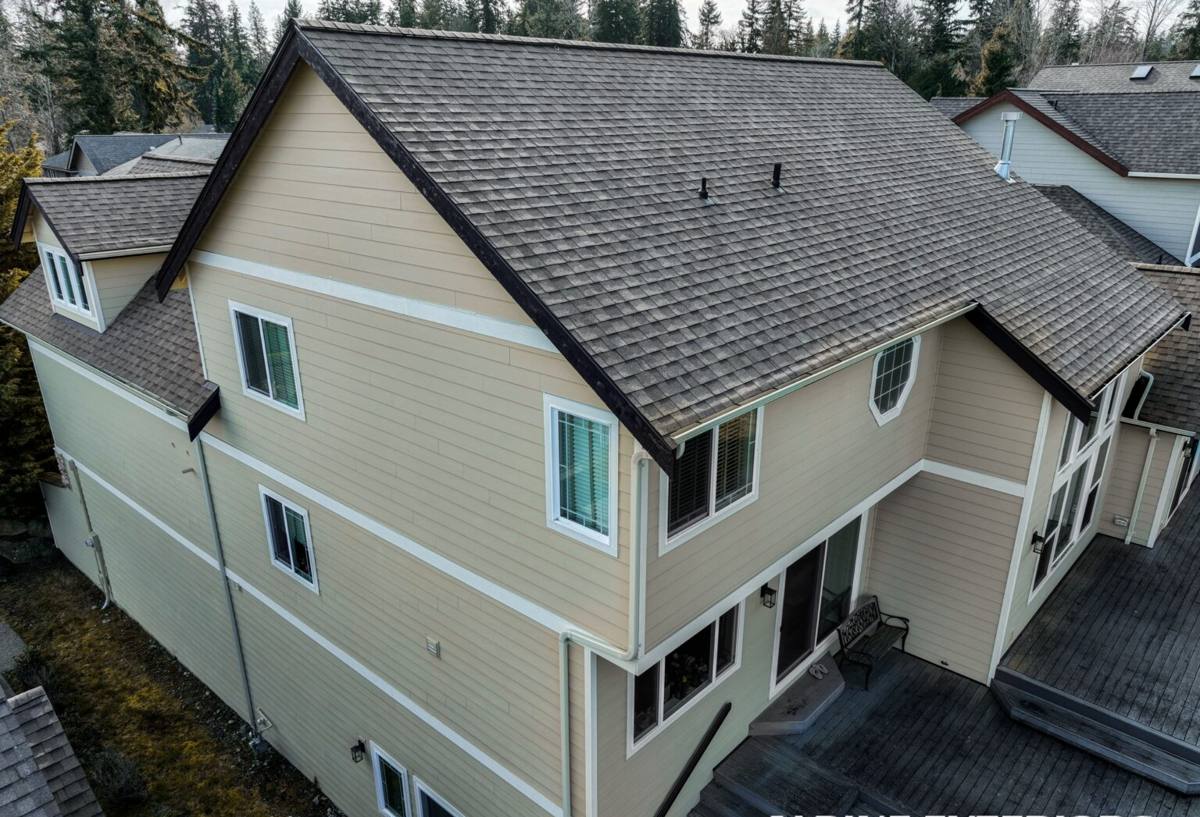
What Salt Air, Rain, and Moss Actually Do to a Deck
Salt Air and Corrosion
Salt-laden air accelerates corrosion on metal hardware — joist hangers, screws, bolts, and structural connectors — far faster than it does inland. Standard galvanized fasteners can start showing rust streaks and pitting within a few years in a coastal-influenced environment like Fairhaven's. Once a fastener corrodes, it loses holding strength long before it looks obviously bad, which is part of why hardware choice matters more here than in most parts of the state.
Driving Rain and Water Intrusion
Rain that falls straight down is easy to shed. Rain that's pushed sideways by wind off the bay finds every gap, seam, and fastener hole a deck has. That means ledger board attachment, flashing details, and the gaps between deck boards all matter more here — water that gets trapped instead of shed is what leads to rot in framing that should otherwise last decades.
Moss and the Long Wet Season
Moss needs shade, moisture, and time — Whatcom County's fall-through-spring stretch supplies plenty of all three. Moss on a deck surface isn't just cosmetic. It holds moisture against the board, stays damp long after the surrounding area has dried, and on wood decking it can accelerate the exact kind of slow decay that shortens a deck's life. On any decking material, a moss-covered surface is also a slip hazard on stairs and landings.
What a Correctly Built Deck Involves
Footings and Framing
Everything starts below the surface. Footings need to be sized and set to local frost and soil conditions, and framing lumber should be rated for ground contact or exposed-to-weather use, not just standard construction-grade stock. Joist spacing and beam sizing should be set for the actual decking material going on top — composite and PVC decking often have tighter span requirements than wood, and skipping that step is one of the more common corners cut on lower-bid jobs.
Ledger Attachment and Flashing
Where a deck attaches to the house is the single most common source of hidden rot on any deck, coastal or not. Proper flashing — installed so water is directed out and away from the house band board, not just tucked in and hoped for — combined with correct lag or through-bolt attachment is not optional. This is also the connection point building inspectors look at most closely, for good reason.
Fastener and Hardware Selection
Given the salt air exposure common to this area, we default to stainless steel or high-grade coated fasteners and connectors rather than standard galvanized hardware, especially for structural connections like joist hangers and ledger bolts. It costs more up front. It also means the hardware holding the deck together isn't the reason a homeowner is calling us back in six years.
Choosing a Decking Material for This Climate
There's no single "best" decking material — there's a best fit for how a homeowner wants to use the deck, how much upkeep they're willing to do, and what budget they're working with. Here's how the common options actually compare under Fairhaven's conditions:
| Material | How It Handles Rain & Moisture | Moss & Algae Resistance | Typical Upkeep |
|---|---|---|---|
| Pressure-treated wood | Good if sealed and re-sealed on schedule; untreated cut ends are a weak point | Low — needs regular cleaning to stay ahead of moss and algae | Annual cleaning, re-sealing every 1-2 years |
| Cedar | Naturally moisture-resistant but still needs finish maintenance over time | Moderate — better than untreated wood, still needs cleaning | Cleaning and re-oiling/staining every 1-3 years |
| Composite decking | Very good — doesn't absorb water or rot | Moderate to good, varies by product and cap technology | Periodic washing, no sealing or staining |
| PVC/cellular PVC decking | Excellent — fully closed-cell, doesn't wick moisture | Good — smoother, denser surface sheds moss more easily | Occasional washing only |
We install all of these depending on what the homeowner wants. Where we steer people away from a choice, it's an honest trade-off conversation, not a sales pitch — for example, a natural wood deck in a shaded, moisture-heavy Fairhaven yard is going to demand more consistent maintenance than the same wood deck would in a drier, sunnier spot, and we'd rather a homeowner know that before we build than find out the hard way after two summers.
Drainage, Slope, and Keeping Moss From Taking Over
Most moss and standing-water problems on decks trace back to design decisions made before a single board was installed. A few details make a measurable difference over the life of the deck:
- Decking installed with a slight slope away from the house so water sheets off instead of pooling
- Consistent board gapping so water drains through rather than sitting on the surface
- Open framing underneath where possible, so airflow can dry the structure after rain instead of trapping moisture
- Skirting, if used, installed with enough ventilation gaps to avoid turning the underside into a permanently damp, shaded moss incubator
- Stair treads and landings built with extra attention to gapping, since these see the most foot traffic and the most consequence if moss builds up
None of this is exotic. It's just detail work that takes a bit longer during the build — and it's the difference between a deck that needs a yearly wash-down and one that needs constant attention to stay safe underfoot.
Railings, Stairs, and Hardware Longevity
Railing posts and hardware take the same corrosion exposure as the rest of the structure, often more, since they're the least protected part of the deck. Post attachment should use structural connectors rated for the load, not just toe-nailing or basic brackets, and any exposed metal — balusters, cable rail hardware, post caps — should be chosen with the same salt-air resistance in mind as the fasteners lower in the structure. Stairs also need consistent rise and run per code, with attention to slip resistance given how often stair treads collect moss and standing water before a homeowner notices.
Our Process, Start to Finish
1. On-Site Assessment
We walk the property, look at drainage patterns, sun and shade exposure, and how the deck will connect to the house, and talk through how the space will actually be used.
2. Design and Material Selection
We go over decking and railing options honestly, including maintenance expectations for each, so the choice matches the homeowner's budget and how much upkeep they actually want to do.
3. Permitting
We handle the permit process with the local building department, including the structural details inspectors focus on most — footings, ledger attachment, and framing.
4. Build
Framing first, inspected before decking goes down, then decking, railings, and stairs, with attention to the drainage and fastening details covered above.
5. Final Walkthrough
We walk the finished deck with the homeowner, cover basic care for whatever material was installed, and answer questions before we consider the job done.
Maintenance Checklist for a Fairhaven Deck
Whatever material a deck is built from, a little seasonal attention goes a long way in this climate:
- Sweep debris off the deck regularly, especially in fall when leaves and needles trap moisture against the surface
- Wash the deck at least once a year to remove early moss and algae growth before it spreads
- Check stair treads and shaded areas more often — they're the first spots moss takes hold
- Inspect visible fasteners and railing hardware yearly for rust streaks or corrosion
- Keep gutters and downspouts near the deck clear so runoff isn't draining directly onto or under it
- Re-seal or re-stain wood decking on the schedule appropriate to the product, rather than waiting until it visibly needs it
- Trim back vegetation that's shading the deck and keeping it damp longer than the surrounding yard
Permits and Local Considerations
New decks and significant deck rebuilds typically require a permit, with requirements tied to deck height, size, and proximity to property lines. Requirements can vary depending on the specifics of a property, so we confirm what applies before work starts rather than assuming. Building in a coastal-influenced part of Whatcom County also means inspectors tend to pay close attention to structural connections and moisture management details, which lines up with how we'd build the deck anyway.
Why a Crew That Already Works Fairhaven Matters
A contractor who mostly works drier, inland areas can still build a structurally sound deck — but they may not default to stainless hardware, may not think through drainage and airflow the same way, and may not have a feel for how fast moss takes over a shaded deck in this particular climate until a homeowner calls back with a problem. Working this area regularly means those details aren't an afterthought; they're just how we build here. It also means faster response if something needs a look after a hard winter storm, and a crew that already understands the local permitting process instead of learning it on the homeowner's timeline.
If you're planning a new deck or replacing one that hasn't held up to Fairhaven's weather, we're happy to take a look and put together a free, no-pressure estimate — just fill out the form below.