 Chuckanut Exterior
 Living Under the Trees at Lake Samish: What Your Siding Is Actually Up Against
Homes around Lake Samish sit in one of the more demanding microclimates in Whatcom County for exterior materials. Most lots here carry heavy tree cover, which is part of what makes the area beautiful and part of what makes siding fail early. Shade slows drying time on every wall after a storm, moisture off the lake adds to the ambient humidity, and the broader marine climate of western Washington keeps driving rain and salt-tinged coastal air moving through the region even a few miles inland. Add a long, wet moss season that can run from fall through spring, and you have a set of conditions that will find every weakness in a siding product faster than they would on a drier, more open lot elsewhere in the county.
This page is specifically about James Hardie fiber cement siding as it applies to Lake Samish properties — not a generic rundown of the product. If you're deciding what to put on a shaded, moisture-heavy lake home, the details below matter more than they would on a typical in-town lot.
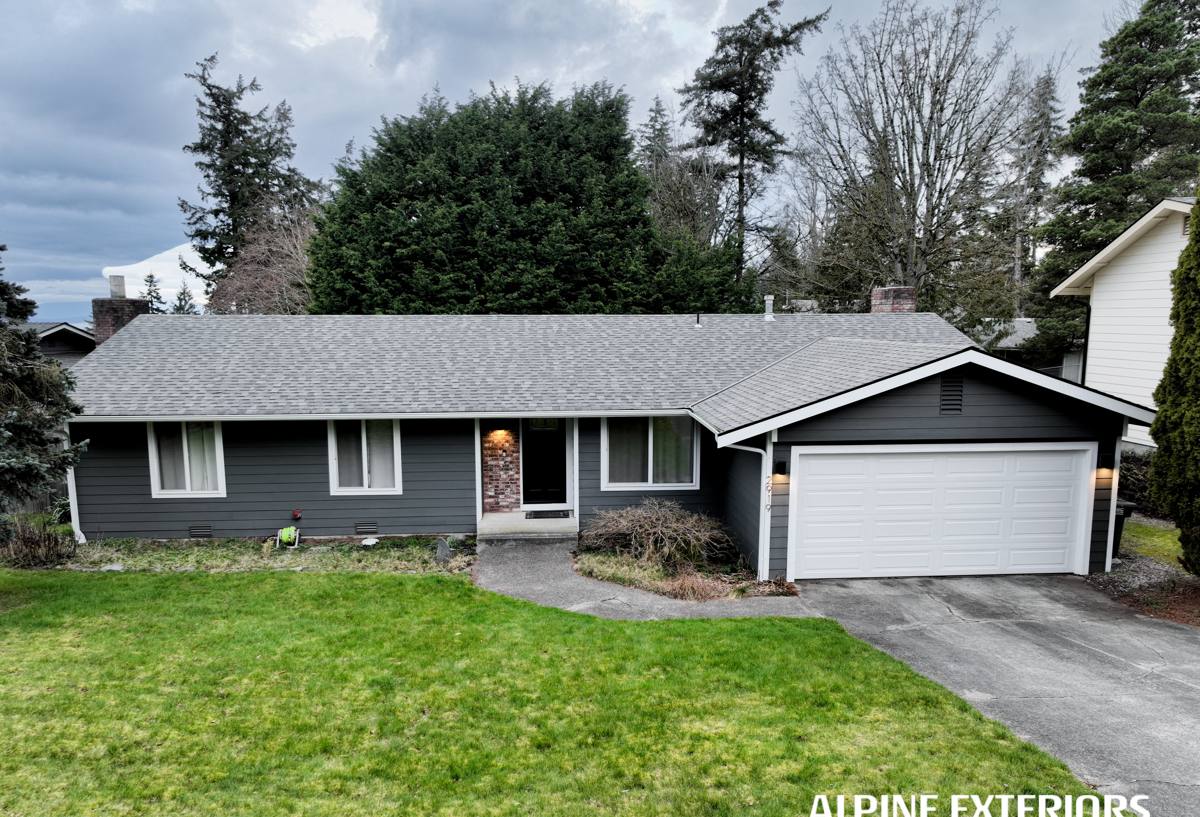
Why Shade and Moisture Are the Real Enemy at Lake Samish
The Moss and Mildew Cycle
Moss doesn't just grow on roofs. On shaded exterior walls, especially north- and east-facing elevations that rarely see direct sun, moss and mildew can take hold in the surface texture of a siding product and hold moisture against it long-term. Wood-based sidings are especially vulnerable because moss anchors into the grain and surface coating, and once it's established, it accelerates rot underneath. A siding product's surface chemistry and how well it sheds standing moisture matter enormously on a lot like this.
Driving Rain and Slow-Drying Walls
Whatcom County gets sustained wet weather, and wind off the lake and surrounding hills drives rain sideways into walls rather than letting it simply run off. On an open, sunny lot, a wall that gets wet in a storm might dry out within a day. On a shaded Lake Samish lot, that same wall can stay damp for several days. Siding, flashing, and the water-resistive barrier behind it all need to perform correctly under that extended wet exposure — not just survive a single storm, but survive being damp far more often than siding on a drier property.
Why We Only Install James Hardie Fiber Cement
We made a standing decision as a company to install James Hardie fiber cement exclusively — not LP SmartSide, not vinyl, not Cemplank, Allura, primed spruce, or cedar. On a lot like Lake Samish, that decision is easy to explain in plain terms.
It Doesn't Feed Rot or Mold
Fiber cement is made from cement, sand, and cellulose fiber. It doesn't have the wood sugars and grain structure that rot, fungus, and moss anchor into over time. In a shaded, damp environment, that difference compounds year after year — it's the difference between a wall that needs repainting and patching within a decade and one that holds up with basic maintenance for decades.
It's Non-Combustible
James Hardie siding is non-combustible fiber cement, which matters anywhere in western Washington's wildfire-adjacent tree cover, Lake Samish included. It's not a decorative benefit — it's a real difference in how a wall assembly responds to an ember or radiant heat exposure compared to wood-based siding.
ColorPlus Factory Finish
Hardie's ColorPlus finish is baked on in a controlled factory environment rather than field-applied. That finish is formulated to resist fading and holds up better against the kind of persistent damp, low-light conditions found under heavy tree cover, where a field-applied paint job tends to show mildew staining and premature wear first.
Choosing the Right Hardie Product for a Shaded Lake Property
Not every Hardie product or configuration is the right fit for every lot. On a shaded, moisture-heavy property like most of what we see around Lake Samish, we typically steer toward specific lines and details.
| Product / Detail | What It Is | Why It Fits a Lake Samish Lot |
|---|---|---|
| HardiePlank lap siding | Hardie's most common horizontal lap profile | Sheds water efficiently when installed with correct overlap and clearance; wide color and texture range for wooded lots |
| HardiePanel vertical siding | Vertical fiber cement panel, often paired with battens | Good option for gable ends and accent walls that take heavy runoff from steep rooflines |
| HZ5 climate configuration | Hardie's engineered formulation for colder, wetter climate zones | Matches the sustained damp and freeze-thaw swings this region sees better than a warm-climate formulation |
| ColorPlus factory finish | Baked-on color and coating applied at the factory | More consistent, longer-lasting finish than field paint, especially on shaded elevations |
What a Correct Installation Actually Involves
James Hardie siding is only as good as the installation behind it. Manufacturer specifications exist for a reason, and on a high-moisture lot like Lake Samish, skipping them shows up as a problem within a few years rather than a few decades. A correct install includes:
- Proper water-resistive barrier and flashing at every window, door, and penetration, lapped correctly to shed water downward and outward
- Minimum clearance from siding to grade, roofline, and decks so the bottom edge of the siding isn't sitting in standing moisture or snow load
- Correct fastener type, spacing, and placement per Hardie's published installation guide for the specific product and climate zone
- Proper joint and butt-seam treatment, with gapping and sealant used only where Hardie specifies it — not as a substitute for correct flashing
- Ventilation behind the siding where the wall assembly calls for it, so damp air has somewhere to go instead of sitting against the back of the panel
- Field-touching cut edges with Hardie-approved products so the cellulose fiber at cut ends isn't left exposed to moisture
Every one of these details gets more important, not less, the longer a wall stays damp — which is exactly the situation on a shaded lake lot.
Cost Factors on a Lake Samish Property
We don't publish blanket prices because every home is different, but a few factors specifically drive cost on lots like this one:
| Factor | Why It Affects Cost |
|---|---|
| Existing siding condition | Moss- and moisture-damaged sheathing found during tear-off needs repair before new siding goes on |
| Access and site layout | Wooded, sloped, or lakeside lots can limit staging and material access compared to a flat in-town lot |
| Trim and detail complexity | Homes with more window and roofline transitions need more flashing and cut work |
| Product line and profile | HardiePlank, HardiePanel, and specialty trim carry different material costs |
| Seasonal scheduling | Wet-season work requires more weather protection and can affect labor efficiency |
Signs Your Current Siding Is Losing the Fight
If your home has been standing under tree cover near the lake for a while, a few warning signs are worth checking for before they turn into sheathing damage:
- Green or black growth that keeps returning after cleaning, especially on shaded walls
- Soft or spongy spots when pressed near the base of the wall or below window sills
- Paint or finish that's peeling, bubbling, or chalking faster on north-facing walls than the rest of the house
- Visible gaps opening up at trim boards, corners, or butt joints
- A musty smell near exterior walls on the inside of the home
- Warping, cupping, or delamination in wood-based siding panels
Our Process, Start to Finish
- On-site inspection of the existing siding, trim, and visible sheathing condition
- Discussion of product line, profile, and color options suited to your home's exposure and shade pattern
- Written estimate covering material, tear-off, disposal, and installation scope
- Tear-off with a check of the sheathing and water-resistive barrier underneath before anything new goes up
- Installation to James Hardie's written specifications for our climate zone, including flashing, clearances, and fastening
- Final walkthrough and warranty paperwork, including Hardie's product warranty registration
Why It Matters That We Already Work Lake Samish
Siding work on a shaded, wooded, waterside lot is not identical to siding work on a flat in-town property. Crews who haven't worked this kind of terrain before tend to underestimate drying windows, moisture behind existing siding, and the access challenges that come with sloped or tree-covered lots. A crew that's already done this work around Lake Samish and the broader Chuckanut area knows to check sheathing more carefully at tear-off, plans around the region's wet stretches instead of getting caught mid-project, and understands why certain elevations need more attention than others. That local pattern recognition is worth more than a low bid from a crew unfamiliar with how this climate actually treats a wall over ten or twenty years.
If you're weighing a siding replacement or want a second opinion on a home near Lake Samish, we're happy to take a look and give you a straight, no-pressure estimate — no obligation, just an honest read on what your home needs.