 Chuckanut Exterior
 Siding Replacement in Larrabee: Built for the Bay, the Bluffs, and the Rain
Homes along the Chuckanut Drive corridor and around Larrabee sit in one of the more demanding microclimates in Whatcom County. Lots here tend to be wooded, sloped, and close enough to saltwater that siding takes on a mix of stresses most inland homes never see: salt-laden air, wind-driven rain off the bay, and deep shade that keeps moss and algae going nearly year-round. Siding that would hold up fine in a drier, more open part of the county can fail early here if it wasn't built or installed with this exposure in mind. This page is about doing siding replacement right for a Larrabee property specifically — not a generic siding job dropped into a coastal setting.
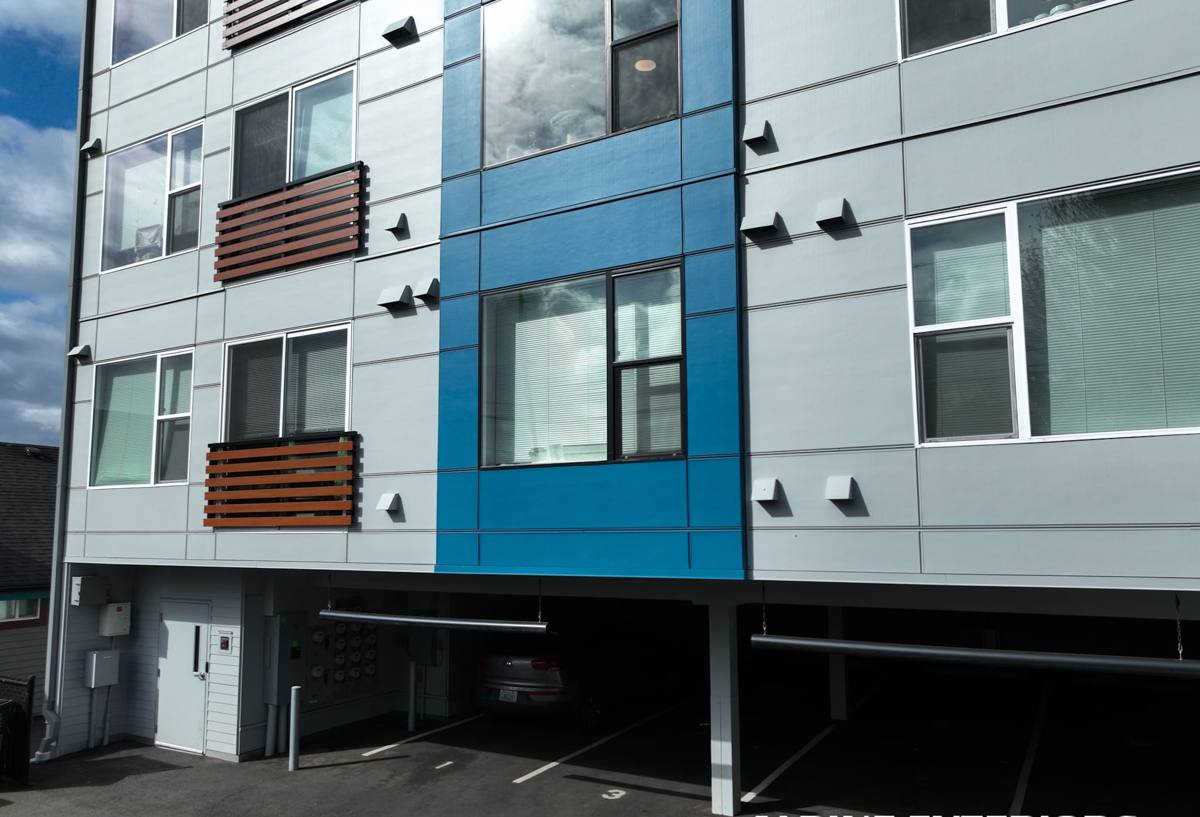
What Larrabee's Climate Does to Siding Over Time
Salt Air and Coastal Moisture
Proximity to Chuckanut Bay and Samish Bay means airborne salt is a constant, low-level factor even when a home isn't directly waterfront. Salt accelerates corrosion on fasteners, trim flashing, and any metal accents, and it draws in moisture that keeps siding surfaces damp longer after a storm passes. Materials that are sensitive to moisture cycling — swelling, softening, or trapping water behind the surface — age faster in this kind of air than they would twenty or thirty miles inland.
Driving Rain and Wind-Driven Water
Whatcom County gets a lot of rain generally, but the terrain around Larrabee adds wind exposure that pushes rain sideways into wall assemblies rather than letting it simply run off. Wind-driven rain finds every weak seam, gap, or poorly lapped joint in a siding system. Over years, water intrusion at those weak points is what causes rot in sheathing and framing long before the siding itself looks obviously bad from the street.
Deep Shade and a Long Moss Season
Many Larrabee lots are shaded by mature evergreens, which is part of what makes the area attractive to live in — but it also means siding surfaces stay damp longer after rain and get less direct sun to dry out. That combination is exactly what moss, algae, and mildew need to establish and spread. On homes here, the moss season effectively runs most of the year rather than being a late-fall, early-spring problem like it is in more open, sun-exposed neighborhoods.
Signs Your Larrabee Home Is Ready for New Siding
Because moisture damage often starts behind the siding, the visible signs homeowners notice are usually a step behind the actual problem. Watch for:
- Persistent moss or dark streaking that returns within weeks of cleaning
- Soft or spongy spots when you press on siding, especially near the bottom courses and around windows
- Paint that's peeling, bubbling, or won't hold a fresh coat for more than a couple of years
- Visible warping, cupping, or gaps opening up between boards or panels
- Rising heating bills or drafts that suggest the wall assembly behind the siding is compromised
- Siding that's original to a home built more than 20-25 years ago, especially wood or older composite products
Any one of these on its own might just need a repair. Several together, especially on a shaded or exposed elevation, usually means the underlying materials or installation have reached their limit and full replacement is the more honest recommendation.
Why We Install Only James Hardie Fiber Cement Siding
We standardized on James Hardie fiber cement and don't install vinyl, LP SmartSide, or wood products, including out here in the Larrabee area where the climate is harder on siding than most of the county. Fiber cement doesn't rot, doesn't feed algae and moss the way wood fibers do, and holds its shape and paint line in wind-driven rain and salt air far better than the alternatives we're regularly asked about. Hardie's climate-engineered HZ product lines are built specifically for wet, high-moisture regions like ours, and the factory-applied ColorPlus finish is baked on under controlled conditions rather than painted on site — which matters a lot on a home that's going to spend a decade or more in constant shade and dampness.
| Factor | James Hardie Fiber Cement | Vinyl | Wood / LP SmartSide |
|---|---|---|---|
| Moisture & rot resistance | Non-combustible, doesn't rot or swell | Doesn't rot, but can warp and gap in heat/cold cycling | Wood-based core; vulnerable to rot and moisture wicking at cuts and seams |
| Moss/algae resistance | Cement surface doesn't feed organic growth the way wood fiber does | Resists growth but can trap moisture behind panels | Wood fiber content is a food source for moss and mildew |
| Salt air durability | Engineered for coastal exposure in HZ5 formulation | Can become brittle and fade faster in salt air over time | Finish and fasteners corrode/fail faster near saltwater |
| Finish longevity | Factory-cured ColorPlus finish, long warranty | Color is through the material but can chalk and fade | Field-applied paint or stain needs recoating every few years |
| Fire performance | Non-combustible material | Melts/deforms under heat exposure | Combustible |
What a Correct Siding Replacement Job Involves Here
Tear-Off and Substrate Inspection
On a home in this climate, we don't just strip old siding and re-cover — we inspect the sheathing underneath for soft spots, staining, or rot, particularly at corners, window and door openings, and lower wall sections where wind-driven rain collects. Any compromised sheathing gets addressed before new siding goes on. Skipping this step is the single most common reason a "new" siding job fails within a few years.
Weather-Resistive Barrier and Flashing Details
A correctly installed weather-resistive barrier, properly lapped and taped, is what actually keeps wind-driven rain out of the wall assembly — the siding itself is the second line of defense, not the first. Flashing at windows, doors, and any roof-to-wall transitions has to be detailed to shed water outward, not into the wall. This is where a lot of shortcut installations fail quietly for years before a homeowner ever sees a problem.
Fastening, Gapping, and Factory Finish
Hardie siding has specific fastening patterns, gapping requirements at butt joints, and clearance requirements from grade, roof lines, and other penetrations. Getting these wrong doesn't show up immediately, but it shortens the life of the installation and can void the manufacturer's warranty. Because we install Hardie exclusively, our crews aren't switching between fastening specs for different products from one job to the next — it's the same system, done the same correct way, every time.
Our Siding Replacement Process, Start to Finish
- Free on-site evaluation of your current siding, wall assembly, and specific exposure (sun, shade, wind, elevation)
- Honest assessment of whether repair or full replacement makes sense, with no pressure either way
- Detailed, written estimate covering material, tear-off, any sheathing repair, and installation
- Scheduling that accounts for Whatcom County's wet-weather windows so materials aren't installed in poor conditions
- Tear-off, substrate inspection and repair, weather barrier and flashing installation
- Hardie siding installation to manufacturer specification, including fastening and gapping
- Final walkthrough and cleanup before we consider the job complete
Why Hiring a Crew That Already Works the Chuckanut Drive Corridor Matters
Siding installation isn't identical everywhere in Whatcom County. A crew that mostly works flatter, more open, more sun-exposed neighborhoods may not think twice about details that matter a lot on a shaded, sloped, saltwater-adjacent lot like the ones around Larrabee — how much gapping to leave for a home that stays damp longer, where moss is going to accumulate first, or how access and staging work on a steep or wooded site. A crew that already works this specific area has already worked through those questions and builds them into the plan from the start, rather than learning on your house.
Keeping New Siding Looking Good in a Moss-Prone, Salt-Air Environment
Even the right material installed correctly still benefits from a little seasonal attention in a climate like this. A gentle rinse to knock back moss and pollen buildup once or twice a year, especially on shaded north- and west-facing walls, keeps growth from taking hold. Keeping gutters clear and trimming back vegetation that shades siding directly helps surfaces dry out faster after rain. Because Hardie's ColorPlus finish is factory-applied rather than field-painted, it holds up to this kind of light maintenance far better than a painted wood or composite surface would, and it won't need repainting on the same schedule.
If your siding is showing wear, staying damp longer than it should, or you're just planning ahead for a home in the Larrabee area, we're happy to take a look and give you a straightforward, no-pressure estimate — no obligation, just an honest read on what your home actually needs.