 Chuckanut Exterior
 Siding Repair Built for York's Climate
Homes in the York area of Chuckanut sit in a stretch of Whatcom County where weather doesn't let siding coast. Salt-laden air off the water, wind-driven rain that finds every gap in a wall system, and a shade-heavy, damp season that can stretch for months all put steady pressure on exterior cladding. Siding here doesn't usually fail all at once — it fails in one corner, one seam, one section that took on more moisture or more wind than the rest of the house. That's exactly the kind of damage that repair, done correctly, is meant to solve.
This page is about siding repair specifically — not full re-siding — for York homes. The goal is to help you understand what's actually going wrong when siding starts to fail in this climate, what a repair needs to include to actually last, and why hiring a crew that already works in this part of Chuckanut makes a real difference.
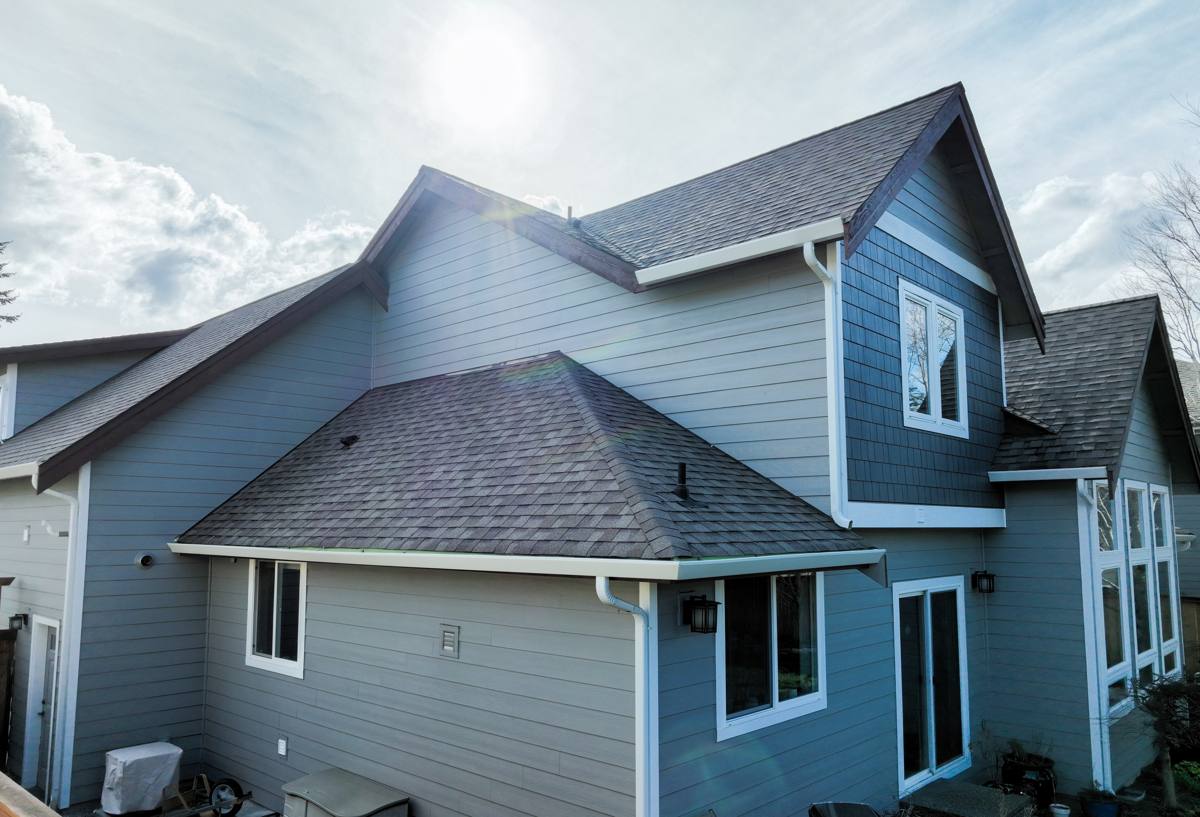
Signs Your Siding Needs Attention
Most siding problems in York start small and stay hidden behind paint or caulk until they're not. Catching them early is the difference between a repair that costs a few hundred dollars and one that turns into a rot repair behind the wall.
- Soft or spongy spots when you press on the siding, especially near the bottom courses or below windows
- Dark streaking, green or black staining, or a fuzzy moss texture on north- and shade-facing walls
- Cracked, split, or buckled boards, particularly on corners and around trim
- Paint that's bubbling, peeling, or failing in the same spot every year no matter how often it's repainted
- Gaps opening up at seams, butt joints, or where siding meets window and door trim
- A musty smell or visible staining on interior walls that share an exterior with a suspect section of siding
- Nail heads popping out or fastener stains bleeding through the paint
Any one of these on its own might be minor. Several showing up in the same area of the house usually means water has been getting behind the siding for a while, not just sitting on top of it.
What's Actually Driving Siding Damage in York
Salt Air and Coastal Exposure
Proximity to open water means airborne salt settles on exterior surfaces and accelerates corrosion on fasteners, flashing, and any exposed metal trim. Salt is also hygroscopic — it pulls moisture out of the air and holds it against the siding surface longer than plain rain would. On products with painted or primed wood substrates, that combination of salt and sustained moisture is what breaks down the finish and lets water into the wood underneath faster than a homeowner further inland would ever see.
Driving Rain and Wind-Driven Moisture
Chuckanut doesn't just get rain, it gets rain pushed sideways by wind off the water. That matters for siding repair because wind-driven rain doesn't behave like still rain — it gets forced up under laps, into seams, and behind trim that would stay dry in a calmer climate. A siding system that's watertight in a light, straight-down shower can still leak in a driving storm if the laps, flashing, and caulking weren't detailed for wind-driven exposure in the first place.
The Long Moss Season
Shaded walls, tree cover, and Whatcom County's extended damp season give moss and algae months to establish themselves on siding that doesn't dry out quickly. Moss holds moisture directly against the siding surface around the clock, which is a much harder condition for any material to withstand than intermittent rain. Over a few seasons, moss-covered siding in shaded spots on a York property will typically show more decay than sun-exposed siding on the same house, even though it took less direct rain.
Repair or Replace? How We Actually Decide
Not every damaged section needs to come off the house, and not every house with damaged siding needs full replacement. The honest answer depends on how far the damage has spread and what's causing it.
| Factor | Repair Usually Makes Sense | Replacement Should Be Considered |
|---|---|---|
| Extent of damage | Isolated to one or two sections or elevations | Spread across multiple walls or the whole house |
| Underlying structure | Sheathing and framing are sound once opened up | Rot has reached the sheathing or framing broadly |
| Siding age and condition | Siding is otherwise in good shape and matches available material | Siding is near end of life or discontinued/hard to match |
| Cause of failure | A specific, fixable detail (flashing, caulk, a cracked board) | A systemic issue like failed house wrap or grading problems |
| Homeowner goals | Preserve existing look and budget for a targeted fix | Want a long-term, low-maintenance exterior upgrade |
When we come out to a York property, we open up the damaged area before quoting anything. Repairing over hidden rot just hides the problem for another season — it doesn't fix it.
What a Correct Repair Actually Involves
Diagnosing the Real Problem
The visible damage is rarely the whole story. A cracked board at the bottom of a wall might be a standalone impact, or it might be the exit point for water that's been entering higher up through a failed window flashing. A proper repair starts with tracing the water path, not just replacing what's broken.
Matching Materials Correctly
Repairs need to match the existing siding in profile, exposure, and thickness, or the patch will show and can create a new place for water to collect. On older homes in York with discontinued lap profiles, this sometimes means the repair area needs to be widened to a natural break point rather than trying to force a mismatched board into place.
Getting the Flashing and Sealing Right
Given how much of the damage in this climate traces back to wind-driven rain, the flashing details around windows, doors, and butt joints matter more here than in a drier region. A repair that replaces the board but skips correcting the flashing behind it is very likely to fail again in the same spot.
Addressing the Cause, Not Just the Symptom
If moss caused the failure, part of the repair conversation should include why that section stays wet longer than the rest of the house — shade, poor airflow, sprinkler overspray, clogged gutters above it — so the same repair isn't needed again in three years.
Why the Siding Material Affects How Repairable It Is
We install James Hardie fiber cement siding exclusively, and one reason is how it behaves specifically in repair situations. Hardie's ColorPlus finish and cement-based composition resist the moisture absorption that drives most of the repair calls we see on wood-based and engineered wood products in this climate — it doesn't swell, delaminate, or feed moss the way organic-based siding materials can. When a Hardie section is damaged, the repair is usually a clean cut-and-replace with a color-matched board, because the material around the damage typically hasn't been compromised by the same moisture that caused the original failure.
That's a different situation than repairing engineered wood or primed wood siding, where moisture damage tends to spread through the substrate beyond what's visibly cracked or stained, and where the repaired section can be a different sheen or color than sun-faded original boards nearby. We're not going to tell you your existing siding is worthless — plenty of it can be repaired well. But if a York homeowner is weighing whether to keep patching a moisture-prone material or move toward something built for this exposure, that's a conversation worth having honestly rather than just quoting the next patch.
Our Repair Process
- On-site inspection where we open up the damaged area to check the sheathing and framing underneath, not just the visible siding
- A written explanation of what caused the damage and whether repair or a targeted replacement section is the right call
- A clear estimate before any work starts, with the scope defined so there's no surprise expansion once we're into the wall
- Removal of damaged material and any compromised sheathing or house wrap, not just the siding itself
- Correction of the underlying cause — flashing, sealant, drainage, or airflow — before new siding goes back on
- Installation of matched or appropriate replacement siding, finished to blend with the surrounding wall
- A final walk-through so you know what was found, what was fixed, and what to watch going forward
Why Local Experience in York Matters
Siding repair is very site-specific. A crew that already works in York knows which elevations in this part of Chuckanut tend to take the worst of the wind-driven rain, which shaded lots hold moss longest into the summer, and how salt exposure near the water changes the pace of fastener corrosion compared to homes further inland in Whatcom County. That knowledge shortens the diagnostic process and helps target the repair at the actual cause rather than just the symptom in front of you. It also means we're not guessing at how a repair will hold up through the next wet season — we've already seen how similar repairs on similar homes nearby have performed.
Keeping Repaired Siding in Good Shape
A well-done repair should last, but a little upkeep protects the investment, especially in a climate that doesn't give siding much of a break.
- Keep gutters clear so overflow doesn't run down and pool against wall sections below
- Trim back vegetation and tree limbs that keep a wall shaded and slow to dry
- Rinse moss-prone, shaded elevations periodically rather than letting growth establish
- Re-caulk joints and seams as part of routine maintenance, not just when you notice a gap
- Have any new soft spots, staining, or paint failure checked promptly rather than waiting for it to spread
If you're seeing damage, staining, or repeat paint failure on your York home's siding, we're happy to take a look and give you a straightforward, no-pressure estimate on what it would take to fix it right.