 Chuckanut Exterior
 Deck Repair Built for Burlington's Skagit Valley Conditions
Burlington sits low in the Skagit Valley, close enough to Skagit Bay that salt-laden air reaches lawns and decks well before most homeowners notice it, and open enough across the valley floor that storms moving in off the water carry real force by the time they arrive. A deck repaired without those two things in mind usually looks fine for a season or two, then starts showing problems in exactly the spots that matter most — the ledger connection to the house, the fasteners holding the frame together, the joists underneath a perfectly good-looking surface.
This page covers deck repair specifically for homes in and around Burlington: what the local climate actually does to an aging deck, what a correct repair job involves, how our process works, and why hiring a crew that already works this part of Skagit County is worth something beyond simple convenience.
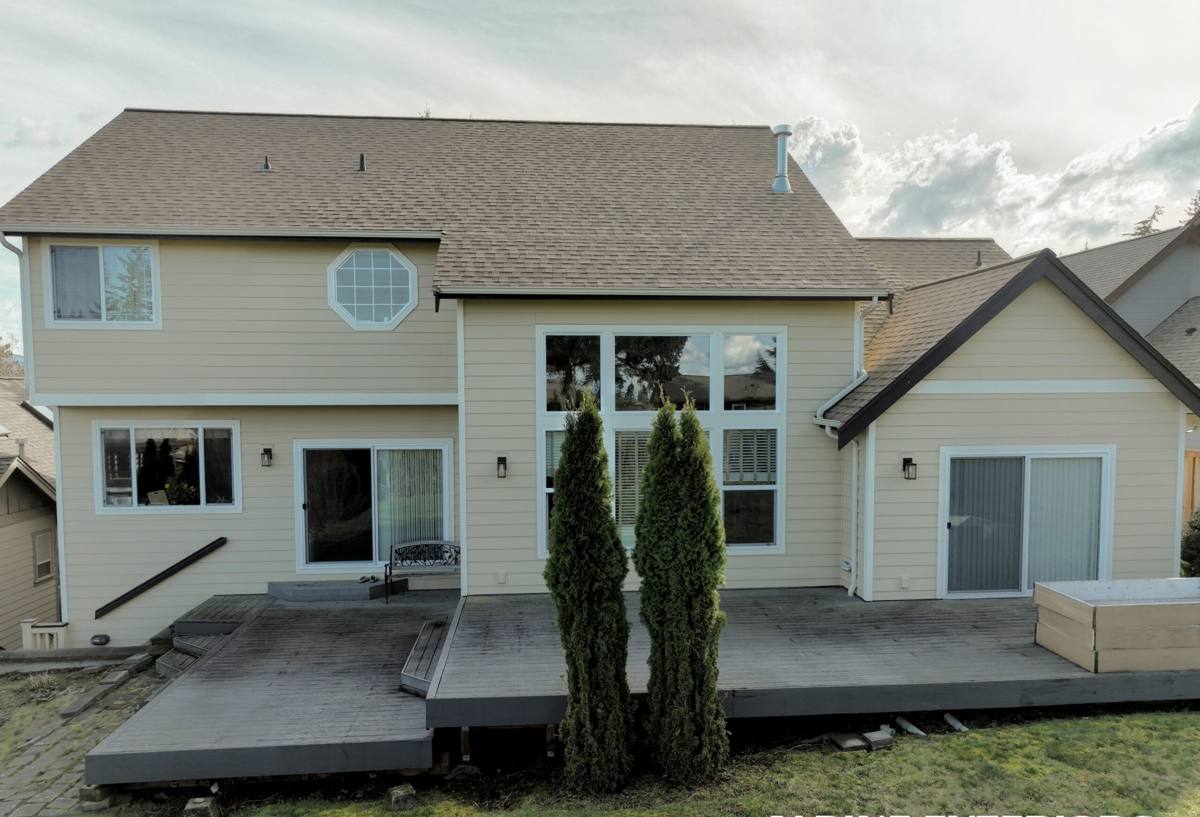
What Burlington's Climate Does to an Aging Deck
Salt Air Off Skagit Bay
Homes closer to Skagit Bay pick up a steady dose of salt-laden air, and a deck has no wall or roofline to shield it from that exposure the way the rest of the house does. Salt accelerates corrosion in exposed fasteners, brackets, and hardware, and a corroding fastener loses holding strength well before it looks obviously bad — which is exactly why a repair that only addresses the visible surface can miss the real problem sitting underneath it.
Driving Rain Across the Valley Floor
Storm systems moving through the Skagit Valley don't always drop rain straight down. Wind pushes it sideways into railings, up under ledger flashing, and between deck boards that have lost their original gapping as the material ages and shifts over time. On an older deck, that wind-driven pattern finds every weak joint and loosened fastener that the original build — or a previous repair — left behind.
A Moss Season That Runs Most of the Year
Burlington's position on the valley floor means less of the dry, breezy stretches that help other parts of the region shed moisture faster, so moss and mildew get a long growing season on any horizontal surface that holds water. Decks are especially exposed to this because they sit flat, catch rain directly, and hold dampness between boards long after a wall would have already dried out. Shaded decks and north-facing surfaces are usually the first to show it, and once moss takes hold in worn or checked decking, it holds moisture against the surface and speeds up whatever decay process has already started underneath.
Common Deck Problems We See in Burlington
Deck repair calls in this area tend to fall into a handful of recurring categories, and most trace back to the same three conditions above. What we're typically asked to look at includes:
- Corroded or failing fasteners — screws, brackets, and post hardware that have lost holding strength after years of salt air exposure
- Ledger board and flashing failures where the deck attaches to the house, often the source of water damage that isn't visible until the framing underneath has already softened
- Soft, spongy, or rotted framing members — joists, beams, or posts that stayed wet too long between storms
- Loose or wobbling railings and posts, usually a sign that attachment hardware has corroded or the framing behind it has weakened
- Cupped, checked, or moss-covered decking boards that have lost their finish or protective cap and are absorbing moisture directly
- Stairs that have shifted, settled, or developed uneven treads from framing movement underneath
Some of these are cosmetic annoyances that can wait. Others — particularly ledger flashing failures and soft framing — are structural issues that get worse, not better, the longer they sit.
Repair or Replace? How We Help You Decide
Not every deck problem calls for a full rebuild, and not every deck is worth patching. The right call usually comes down to how much of the structure is affected versus how much is surface-level, and how the deck's age compares to its material's expected service life. A table like this can only offer broad guidance — every deck still gets a hands-on inspection before we recommend anything — but it covers the factors that usually drive the decision:
| Factor | Favors Repair | Favors Replacement |
|---|---|---|
| Framing condition | Solid, dry joists and beams; problem is isolated | Widespread soft spots, rot, or multiple compromised members |
| Ledger connection | Flashing intact, isolated fix needed | Long-term water intrusion has reached the house's rim joist |
| Decking surface | Isolated board damage on an otherwise sound deck | Widespread cupping, moss, or fastener staining across most boards |
| Age of structure | Within expected service life for its material | Original build is decades old or wasn't built to current standards |
| Fastener condition | Corrosion limited to a few visible points | Corrosion found throughout during inspection |
We'll walk you through where your specific deck lands on that spectrum rather than defaulting to whichever option is easier to sell. A fair number of Burlington decks we look at need real structural repair even though the surface still looks presentable, and just as many only need targeted board and hardware replacement rather than a full teardown.
What a Correct Deck Repair Involves
A repair that actually holds up in this climate goes beyond swapping out whichever boards look worst. Depending on what our inspection finds, a proper repair typically includes:
- Full inspection of framing — joists, beams, posts, and footings — before any surface work begins, since a new board over a soft joist doesn't fix anything
- Replacement of corroded fasteners and hardware with stainless or coastal-grade corrosion-resistant materials, not standard hardware that will corrode again under the same conditions
- Correct ledger board flashing repair or replacement where the deck ties into the house, since that connection is one of the most common sources of hidden water damage
- Compatible decking material for any board replacement, so repaired sections age consistently alongside the rest of the deck
- Correct board gapping restored during any decking replacement, so drainage and airflow work the way the original design intended
- Railing and post reattachment sized for the site's actual wind exposure, not just a cosmetic tighten-and-caulk fix
- A grading and ventilation check underneath the deck so moisture doesn't sit against repaired framing the way it did against the original
Skip the framing inspection and fastener upgrade, and a repair can look great for a season while the underlying problem that caused the damage in the first place is still sitting there, untouched.
Matching Materials When Boards Need Replacing
One challenge specific to repair work, as opposed to building new, is that whatever decking product went down originally may not still be available in the same color or profile years later. Cedar and pressure-treated lumber are usually the easiest to match reasonably well, since replacement stock is a commodity product rather than a proprietary line — though weathered boards next to fresh ones will show a visible color difference until the new wood grays in over a season or two.
Composite Decking Repairs
Composite is trickier to match. Manufacturers update board profiles and color lines regularly, so a five- or ten-year-old deck can be difficult or impossible to match exactly. If we can't source an exact match, we'll talk through the real options honestly — placing new boards in a less visible area like a step or a run near the house wall, accepting a modest visible color difference, or in some cases replacing a full section of boards so the color reads consistently rather than patchy.
PVC Decking Repairs
Cellular PVC tends to hold its color more predictably over time than composite, but exact profile matching still depends on whether the original product line is still in production. We'll tell you upfront if we think a repair will leave a visible seam rather than promising a perfect match we can't actually guarantee.
How Our Process Works
We start with a site visit and a hands-on inspection — checking framing from underneath where we can access it, testing decking for soft spots and retained moisture, looking closely at the ledger connection and flashing, and checking fastener and hardware condition throughout the structure. That inspection is what actually drives the repair-versus-replace conversation, not a guess from the driveway.
From there we give you a clear, itemized picture of what needs to happen and why, in plain terms, before any work starts. If the issue is limited to a section of decking or a run of hardware, we handle that directly. If the inspection turns up structural issues — soft framing, a compromised ledger connection, footings that have shifted — we'll walk you through what that means for the deck's safety and what it would take to correct it properly, including whether a full or partial rebuild makes more sense than continuing to patch around a bigger problem. Once you've approved a scope, we carry out the repair to the same fastener, flashing, and drainage standards we'd use on new construction, not a shortcut version just because it's labeled a repair.
What Your Deck Needs From You After a Repair
A well-executed repair still needs some routine attention from you to hold up through Skagit Valley winters. Worth keeping in mind going forward:
- Rinse the deck surface periodically to clear salt residue and organic buildup before it works into the surface or finish
- Keep gaps between boards clear of leaves and debris so water can actually drain and air can move through as designed
- Check railing posts and hardware once a year, particularly heading into the wet season, for early signs of loosening or corrosion
- Trim back plants or branches that keep the deck surface shaded and damp longer than it needs to be
- Call about any new soft spots, standing water, or movement right away — those get worse with time, not better, and catching them early is almost always the smaller job
Why It Matters That We Already Work Burlington
A crew that mostly repairs decks further from the water can still do competent work, but a Burlington deck carries specific variables that don't come up as often elsewhere — corrosion patterns tied to Skagit Bay's salt air, wind-driven rain that finds every weak ledger connection in this part of the valley, and a moss season long enough to hide real decay under a coat of green longer than it should stay hidden. Working this area regularly means we're not guessing at what a given repair actually indicates. We've seen which failure patterns are cosmetic and which ones point to a bigger structural issue underneath, and we can tell you which is which during the initial inspection rather than after we've already opened things up.
That familiarity also means a more accurate first estimate, since we're not learning this valley's specific failure patterns on your project.
Get a Straight Answer About Your Deck
Whether your deck needs a targeted repair, a partial rebuild, or an honest read on whether it's worth saving at all, we're glad to walk the site with you and explain what we find in plain terms. Reach out below for a free, no-pressure estimate.