 Chuckanut Exterior
 Windows Take a Beating in Sehome
Homes in Sehome sit close enough to the water and the weather patterns that move through Whatcom County that windows wear differently here than they do inland. Salt-laden air corrodes hardware and finishes faster than dry climates ever would. Driving rain, pushed sideways by wind off the water, finds every weak seam around a window frame. And the long stretch of damp, low-light months that support moss growth on roofs and siding also feed rot in wood trim and sashes that never get a chance to fully dry out. None of this is dramatic on its own, but it adds up year after year, and it's why window installation in this neighborhood is not quite the same job as window installation in a drier part of the state.
This page is specifically about installing windows correctly for Sehome conditions — what the climate does to a window system over time, what a proper installation looks like, and how our process is built around the realities of this particular stretch of Whatcom County.
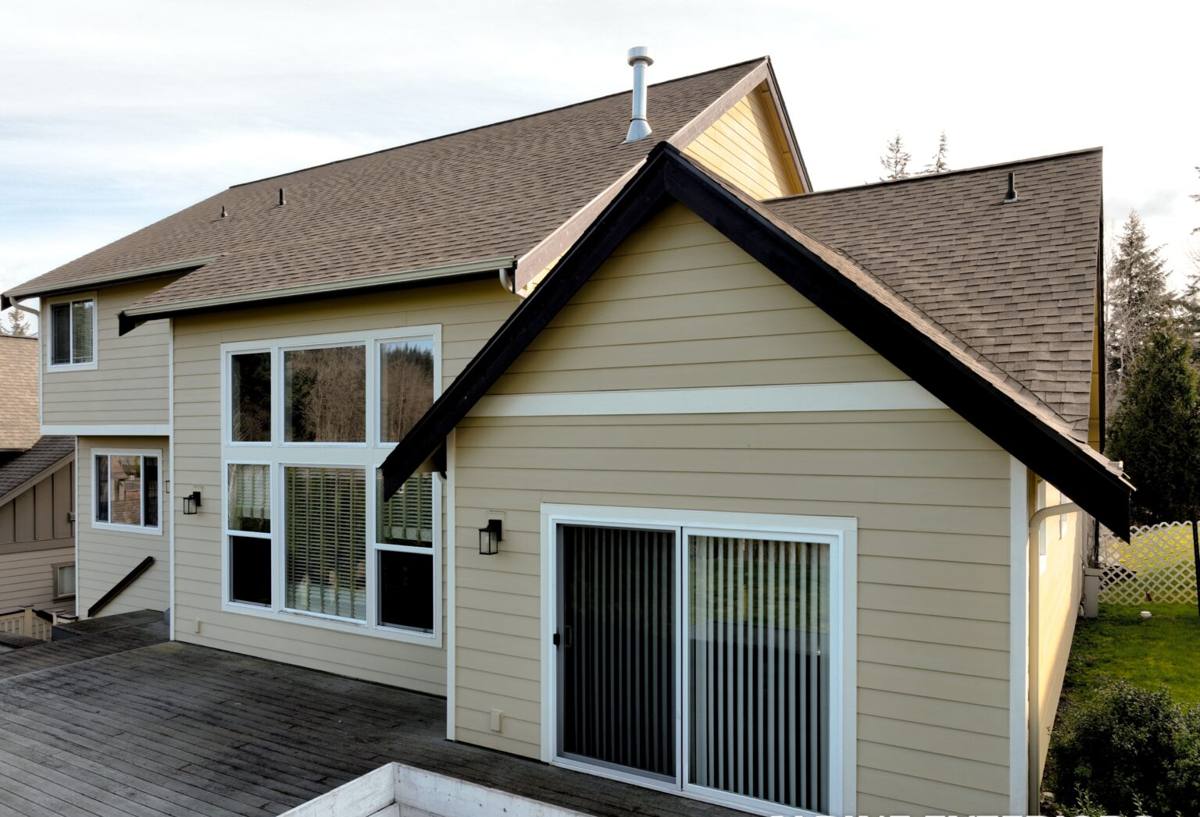
What Coastal Whatcom County Weather Does to Windows
Salt Air and Hardware Corrosion
Even a few miles from open water, airborne salt settles on window hardware, screen frames, and exposed fasteners. Over time it accelerates pitting and corrosion on lower-grade metal components — locks that stop latching cleanly, hinges that seize, and cladding that shows premature wear at the finish. Windows with well-sealed hardware and corrosion-resistant fasteners hold up noticeably better in this environment than budget-grade units built for a generic climate.
Driving Rain and Wind-Driven Moisture
Rain in this part of Washington rarely falls straight down. Wind pushes it sideways and up under sills, trim, and siding laps. A window that would be fine in a calm rain climate can leak here if the flashing details and sill pan aren't done right, because the water is being forced into gaps it wouldn't normally reach. This is the single biggest cause of hidden water damage we see behind window openings in this area — not a bad window, but a window installed without accounting for wind-driven rain.
Moss Season and Prolonged Dampness
Whatcom County's moss season isn't just a roof problem. The same conditions that grow moss on shingles — long stretches of cool, damp, low-sun weather — keep wood trim, sills, and siding around windows wet for extended periods. Wood that can't dry out between rain events is far more prone to rot, and once moisture gets behind a window frame in a wall that stays damp for months at a time, it can travel and cause damage well beyond the window opening itself.
Signs a Sehome Home Needs Window Attention
- Soft, spongy, or discolored trim or sill wood around a window frame
- Visible gaps, cracked caulk, or daylight around the frame when the window is closed
- Windows that are difficult to open, close, or lock — often a sign of frame movement or swelling
- Fogging or moisture between panes on double- or triple-glazed units, meaning the seal has failed
- Noticeable drafts or a cold wall area near a window even when it's fully shut
- Peeling paint, bubbling, or staining on interior drywall below or beside a window
- Corroded or stiff hardware — locks, cranks, or hinges that have gotten hard to operate
Any one of these on its own might just mean the window needs servicing. Several at once, especially combined with soft wood or interior staining, usually means water has been getting behind the frame for a while and it's worth having someone look at the opening itself, not just the window.
What a Correct Window Installation Actually Involves
The window unit itself matters, but in a climate like this one, how it's installed matters just as much — arguably more. A high-end window installed with sloppy flashing will leak. A mid-range window installed correctly, with attention to the details below, will outperform it.
Sill Pan and Flashing
Every opening should get a sloped sill pan that directs any water that does get past the window back outside the wall assembly, not down into the framing. Flashing tape should integrate with the home's existing weather-resistive barrier in the correct shingle-lap order — upper layers over lower layers — so water is always directed outward and down, never trapped behind a layer above it.
Air Sealing and Insulation
The gap between the window frame and the rough opening needs to be sealed with a proper low-expansion foam or backer rod and sealant, not stuffed with loose fiberglass. Overfilled or underfilled gaps both cause problems — one bows the frame, the other leaves drafts and condensation points.
Exterior Sealant and Trim
The exterior perimeter needs a continuous, weather-rated sealant bead with no gaps, especially along the top edge where wind-driven rain hits hardest. Trim should be back-primed or factory-clad on all sides, not just the face that shows, since the back and end grain are where moisture gets in first.
Interior Finish and Insulation Continuity
On the interior side, insulation needs to run continuously to the window frame with no voids, and trim should be set to allow the window to be serviced later without tearing out finish work.
Our Process for Sehome Window Installation
- On-site assessment. We look at each opening individually — existing flashing condition, sill wood condition, and any signs of past water intrusion — before quoting anything.
- Product selection based on exposure. A window on a wall that takes direct wind-driven rain gets treated differently than a sheltered opening. We'll walk you through which frame materials and glazing options make sense for each elevation of your home.
- Removal and opening inspection. Once the old window is out, we inspect the framing and sill for rot or prior water damage before anything new goes in. This is the point where hidden problems get caught — and fixed — instead of sealed over.
- Sill pan, flashing, and air sealing. Installed in the correct order, integrated with the existing weather barrier, every time — not as an upsell, as the baseline.
- Window setting and shimming. The unit is set level, plumb, and square, and shimmed so it operates smoothly without stressing the frame.
- Exterior and interior finish. Sealant, trim, and touch-up work done to match the surrounding siding and interior finish.
- Walkthrough. We show you what was done at the opening, including anything we found during removal, and how the new window operates.
Frame Material Comparison for This Climate
| Frame Material | Performance in Salt Air / Driving Rain | Maintenance | Notes |
|---|---|---|---|
| Vinyl | Good — won't corrode or rot, handles moisture well | Low | Cost-effective, wide range of quality tiers; we specify marine-grade hardware where exposure is high |
| Fiberglass | Excellent — dimensionally stable, resists corrosion | Low | Higher upfront cost, holds up very well long-term in coastal-adjacent conditions |
| Aluminum | Fair — conducts cold and can corrode without proper coatings | Moderate | We're selective about aluminum here due to corrosion risk and condensation potential |
| Wood (clad exterior) | Good on the exterior face, but end grain and interior wood remain moisture-sensitive | Higher | Appearance-driven choice; requires diligent maintenance in a damp climate |
| Solid wood (unclad) | Poor to fair — most vulnerable to prolonged dampness and rot | High | We generally steer homeowners away from unclad wood on exposed elevations here, not because the material is bad, but because this climate is unusually hard on it |
What Drives Cost
Every home and opening is different, so we don't quote sight-unseen, but the main factors that move price up or down are consistent:
| Factor | Why It Matters |
|---|---|
| Frame material and glazing package | Fiberglass and higher-performance glazing cost more upfront but need less maintenance over time |
| Condition of the existing opening | Rot or water damage found during removal adds repair work before the new window can go in correctly |
| Number and size of openings | Larger and more numerous windows increase material and labor |
| Exposure of the wall | Elevations that take direct wind-driven rain may warrant upgraded flashing details or hardware |
| Trim and interior finish scope | Matching existing trim profiles or finishes adds time compared to standard trim |
As a broad range, straightforward window replacements in this area typically run from the low thousands per window up into the higher range for large, custom, or difficult-access openings. We'll give you a specific number after seeing the openings in person.
A Homeowner's Checklist for Choosing a Window Installer
- Do they inspect the opening after removal, not just install into whatever is there?
- Do they explain their flashing and sill pan approach, or just talk about the window brand?
- Are they licensed and insured for exterior work in Washington?
- Do they offer a written scope that specifies flashing, air sealing, and finish work — not just "install windows"?
- Can they speak specifically to wind-driven rain and moisture handling, or only to energy efficiency numbers?
- Do they stand behind both the product warranty and their own installation workmanship?
Why a Crew That Already Works in Sehome Matters
Window installation done right depends on understanding the conditions a specific wall will face — which elevations take the worst of the wind-driven rain, how long moisture tends to sit in a given wall assembly during the wet months, and what's actually holding up over time versus what fails early. A crew that works regularly in Sehome and the surrounding Chuckanut area has seen how local homes age under Whatcom County's coastal weather pattern — the salt air, the driving rain, the long moss season — and builds that knowledge into every installation instead of treating each job as generic. That's the difference between a window that looks fine on day one and one that's still performing correctly five or ten wet seasons later.
Get a Straightforward Estimate
If you're dealing with drafty, foggy, hard-to-operate, or water-damaged windows — or you're just planning ahead before the next wet season sets in — we're happy to take a look and give you an honest assessment of what your home actually needs. Use the form below to request a free, no-pressure estimate.