 Chuckanut Exterior
 Roof Repair Built for Sehome's Coastal Climate
Sehome homes sit close enough to the water that salt-laden air is part of daily life, and that changes how a roof ages. Add in Whatcom County's long wet season, driving rain off the water, and months of shade-fed moss growth, and you get a roofing environment that's tougher on materials than most inland neighborhoods realize. A roof that would coast along quietly in a dry climate can develop real problems here in half the time if it isn't maintained and repaired correctly.
Roof repair in this setting isn't just patching a leak and moving on. It's understanding how salt air accelerates corrosion on fasteners and flashing, how sustained moisture pressure finds its way through aging underlayment, and how moss holds water against the roof surface long after a storm has passed. This page covers what Sehome homeowners should know about roof repair specifically — what it involves, how we approach it, and why local experience matters more here than it does in drier parts of the state.
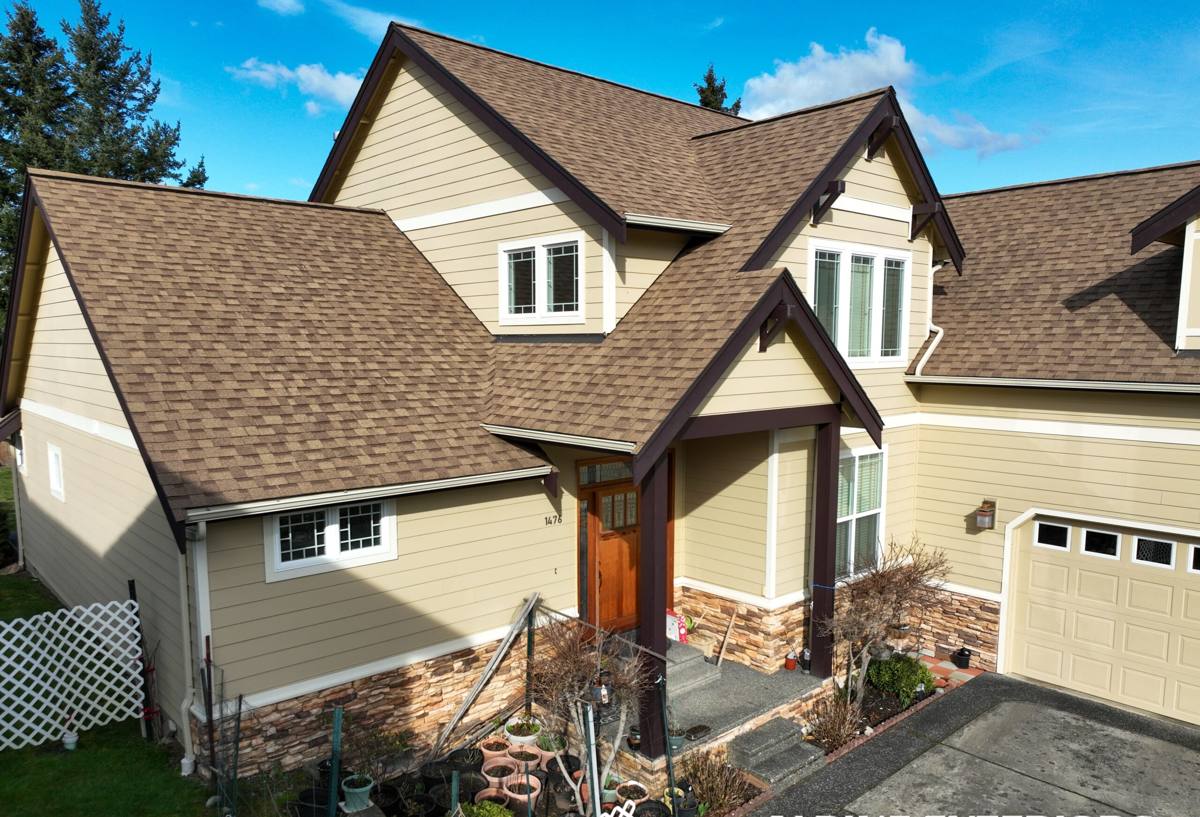
What Sehome's Climate Does to a Roof
Salt Air and Corrosion
Homes closer to Chuckanut Bay and the Samish waterway deal with airborne salt that settles on roofing metal, fasteners, and flashing. Over time, salt exposure speeds up corrosion on exposed metal edges, valley flashing, and nail heads, especially on older installations that used standard fasteners instead of corrosion-resistant hardware. Once a fastener starts to corrode, it loosens, and a loose fastener is an open door for water.
Driving Rain
Storms coming off the water don't just fall straight down — wind-driven rain pushes water sideways and upward under shingle edges, around vent boots, and into any gap in flashing that a calmer rain would never reach. A roof can pass a casual inspection and still leak during a wind-driven storm because the vulnerable points only show themselves under that specific pressure.
Moss Season
Whatcom County's wet season runs long, and shaded roof sections — north-facing slopes, areas under tree cover — stay damp for extended stretches. That's exactly what moss needs. Moss doesn't just look bad; it lifts shingle edges as it grows, holds moisture against the roof deck, and traps debris that keeps the surface wet even between rains. Left unaddressed, a moss mat can shorten the useful life of an otherwise sound roof section by years.
Signs a Sehome Roof Needs Repair
Most roof damage doesn't announce itself with an obvious leak right away. It shows up first in smaller signs that are easy to miss from the ground.
- Granules collecting in gutters or at downspout outlets
- Shingles that look cupped, curled, or lifted at the edges
- Dark streaking or thick moss growth, especially on shaded slopes
- Rusty streaks below metal flashing or fasteners
- Soft spots or slight sagging when walked (by a professional, not a homeowner)
- Water stains on interior ceilings, especially after a wind-driven storm
- Daylight visible through the attic decking
- Flashing that's separated, cracked, or missing sealant around chimneys, vents, and skylights
Any one of these is worth a look before it becomes a bigger repair. Catching a lifted shingle or failing flashing early is a small job. Ignoring it through another wet season usually turns it into a deck repair or a full section replacement.
What a Correct Roof Repair Involves
Diagnosing the Actual Source
Water doesn't always show up where it enters. A stain on a ceiling can trace back to a flashing failure several feet away, following a rafter or sheathing seam before it drips. A proper repair starts with tracing the water path back to its real source, not just patching the spot where the damage is visible.
Shingle and Composition Repairs
Where individual shingles have cracked, curled, or blown loose, the repair involves removing the damaged pieces, checking the underlayment and decking beneath for moisture damage, and installing matching material properly integrated with the surrounding courses — not just caulked over the top, which fails quickly under driving rain.
Flashing and Moisture Points
Chimneys, skylights, vent pipes, and roof valleys are where most leaks actually originate, not the open field of shingles. Repair here means resealing or replacing corroded flashing, checking that step flashing is properly layered (not just sealed with roofing cement), and confirming vent boots haven't cracked from age and UV exposure.
Deck and Structural Checks
If water has been getting in for a while, the plywood or board decking underneath may be soft, delaminated, or stained. A repair that only replaces the surface layer over compromised decking won't hold. Any soft decking needs to come out and be replaced before new roofing goes back down.
Repair or Replace? Weighing the Real Factors
Not every roof problem in Sehome calls for a full replacement, and not every leak is fixable with a patch. The right call depends on the roof's age, how widespread the damage is, and what's happening underneath the surface.
| Factor | Leans Toward Repair | Leans Toward Replacement |
|---|---|---|
| Roof age | Under 15-20 years, single problem area | Near or past expected material lifespan |
| Extent of damage | Isolated to one slope or feature | Widespread across multiple slopes |
| Decking condition | Solid, dry to the touch | Soft, delaminated, or stained in several spots |
| Moss/algae history | Surface growth, recently addressed | Long-term growth with visible shingle lifting |
| Prior repairs | First or second repair on this roof | Multiple past patches in different areas |
We'll walk the roof, explain what we find in plain terms, and give an honest recommendation either way. A repair that's clearly the right call shouldn't be upsold into a replacement, and a roof that's genuinely past the point of patching shouldn't be strung along with band-aid fixes either.
Our Repair Process
- Inspection: We check the full roof, not just the reported problem area, including flashing points, vents, valleys, and any moss or algae presence.
- Diagnosis: We trace leaks to their actual source and check the decking underneath any suspect area.
- Written scope: You get a clear explanation of what needs to happen and why, including whether repair is sufficient or replacement should be considered.
- The repair: Damaged materials come out, decking is replaced where needed, and new materials are integrated properly with the surrounding roof — matched as closely as possible to existing shingles or roofing.
- Moss and debris cleanup: Where moss or heavy debris contributed to the problem, we clear it as part of the job so the repair isn't undermined immediately by the same conditions that caused it.
- Final check: We confirm flashing is sealed, fasteners are set, and the repair area sheds water the way the rest of the roof does.
Ongoing Moss and Salt-Air Maintenance
A repair fixes what's damaged now, but Sehome's climate keeps working on the roof year-round. Moss regrowth on shaded slopes and slow corrosion on exposed metal are ongoing realities here, not one-time problems. Homeowners who get the most life out of a repair typically pair it with periodic moss removal and a visual check of flashing and fasteners once a year, particularly after the wetter months. We can talk through a simple maintenance interval that fits your specific roof and its exposure when we're out for the estimate.
Why Local Experience on This Roof Type Matters
A crew that regularly works roofs in Sehome and the surrounding Chuckanut area knows which slopes tend to hold moss, which flashing details fail first under wind-driven rain off the water, and which fastener and material choices actually hold up against salt air rather than just meeting a minimum code spec. That's the difference between a repair that's technically complete and one that's actually built for where it sits. We use materials and fastening methods chosen for this specific climate, not a generic inland spec, and we stand behind the work with a clear warranty on our labor.
What to Expect From an Estimate
We keep the estimate process straightforward: a full roof walk-through, a plain-English explanation of what we find, and a written scope with repair or replacement options if both are genuinely on the table. There's no pressure to upsell a repair into something bigger than it needs to be, and no pricing surprises once work begins — the scope we agree on is the scope we perform.
If you've noticed granules in the gutters, moss creeping across a shaded slope, or a stain on a ceiling after the last windy storm, it's worth having a second set of eyes on it before another wet season sets in. Reach out for a free, no-pressure roof repair estimate — we're happy to take a look and give you an honest read on what your roof actually needs.