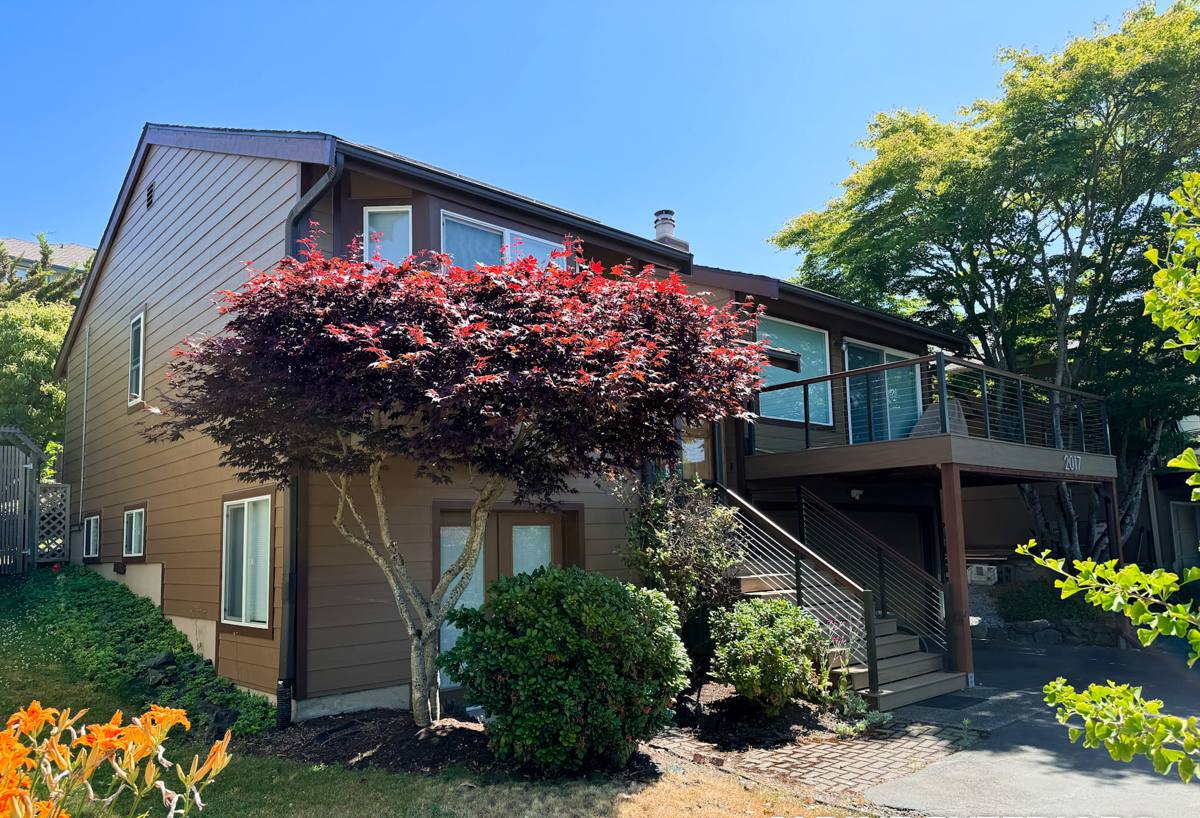
 Chuckanut Exterior
 Why Sehome Homes Need a Metal Roof Built for This Climate
Sehome sits in a part of Whatcom County where the roof over your head works harder than it does in most of the country. You've got moisture blowing in off the water, long stretches of gray, drizzly weather that never quite lets a roof dry out, and enough tree cover in and around the neighborhood to keep shade and debris landing on shingles for most of the year. Metal roofing has become a popular answer to that combination, and for good reason — but only when it's specified and installed correctly for this exact climate, not just installed the same way it would be in a dry inland market.
We work on homes throughout Chuckanut and the surrounding Whatcom County area, and Sehome roofs see a specific mix of stressors: salt-laden air drifting in from the bay, driving rain that gets pushed sideways during winter storms, and a moss season that can stretch across most of the year in shaded yards. A metal roof that's built and installed with those three things in mind will outlast one that's just "a metal roof" dropped on without local judgment.
What Salt Air, Rain, and Moss Do to a Roof Over Time
Each of these factors attacks a roof differently, and understanding the mechanism is what separates a roof that lasts decades from one that needs early repairs.
Salt Air
Airborne salt is corrosive to unprotected or poorly coated metal fasteners, flashing, and panel edges. It settles fine, works into seams and cut edges, and accelerates rust wherever bare or scratched metal is exposed. This is why fastener and coating choice matters more here than it would forty miles inland.
Driving Rain
Wind-driven rain doesn't just fall straight down — it gets pushed under laps, around penetrations, and into any gap that a fair-weather installation might get away with. A metal roof's water-shedding performance depends entirely on correct lap direction, sealant placement, and flashing detail at every transition, not just the panels themselves.
Moss and Organic Growth
Shaded, damp roof surfaces in this region grow moss readily, especially where debris collects or where a roof stays wet longer than it should. On some roofing materials moss roots into the surface and holds moisture against it. Metal doesn't give moss the same foothold, but moss and organic debris can still collect in valleys, at panel laps, and around chimneys and vents, holding moisture against fasteners and trim if the roof isn't designed to shed debris cleanly.
Choosing the Right Metal Roofing System
"Metal roofing" isn't one product — it's a category, and the right choice for a Sehome home depends on the roof's slope, exposure, and how much you value a low-maintenance, decades-long service life versus upfront cost. Here's how the common options compare for this climate:
| System | Fastener Exposure | Typical Lifespan | Best Suited For |
|---|---|---|---|
| Standing Seam | Concealed (clipped, not through-fastened) | Longest of the metal options | Full roof replacements, homes with heavy rain/wind exposure, longer-term ownership |
| Exposed-Fastener Panel | Fasteners penetrate the panel face | Solid, but shorter than standing seam | Outbuildings, budget-conscious projects, lower-slope tolerance permitting |
| Stone-Coated Steel / Metal Shingle | Concealed under overlapping courses | Long, comparable to standing seam | Homeowners who want the profile of shingle or tile with metal's durability |
For most Sehome homes dealing with driving rain and salt air, we steer clients toward standing seam or a quality metal shingle system. Concealed fasteners mean fewer penetration points for water and salt to work into over time, which matters more here than in a drier, calmer climate. Exposed-fastener panels still have a place — they're a legitimate, cost-effective choice for garages, shops, and secondary structures — but we're straightforward that they carry more long-term maintenance in a wet, coastal-influenced environment because every fastener is a potential leak point that needs periodic inspection.
Coatings and Gauge
Panel gauge (thickness) affects impact resistance and how well a roof handles foot traffic and wind load. Coating system affects corrosion resistance and how the finish holds up to UV and salt exposure over the years. We'll walk you through the specific options available for your project and explain the trade-offs honestly rather than upselling a spec your roof doesn't need — a well-coated, mid-weight panel installed correctly will outperform a premium panel installed poorly, every time.
What a Correct Metal Roofing Installation Involves
The panels get the attention, but most metal roof failures we're called to diagnose trace back to what's underneath or around them, not the metal itself.
- Underlayment: A synthetic or high-temp underlayment rated for the climate, installed with correct overlap direction so wind-driven rain can't work its way upslope under a lap.
- Fastener pattern and spacing: Manufacturer-specified spacing and torque — overdriven or underdriven fasteners are a leading cause of early leaks on exposed-fastener systems.
- Flashing at every transition: Valleys, chimneys, skylights, wall intersections, and eaves each need their own correct flashing detail. This is where most leaks actually originate.
- Ventilation: Proper intake and exhaust ventilation keeps moisture from condensing under the roof deck, which matters in a climate where humidity rarely drops for long.
- Panel and trim continuity: Clean, consistent laps and trim work aren't just cosmetic — gaps and inconsistent overlap are where wind-driven rain finds its way in.
Get any one of these wrong and it doesn't matter how good the panel itself is — the roof will underperform its material's real potential.
Our Process, Start to Finish
We keep the process straightforward and communicate at each stage so you're never guessing what's happening on your roof.
- On-site assessment: We inspect the existing roof, deck condition, ventilation, and any problem areas (valleys, chimneys, low-slope sections) before recommending a system.
- Honest system recommendation: Based on your roof's slope, exposure to wind and rain, and your budget, we recommend the panel type and coating that actually fits — not the most expensive option by default.
- Deck and underlayment prep: Any deck repairs get addressed before a single panel goes down, and underlayment goes in with correct lap direction and fastening.
- Panel installation and flashing: Panels, trim, and flashing are installed to manufacturer spec, with extra attention at every valley, penetration, and wall transition.
- Final walkthrough: We walk the finished roof with you, review the work, and go over what maintenance (if any) the system needs going forward.
Maintenance: What to Watch For After Installation
A correctly installed metal roof is genuinely low-maintenance, but "low" isn't "none." A short seasonal checklist keeps small issues from becoming roof-life issues:
- Clear debris and organic buildup from valleys and around chimneys or vents, especially after fall leaf drop.
- Check gutters and downspouts are flowing freely — clogged gutters back water up under the eave edge.
- Look for any panels or trim that show scuffed or scratched coating, and have bare metal touched up before rust can start.
- After major windstorms, do a visual check for lifted trim or fasteners backing out.
- Keep overhanging branches trimmed back where practical — less shade and debris means less moss and organic buildup on the roof.
What Affects the Cost of a Metal Roof in Sehome
Every roof is different, so we'll always give you a firm number after seeing the actual roof — but broadly, the biggest cost drivers are the same across most projects:
| Factor | Why It Matters |
|---|---|
| Roof complexity | More valleys, dormers, and penetrations mean more flashing labor and material |
| System type | Standing seam typically costs more upfront than exposed-fastener panel, reflecting concealed fasteners and longer service life |
| Deck condition | Rot or damage found during tear-off adds repair scope before new roofing goes on |
| Access and pitch | Steep or hard-to-access roofs take longer and require more safety setup |
| Coating and gauge | Heavier gauge and premium coatings cost more but add to long-term durability |
As a general guide, metal roofing installed correctly tends to run notably more per square foot than asphalt shingle upfront, with the difference offset over time by a much longer service life and lower maintenance. We'll break down exactly where your project's cost is coming from rather than handing you a single number with no explanation.
Why a Crew That Already Works Sehome Matters
Roofing crews who only occasionally work this specific corner of Whatcom County can miss things that are obvious to a crew that sees these roofs regularly — how a particular street's tree canopy affects moss buildup, how exposed a given roof orientation is to driving rain off the water, or which flashing details tend to fail first on older Sehome homes. That local pattern recognition doesn't come from a manual; it comes from doing the work here, season after season.
It also means we're not guessing at permitting requirements, disposal logistics, or how a project fits around this area's weather windows. When we recommend a system or a detail, it's based on what actually holds up on roofs like yours, in this exact climate — not a generic playbook.
Get a Straightforward Estimate
If you're weighing metal roofing for a Sehome home, we're happy to take a look and give you a clear, no-pressure estimate — including an honest read on whether metal is the right fit for your roof at all. Fill out the form below and we'll get back to you to schedule a time.