 Chuckanut Exterior
 Sehome's Coastal Climate Is Hard on Decks
If you own a home in the Sehome area near Chuckanut, your deck is dealing with conditions that decks in drier parts of the country never see. Whatcom County sits in a marine climate that combines salt-laden air off the water, long stretches of driving rain, and a moss season that can run from early fall clear into late spring. Individually, each of those is manageable. Stacked on top of each other year after year, they're the reason so many decks in this area start showing real damage well before their expected lifespan is up.
Salt air accelerates corrosion on anything metal — nails, screws, joist hangers, post connectors. Once a fastener starts rusting, it loses grip strength long before it looks obviously bad, which is why boards that seem "just a little loose" are often a warning sign, not a minor annoyance. Driving rain, especially when it comes in sideways during a storm, gets pushed into vertical seams that a straight-down rain would never reach — the ledger board where the deck meets the house, the top of a support post, the joint behind fascia trim. And moss doesn't just make a deck slippery; a mat of moss or algae holds moisture against the wood surface for days after the rest of the yard has dried out, which is exactly the kind of sustained dampness that leads to rot.
We repair decks in this climate all the time, and the pattern is consistent: the damage is rarely random. It shows up at the same handful of vulnerable points, for the same handful of reasons, because the weather that causes it is the same weather every deck in Sehome deals with.
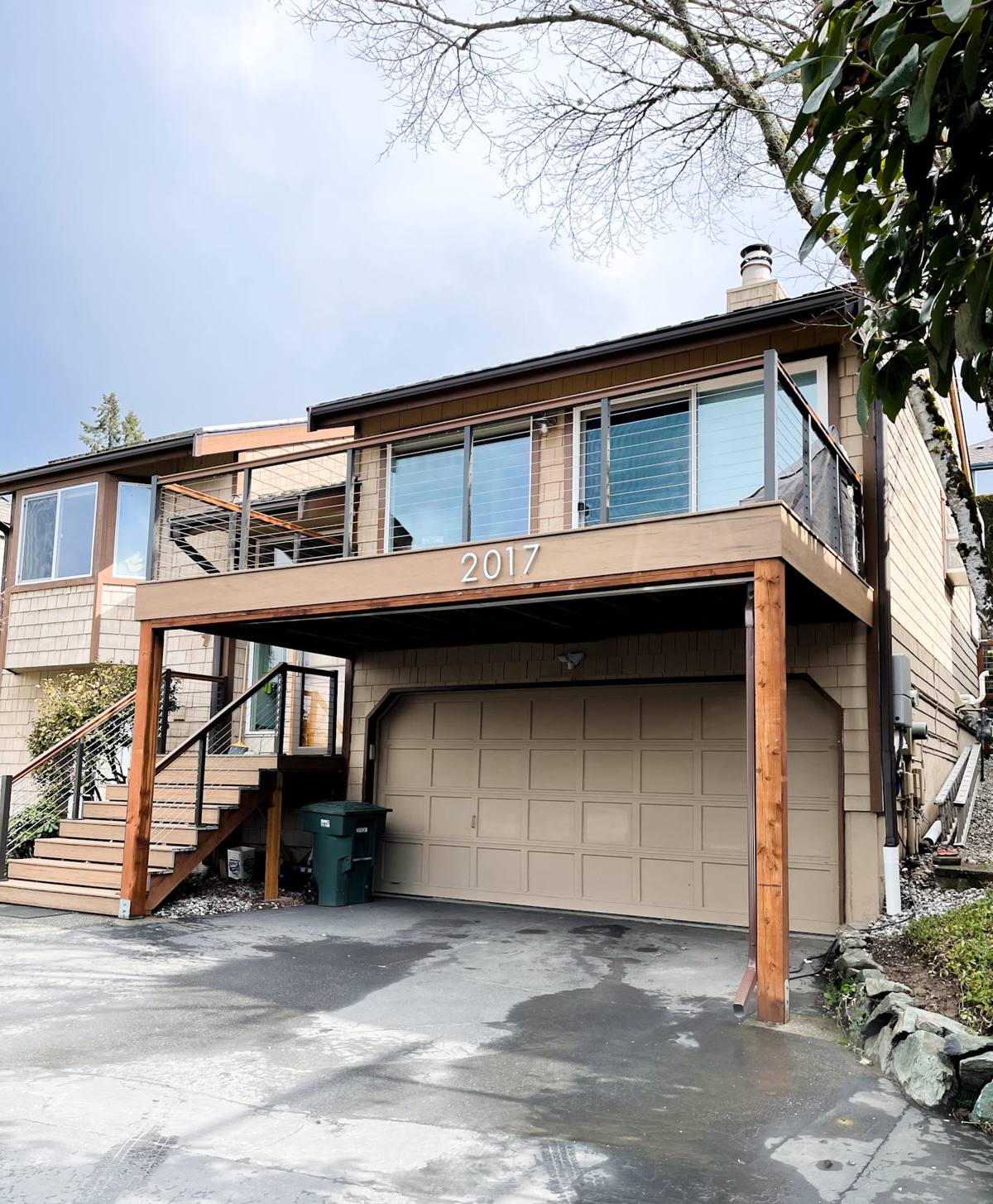
Repair or Replace? How We Make the Call
Not every damaged deck needs to come out. A lot of what looks like a "replace the whole thing" problem is actually a contained repair once you know where to look. The honest answer depends on what's happening in the framing underneath, not just what the surface boards look like.
| Factor | Points Toward Repair | Points Toward Replacement |
|---|---|---|
| Framing (joists, beams, posts) | Solid, dry, no soft spots when probed | Soft, spongy, or crumbling in multiple spots |
| Ledger board connection | Isolated fastener or flashing failure | Rot has spread along the ledger or into the rim joist |
| Surface decking | A handful of cupped, cracked, or loose boards | Most boards are weathered, splintering, or moss-stained throughout |
| Deck age | Under roughly 15 years, built to a reasonable standard | Older, or built before current fastening and flashing practices were common |
| Extent of damage found on inspection | Contained to what's visible from the surface | Probing reveals problems spreading beyond what's visible |
When Repair Makes Sense
If the framing is sound and the problems are limited to specific boards, a handrail, a section of fascia, or a fastener issue, repair is the right call. It costs less, keeps a structurally good deck in service, and doesn't waste material that still has useful life left.
When Replacement Is the Honest Answer
When rot has reached the framing itself — posts, beams, or the ledger connection to the house — patching around it isn't a real fix. A deck is only as strong as the wood you can't see, and once that's compromised in more than one place, repair work turns into chasing damage from one spot to the next. At that point we'll tell you straight that replacement is the better use of your money.
The Problems We See Most Often on Sehome Decks
- Ledger board separation or rot — usually from water tracking behind the flashing where the deck attaches to the house, which is hard to spot from above until it's advanced
- Post base rot — where a support post meets a concrete footing or sits at grade, holding moisture against end grain
- Corroded fasteners and connectors — nails and screws that have lost holding strength from years of salt-air exposure, leaving boards or railings loose even though the wood itself looks fine
- Moss and algae buildup — a slip hazard on its own, and a moisture trap that speeds up rot underneath it
- Cupped, warped, or split boards — from repeated wet-dry cycling over multiple seasons
- Stair stringer rot — stairs take more direct rain exposure and less airflow than the deck surface, so they often fail before the rest of the structure
- Missing or failed flashing — at the ledger-to-siding joint, the single most common source of hidden water damage on any deck in this climate
What a Correct Deck Repair Actually Involves
A repair that only replaces what's visibly damaged and ignores why it got damaged in the first place isn't a real repair — it's a delay. Here's how we approach it:
- Full inspection with a moisture meter, probing the framing, ledger, and posts rather than just eyeballing the surface
- Identify the root cause — if a ledger board is wet, we find out whether it's a flashing gap, a missing drip edge, or a grading issue before we close anything back up
- Remove only what's compromised — sistering a joist instead of replacing it whole where possible, replacing a post base rather than the entire post if the rest is sound
- Use fasteners rated for this environment — stainless or heavy-coated hardware, not standard galvanized that corrodes faster near salt air
- Correct the water path — proper flashing, drip edges, and board spacing so water sheds instead of pooling or wicking into end grain
- Refinish or seal as needed — matching the rest of the deck where practical, and setting a realistic maintenance schedule going forward
Materials and Fasteners That Hold Up Here
What we use for a repair depends on what's already there and what makes sense for your budget, but the trade-offs are worth understanding upfront.
| Wood (cedar / pressure-treated) | Composite | |
|---|---|---|
| Maintenance | Needs periodic cleaning and resealing to resist moss and moisture | Lower upkeep, but still needs regular cleaning to prevent surface algae |
| Moisture behavior | Absorbs and releases moisture — properly finished wood handles this well, neglected wood doesn't | Doesn't absorb water into the board itself, though the substructure underneath still can |
| Repair matching | Easier to blend a repair into existing wood decking | Color and texture matching can be harder depending on age and fading of existing boards |
| Upfront cost | Generally lower material cost for spot repairs | Higher material cost, but often less frequent surface maintenance |
Whichever material is already on your deck, the framing underneath and the fasteners holding it together matter more than the decking material itself when it comes to how long a repair lasts in this climate. We won't recommend a fastener or connector just because it's cheaper if it's a poor match for salt-air exposure — that's a callback waiting to happen, and it's not worth it for either of us.
What Deck Repair Typically Costs
Every deck is different, so we won't quote a number without seeing it, but the cost of a repair is driven by a small set of factors.
| Factor | Why It Affects Cost |
|---|---|
| Scope of damage | A spot repair (a few boards, a rail section) costs far less than structural work at the ledger or posts |
| Hidden damage found during inspection | What's visible from the surface isn't always the full extent — probing framing can reveal more |
| Access | Decks that are hard to get under or around take more labor time to repair correctly |
| Material choice | Matching existing wood versus composite, and the grade of fastener used, changes material cost |
As a broad range, minor surface repairs are typically a modest cost, while work involving posts, beams, or ledger reframing runs higher because it involves structural framing material and more labor. We'll always give you a clear breakdown of what we found and what it takes to fix it before any work starts.
A Homeowner's Deck Maintenance Checklist
Between repairs, a little routine attention goes a long way in this climate:
- Rinse moss and algae off boards before the fall rains set in, not after
- Keep gutters and downspouts clear so roof runoff isn't sheeting onto the deck or framing below
- Do a light foot-pressure check across the deck surface each spring, feeling for any give or softness
- Look closely at the joint where the deck meets the house — this is where problems start most often
- Reseal or refinish wood decking on the schedule appropriate for the product, not just when it looks faded
- Keep planters and other items that trap moisture off direct wood-to-wood contact with the deck surface
- Clear leaves and debris from between boards where they collect water
Why Hiring a Crew That Already Works in Sehome Matters
Deck repair isn't complicated in theory, but doing it right in this specific climate means knowing where problems actually start — not guessing. A crew that repairs decks throughout Chuckanut and the surrounding Whatcom County area sees the same failure points often enough to know what to check first, what's cosmetic versus what's structural, and which materials and fasteners are worth the extra cost here versus which ones aren't. That's the difference between a repair that lasts and one you're calling someone back for in two years.
We also know this climate doesn't forgive shortcuts. A flashing detail that would be fine in a drier region can fail here within a season if it's not done correctly, and a fastener that's rated for general use isn't necessarily rated for salt-air exposure. Working locally means we're not learning that on your deck — we already know it.
If you've got a deck in the Sehome area showing loose boards, soft spots, moss buildup, or rust staining around the hardware, we're happy to come take an honest look. There's no pressure and no upsell — just a clear rundown of what we find and what it would take to fix it. Fill out the form below to request a free estimate.