 Chuckanut Exterior
 Deck Building in Sehome
A deck in Sehome does not live an easy life. Between salt-laden air moving in off the water, long stretches of driving rain, and a moss season that seems to start earlier and end later every year, an outdoor structure here takes a beating that inland decks never see. Chuckanut Exterior Company builds and repairs decks with that reality built into every decision — not as an afterthought, but as the starting point for material choice, framing, and fastener selection.
This page covers what a deck actually needs to hold up in Sehome's conditions, what a correctly built deck involves from the ground up, and how we approach the work so you get something that looks good in year one and still performs in year fifteen.
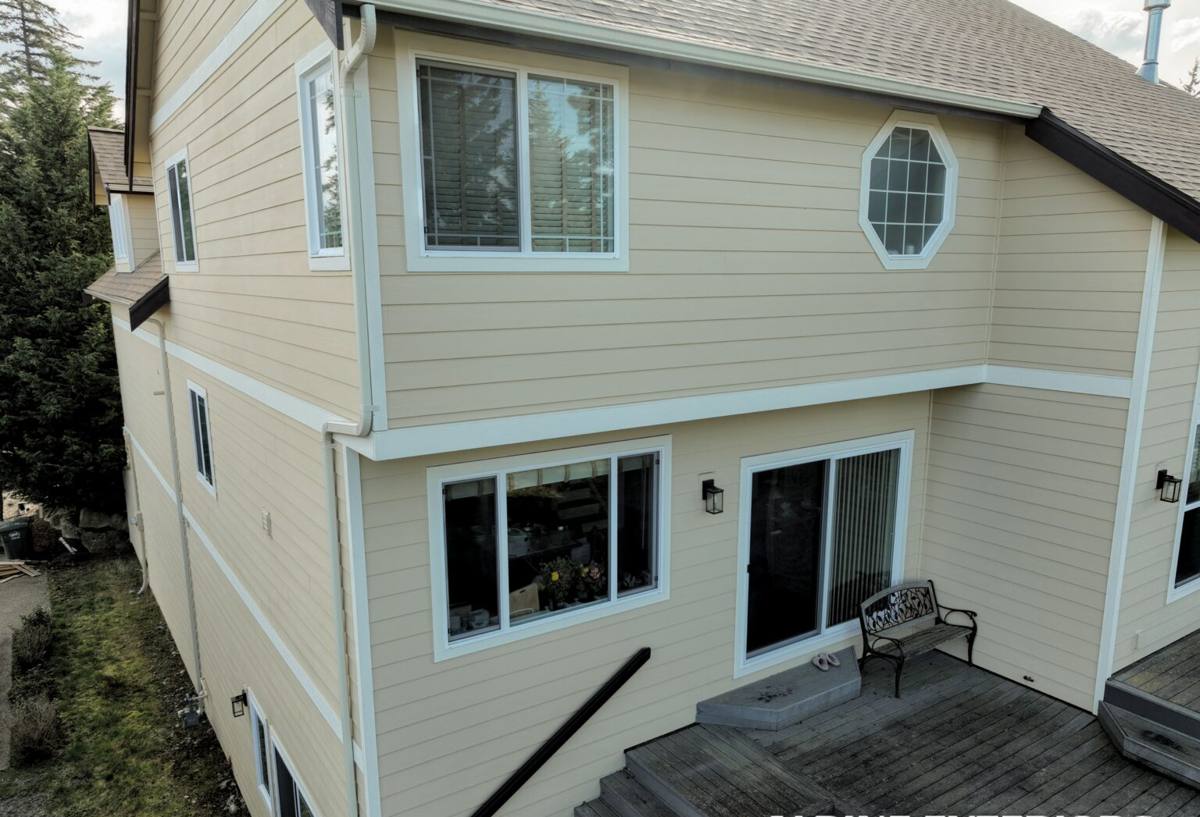
What Sehome's Climate Actually Does to a Deck
Three environmental factors drive almost every deck failure we see in this part of Whatcom County, and they compound each other.
Salt Air
Airborne salt accelerates corrosion on anything metal — fasteners, joist hangers, railing brackets, post bases. A deck built with standard hardware may show rust bleed and weakened connections years before an identical structure built further inland would. This isn't cosmetic; corroded fasteners lose holding strength, and hardware that's rusting is hardware that's no longer doing its job the way it was engineered to.
Driving Rain
Wind-driven rain doesn't just fall straight down — it gets pushed sideways into ledger connections, under decking boards, and into any gap in flashing or trim. Water that gets behind a ledger board or pools under decking is the single biggest cause of hidden rot we find when we open up an older deck for repair. The damage is rarely visible from the top until it's advanced.
Moss Season
A long, damp moss season means organic growth gets a real foothold on any deck surface that doesn't drain and dry quickly. Moss and algae hold moisture against the wood or composite surface, make boards slippery underfoot, and — on wood decks especially — feed the same fungal conditions that cause rot. A deck that stays wet longer stays vulnerable longer.
What a Correctly Built Deck Requires Here
A deck that's going to hold up under these conditions needs to get several things right at once — there's no single fix that compensates for a shortcut elsewhere.
- Footings set to proper frost depth and bearing on undisturbed or properly compacted soil, sized for the actual load the deck will carry.
- Ledger flashing that actually sheds water — a proper flashing detail (not just caulk) where the deck attaches to the house, since this is the single most common point of hidden rot.
- Joist spacing matched to the decking material — composite and PVC boards often need tighter joist spacing than solid wood to avoid flexing and long-term sag.
- A ventilated structure underneath so airflow can dry out the frame after rain instead of trapping moisture against it.
- Corrosion-appropriate fasteners and hardware throughout, not just at the points most exposed to weather.
- Railing and stair systems built to current code, both for safety and because it's what will pass inspection and hold up to insurance scrutiny later.
Skipping any one of these doesn't necessarily show up right away — it shows up in year three or four, as soft spots, rust streaks, or a railing that's developed play in it.
Choosing the Right Decking Material
There is no universally "best" decking material — there's a best material for a given budget, maintenance appetite, and exposure level. In a coastal, rain-heavy, moss-prone environment like Sehome, the trade-offs matter more than they would in a drier climate.
| Material | Moisture & Rot Resistance | Moss/Algae Behavior | Maintenance | Typical Coastal Lifespan |
|---|---|---|---|---|
| Pressure-treated wood | Good with proper sealing; vulnerable at cuts and fastener holes | Grows readily if not cleaned and resealed regularly | Annual cleaning, periodic resealing/staining | 10–20 years with upkeep |
| Cedar | Naturally rot-resistant but still needs sealing in this climate | Can develop surface growth without regular cleaning | Regular cleaning, occasional oil or stain | 15–25 years with upkeep |
| Composite decking | Very good; won't rot, but can trap moisture at poor connections if installed wrong | Can still grow algae/moss on the surface, especially in shaded, damp spots | Periodic washing; no sealing or staining | 25+ years |
| PVC decking | Excellent; fully moisture-resistant material | Same surface-growth risk as composite; smooth-surface products resist it better | Occasional washing | 25–30+ years |
Composite and PVC cost more up front, but in a climate that gives wood so little rest between rain events, they remove rot as a failure mode entirely and cut the maintenance burden significantly. Wood remains a legitimate choice for homeowners who prefer the look and are committed to the upkeep — we'll give you an honest read on what that upkeep actually looks like before you decide, rather than talk you into one option or the other.
Why We're Selective About What We Install
We don't install every product on the market. Some lower-cost composite and wood-alternative products have moisture behavior or installation tolerances that don't hold up well to this specific combination of salt air and sustained rain — not because the product is defective, but because it wasn't engineered with this exposure profile in mind. Our standard is to install products with a track record in Pacific Northwest coastal conditions, backed by a manufacturer warranty structure that's actually meaningful here.
Framing, Fasteners, and Hardware That Actually Last
The framing underneath a deck does more work than the decking on top, and it's the part most homeowners never see once the project is finished — which is exactly why it's the part most often cut short on lower-quality builds. For Sehome's salt-air exposure, we build with:
- Stainless steel or heavy hot-dip galvanized fasteners rated for coastal/marine-grade exposure, not standard exterior-rated hardware.
- Joist hangers and structural connectors matched in coating class to the fasteners used with them — mixing metals at a connection point accelerates corrosion on both.
- Post bases that keep wood posts elevated off concrete and standing water, rather than embedded directly.
- Flashing tape and membrane at every ledger and post connection, sized and lapped to actually shed water rather than just seal a seam.
None of this is visible in the finished deck, and none of it is optional if the goal is a structure that's still solid in fifteen years rather than needing structural repair in five.
Drainage, Slope, and Keeping Moss From Taking Hold
Moss doesn't grow because a deck is in Whatcom County — it grows because a surface stays wet longer than it should. Two things control that: slope and airflow.
Decking should be installed with a slight slope away from the house so water runs off rather than pooling, and gaps between boards need to be sized correctly so water drains through rather than sitting on the surface. Underneath, the structure needs enough clearance and ventilation that the frame can actually dry out between rain events instead of staying damp for weeks at a stretch, which is exactly the condition moss, algae, and rot all prefer.
Site conditions matter too — a deck tucked under heavy tree cover or on the shaded side of a house will hold moisture longer no matter how well it's built, and we'll flag that during design so you know what maintenance rhythm to expect rather than being surprised by it later.
Our Process
We keep the process straightforward and give you clear information at each stage rather than surprises at the end.
- On-site assessment — we look at the site's sun/shade exposure, drainage, existing structure (for replacements), and how the deck connects to the house.
- Design and material selection — we walk through material trade-offs honestly, based on your budget and how much upkeep you actually want to do.
- Permitting — we handle the permit process for the jurisdiction the property falls under, including footing and railing requirements.
- Construction — footings, framing, flashing, decking, and railing, built in that order with each stage inspected before the next begins.
- Final walkthrough — we go over the finished deck with you, including what maintenance to expect and when.
Why a Crew That Already Works Sehome Matters
A contractor who mostly builds decks in drier, inland conditions is working from a different set of assumptions than the ones that actually apply here. A crew that regularly works Sehome and the surrounding Chuckanut and Whatcom County area already knows which fastener grades hold up to the salt air, which decking products actually resist the local moss and algae pattern, and how the local permitting process handles footings and railings. That familiarity shows up in fewer surprises during construction and a deck that's built for the conditions it will actually face, not generic conditions from a spec sheet.
Signs an Existing Deck Needs Attention
If you're weighing a repair against a rebuild, these are the things worth checking before you decide:
- Soft or spongy spots in the decking or around the ledger board connection to the house.
- Rust streaking around fasteners or visibly corroded hardware.
- Persistent moss or algae growth that returns quickly after cleaning.
- Railings or stair stringers with any noticeable movement or play.
- Gaps or separation where the deck meets the house siding or foundation.
- Standing water on the deck surface more than a few minutes after rain stops.
Any one of these is worth a look. Several together usually mean the structure, not just the surface, needs attention.
Get an Honest Look at Your Project
Whether you're planning a new deck or trying to figure out if an existing one is worth repairing versus rebuilding, we're happy to come take a look and give you a straight answer. Reach out for a free, no-pressure estimate using the form below.